







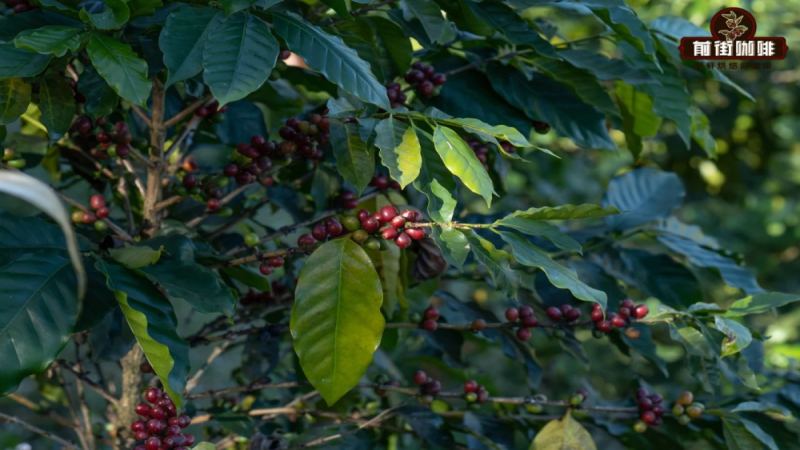
How did West Arsi coffee farms perform at the COE?
Ethiopia entered the Cup of Excellence for the first time, and West Arsi was the standout region. Nine farms from Kokosa and Nansebo reached the international finals, four made the top ten, and Nansebo alone supplied eight of the region's shortlisted spots. Every shortlisted West Arsi entry was Typica.
West Arsi sits in western Oromia, a second-level administrative zone about 300 kilometers northeast of Yirgacheffe and next to Sidama. The COE #22 sun-dried Typica comes from there, while another Arsi coffee uses Ethiopian heirloom varieties. Region, variety and processing together explain why two coffees from the same area taste so differently.
Ethiopian coffee made its debut in this year's Cup of Excellence (COE) competition, and the West Arsi region shone brightly with the Typica variety, sweeping multiple awards. The COE #22 sun-dried Typica and another Arsi heirloom coffee bean launched by Front Street Coffee, although both from West Arsi, have different flavors due to their varieties and processing methods. This article will compare the differences between these two coffee beans from multiple dimensions such as region background, variety characteristics, sun-drying processing, roasting curves, and cupping and brewing, helping coffee enthusiasts gain a deeper understanding of the flavor performance of Typica and Ethiopian heirloom varieties, while also sharing Front Street Coffee's roasting and brewing insights.
Front Street Coffee recently launched a sun-dried Typica that won 22nd place in this year's Ethiopian Cup of Excellence (COE). Many coffee enthusiasts have been asking how this bean differs from the Arsi coffee bean previously offered. Today, Front Street will provide a detailed analysis of the differences between these two coffee beans.
West Arsi Coffee Region
This year, Ethiopia participated in the Cup of Excellence (COE) cupping competition for the first time, and one region stood out particularly, though it was previously little known—that is West Arsi. West Arsi is located in the western part of the Oromia Region in Ethiopia, classified as a second-level administrative zone, about 300 kilometers northeast of Yirgacheffe, and adjacent to Sidama, also a second-level administrative zone. In the 2020 Cup of Excellence, two third-level administrative districts (called WOREDA in Ethiopia) in the West Arsi region—Kokosa and Nansebo—had a total of nine farms shortlisted for the international finals, with four farms even making it into the top ten.
West Arsi truly shone in Ethiopia's first Cup of Excellence, becoming the biggest winning region. Among them, Nansebo alone secured 8 of the region's shortlisted spots. If judged by WOREDA-level competition results, Nansebo's coffee performance was the best in the country. All the shortlisted varieties from the West Arsi region in this competition, whether from Kokosa or Nansebo, were uniformly Typica. The COE #22 coffee that Front Street Coffee acquired is precisely of the Typica variety, while the other Arsi coffee uses Ethiopian heirloom varieties.
Coffee Bean Varieties
COE #22 uses Typica: Ethiopia is the birthplace of Arabica coffee, and this land has nurtured over ten thousand varieties of Arabica coffee. Typica was the first variety to spread from Ethiopia to coffee plantations around the world. According to historical research, it was introduced from East Africa to Yemen around the 16th century AD, and then in the 17th century, along with the colonial powers such as the Netherlands and Britain, it was successively introduced to India and Java, and then transplanted to Latin America.
Through cupping Typica from different origins, Front Street Coffee found that no matter where it is grown, Typica maintains its unique clear and clean flavor, balanced characteristics, and mouthfeel, spreading across coffee-growing regions worldwide. However, due to its susceptibility to coffee pests and diseases and low yield, it has been less planted in coffee farms in recent years. From this competition, it is evident that the West Arsi coffee region is clearly one of the native regions for Typica.
Arsi uses Ethiopian heirloom varieties: Heirloom, most Ethiopian varieties are named under this term. In fact, this is because there are simply too many varieties in Ethiopia, like a natural gene pool of Arabica. On one hand, the variety is so diverse that identification and classification are difficult; on the other hand, the Ethiopian government, for protection reasons, is unwilling to disclose information about these varieties, so they are collectively called "Heirloom." Front Street believes that, in comparison, Typica has a cleaner overall flavor and very gentle acidity; while heirloom varieties, due to their complexity, have richer acidity but slightly lower cleanliness.
Sun-Drying Processing Method
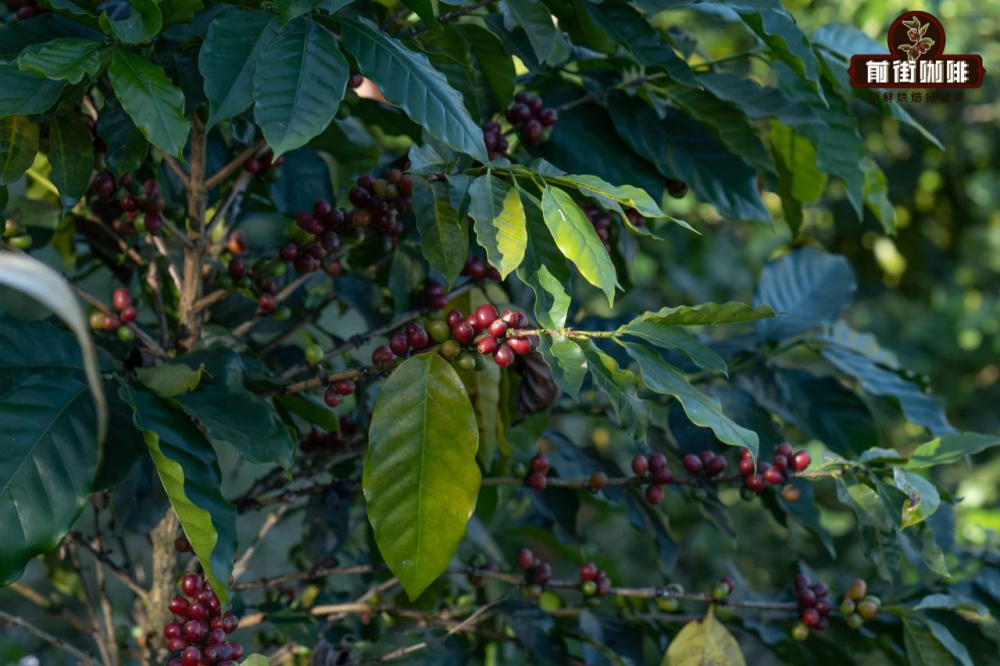
During the coffee harvest season, farmers in West Arsi only pick ripe red cherries, placing them one by one into baskets. After picking, the coffee cherries are uniform in size, similar in ripeness, and free of other impurities. During processing, the first step is to manually sort out defective coffee beans as well as unripe or overripe cherries. Then the red coffee cherries are spread flat on raised wooden frames or entire drying beds for sun-drying, which prevents the beans from contacting the ground and absorbing off-flavors.
During the drying process, they are constantly turned to ensure even drying and uniform moisture loss in the coffee beans; every three to five days, farmers manually sort out defective and moldy beans. After the fruit skin dries and hardens, a hulling machine is used to remove the dry, hard fruit skin. After obtaining the green coffee beans, in pursuit of perfect flavor, farmers will conduct one final sorting.
Front Street Coffee Roasting Record
COE #22 Front Street Coffee Roasting Recommendation: Yangjia 800N, bean charge 480g: Charge when the furnace temperature reaches 160°C, set airflow to 3, and heat to 120. Adjust heat once at 115°C, set airflow to 4. Roast until 6'00'', temperature 154.9°C, the bean surface turns yellow, the grassy smell completely disappears, and dehydration is complete. At the 8th minute, the bean surface shows ugly wrinkles and dark spots, and the toasted bread smell clearly turns into coffee aroma, which can be defined as the prelude to first crack. At this time, listen carefully for the sound of first crack. First crack begins at 9'08'', open airflow fully, first crack development time 1'20'', drop the beans at 193.5°C.
Arsi Front Street Coffee Roasting Recommendation: Yangjia 800N, bean charge 480g: Charge at 170°C, heat 130, airflow 3; turning point at 1'32", when the furnace temperature is 100.2°C, heat remains unchanged; at 3 minutes, adjust airflow to 4, at 4 minutes increase heat to 140. When the furnace temperature reaches 150.5°C, the bean surface turns yellow, the grassy smell completely disappears, entering the dehydration stage. At 8'36", the bean surface shows ugly wrinkles and dark spots, and the toasted bread smell clearly turns into coffee aroma, which can be defined as the prelude to first crack. At this time, listen carefully for the sound of first crack. First crack begins at 9'10", develop for 1 minute 30 seconds after first crack, drop the beans at 192.5°C.
Front Street Coffee Cupping Report
Arsi
Dry aroma: berry
Wet aroma: jam
Palate: plum, berry, cranberry jam, nectarine, mango, honey
COE #22
Dry aroma: citrus
Wet aroma: citrus, camellia
Flavor: citrus, lychee, honey, cream, winey, mango, strawberry
Front Street Coffee Brewing Insights
Dripper: V60 #01
Water temperature: 90-91°C
Coffee dose: 15g
Coffee-to-water ratio: 1:15
Grind size: medium-fine grind (80% passing through China standard No. 20 sieve)
Front Street Coffee brewing method: three-stage extraction. Use 30 grams of water for blooming for 30 seconds, then pour in a small stream in a circular motion until 125 grams for the first stage. When the water level is about to expose the coffee bed, continue pouring to 225 grams and stop. When the water level is about to expose the coffee bed again, remove the dripper. (Timing starts at the beginning of blooming) Total extraction time is 2'00".
Arsi brewing flavor: At high temperature, a berry juice-like mouthfeel; after slowly cooling, a finish of plum, nectarine, mango, and honey. COE #22 brewing flavor: The sweet and sour of strawberry and lychee, fermented wine aroma, creamy smoothness, honey-like finish.
For more specialty coffee beans, please add private WeChat Front Street Coffee, WeChat ID: kaixinguoguo0925
The above content is compiled by CoffeeHunters, a coffee news website.


