







What water temperature brings out Geisha coffee flavor?
For a medium-light roasted Geisha, the recommended pour-over water temperature is 90 to 93 degrees Celsius, or roughly 194 to 199 degrees Fahrenheit. That range releases the floral and fruity notes without flattening them. Pair it with a V60 dripper and a 1:15 coffee-to-water ratio, and the cup shows the bright, perfumed character the variety is known for.
Geisha rose to fame after 2017 and traces back to Ethiopian specialty beans, though the name is now tied closely to Panama. The article also covers estate background, naming conventions, flavor traits, and the batch performance of Geisha 6.0, along with the bean selection standards applied when choosing lots for brewing.
Since gaining popularity in 2017, Geisha coffee has remained a star among Ethiopian specialty beans. This article focuses on the pour-over water temperature for Geisha coffee, explaining in detail the logic behind brewing temperature selection, while also covering the estate background, naming conventions, flavor characteristics, and Front Street Coffee's brewing recommendations. For medium-light roasted Geisha, Front Street recommends a water temperature of 90–93°C, paired with a V60 dripper and a 1:15 coffee-to-water ratio, to fully release its floral and fruity notes. The article also introduces the batch performance of Geisha 6.0 and Front Street's bean selection standards, helping coffee enthusiasts gain a more comprehensive understanding of brewing this bean.
For more specialty coffee knowledge, please follow our WeChat public account: Front Street Coffee (FrontStreet Coffee)
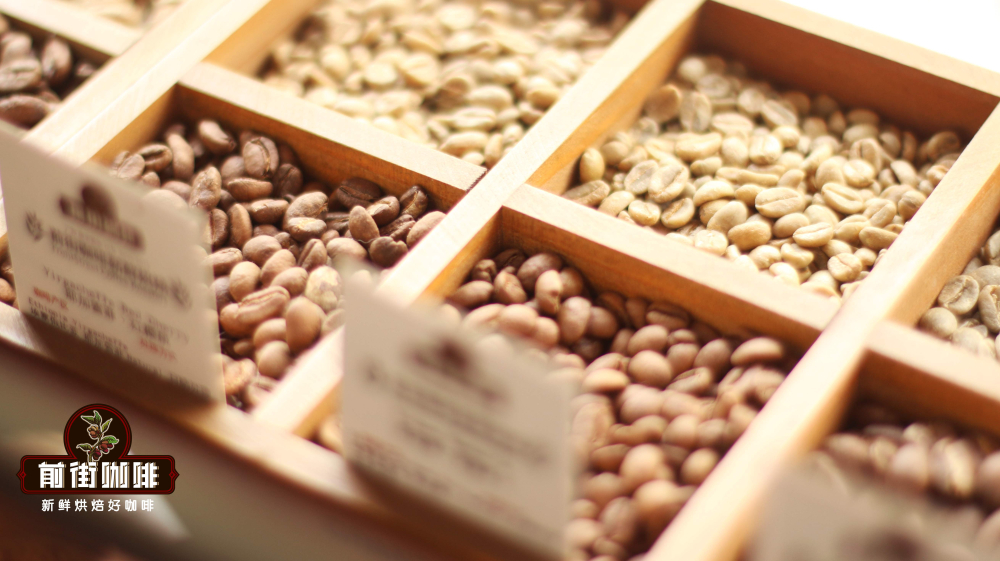
Coffee has a broad consumer base worldwide. Some prefer the heavy mouthfeel of Jamaican Blue Mountain coffee, while others are drawn to the bright, uplifting acidity of African coffee beans. Many customers who visit Front Street Coffee (FrontStreet Coffee) stores to select coffee beans often feel overwhelmed by a wall full of beans from different origins, processing methods, and varieties. Even after narrowing down to African origins, they still don't know where to start.
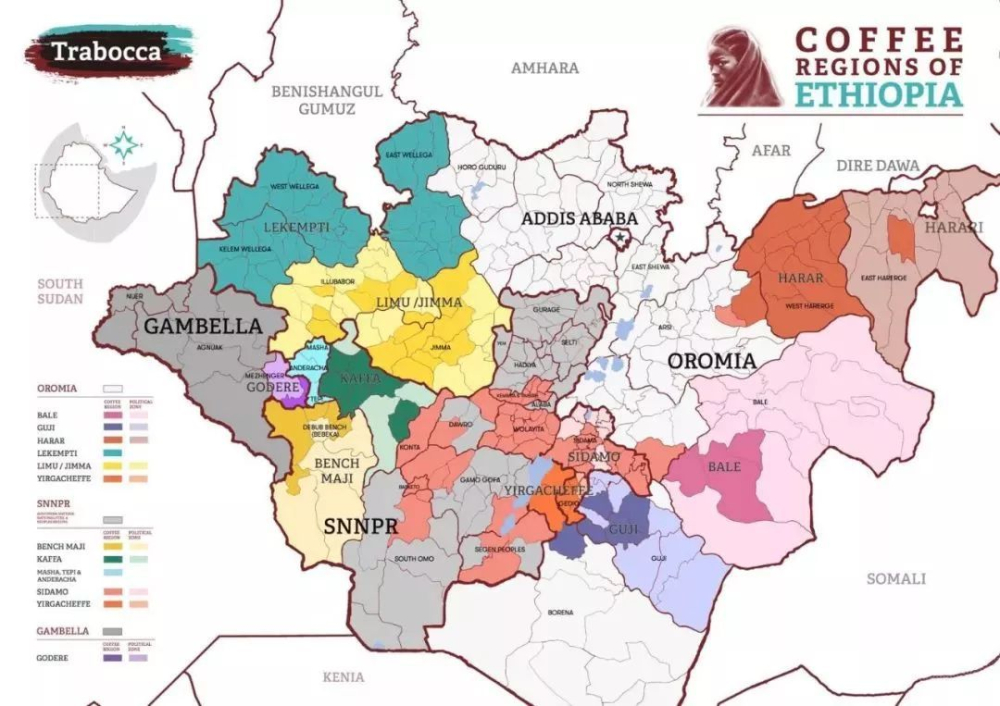
Ethiopia is both the birthplace of coffee and a genetic treasure trove of coffee varieties. This land has nurtured numerous coffees with outstanding flavors. Ethiopia has a considerable number of producing regions, among which Harrar, Yirgacheffe, and Sidamo are the most renowned. In China, many coffee enthusiasts' entry point tends to be washed Yirgacheffe and natural Sidamo.
Washed Yirgacheffe is known for its fresh, natural character, while natural Sidamo, with its bold and intense berry-cream flavors, has likewise attracted a large following.
Sidamo, like Yirgacheffe, has long established an international reputation. In some international coffee competitions, the name of the Sidamo region frequently appears at the top of award lists. In recent years, Sidamo has also achieved repeated successes in green bean competitions such as COE and TOH.
Before Yirgacheffe became famous for its fresh floral notes, it was once under the jurisdiction of the Sidamo region. The Guji region was also once part of Sidamo before it became a hot spot in green bean competitions and gained independence in 2010. Front Street Coffee (FrontStreet Coffee) has a coffee bean on its shelves that won the washed group championship in the Ethiopian division of the 2020 TOH competition. It comes from the Uraga sub-region of the Guji region, with a fresh and unique flavor reminiscent of honey pomelo green tea, and is deeply loved by customers.
The Sidamo region is vast and encompasses numerous sub-regions. Just as those who have tasted Geisha coffee from Panama's Hacienda La Esmeralda can appreciate the significant differences between different plots, the styles among different Sidamo sub-regions are likewise distinct. The Uraga region and the Bensa region each have their own merits.
Among them, the Hambela region has received extremely high attention. Due to a promotional collaboration between an internet celebrity and Luckin Coffee, Geisha coffee beans became known to consumers nationwide and instantly became a hot commodity. Many customers who come to Front Street Coffee (FrontStreet Coffee) stores ask specifically for Geisha coffee beans as soon as they walk in.
Of course, many customers also inquire with Front Street Coffee (FrontStreet Coffee) baristas about information on Geisha coffee beans, and some hope to systematically expand their knowledge of Geisha. Below, Front Street Coffee (FrontStreet Coffee) introduces this coffee bean.
In 2017, Ethiopian green bean company DW sent a natural coffee bean from the Buku Abel processing station in Hambela to compete in that year's TOH competition. This bean's berry-cream flavor was extremely intense, winning over multiple international judges and ultimately earning the championship in the natural group of the Ethiopian division of that year's TOH competition.
A Beijing-based green bean company introduced the same winning batch of coffee beans into China. After tasting the flavor, they named it "Geisha," meaning "the chief of a hundred flowers," expressing the hope that it would become the next well-known specialty coffee representative like Geisha.
In the same year, in the China division of the World Brewers Cup, competitor Li Jianfei used the same winning batch of Geisha coffee beans to take second place. In recent years, Geisha coffee has become the first choice for many competitors due to its unique flavor. Against the backdrop of Geisha sweeping the competition field, Li Jianfei used Ethiopian Geisha coffee beans to defeat many users of Panamanian Geisha, and Geisha thus rose to fame in the coffee community.
However, Geisha coffee beans truly entered the public eye when Li Guoqing criticized Luckin Coffee for launching its Geisha SOE series earlier this year. Afterward, more people went to Front Street Coffee (FrontStreet Coffee) to ask about the origins and taste characteristics of Geisha coffee beans.
By 2022, customers were still coming to the store asking whether Geisha 4.0 coffee beans were available, showing that some consumers do not fully understand the naming method of Geisha. Since Geisha coffee beans first appeared in 2017, the "Geisha" IP has been properly managed by a Beijing-based green bean merchant and has now developed to its sixth generation of products.
2017 was the starting point of Geisha coffee; 2018 saw the launch of Geisha 2.0; 2019 Geisha 3.0; 2020 Geisha 4.0; 2021 Geisha 5.0; and 2022 naturally Geisha 6.0. It can be seen that the Geisha coffee series uses the "Geisha X.0" naming method for differentiation. Over the years, Front Street Coffee (FrontStreet Coffee) has promptly stocked new-season Geisha coffee beans every year.
Generally speaking, only natural coffee beans produced and processed by Buku Abel can be called "Geisha." Geisha's growing area is located in highlands above 2,000 meters in altitude, where tropical plants such as sugarcane and bananas grow around the coffee trees, providing moderate shade. This growing environment gives Geisha coffee its sweet-and-tart, smooth-drinking characteristics, and the natural processing method further enhances this bean's sweetness.
However, coffee is ultimately an agricultural product, and every year it is affected by uncertain factors such as climate and rainfall. Therefore, flavor differences in coffee beans from different years are normal. When Front Street Coffee (FrontStreetCoffee) received the new-season Geisha 6.0 coffee beans, it found quite a few flat beans, shell beans, broken beans, and other underdeveloped beans among the green beans.
Front Street Coffee (FrontStreet Coffee)'s roaster removes 20% to 30% of defective beans before roasting. After roasting is completed, quite a few irregular coffee beans can still be sorted out from the roasted beans, more than in previous years.
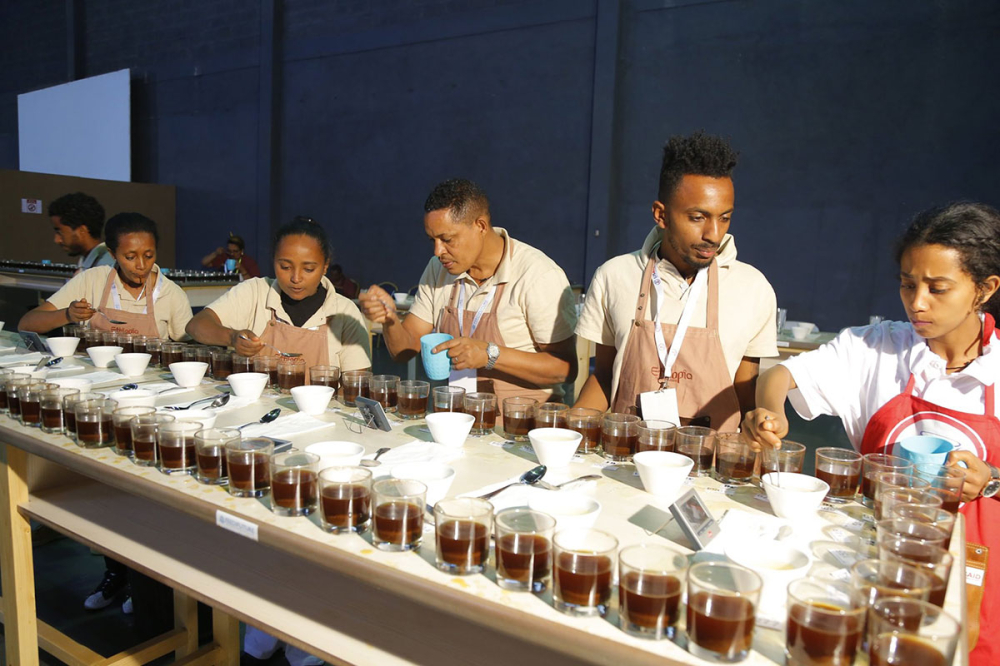
After cupping, this Geisha 6.0 showed flavors of berries, honey, and passion fruit, with prominent sweetness.
However, because this batch of Geisha 6.0 had a relatively high defect rate, Front Street found another new-season processed Geisha coffee bean through the Buku processing station in Hambela. This bean is also from the Hambela region and processed by the Buku processing station using the natural method. The beans are plump and close in appearance to Geisha coffee beans from previous years. Cupping results show that this new-season Geisha has citrus acidity, honey sweetness, a slight white floral note, and a strong juicy quality.
Before we knew it, Geisha has already passed its 9th year since debut. The latest 2025 new-season batch also continues the multi-year naming convention and is still released under the name "Geisha." Tasting the new Geisha has become the top priority for loyal fans. To showcase the refined floral and fruity flavors of the Sidamo region while preserving the coffee's caramelized aroma, Front Street's roaster uses a medium-light roast to present this bean.
Front Street Coffee (FrontStreet Coffee) : Ethiopia · Geisha Coffee Beans
Country : Ethiopia Region : Sidamo · Guji Region Altitude : 2,250–2,350 meters Variety : Local heirloom varieties Processing Method : Natural process
Flavor : Floral, jackfruit, dried fruit, apricot, juicy
Front Street remains loyal to its principle of "freshly roasted good coffee," shipping coffee beans freshly roasted within 5 days to maximize the expression of coffee's rich flavors. When they arrive, they have already gone through a 4-to-7-day resting period, which is exactly when the flavor is at its best.
In terms of extraction method, Front Street consistently serves coffee as pour-over black coffee. It should be noted that roasting triggers caramelization and the Maillard reaction. The lighter the roast, the harder the coffee bean texture and the harder it is for flavor compounds to be released into the water; conversely, the darker the roast, the more non-enzymatic browning occurs as monosaccharides and amino acids interact and decompose under heating, making it easier to release bitter, large-molecular compounds. Therefore, for dark-roasted coffee beans, Front Street recommends 87–88°C, which can effectively avoid extracting excessive off-flavors; while for medium-light roasted beans like Geisha, Front Street uses a slightly higher water temperature, namely 91–93°C, to maximize its floral and fruity profile.
Dripper: Hario V60
Water temperature: 90°C
Dose: 15 grams
Coffee-to-water ratio: 1:15
Grind size: 80% passing through a Chinese standard No. 20 sieve
Front Street recommends a 30-second bloom during brewing. After coffee beans are roasted, the bean body is filled with gas. Blooming helps carbon dioxide escape, thereby extracting a more complete flavor.
First pour 30 grams of hot water and bloom for 30 seconds. Then, from the center point, pour in a thin stream while slowly circling to 125 grams. When the water level in the dripper drops to the point where the coffee bed is about to be exposed, continue circling and pouring to 225 grams. Total extraction time is 2 minutes.
The above content is compiled by CoffeeHunters, a coffee news website.


