







Why is Huila coffee the face of Colombian specialty coffee?
Huila has become the specialty region chosen to represent Colombia because its high-altitude plots and stable climate produce consistent, sweet and balanced cups. Colombian coffee grows along the Andes, where producing areas sit between roughly 1,000 and 2,000 meters, and average temperatures in coffee zones run about 18 to 22.5 degrees Celsius.
The country is divided from south to north into northern, central and southern regions, and harvest seasons differ markedly between them. Export grades such as UGQ, EP and Supremo describe screen-size. Washed processing is standard in Huila, and the article walks through moka pot extraction using Huila beans as the example, alongside the classic coffee image of Juan Valdez.
For coffee enthusiasts, Colombia is always a classic origin that cannot be overlooked. This article starts from the household brand image of Juan Valdez, systematically reviews the distribution of Colombian coffee regions, climate characteristics, harvest seasons, and the landscape of specialty production areas, and provides an in-depth interpretation of why Huila has become the specialty region selected by Front Street Coffee as the representative face of Colombia. The article also explains in detail the screen-size grading standards for Colombian green beans—the specific meanings and screen specifications of export grades such as UGQ, EP, and Supremo—as well as the practical application of the washed processing method in Huila. Finally, using Huila coffee beans as an example, Front Street fully demonstrates the extraction steps for a moka pot, providing a reference for daily brewing.
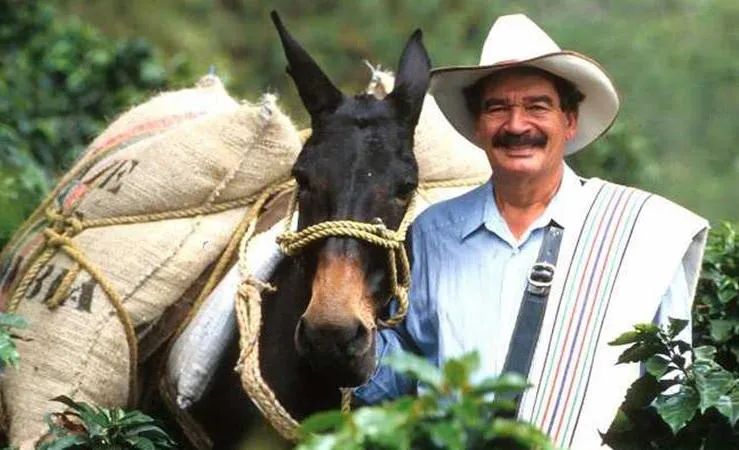
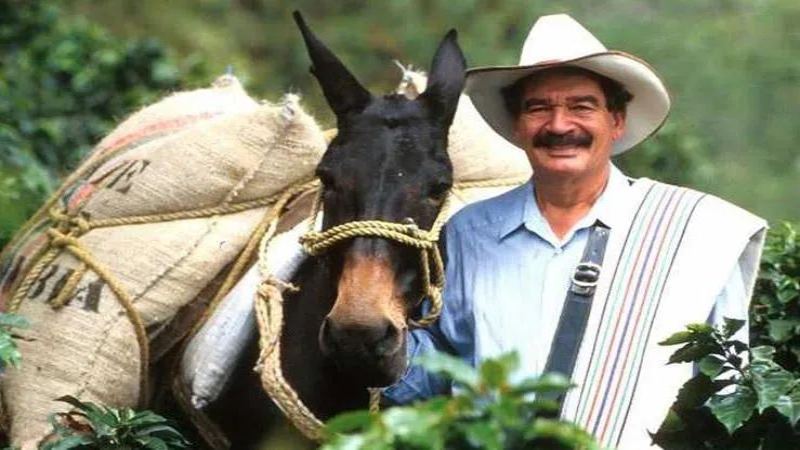
If you type Colombian coffee brand into a search engine, one image is almost certain to pop up—the coffee farmer Juan Valdez, wearing a white straw hat, an Andean wool poncho, a leather bag slung across his body, and canvas shoes, with his loyal mule beside him, his face simple and honest. This logo frequently appears in various advertisements and film and television scenes, and has also spread Colombia's classic coffee brand symbol throughout the world.
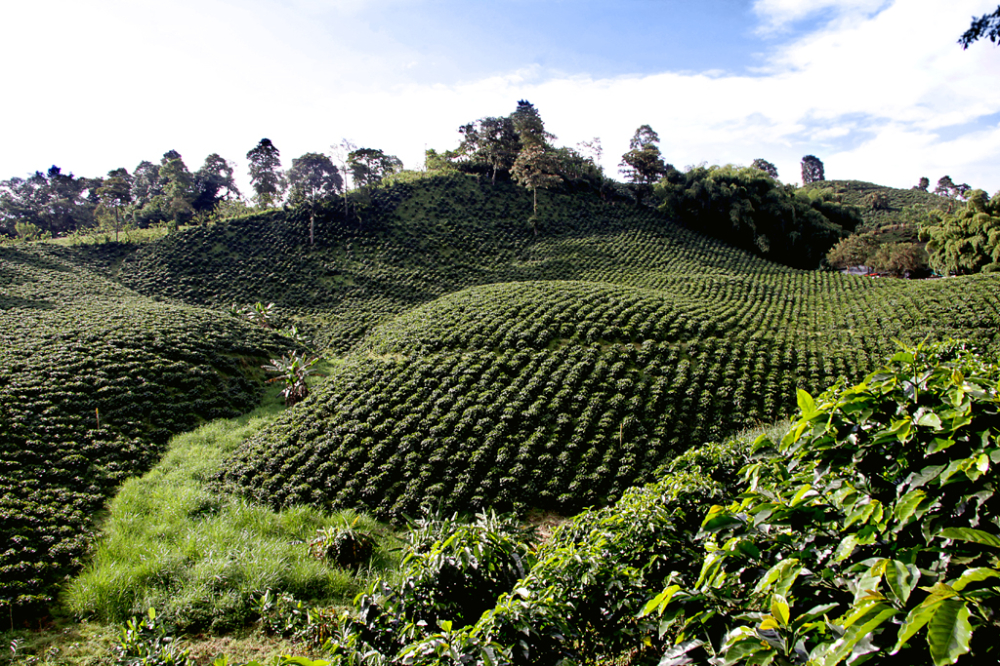
Colombian coffee is grown in the valleys of the Andes Mountains
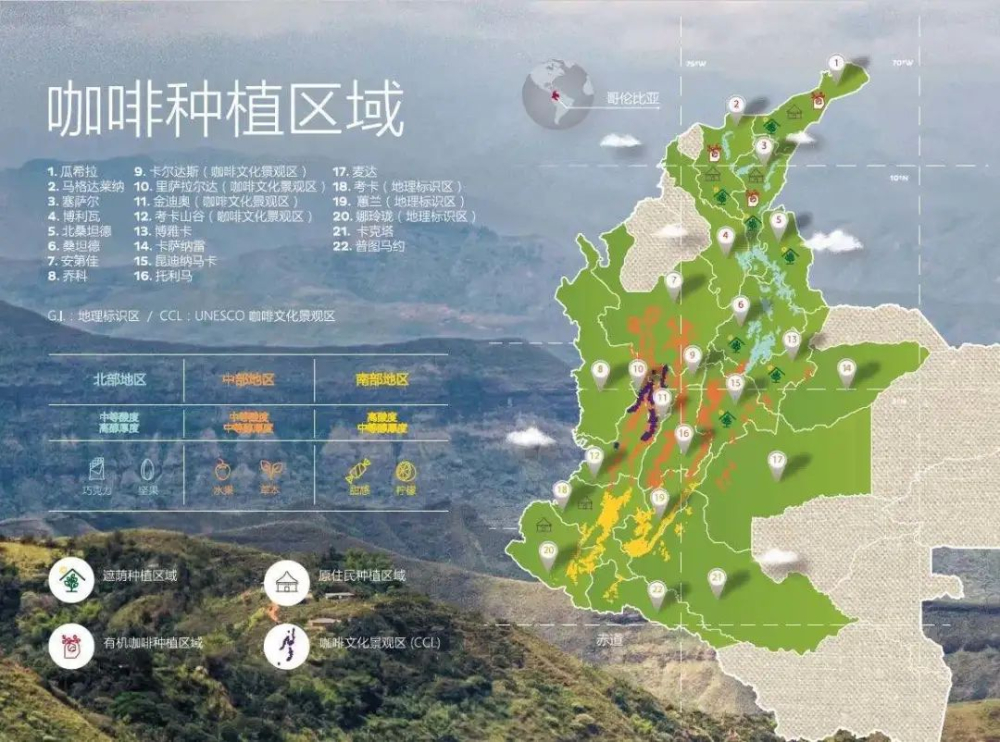
Colombia's coffee-growing regions are distributed along the Andes Mountains within the country, and climatic conditions vary with the terrain. The southern part of the eastern plains and the Pacific coastal area have a tropical rainforest climate, the mountainous areas at altitudes of 1,000 to 2,000 meters have a subtropical climate, and the northwest has a tropical savanna climate. The average temperature in coffee-producing areas fluctuates between about 18°C and 22.5°C. Because the geographical and climatic conditions are so diverse, whether you prefer a round, rich taste or a cup full of vitality with prominent fruity aromas, you can basically find a suitable choice in Colombia.
Colombia's production regions are divided quite clearly. Influenced by the latitudinal span of the producing regions and the terrain of the Andes, the country is divided from south to north into three major regions: northern, central, and southern. The harvest seasons differ markedly between north and south, and the central region is further divided into main and secondary harvest seasons depending on whether it is located farther north or south, so there are two harvest periods in a year: the main season is concentrated from October to January of the following year, while the secondary season falls between April and July. The variable climate conditions among the mountains allow coffee cherries to ripen throughout the year in this land, and different coffee varieties enter the picking period at different times, so no matter the season, busy pickers can be seen among the trees.
In the last century, Colombian coffee was best known for the "MAM" combination made up of Medellin, Armenia, and Manizales. With the advance of the specialty coffee wave, many specialty coffee origins emerged in southern Colombia, such as San Augustin, Huila, Popayan, Cauca, Nariño, and Tolima. Thanks to their extremely high altitudes and distinctive processing methods, these regions produce coffees with refined acidity and fruity flavors, and they have repeatedly achieved excellent results in Cup of Excellence competitions. After multiple rounds of cupping comparisons, Front Street selected washed coffee beans from Huila among the specialty regions, making them the representative face of Colombian coffee and listing them in small packaging so that everyone can taste the classic Colombian flavor.
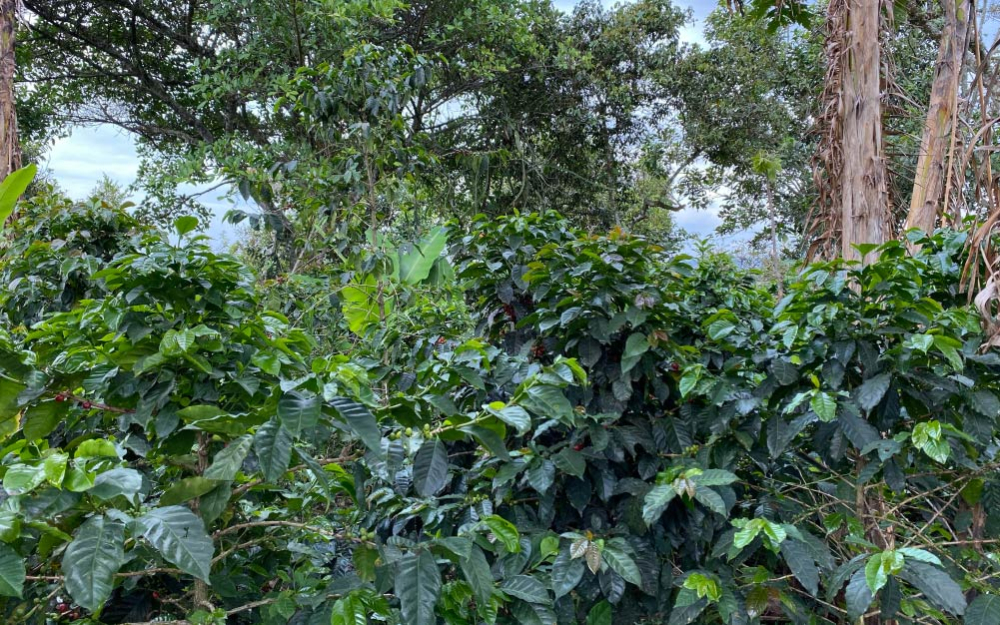
Huila is located in southern Colombia, in the southern part of the Central Cordillera, and is Colombia's most renowned specialty coffee region. The local terrain consists of hills surrounded by mountains, with cultivation at altitudes above 1,500 meters, providing the high altitude and suitable temperatures needed to grow high-quality Arabica beans. The soil conditions are excellent, and together with the geographical advantages for coffee cultivation, Colombia's most important rivers converge here, bringing abundant water resources and moisture. The climate on the canyon slopes not only blocks cold winds from intruding, but also sends cool mountain breezes, with no trouble from high temperatures and quite sufficient rainfall, making it a truly gifted coffee-growing area.
Most Colombian coffee uses traditional washing
Colombia's producing regions are rich in water resources and very suitable for washed processing. Family-based farms are usually equipped with specially made green bean processing machines (Ecomill or Eco-Pulper). Farmers pour the harvested coffee cherries into the machine; the skin and pulp are removed, and most of the mucilage can be cleaned off using only a very small amount of water. The parchment beans with a small amount of residual mucilage then go into a small tank or container—possibly a tiled tank—and are left to ferment overnight so the remaining mucilage loosens, then the next day they are rinsed clean with water and finally spread out in the sun to dry to the target moisture content. Washed processing not only ensures the high quality of the coffee, but also allows Huila coffee to show its most authentic flavor characteristics. This is also why Front Street prioritizes washed batches when selecting everyday beans.
Characteristics of Colombian green bean grades
Currently, Colombian coffee green beans are graded by screen size. Although bean size is not a decisive criterion for judging coffee quality and flavor, many producing regions believe that plump, neat, and large beans indicate that the coffee has reached a fully mature state, can develop a more desirable aroma profile, and are more conducive to even roasting, thereby forming a consistent flavor.
Fixed-size screens are usually used for sorting, and different specifications correspond to different hole sizes. For example, if the mesh is 17 screen, beans larger than this size cannot pass through the screen, so the larger the screen number, the larger the beans retained on the screen surface. The most common export grades are UGQ, EP, and Supremo.
Excelso UGQ 12*60 (1.5%): UGQ stands for Usual Good Quality. Green bean size is above screen 14, with 1.5% of green beans allowed to be between screen 12 and 14, but they must be above screen 12, and more than 50% must be larger than screen 15.
Excelso EP 12*60 (10%): EP stands for European Preparation. Green bean size is above screen 15, with 10% of green beans allowed to be smaller than screen 15, but they must be above screen 14.
Excelso Supremo 12*60 (5%): Green bean size is above screen 17, with 5% of green beans allowed to be smaller than screen 17, but they must be above screen 14.
No matter which screen-size grade the green beans belong to, as long as they are for export, they are all classified under the Excelso grade. In other words, most Colombian coffee green beans exported around the world today must have the word Excelso marked on the burlap sacks. The Excelso export grade is currently the most widely used export standard adopted by FNC, and it is also the highest grade for Colombian green bean exports.
In addition, Colombia also has a grade called Extra for screen 16 and above, a grade called Premium for beans larger than Supremo and reaching screen 18 and above, and Minama for green beans almost all uniformly at screen 15, among others. Colombia also has coffee beans that do not reach the Excelso export grade, locally called "Product of Colombia," which are generally used to make commercial-grade instant coffee.
In Colombia, every farm household must report a number and enter green bean information so that green bean traceability can be carried out later. The names of Colombian exported coffee green beans are usually written in the format country + producing region + grade + other details. For example, the green bean name of Front Street Huila everyday beans is Colombia Huila Supremo SC17/18 FNC.
Front Street Colombia Huila coffee beans use a medium-dark roast and have moderate oils. In various extraction methods, they often present the sweet aromas of caramel, dark chocolate, and cream, so they are suitable for many brewing methods. You can buy them at the Front Street flagship store or Front Street Taobao store. Below, Front Street will use a moka pot to brew a cup of Huila coffee.
Extracting coffee with a moka pot is not complicated; you only need to prepare coffee beans, a grinder, and a gas stove (or induction cooker) for heating.
First remove the base of the moka pot and add water to the lower chamber (using hot water can shorten the brewing time). Keep the water level below the pressure relief valve line; here Front Street injects 130 ml.
Pour coffee grounds with a grinding setting of EK-43s#3-3.5 into the filter basket, fill it to nine-tenths full, smooth it with your finger, and place it into the base. Then tighten the upper chamber and lower chamber together and place it on a gas stove or induction cooker to heat. When using an open flame, be careful that the flame does not extend beyond the base of the moka pot as much as possible.
Wait for the moka pot to heat up. When you hear a hissing sound, turn to low heat, and the coffee liquid and oils will slowly flow out. When you see the coffee liquid in the upper chamber reach half full, you can turn off the heat source and move the pot to the table. Use the residual heat and pressure inside the pot to continue extracting the remaining coffee liquid.
Finally, pour the extracted coffee liquid into a cup. The taste is relatively rich, and when drinking, you can add water, milk, or other ingredients according to your own taste to adjust it.
The above content is compiled by CoffeeHunters, a coffee news website.


