







Why is the arabica variety in Sumatra Mandheling distinctive in aroma and acidity?
Sumatra Mandheling is known for a rich, full body, silky mouthfeel and intense herbal aroma, with lively but moderate acidity rather than sharp brightness. The wet-hulling method used on the island shapes that profile, and the local soil and growing environment add woody notes, cedar, cocoa and fermented fruit. It is a classic arabica variety and a frequent component in blends.
Only about 25 percent of Indonesia's coffee beans are arabica, which makes Mandheling a notable representative of the species. Five Mandheling coffees are compared here, covering PWN Golden Mandheling, Lintong Mandheling, Tiger Mandheling, Aged Mandheling and Wahana Estate Natural Mandheling, each with its own brewing parameters and flavor description.
Sumatra Mandheling is renowned for its rich, full-bodied taste and intense herbal aroma, and has remained a favorite among seasoned enthusiasts since the rise of coffee culture. This article, drawing from the bean list of Front Street Coffee, reviews the origins, varieties, and processing methods of five Sumatra Mandheling coffees, covering PWN Golden Mandheling, Lintong Mandheling, Tiger Mandheling, Aged Mandheling, and Wahana Estate Natural Mandheling. The article details the origin and characteristics of the wet-hulling method, the evolution of aged processing, and includes Front Street's unified brewing parameters and flavor descriptions for each, offering a comprehensive understanding of Mandheling's rich charm and acidity profile.
Have you ever tasted Starbucks' Sumatra coffee? This coffee boasts a solid body, silky mouthfeel, and a strong herbal aroma—a truly remarkable delight. Let's dive deeper with Front Street Coffee.
Sumatra Mandheling, with its rich flavor profile, has been cherished by veteran coffee lovers from the dawn of coffee's popularity to the present day. A customer who once tasted Golden Mandheling at Front Street described it this way: "After this cup of Golden Mandheling slid into my mouth, it felt as if a Sumatran tiger was silently prowling within." On Front Street Coffee's bean list, there are five Mandheling coffees from Sumatra, each with its own distinctive flavor. In this article, Front Street will introduce these five Sumatra Mandheling coffees one by one.
The soil and growing environment of Sumatra give local coffee its woody notes, thick body, restrained flavor, and lively yet moderate acidity, along with unique aromas of herbs, cedar, cocoa, and fermented fruit. Among Sumatra Mandheling, it is the most classic representative of the arabica species, which accounts for only 25% of Indonesia's coffee beans. It possesses a superb classic taste, heavy flavor, and a combination of body and rich liveliness, yet it is neither astringent nor sour—its body and bitterness are fully expressed. When tasting Mandheling, the tongue feels a smooth lubrication, accompanied by a faint herbal fragrance, cocoa sweetness, and fruity aroma, with a long-lasting aftertaste. Generally, Sumatra Mandheling enthusiasts drink it as a single origin, but it is also an indispensable variety in coffee blends.
Mandheling, literally understood, gives a sense of romance and warmth, but those who have tasted it would disagree. It is fragrant, rich, and thick, bittersweet, and is a non-acidic variety of coffee, considered the world's most full-bodied coffee. When tasting, you can feel a distinct smoothness on the tongue, while also sensing a lower acidity; the lively subtle acidity mixed with the most intense aroma allows you to easily appreciate the lively elements within its gentle richness. Additionally, this plant has a faint earthy aroma, which some describe as the fragrance of herbs. Sumatra Mandheling is a premium coffee bean grown on the highlands of Mount Michael at altitudes of 750-1500 meters, and is known as "the Caesar of coffee." Today, Indonesia is a major coffee-producing country, with production mainly concentrated in Java, Sumatra, and Sulawesi. Of these, Robusta accounts for 90%, while Sumatra Mandheling is a rare arabica variety and the most prestigious Mandheling. When speaking of Mandheling, one must mention PWN Company.
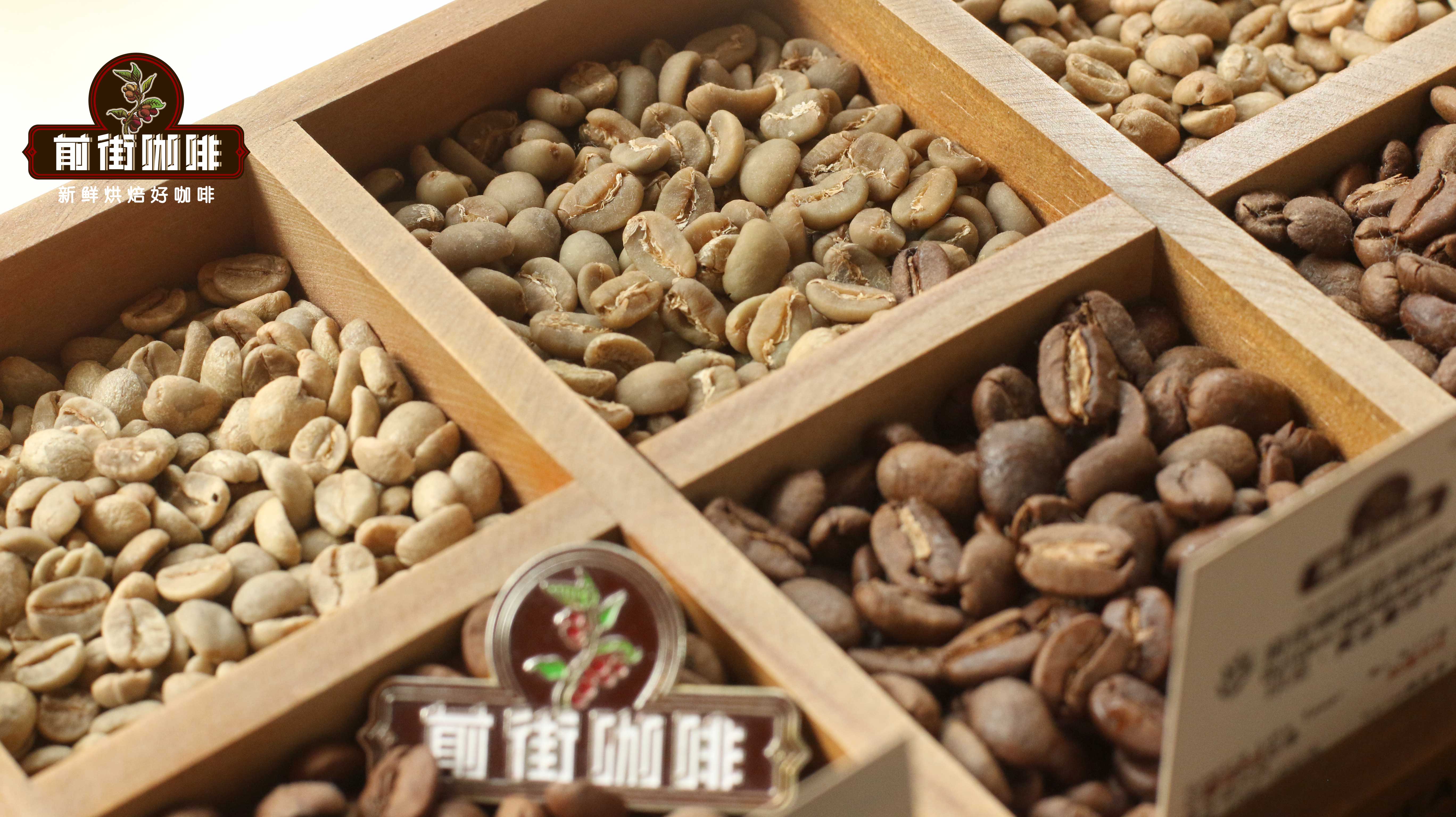
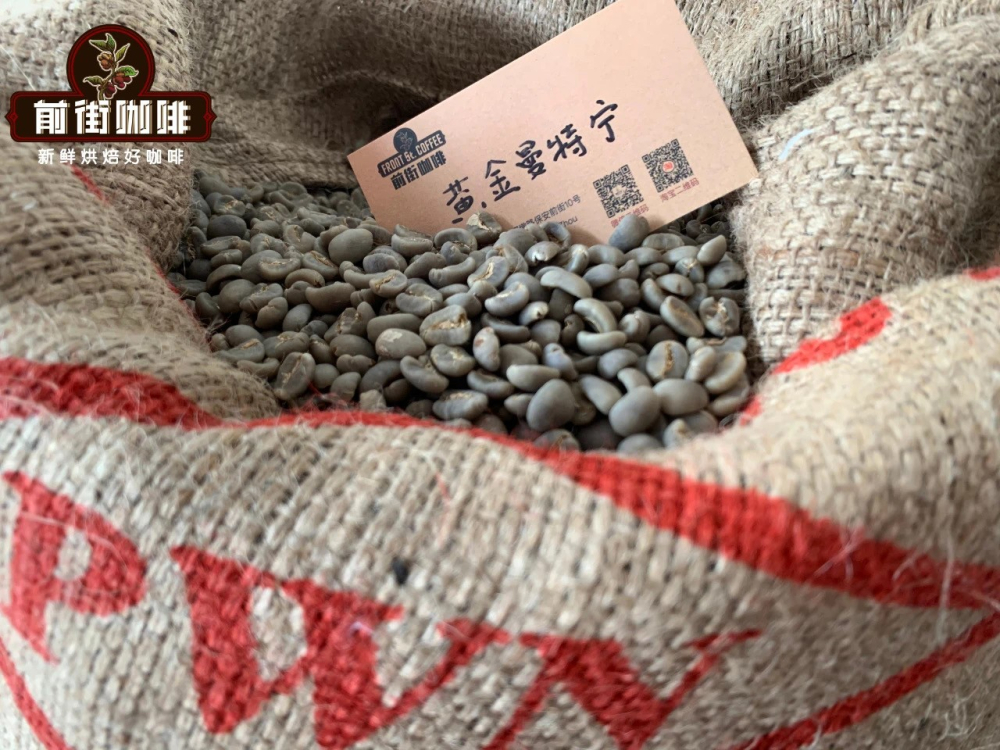
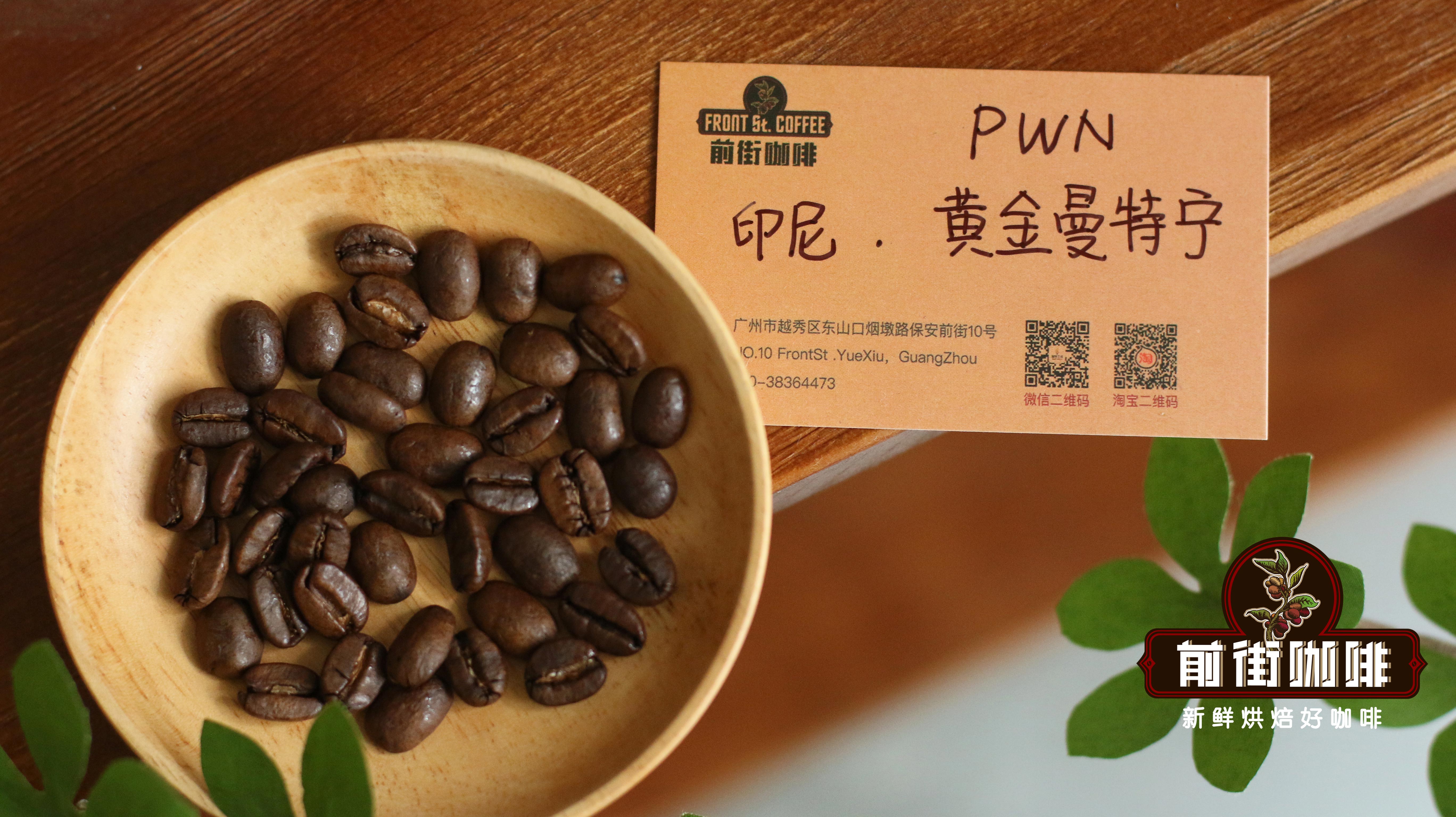
PWN Company's full name is Pwani Coffee Company. In Indonesia, it is a very famous coffee purchasing company, mainly purchasing Mandheling coffee. It has acquired almost all of Indonesia's best-producing regions, so most beans from PWN are unique specialty coffees. Golden Mandheling is a product of this company. After purchasing the green beans, they undergo multiple rounds of manual sorting to select plump, flawless beans. Only these beans, having gone through layers of selection like a beauty pageant, can be classified as Golden Mandheling. The Golden Mandheling offered by Front Street comes from PWN Company, and Front Street believes that the quality of Sumatra Golden Mandheling absolutely deserves to be called top-grade Indonesian Mandheling.
Front Street Coffee: PWN Golden Mandheling Coffee Beans
Region: Gayo Mountain, Aceh, Sumatra Altitude: 1100-1600 meters Variety: Ateng Grade: G1, 3 times hand-sorted Processing Method: Wet-hulled
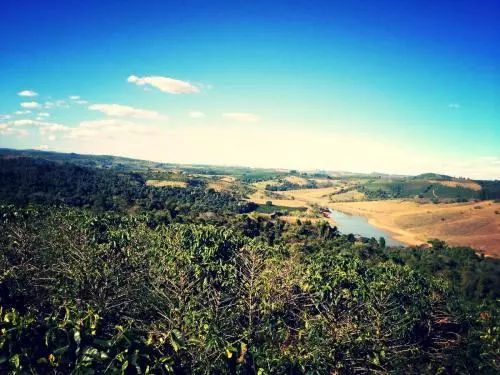
In Front Street's daily bean series, there is a Mandheling from the Lintong region. Lintong Mandheling is produced in the Lintong highlands of north-central Sumatra, near Lake Toba. Lintong Mandheling is the regular version of Sumatra Mandheling. Lintong Mandheling also uses the conventional wet-hulling method, which creates its characteristics of low acidity and high body. However, a situation that arises with the wet-hulled method is that, because the semi-hard, semi-soft moist green beans are easily crushed when the mucilage and parchment layer are removed, the beans crack open like a goat's hoof, commonly known as goat's hoof beans. This is not a defect bean but can be considered a very prominent characteristic of Mandheling. Front Street launched the daily bean series hoping that every coffee lover can enjoy the main flavors of the region at the most affordable price.
Front Street Coffee: Lintong Mandheling Coffee Beans
Region: Lintong, Sumatra Altitude: 1100-1600 meters Variety: Typica, Caturra Processing Method: Wet-hulled
Earlier, Front Street mentioned a customer who said that Sumatra Mandheling, upon entering the mouth, is like a tiger creeping forward. Among the Mandheling coffees offered by Front Street, there is one named after the tiger. Tiger Mandheling is an AA-grade Mandheling selected three times from ordinary Mandheling trees using 19-mesh screens (referring to beans that have been strictly filtered through screens with 19 mesh holes, ultimately selected to ensure that each bean is almost identical in size and diameter). Therefore, some use "Sumatran tiger" to describe the nobility and rarity of these 19-mesh selected beans.
In cupping, its mouthfeel shows high viscosity and very high fruitiness and sweetness, with a long-lasting sweet aftertaste—truly an exceptional bean, deeply loved by coffee connoisseurs. Some use "Sumatran tiger" to describe the rarity and preciousness of this Mandheling, hence it is called "Sumatran Tiger Mandheling," and Chinese people also call it "Tiger Mandheling" or "Tiger Mandheling." Of course, there is another explanation: Sumatra has a "Tiger Estate" that specializes in producing Sumatra Mandheling, and the batches specially selected by them are named "Tiger Mandheling," also known as "Tiger Mandheling."
Front Street Coffee: Tiger Mandheling Coffee Beans
Region: Sumatra Altitude: 1500 meters Variety: Caturra, Typica, Sidikalong Processing Method: Wet-hulled
If you feel that the Mandheling coffees mentioned above are still not rich enough, Front Street's Aged Mandheling will surely satisfy lovers of full-bodied coffee. Indonesia was once a Dutch colony. During the colonial period, Indonesia had to continuously ship coffee beans to Europe. To ensure a steady supply, coffee beans were stored appropriately. However, due to long transportation distances and other external factors, the shipping time became excessively long, and the beans were eroded by sea breezes. By the time the coffee beans reached Europe, another flavor had already formed—this is the origin of the aged flavor. Fortunately, at that time, the European colonists were amazed by this taste and quickly accepted and promoted this processing method.
Nowadays, the aging process for Aged Mandheling has become relatively mature. The coffee beans first undergo the wet-hulling method (wet-hulling is a process in which, during regular washed processing, the beans are sun-dried with parchment for 2-3 days to a moisture content of 20-24%, and finally the parchment is removed to dry the green beans to a moisture content of 12-13%), and then are sealed and stored in warehouses. The warehouse environment must be cool and well-ventilated, and the beans must be regularly turned to prevent mold and spoilage. They are stored for 2-3 years, during which the acidity of the coffee beans slowly diminishes and converts to sugar, and the color becomes deeper, mostly yellowish-brown or dark brown, making them very recognizable.
Front Street Coffee: Aged Mandheling Coffee Beans Region: Sumatra Altitude: 1500 meters Variety: Caturra, Typica Processing Method: Wet-hulled
The above four Mandheling coffees use the wet-hulled processing method. Because the local weather is often rainy, with continuous typhoons, it cannot achieve the good weather required for sun-drying, and the local economy is not good, so it also cannot afford the more expensive washed method. For various reasons, the wet-hulling method with strong local characteristics was developed (wet-hulling is a process in which, during regular washed processing, the beans are sun-dried with parchment for 2-3 days to a moisture content of 20-24%, then the parchment is removed). The ultra-fast speed of wet-hulling also results in a higher defect rate for Mandheling, but Golden Mandheling effectively avoids this shortcoming. The specification of Golden Mandheling is 19 mesh or above, with fewer than 3 defect beans (in a 300g green bean sample), belonging to the highest grade G1. Its color is darker green, and its shape is neat flat beans.
If you want to drink Mandheling but don't want it so full-bodied, is there an option? Yes!
Front Street recently launched a natural-process Mandheling. This bean is completely different from the impression of Mandheling flavor. Traditional Mandheling has more herbal, woody agarwood notes, and low acidity, while this natural Mandheling retains the herbal aroma while adding a soft fruit acidity. Wahana Estate was established in 2005, located near LeaMungkur village in the Sidikalang district of North Sumatra, Indonesia. Sidikalang has been one of Indonesia's famous coffee-producing regions since ancient times. The area where Wahana Estate is located has an altitude of 1200-1500 meters, annual rainfall of 2000-3000 mm, and also has a relatively cool climate with a diurnal temperature difference of over 10°C. Based on these conditions, the red cherries produced by Wahana have a sugar content of over 13%, so the coffee beans produced here are relatively sweeter.
Front Street Coffee: Natural Mandheling Coffee Beans Region: Lake Toba, Sumatra Estate: Wahana Estate Altitude: 1000-1700 meters Variety: Bourbon, Typica Processing Method: Natural
How does Front Street brew the five Mandheling coffees? When brewing Mandheling coffee beans, Front Street tries to keep the brewing parameters as consistent as possible. Since the natural Mandheling uses a medium-light roast, while the other four Mandheling coffees use a medium-dark roast, the brewing parameters used for beans with different roasts will differ.
Medium-light roast coffee brewing parameters: V60 dripper, 1:15 coffee-to-water ratio, 15g dose, 90 ℃ water temperature, grind size (80% passing through a No. 20 standard sieve)
Medium-dark roast coffee brewing parameters: Kono dripper, 1:15 coffee-to-water ratio, 15g dose, 88℃ water temperature, grind size (70-75% passing through a No. 20 standard sieve)
Front Street uses staged extraction: bloom with 30g of water for 30 seconds, then pour in a small stream in circles until 125g, at which point a stage break is made. When the water level drops and is about to expose the coffee bed, continue pouring until 225g and stop. When the water level drops and is about to expose the coffee bed again, remove the dripper. (Timing starts at the beginning of the bloom.) The V60 dripper extraction time is 2'00", and the Kono dripper extraction time is slightly longer at 2'10".
Golden Mandheling: Complex layers, full-bodied and clean, high balance, rich nut and caramel aroma, with chocolate notes, and a long-lasting finish.
Lintong Mandheling: Herbal and medicinal notes on entry, dark chocolate, caramel, and a sweet aftertaste. Tiger Mandheling: Pine and spice aromas, relatively balanced mouthfeel, with obvious cream, dark chocolate, and nut flavors. Aged Mandheling: Aromas of wood, malt, and caramel rush forth. On the palate, it has less of the wildness of traditional Mandheling and more richness and finesse, with a sense of maturity and steadiness. Low acidity, with flavors of ripe pu-erh, caramel, herbs, and chocolate on entry, and a full sweetness. Natural Mandheling: Tropical fruit, fermented notes, moderate acidity, smooth mouthfeel, and pronounced sweetness.
The above content is compiled by CoffeeHunters, a coffee news website.


