







Is Yunnan coffee actually bitter?
Yunnan coffee is not a prominently bitter coffee. Grown between 1,000 and 2,000 meters inside the 25°N golden belt, with temperatures around 16 to 21°C, it develops a rich aroma, full body without harshness, and a hint of fruity acidity. New drinkers may still read some bitterness, partly because Yunnan beans belong to the Asian bean system.
Variety shapes the cup as much as terroir. Yunnan's main arabica variety plantings are Catimor and Typica, and Asian beans typically carry pine, herb, and nut notes. Yunnan adds local markers such as brown sugar, plum acidity, and a light tea-like sensation. Hand brewing works well once grind, ratio, and a three-stage pour are matched to the bean's origin and processing.
Yunnan, as the province with the largest coffee planting area in China, nurtures a uniquely distinctive small-bean coffee thanks to its golden growing belt at 25°N, altitudes of 1,000–2,000 meters, abundant sunshine, and plentiful rainfall. Many coffee enthusiasts wonder: Does Yunnan coffee taste bitter? Would it taste better extracted by pour-over? From the perspective of Front Street Coffee, this article systematically sorts out the flavor and mouthfeel characteristics of Yunnan coffee, its main varieties (Catimor and Typica), the distribution of its four major producing regions (Baoshan, Dehong, Pu'er, Lincang), and includes the complete pour-over parameters and three-stage pouring steps for Front Street Yunnan Catimor coffee, helping you gain a comprehensive understanding of the true character of Yunnan coffee and its key brewing points.
To get more specialty coffee knowledge, welcome to follow: Front Street Coffee (Frontsteet Coffee).
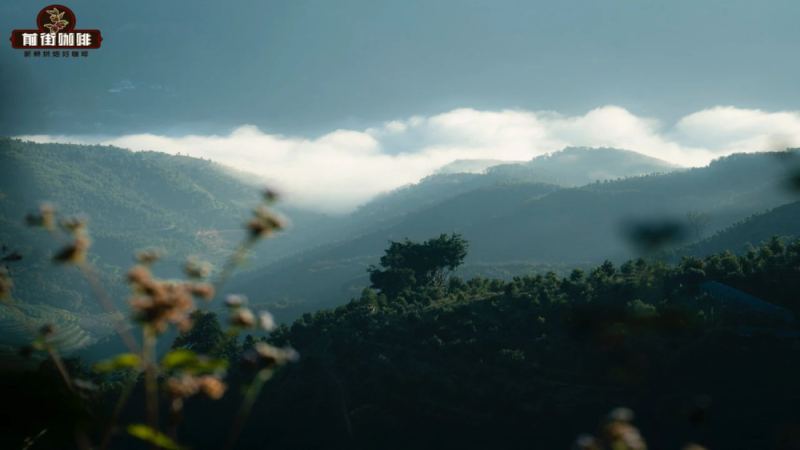
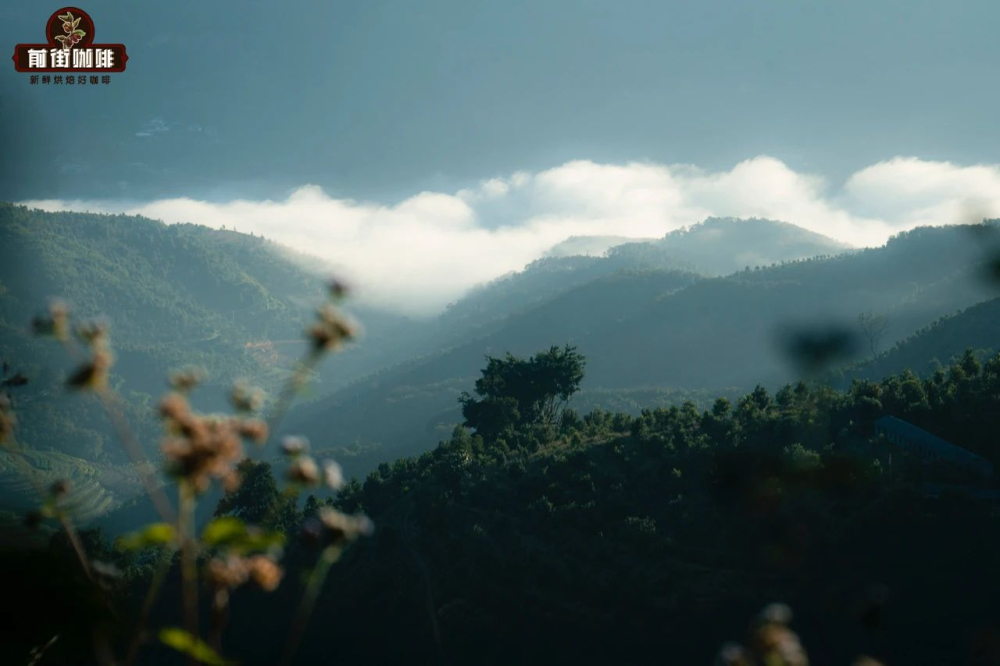
Yunnan is the province with the largest coffee planting scale in China, and local temperatures usually remain between 16 and 21 degrees Celsius. With the equator as the axis, the range from 25°N to 25°S forms the world-famous "World Coffee Golden Growing Belt," and Yunnan happens to fall within it. Most areas in the province lie at altitudes of 1,000–2,000 meters, with deep and fertile slope soils, abundant sunlight, plentiful rainfall, and significant temperature differences between day and night—all conditions extremely favorable for coffee tree growth. It is precisely because of this unique natural environment that the flavor characteristics of Front Street Yunnan small-bean coffee are created: rich and mellow aroma, full-bodied flavor without harshness, smooth and thick mouthfeel, and a hint of fruity acidity.
Yunnan coffee is not a type with prominent bitterness, though those not yet accustomed to it may still perceive bitterness. Yunnan beans belong to the Asian bean system, and Asian beans often carry notes of pine, herbs, and nuts, while Yunnan coffee additionally incorporates local distinctive flavor elements: brown sugar, plum acidity, and a slight tea-like sensation.
To brew an ideal cup of coffee, Front Street usually first grasps the basic information of the bean, such as: where it is from, what flavor characteristics it has, what variety it belongs to, and so on. Based on this information, Front Street decides the roasting method, and then conducts cupping and brewing tests.
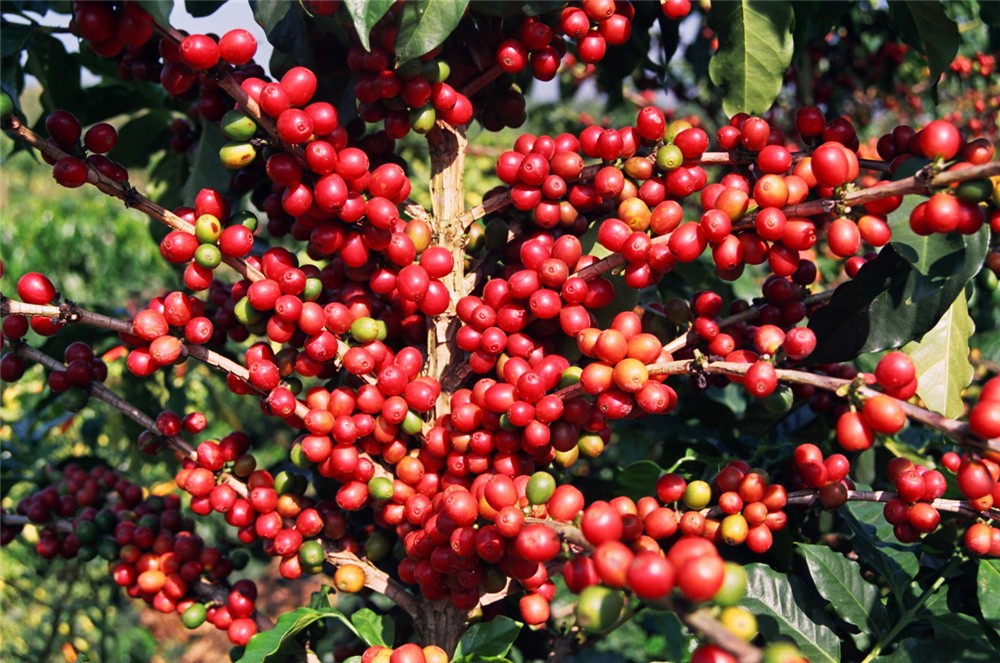
Currently, Yunnan coffee circulating on the market is mainly the Catimor variety. Yunnan coffee is called small-bean coffee, and the so-called "small-bean" is actually another name for Arabica coffee beans, used to distinguish them from the medium-bean Robusta grown in Hainan. Arabica has a clean flavor profile, fruity acidity, and a pleasant mouthfeel. Of the coffee currently grown in Yunnan, 99% is the Catimor variety. This variety is a hybrid of Arabica and Robusta, containing about one-quarter Robusta genes, but it is still classified as Arabica because it is tetraploid and can self-pollinate. Of course, after the introduction of Robusta genes, the plant itself is more robust and yields more than pure Arabica, yet its flavor performance is inferior to Arabica. The remaining 1% consists of Typica, Bourbon, and some experimental plots of Caturra, Geisha, and Yirgacheffe native varieties.
The coffee seedlings selected by the Front Street Coffee (FrontStreet Coffee) estate are of the Typica variety, whose copper-colored new leaves are an identifying feature. Typica has extremely low yields, only one-third that of Catimor, which is also why its price is higher. At the same time, Typica and Bourbon are both highly susceptible to coffee leaf rust, which is one reason farmers are unwilling to grow Arabica.
Catimor is a combination of the Arabica species and the Robusta species. Robusta has good resistance to leaf rust and rich oils, with high yields and easy cultivation. After hybridizing with the Arabica species Typica, Catimor obtained 25% Robusta genes, which both improved its resistance to leaf rust and retained rich oils, while also inheriting part of Typica's native flavor complexity. Therefore, most Yunnan estates began planting Catimor on a large scale, while the planting range of Typica gradually shrank.
Main planting areas of Yunnan coffee
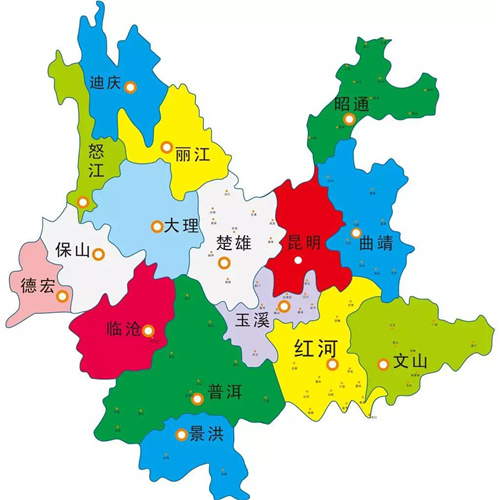
The coffee planting areas of Yunnan are mainly concentrated in the southwestern part of the province, covering four major producing areas: Baoshan, Dehong, Pu'er, and Lincang. The two Front Street Yunnan coffee beans on Front Street's daily bean list come from Baoshan and Lincang respectively.
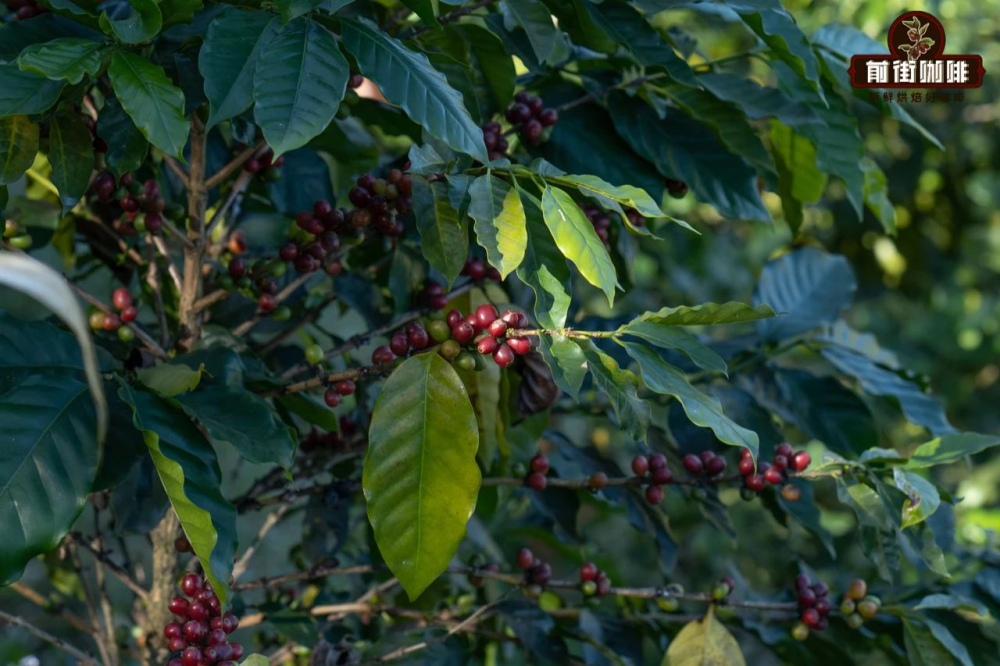
Pu'er: Pu'er coffee has a history of one hundred years, with cultivation beginning in the late 19th century and industrialization developing in 1988. Today the city's coffee planting area reaches 767,000 mu, making it the main coffee producing area and coffee trade distribution center with the largest planting area, highest output, and best quality on the mainland.
Lincang: Located in the southwestern part of Yunnan Province, with the Tropic of Cancer running through its southern part, it borders Pu'er to the east, Dali to the north, Baoshan to the west, and Myanmar to the southwest. It is named because it is near the Lancang River, and is a brilliant pearl on the southwestern frontier of the motherland. Lincang's year-round average temperature is between 16.8°C and 17.2°C, with distinct dry and wet seasons and abundant sunshine.
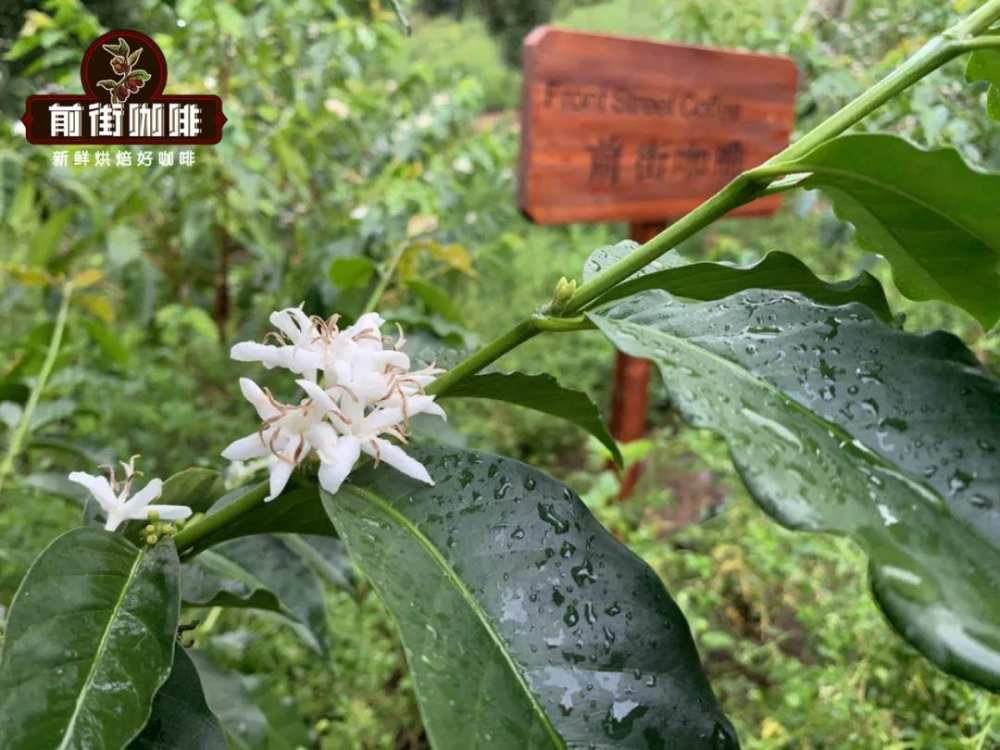
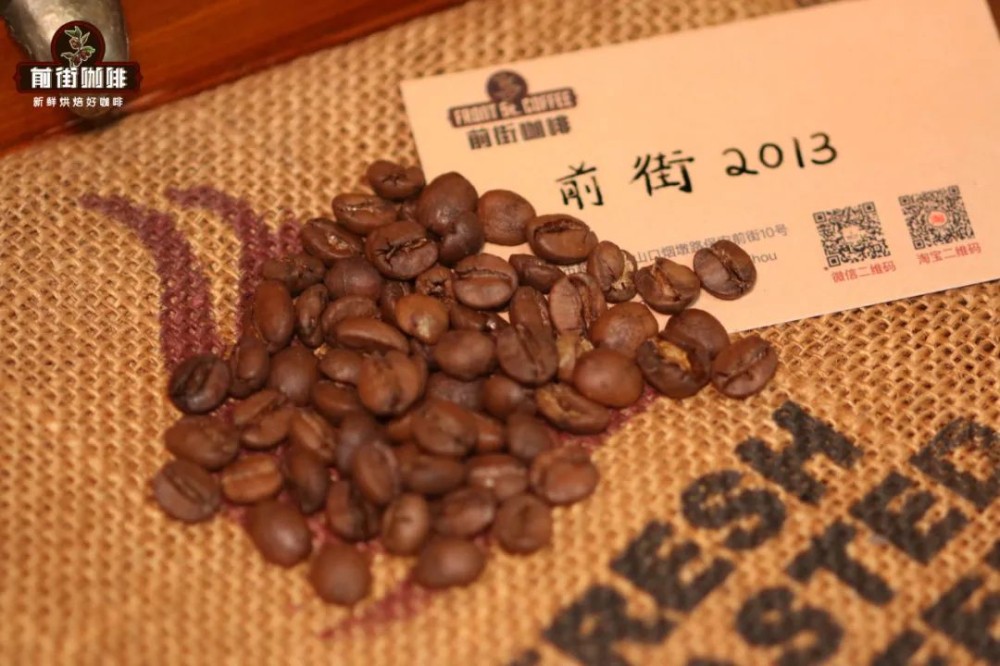
Front Street Coffee (FrontStreet Coffee) established its own estate in the Lincang producing area of Yunnan, planting the oldest Arabica variety—Typica. Then in 2021, Front Street Coffee (FrontStreet Coffee) produced its first self-produced coffee bean—Front Street 2013 Sun-Dried Typica Coffee.
Baoshan: Baoshan has an average temperature of 21.5°C, with a maximum of 40.4°C, and basically no frost throughout the year. It is widely recognized as the best small-bean coffee producing area. The small-bean coffee cultivated here is renowned at home and abroad for being strong but not bitter, aromatic but not harsh, with small and uniform beans, rich mellow aroma, and fruity notes. Yunnan Baoshan small-bean coffee has a long planting history, and Baoshan small-bean coffee can be called a national geographical indication product. Front Street Coffee (FrontStreet Coffee)'s Yunnan coffee planting producing area is also located here.
The Front Street Yunnan small-bean coffee on the Front Street Coffee (FrontStreet Coffee) bean list comes precisely from Baoshan.
Processing methods of Yunnan coffee beans
Yunnan has a rainy season all year round and an unstable climate, so most Yunnan coffee beans use the washed processing method, but there are also sun-dried coffee beans. Front Street's Catimor series includes Front Street Washed Yunnan Small-Bean Coffee and Front Street Sun-Dried Catimor Coffee, and in addition there is Front Street Sun-Dried Typica Coffee produced by the Front Street Coffee (FrontStreet Coffee) estate.
Front Street's parameters for brewing Front Street Yunnan Catimor Coffee:
Since Yunnan coffee's flavor is not known for acidity but mainly for nutty tonality, this Front Street Yunnan Catimor Coffee from Front Street uses a medium roast, which can preserve the herbal aroma and soft acidity of Yunnan beans. When brewing, use a finer grind and a higher water temperature, paired with a v60 dripper. After pouring the ground coffee powder into the dripper, you can smell the herbal and nutty aroma released by the beans.
Front Street Coffee (FrontStreet Coffee) believes that to brew a good pot of coffee, one mainly starts from four aspects: water temperature, grind size, coffee-to-water ratio, and brewing technique.
1. Water temperature
When doing pour-over, Front Street Coffee (FrontStreet Coffee) chooses different water temperatures according to different roast levels. During roasting, substances inside the coffee beans are lost as the roast deepens, so dark-roasted beans use lower water temperatures to avoid extracting too many off-flavors. For medium-light roasted beans, Front Street Coffee (FrontStreet Coffee) recommends a water temperature of 90–91°C; for medium-dark roast, a water temperature of 88°C is recommended.
2. Grind size
The grind size of coffee is likewise related to the roast level. Grind size refers to the size of the coffee particles, because grind size affects the contact time between coffee and water. The finer the coffee powder, the more substances water can extract in the same amount of time, but too fine a grind easily leads to over-extraction; conversely, the coarser the grind, the fewer substances water extracts in the same amount of time, but too coarse a grind easily leads to under-extraction. In addition, because everyone's grinder is different, the parameters will also vary. Here Front Street suggests buying a No. 20 cupping correction sieve, with a sieve aperture of 0.85 mm. Take 10 g of coffee beans, adjust to a roughly suitable grind size and grind into powder, pour it into the sieve and sift, then weigh the sifted coffee powder (be sure to sift until no more coffee powder can pass through).
A pass-through rate of 70%–75% (that is, 7–7.5 g sifted from 10 g of powder) is the most suitable grind size. The grind size standard for pour-over is: light roast 80%, medium-dark roast 75%. If it exceeds the suitable sifting rate, appropriately coarsen the grind; if it does not reach the suitable sifting rate, appropriately fine-tune the grind finer.
3. Coffee-to-water ratio
This is the extraction parameter for pour-over coffee water-to-coffee ratio that Front Street Coffee (FrontStreet Coffee) derived based on the SCAA Golden Cup extraction theory. Front Street produces a cup of coffee using 15 g of coffee powder. The choice of powder amount usually takes the designed specification size of the dripper as a reference. Front Street's dripper is suitable for 1–2 people to drink, and can be adjusted between 15–20 g of powder. Too much powder is relatively harder to control, and the extracted coffee flavor is prone to becoming muddled.
Regarding the coffee-to-water ratio, 1:15 is the most commonly used, and any ratio within the range of 1:14–1:16 is acceptable. Those who like a strong mouthfeel can choose 1:14, and those who like a clearer flavor can choose 1:16. Front Street believes that everyone's taste is different, so it takes the middle value of 1:15.
Therefore, Front Street Coffee (FrontStreet Coffee) suggests that when brewing coffee, you might as well use the less error-prone 1:15 coffee-to-water ratio.
4. Brewing technique
Finally, the pour-over technique is also crucial. Common ones include the three-stage method, one-cut flow, and drip method, among others. Here, Front Street Coffee (FrontStreet Coffee) suggests that beginners use the three-stage pouring method to brew, because this technique is suitable for light-roasted, medium-light roasted, and medium-dark roasted coffee beans. The staged extraction method of three-stage pouring can clearly define the front, middle, and back-end flavors of the coffee, and can relatively ensure the complete presentation of the coffee's flavor. Next, Front Street Coffee (FrontStreet Coffee) will teach everyone how to perform the three-stage pour-over for coffee.
Three-stage brewing technique: (Front Street's three-stage brewing method for brewing Front Street Yunnan Catimor Coffee)
Using a v60 dripper can present a richer coffee flavor. Water temperature 88°C, coffee-to-water ratio 1:15, powder amount 15 g, grind size (75% pass-through rate on the China No. 20 standard sieve).
First pour: bloom (to help degassing)
First, wet the v60 dripper to make the filter paper fit the dripper more closely, pour out the water in the sharing pitcher, and at the same time add 15 g of coffee powder, then bloom with 30 g of water for 30 seconds. Many coffee enthusiasts do not understand why pour-over coffee needs blooming. Actually, it is because during the roasting process from green beans to roasted beans, a series of chemical reactions and physical changes occur in the coffee beans, and after reaching a certain roast level, a large amount of gas (mostly carbon dioxide) accumulates inside the coffee beans.
Generally speaking, the fresher the beans and the closer to the roast date, the more bubbles appear during blooming. Dark-roasted beans also release more gas during blooming than light-roasted beans. Front Street Coffee (FrontStreet Coffee)'s coffee beans are all freshly roasted, so it generally suggests customers first rest the beans for three days to let the coffee beans release carbon dioxide first, so that during brewing unstable extraction and under-extraction can be avoided.
After the gas is released during blooming, the coffee particles can absorb water evenly, making later extraction more uniform. A good bloom can allow the coffee powder to degas quickly, fully, and evenly, and can also allow the coffee powder to contact water quickly, helping the coffee powder to be extracted evenly. These are precisely the purpose and significance of blooming in pour-over coffee.
Second pour
After blooming for 30 seconds, perform the second pour. Starting from the center, pour in a small stream in a circular motion until reaching 125 g, then stop. In order to concentrate the penetrating force of the water stream, the range of the circular movement should be small, about the size of a one-yuan coin, and then circle outward. From the start of the second pour, pay attention to the water amount, and try not to exceed the height of the coffee bed. That is to say, when the water stream circles to near the filter paper, you can stop pouring.
Third pour
When the coffee bed has dropped to the halfway point of the dripper, pour the second stage using the same technique until 225 g, and after all dripping is complete, remove the dripper.
From the start of the third pour, observe the extent to which the water level drops. Likewise start pouring from the center in a circular motion, and do not let the water amount exceed the height of the coffee bed. At this time you will also observe that the proportion of foam has already filled the surface. The third pour should increase the tumbling of the coffee particles, causing all the settled particles to turn over, thereby dissolving out soluble substances.
The tumbling particles will begin to settle because the water is stopped, and at this time it is necessary to rely on the flow rate caused by the dropping water level to make the coffee particles rub against each other. Therefore, once pouring stops, the coffee powder particles sink downward, causing clogging, so pay special attention to the rhythm of pouring. If the pouring is interrupted too many times, it is equivalent to letting the coffee powder particles stay soaked in water, which will cause the tail-end extraction of the coffee to produce astringency and off-flavors.
Start timing from the beginning of pouring; the extraction time is 2 minutes 00 seconds. Next, shake the whole cup of coffee evenly, then pour it into a cup and taste.
Front Street believes that the flavor tonality of Yunnan coffee is relatively balanced, that is, it possesses sweetness, acidity, and bitterness at the same time, so it chose a medium roast, which highlights the chocolate aroma while retaining part of the acidity.
[Front Street 2013 Sun-Dried Typica Coffee Flavor] Heavy mouthfeel, prominent sweet and sour sensation, with citrus and berry tonality, a hint of fermented wine aroma, caramel-like sweetness, creamy finish, and black tea tea-like sensation.
[Front Street Washed Yunnan Small-Bean Coffee Flavor] Herbal, nutty aroma, chocolate, caramel.
[Front Street Yunnan Sun-Dried Catimor Coffee Flavor] Performance: nuts, chocolate, spices, caramel, plum.
As long as you practice brewing more, you can adjust the brewing method according to the taste you like. As long as it is what you like, then it is all delicious coffee.
Front Street coffee brewing suggestions:
To brew a delicious cup of coffee, you still need to pay attention to the freshness of the coffee beans. Front Street has always believed that the freshness of coffee beans has a great impact on coffee flavor. Therefore, the coffee beans shipped by Front Street Coffee (FrontStreet Coffee) are all within 5 days of roasting. Front Street's roasting principle is "freshly roasted good coffee," so that every customer who places an order receives the coffee in the freshest state. The bean resting period of coffee is about 4–7 days, so when the customer receives it, it is exactly at its best flavor.
For friends who need ground coffee, Front Street warmly reminds you: after coffee beans are ground in advance, they no longer need to be rested, because the pressure generated by carbon dioxide inside the package during transportation can also make the coffee flavor mellow, so as soon as you receive the coffee powder you can immediately brew a cup and taste it. But the coffee powder needs to be brewed promptly, because after coffee powder contacts air it oxidizes relatively quickly, which means the coffee's flavor will dissipate relatively quickly and the coffee's flavor will not be as good. Therefore, Front Street suggests buying whole beans and grinding fresh before brewing, so that you can better taste the coffee's flavor.
The above content is compiled by CoffeeHunters, a coffee news website.


