







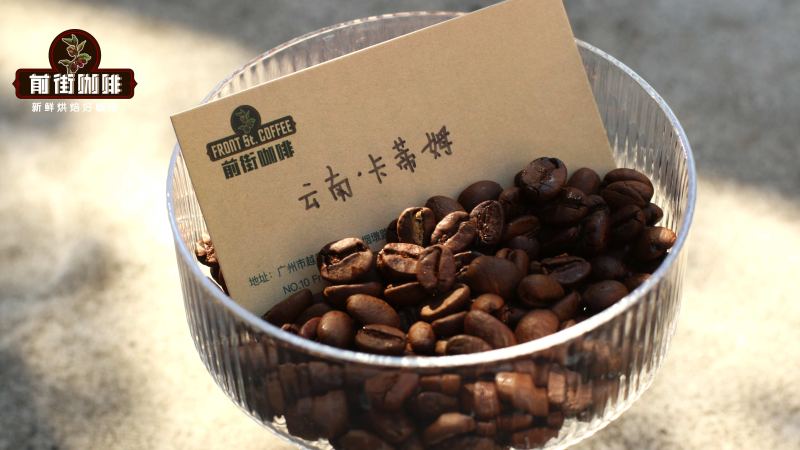
What kind of arabica coffee bean is Catimor?
Catimor is an arabica coffee bean variety bred in Portugal in 1959 by Dr. D'Oliviera, crossing Caturra with Timor. It carries about 25 percent Robusta lineage, so its aroma is relatively weak and its bitterness heavier, with a tendency toward astringency. In return, it offers strong disease resistance and high yield, which is why Colombia, Indonesia, and Yunnan adopted it.
The plant is medium-short and vigorous, with emerald green young leaves, a columnar shape, short internodes, and many branches. Under intermediate management, average dry bean yield exceeds 200 kilograms. Colombia introduced it around 1980 to replace old, weak, and diseased Caturra trees, and later released improved lines in 2008 to address its earthy flavor and poor aroma. Baoshan in Yunnan is known for its Catimor.
Catimor is a coffee variety bred from a cross between Caturra and Timor. After its birth in Portugal in 1959, it was successively introduced and cultivated in producing regions such as Colombia, Indonesia, and Yunnan, China. It carries 25% Robusta lineage, and in terms of flavor, its aroma is relatively weak and its bitterness is heavier, but it performs outstandingly in disease resistance and yield. This article will review the spread of Catimor across major producing regions, focus on the flavor characteristics of Baoshan Catimor in Yunnan, and include Front Street Coffee's pour-over brewing parameters and suggestions.
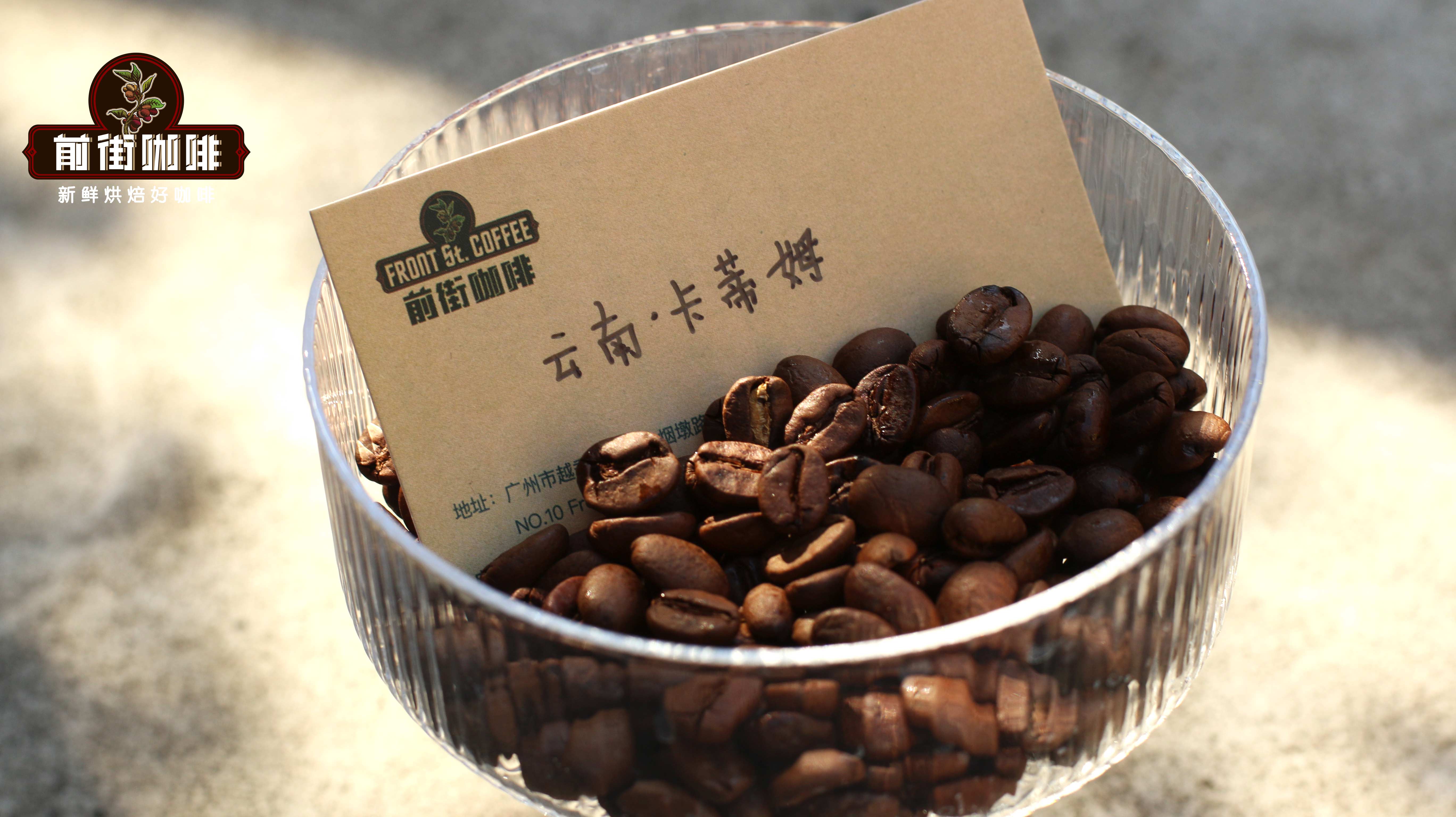
In 1959, Dr. D'Oliviera of Portugal successfully bred the Catimor variety. It was created by crossing two coffee varieties, Caturra and Timor. This variety would go on to influence many major producing regions, such as Colombia, Indonesia, and Yunnan, China. Front Street will now introduce what the Catimor variety is.
What variety is Catimor coffee?
Arabica coffee, belonging to the high-generation Catimor variety, the plant is medium-short, vigorous in growth, with stable secondary traits, the crown's terminal buds and young leaves are emerald green, the whole plant's leaf color is dark green, the plant shape is columnar, with short internodes, many branches, vigorous growth, wide adaptability, strong drought resistance, and a certain degree of cold resistance. Under intermediate management levels, the average dry bean yield is more than 200 kilograms. Catimor: Catimor does not have pure Arabica lineage. It is a hybrid of Timor (belonging to the Robusta species) and Caturra (a variant of Bourbon), so Catimor has 25% Robusta lineage, and its Robusta lineage also determines its flavor defects: the aroma is not rich enough, and the overall taste is heavily bitter, prone to astringency and relatively pungent musty flavors.
Catimor in Colombia
In reviewing materials, Front Street learned that around 1980, Colombia introduced the Catimor variety, which has strong disease resistance and high yield, to replace old, weak, diseased, and unproductive Caturra. After localized cultivation, Colombia decided to call this variety by the country's name, so the coffee variety "Colombia" actually refers to Catimor.
Of course, after Catimor arrived in Colombia, it still maintained its rather unappealing earthy and poor aroma characteristics. So in 2008, Colombia announced the development of a backcross variety between "Colombia" and Caturra, named Castillo.
Catimor in Indonesia
Indonesia is a producing region that is a melting pot of varieties, with intricate varieties and lines within it. In 1980, the Indonesian authorities introduced a batch of Catimor and planted it in central Aceh. However, due to the political instability in Aceh, for many years no outside bean traders entered this land to seek beans. After Catimor took root in Aceh for more than 30 years, it became a local variety. Local coffee farmers call these coffees Ateng. Later, Ateng was promoted and planted in other parts of Sumatra. Ateng is the name for Indonesian Catimor. Today, the variety in Front Street Golden Mandheling coffee beans is precisely Ateng.
Catimor in Yunnan, China
Yunnan initially cultivated ancient premium coffee varieties such as Typica and Bourbon. In the years 1988, 1991, and 1994, Nestlé introduced Catimor 7963, Catimor P1, P2, P3, P4, T5175, and T8667 from the Portuguese Coffee Rust Research Center and trial-planted them in Yunnan. To this day, 99% of coffee in Yunnan is the Catimor variety.
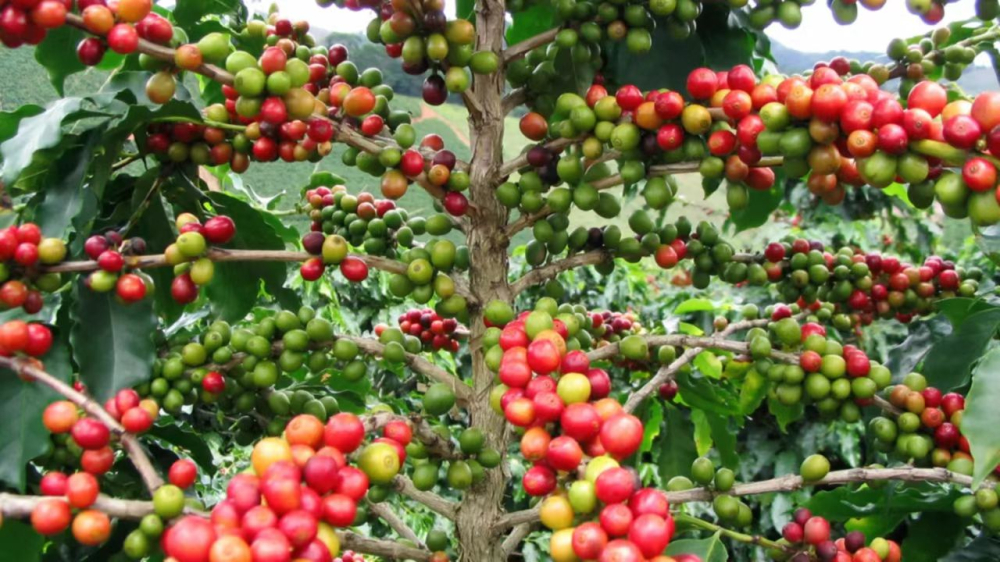
So when we talk about Yunnan arabica coffee today, it actually refers to the Catimor variety. Front Street believes that there is no fixed marker for distinguishing good from bad in the flavor expression of coffee beans. We cannot use the markers of Geisha's flavor to measure Mandheling, because these two coffees each have their own characteristics. Therefore, coffee beans from every coffee-producing region should reflect the terroir charm of that region.
When selecting coffee beans, Front Street Coffee (FrontStreet Coffee) includes whether they have regional characteristics as one of its reference options. Front Street's daily drinking bean series is also based on this reference standard, selecting some coffee beans that can represent the basic flavor of a producing country. To represent Yunnan, China, Front Street chose a Front Street Yunnan Baoshan washed Catimor. As Front Street said earlier, Yunnan currently almost entirely cultivates Catimor, so this variety is the most representative of the Yunnan producing region. The Baoshan producing region, as one of Yunnan's relatively long-established coffee-growing areas, has a quality that can be considered among the best in all of Yunnan. Washed processing, meanwhile, is what reflects a producing region's most basic regional flavor.
Front Street Coffee (FrontStreet Coffee) Yunnan arabica coffee beans
Producing region: Baoshan, Yunnan
Altitude: 1200m
Variety: Catimor
Processing method: Washed processing
Flavor: Herbal, nutty aroma, chocolate, caramel
Front Street pour-over suggestion
Front Street recommends using a V60 conical dripper. The V60 has a relatively large opening, and together with its unique spiral curved ribs, it makes it easier for air to escape, thereby improving extraction quality. The body may not be full enough, but the bright acidity and distinct aroma of Front Street Yunnan coffee brought out by its high concentration are one of its major features.
Dripper: V60
Water temperature: 90℃
Coffee-to-water ratio: 1:15
Grind size: Medium-fine grind, that is, fine granulated sugar coarseness (75% passing rate on China standard No. 20 sieve)
Brewing method: Staged extraction.
Use 30 grams of water for a 30-second bloom, then pour in a small stream in circles until 124 grams, at which point begin the staged pour. When the water level drops and is about to expose the coffee bed, continue pouring until 227 grams and stop pouring. When the water level drops and is about to expose the coffee bed, remove the dripper. (Start timing from the beginning of the bloom.) The extraction time is 2 minutes.
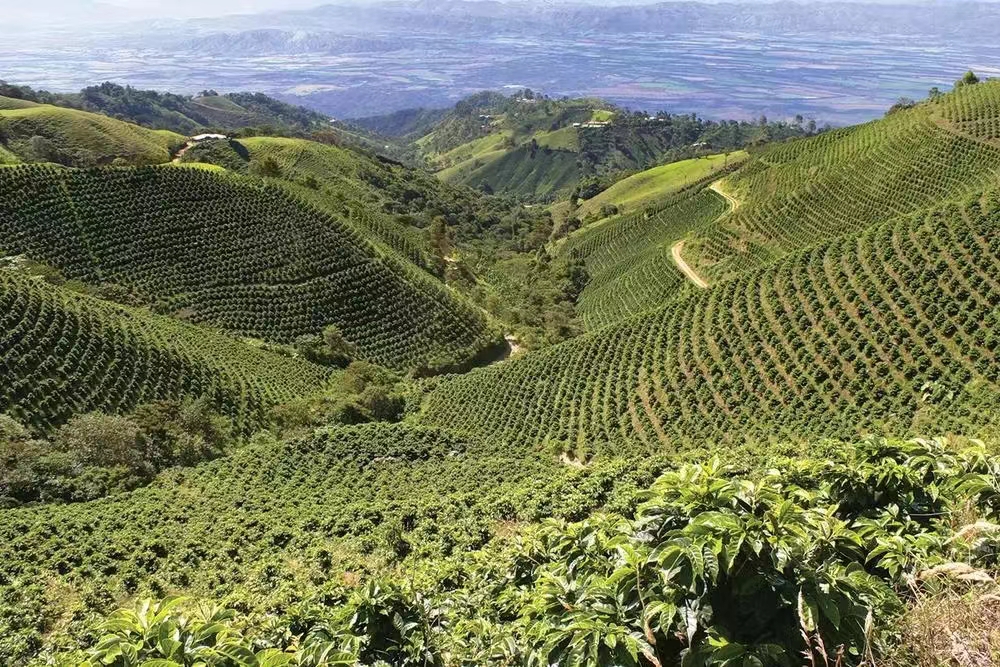
Front Street Yunnan arabica coffee bean flavor description: Plum, nuts, chocolate, caramel
The above content is compiled by CoffeeHunters, a coffee news website.


