







How are Yirgacheffe coffee bean grades and processing methods classified?
Ethiopia is coffee's birthplace, with more than a thousand native varieties, and Yirgacheffe was once part of Sidamo before becoming its own region. Grading there reflects processing and quality. The washed process gives clean, bright citrus acidity with white floral notes, while the natural process brings rich fruity aromas, fermented wine-like notes, and a heavier sweetness.
Most Ethiopian coffee packaging lists varieties simply as local heirloom, because the variety base is too large to label individually and the government protects genetic resources by marking them that way. Yirgacheffe sits at higher elevations than much of Sidamo, and that difference in terrain, along with the coffee beans process chosen at the washing station, explains why the two regions taste distinct.
Ethiopia, as the birthplace of coffee, is home to over a thousand native varieties, with Yirgacheffe and Sidamo being the two most representative regions. Yirgacheffe was once part of Sidamo but became an independent region due to its distinctive floral aroma. The two processing methods, washed and natural, shape completely different flavor profiles: washed brings clean and bright citrus acidity with white floral notes, while natural imparts rich fruity aromas, fermented wine-like notes, and a thick sweetness. This article will analyze the grading logic of Yirgacheffe, compare the process differences between the two processing methods, and explore which processing method better presents coffee's sweetness, while recommending two representative beans: Front Street Coffee Washed Yirgacheffe and Front Street Coffee Natural Red Cherry.
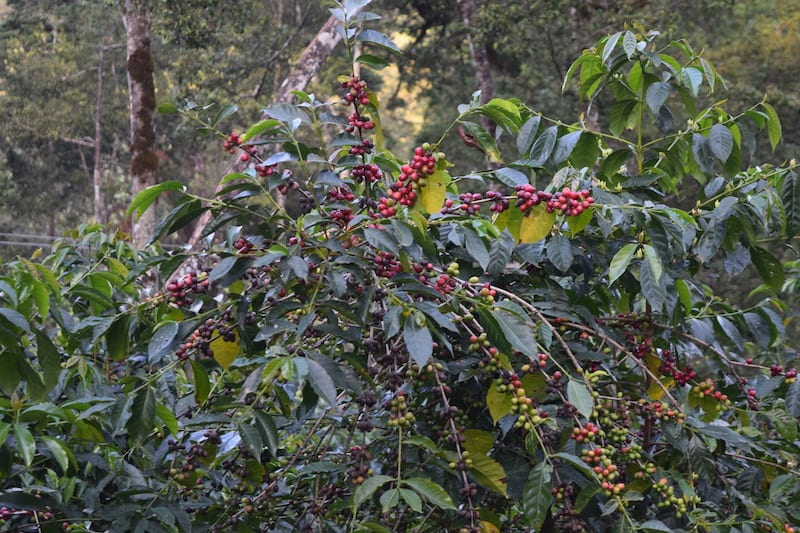
The charm of Ethiopian coffee is rooted in the irreplaceable natural endowments of its growing regions. As the world-recognized birthplace of coffee, this place has an extremely rich variety of coffee species, numbering in the thousands. However, the variety information consumers see on most Ethiopian coffee bean packaging often only states "local heirloom varieties." There are two reasons behind this: first, the variety base is too vast to label each one individually; second, the government, for the protection of genetic resources, uniformly marks them as "heirloom."
Among the many Ethiopian coffee beans, whether from Sidamo or Yirgacheffe, the variety column is mostly labeled as local heirloom varieties. Since the variety names are similar, do coffees from different Ethiopian regions also tend to have consistent flavors?
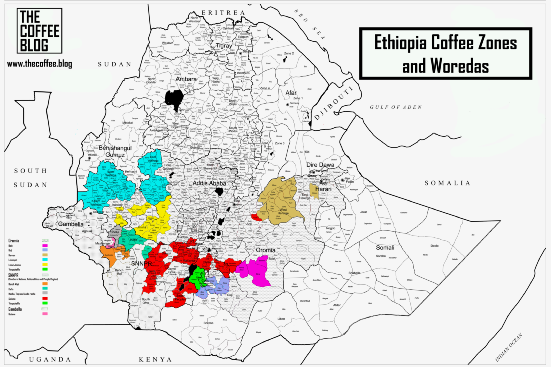
Ethiopia is one of the world's largest coffee-producing countries, with growing regions spread across areas of varying altitudes and soil conditions. Among them, Sidamo and Yirgacheffe are the two most core coffee-producing regions in the country, and most of the Ethiopian coffee beans on Front Street Coffee's bean list also come from these two places.
Although Sidamo and Yirgacheffe both belong to Ethiopia and the two regions are not far apart, the taste characteristics of Yirgacheffe coffee beans are noticeably different from those of Sidamo.
Front Street Coffee has mentioned in several articles about Yirgacheffe that the Yirgacheffe region originally belonged to Sidamo. Most people who have tasted Yirgacheffe are deeply impressed by its signature floral aroma. It was precisely this floral aroma that quickly made Yirgacheffe famous worldwide, so much so that coffee farmers in other areas within the Sidamo region also claimed to be growing Yirgacheffe. Eventually, Yirgacheffe was independently divided out to become a separate region.
"Washed Yirgacheffe, natural Sidamo" is a shared memory of many coffee connoisseurs when they first entered the world of specialty coffee. Interestingly, the natural processing method was actually the earliest post-harvest processing method used for Yirgacheffe green beans. By the 1970s, Ethiopian authorities, in order to improve coffee quality and shorten the drying cycle, introduced the washed processing method from Central and South America.
The washed processing method involves: first removing the skin and pulp of ripe coffee cherries, then soaking the coffee beans in a water tank, submerging them in clean water for fermentation lasting 18 to 36 hours. Subsequently, through agitation, the mucilage layer is thoroughly washed clean, and finally the beans are spread on raised beds to dry. Coffee beans processed this way have a clean taste and can clearly showcase the distinctive flavors of the region.
When trying Ethiopian coffee for the first time, baristas usually first recommend Front Street Coffee Washed Yirgacheffe. This bean is light-roasted, presenting citrus acidity, honey sweetness, and white floral notes, clearly expressing the typical characteristic of "a hundred flowers blooming in the mouth."
It is precisely because washed Yirgacheffe has pronounced floral aromas, bright lemon acidity, and a clean, transparent, and delicate taste that many coffee lovers have come to recognize the uniqueness of Yirgacheffe, while also ensuring consistent quality. Therefore, since the 1970s, most Yirgacheffe coffee beans have been primarily processed using the washed method.
It was not until 2006 that some locals in Ethiopia, nostalgic for the traditional natural flavor and unwilling to see natural processing completely replaced by washed, improved the natural processing method, allowing the charm of natural Yirgacheffe coffee to be presented to the world once again.
Unlike washed processing, the natural method retains the complete skin and pulp, allowing more sugars from the coffee cherries to participate in the processing. During the longer sun-drying period, more sugars and other aromatic compounds penetrate into the green coffee beans, giving naturally processed coffee an edge in aroma and body.
To taste natural Yirgacheffe, it is highly recommended to purchase Front Street Coffee Natural Red Cherry, known as the "fruit bomb." The drying process with skin and pulp intact gives the coffee a subtle fermented wine aroma, a much richer taste, with honey sweetness, cocoa notes, and a hint of spice. The body is thick and the aftertaste is long-lasting, as the rich texture and unique soft floral notes brush across the palate, leaving an endless aftertaste.
The above content is compiled by CoffeeHunters, a coffee news website.


