







How does Geisha Village grade its coffee lots?
Geisha Village in Ethiopia sorts its Gesha coffee into five tiers: Auction, Gold (Rarities), Red, Green, and Chaka. Auction lots make up only 3.7 percent of total Gesha production there and sell through global auction channels, while Gold accounts for roughly 10 percent. The tiers differ in grading, flavor profile, and processing rather than variety alone.
The flavor directions diverge clearly. This year's Gold lot showed Panama geisha-style notes of citrus, jasmine, honey, and tea. Red is balanced with prominent nuttiness, Green is full-bodied with berry acidity and vinous notes, and Chaka carries soft citrus and grapefruit acidity at a lower threshold. Ethiopia's Geisha Village style reads differently from Panama Gesha overall.
The Geisha Village estate in Ethiopia produces coffee with a style quite different from Panama Geisha, and has established a five-tier system: Auction, Gold, Red, Green, and Chaka. Front Street Coffee has long tracked and cupped these lots. This article will go through each tier's characteristics, from grading standards and flavor performance to sun-dried processing and three-pour hand-brew parameters. This year's Gold tier shows Panama-style notes of citrus, jasmine, honey, and tea; the Red tier is balanced with prominent nuttiness; the Green tier is full-bodied with berry acidity and vinous notes; and Chaka has a lower threshold with soft citrus and grapefruit acidity. Suitable for coffee lovers who want a systematic understanding of the Geisha Village product line.
For more specialty coffee content, follow our WeChat public account: Front Street Coffee (FrontStreet Coffee).
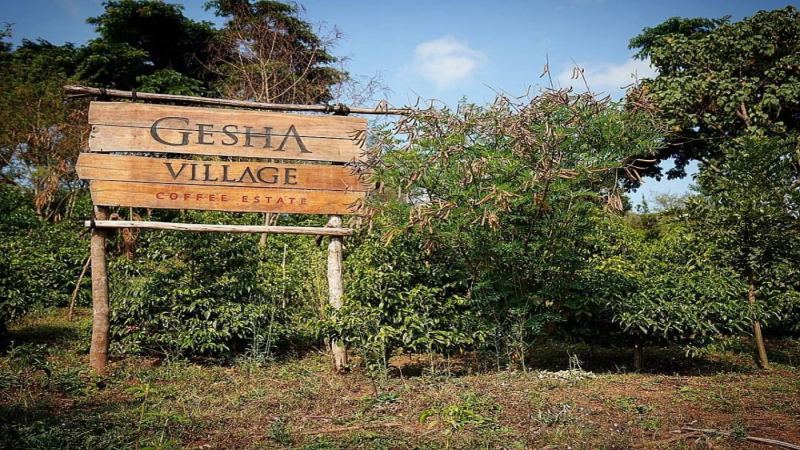
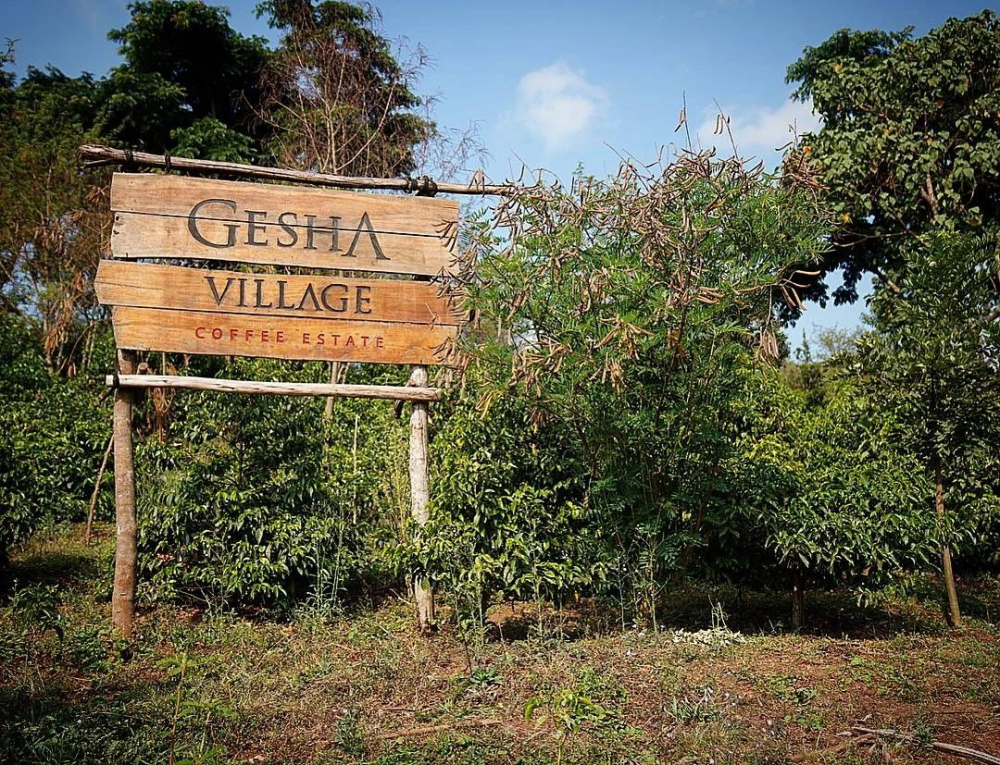
Ethiopia, as the birthplace of coffee, is home to an estate called Geisha Village, where a large number of Geisha varieties are planted. However, the Geisha produced here differs in flavor direction from Panama Geisha, and each has its own distinctiveness.
Like Panama Geisha, Ethiopia's Geisha Village has a fairly strict grading system for coffee beans, dividing products into Auction, Gold, Red, Green, and Chaka lots. Now, follow Front Street as we gradually understand the full picture of Geisha Village Geisha coffee.
Front Street will first sort out the grading logic of Geisha Village. The product line includes Auction lots, Gold lots, Red lots, Green lots, and Chaka lots. These "color labels" are actually Chinese nicknames, derived from the background colors of promotional materials.
Auction lots are beans obtained after repeated screening by Geisha Village, belonging to the estate's top-tier lots, accounting for only 3.7% of Geisha Village's total Geisha coffee production, so they can only be obtained through global auction channels.
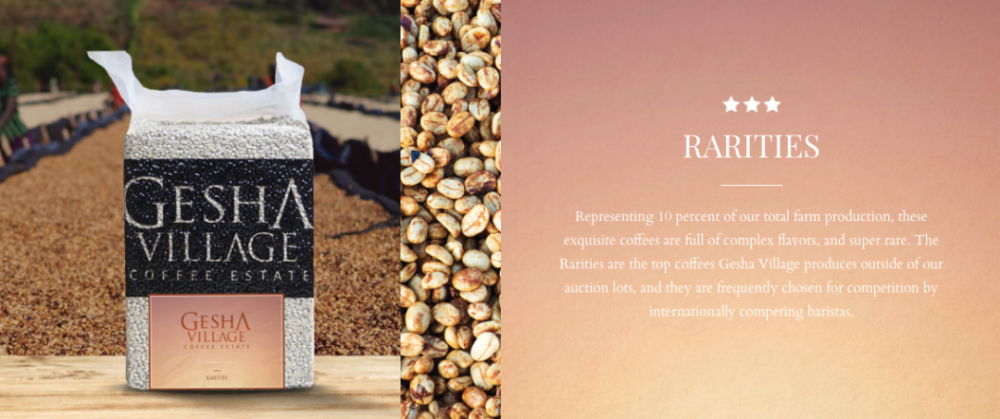
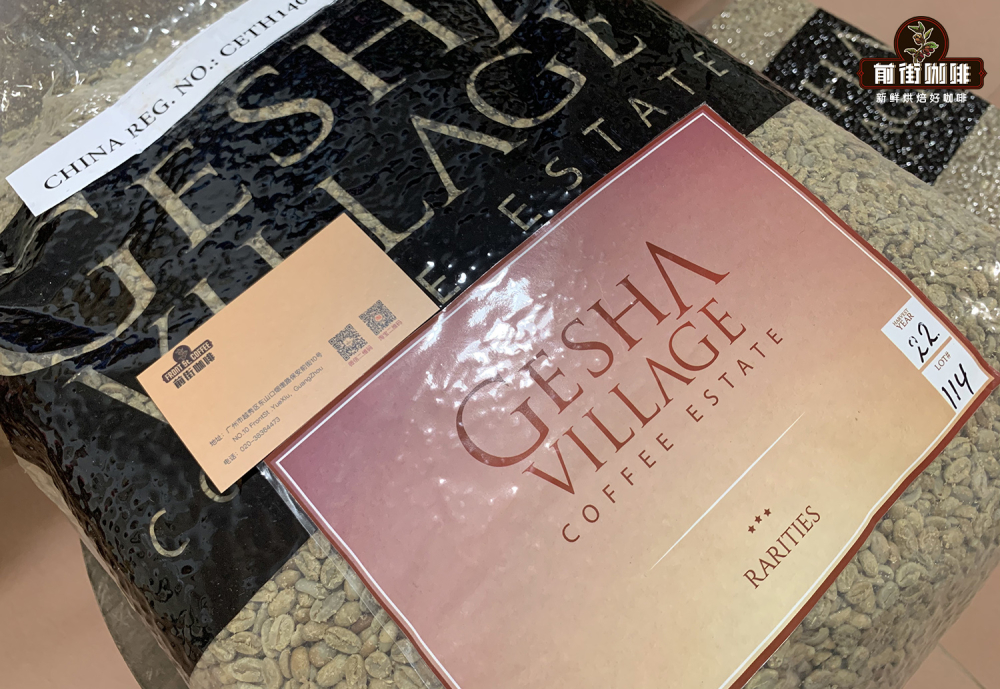
The official name of Gold is "Rarities," meaning "treasures," and it is the highest-quality series among Geisha Village's non-auction lots, accounting for only 10% of the entire estate's production. Front Street cups the Gold tier every year. In past cuppings, the Gold tier did not perform particularly prominently, with a flavor roughly comparable to Grade Yirgacheffe. But this year's Gold lot performed noticeably differently.
In the cupping, Front Street captured Panama Geisha-style flavor characteristics, expressed as citrus, jasmine floral notes, honey, and tea. Those familiar with Geisha will know that the Panama Geisha variety and the Geisha variety of Geisha Village are not the same variety. Such performance shows that Geisha Village has put in considerable effort.
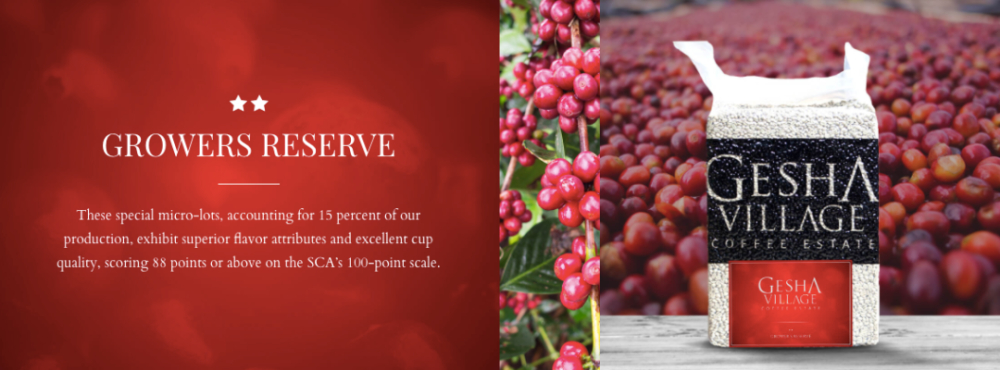
The official name of Red is "Growers Reserve," accounting for 15% of the estate's total production, with an SCA cupping score above 88. The Red lot has typical Geisha Village flavors; its flavor intensity and complexity are slightly weaker than Gold, making it a very cost-effective single-origin lot.
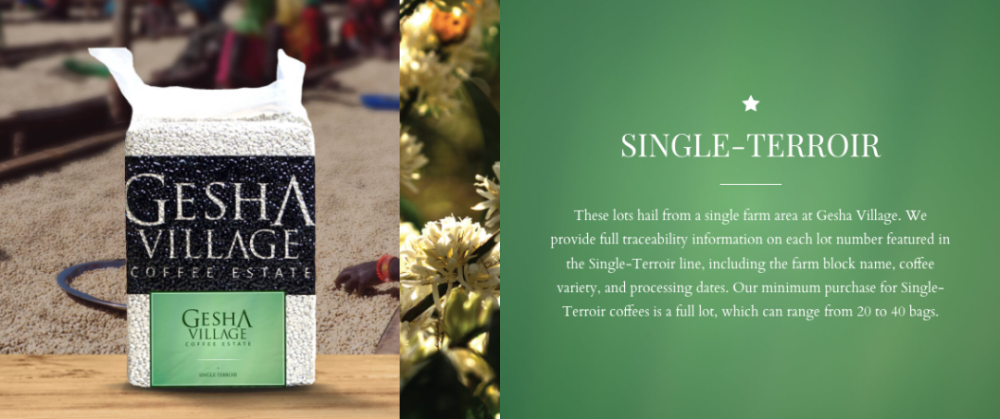
The official name of Green is "Single-Terroir," meaning "single terroir." This series provides detailed traceability information, traceable to specific plots, coffee varieties, and processing methods and times, making it truly single-origin coffee.
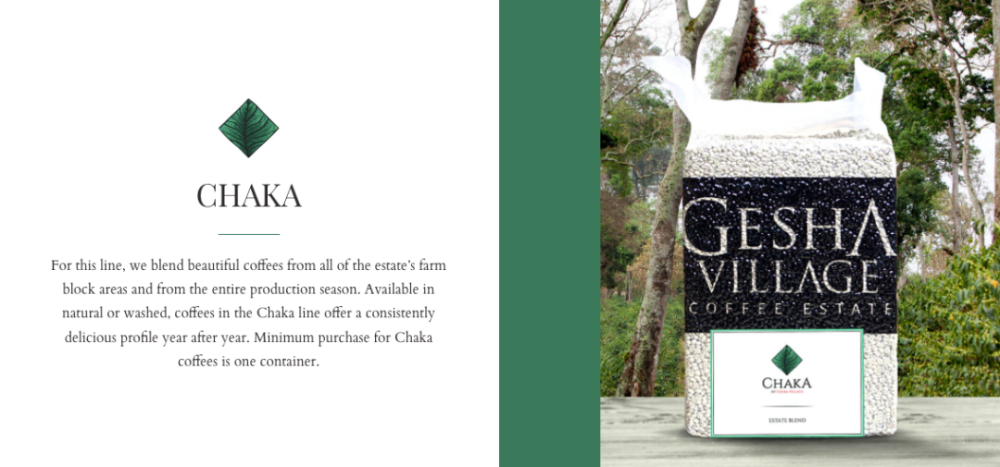
The Chaka lot focuses on a low purchase threshold, mixing all plots and coffee varieties of the estate together without emphasizing subdivision. It can be seen as representing the lower quality limit of the Geisha Village estate.
Front Street has separately cupped these Ethiopian coffees. Each time, 11.3 grams of coffee beans were weighed, ground, and the dry aroma was smelled first; then 94°C hot water was poured, the wet aroma was smelled within four minutes, and then the cupping spoon was used to begin tasting.
During the dry aroma stage of Geisha Village Gold Geisha, Front Street smelled intense fruit aromas; after pouring water, the wet aroma stage shifted to rich floral and berry aromas. When actually tasting, prominent citrus and creamy notes could be felt. The acidity was not as bright as Yirgacheffe, but rather softer, with outstanding sweetness. The sweetness of caramel and cream continued steadily, and the finish carried a fermented-like aftertaste.
When cupping the Gori Geisha of Geisha Village's Red lot, Front Street sensed notes of tropical fruit, bergamot, and lemon, accompanied by creamy sweetness and fermented notes; after the temperature dropped slightly, jasmine floral notes gradually emerged, and later flavors reminded one of toffee and almond.
Geisha Village Green Geisha in the cupping had obvious berry sweetness, a full and rich mouthfeel, presenting flavors of cherry, red berry, and honey, with fermented aromatic notes in the aftertaste.
After the cupping, Front Street also fully tasted these coffees by hand brew. Considering that the beans had a relatively high moisture content during roasting, in order to extend the dehydration time, Front Street ultimately chose a medium-light roast, because the Geisha Village Geisha coffees launched by Front Street all use sun-dried processing.
Sun-dried processing usually first removes floating impurities, then dries the coffee in thin layers on African raised beds covered with plastic sheeting; during the drying process on the drying beds, it is screened again to pick out insect-damaged beans and green beans, with a total drying time of about 18 to 30 days. Front Street believes that sun-dried coffee has obvious sweetness and soft acidity, and presents complex fruit notes in flavor. Therefore, the roast level of Geisha Village Geisha coffee is set to medium-light to highlight the Geisha-specific floral and fruit sweetness brought by sun-dried processing.
When brewing these Geisha Village Geisha coffees, Front Street uses the same hand-brew plan: a 1:15 coffee-to-water ratio, 90°C water temperature, and the corresponding grind size. Before formal brewing, Front Street generally rinses the filter paper first and preheats the dripper and server. The first pour uses 30 grams of water for blooming. After 30 seconds, begin the second pour, circling with a small stream until the water reaches 125 grams, then stop; when the water level drops and is about to expose the coffee bed, proceed to the third pour, continuing to circle until 225 grams, then stop, and when the water level again approaches the coffee bed, remove the dripper. Timing starts from the bloom, and the total extraction time is exactly 2 minutes. This technique is usually called three-pour hand brewing, and it is the most commonly used brewing method at Front Street Coffee (FrontStreet Coffee).
Next, you can taste these Geisha Village Geisha coffees.
After comparison, Front Street found that the Gold lot carries the intense jasmine floral aroma unique to Ethiopian beans, with a mouthfeel similar to citrus juice, along with fruitiness like peach and melon, and honey sweetness at the finish.
The Red lot is overall very balanced, and its biggest difference from Gold is that the nutty flavor is more prominent.
The Green lot has a slight acidity, similar to the acidity of Kenyan berries, with a full and rich mouthfeel, honey sweetness in the aftertaste, and a touch of fermented vinous aroma.
The Chaka lot has lighter fermented aromas, presenting overall citrus and grapefruit acidity, relatively soft. Of course, the above is Front Street's relatively objective flavor description; coffee flavor perception varies from person to person.
The above content is compiled by CoffeeHunters, a coffee news website.


