







Coffee Roast Levels: How Light, Medium and Dark Differ
Roasting is what turns green coffee into drinkable beans. High temperatures trigger the Maillard reaction and caramelization, and the roast level decides how much aroma, acidity, sweetness and bitterness end up in the cup. Light, medium and dark roasts each push those components in a different direction, which is why the same bean can taste bright or deep depending on the profile.
Roasters typically run a bean through at least three profiles, then cup and refine the most promising one to protect the original coffee composition. Brewing parameters follow the roast: lighter beans usually need higher water temperature and a finer grind, darker beans respond to lower temperature and coarser grounds, and the dripper choice shifts the balance further.
Roasting is the key step that determines the final flavor of coffee beans. Only after green beans undergo high-temperature roasting do the Maillard reaction and caramelization reaction occur, releasing rich aromas and sweet, sour, and bitter flavors. Currently, the common roast levels on the market are divided into light, medium, and dark, each presenting completely different flavor directions and brewing logic. This article starts from the roasting practice of Front Street Coffee, systematically sorts out the chemical reaction principles and flavor characteristics of the three roast levels, and combines three representative beans—Yirgacheffe Konga, Brazil Queen's Manor, and Indonesia Golden Mandheling—to give corresponding suggestions on dripper selection, water temperature, grind size, and extraction methods, helping coffee enthusiasts build a complete cognitive framework from roasting to brewing.
Front Street Coffee has been deeply engaged in the field of in-house roasting for many years and has a profound understanding of the weight of roasting in coffee quality. To use an old saying as an analogy, the green beans, equipment, and technique are all in place, but how this "east wind" of roasting blows directly determines the final performance of the coffee in the cup. For this reason, Front Street is especially rigorous about roasting every bean—sample beans must at least be run through three profiles for comparison, and then the most ideal one is selected through cupping and optimized, striving to fully restore the coffee's original flavor. Many enthusiasts must also be curious about roasting, so today we will take this opportunity to talk about related knowledge.
What is the significance of roasting coffee beans?
After coffee cherries go through various processing methods, it is as if they have shed their outer layers one by one and become the green coffee beans we are familiar with. But green beans must still undergo high-temperature roasting, the so-called roasting, to awaken their aroma and sweet, sour, and bitter flavors before finally reaching consumers.
The process by which various components inside green beans are activated is essentially a series of chemical reactions. It is precisely these reactions that allow aroma, acidity, sweetness, and bitterness to appear in sequence, and differences in the proportion of each component directly cause differences in the flavor of the finished coffee beans. There are mainly two types of chemical reactions that occur during roasting: the Maillard reaction and the caramelization reaction.
[Maillard reaction] The Maillard reaction plays a decisive role in the flavor and color of coffee beans. When the temperature is between 150 and 200 degrees Celsius, carbonyl groups from sugars react with amino groups from amino acids and proteins to generate flavor compounds. The hundreds of flavor substances produced by the Maillard reaction come together to form the unique flavor profile of coffee beans.
[Caramelization reaction] After the temperature rises to 170 to 200 degrees Celsius, the sugars in coffee beans begin to caramelize. Sugars dehydrate and degrade, and browning occurs at the same time, deepening the color of the beans and releasing aromatic and acidic compounds. It can be seen that the formation of coffee bean aroma and the change in color are inseparable from the Maillard reaction and the caramelization reaction. In the taste composition of a cup of coffee, green beans account for 60%, roasting for 30%, and extraction for 10%. The importance of roasting can be seen from this.
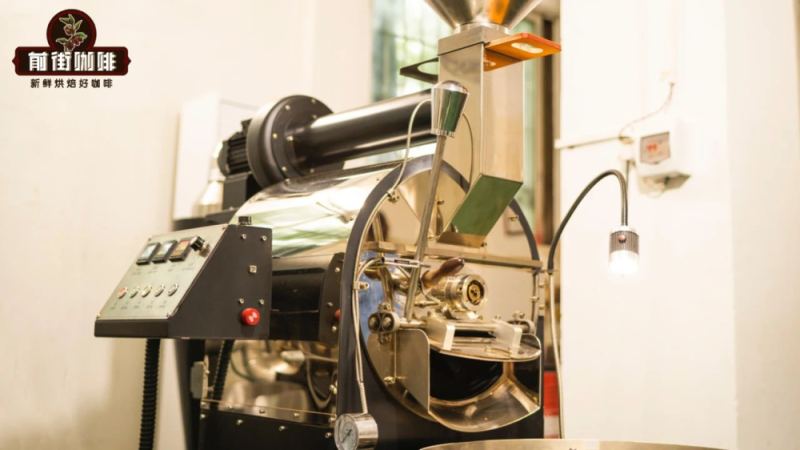
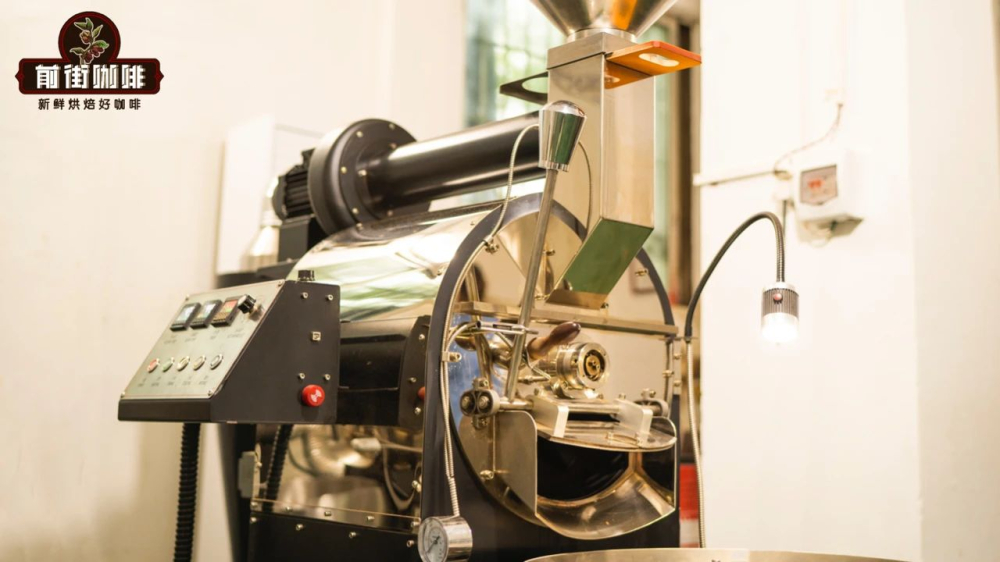
Front Street roasting scene
In the 1970s and 1980s, coffee culture was dominated by commercial beans, and commercial beans were more or less mixed with Robusta varieties, so it was inevitable that their flavor carried some defects. In order to suppress this sense of defect, dark roasting was generally used at the time. If light or medium roasting were used instead, the defective flavors would easily be exposed. Today's coffee culture has shifted toward specialty coffee, also commonly known as the third wave of coffee, placing more emphasis on cleanliness in taste and the clear presentation of acidity and sweetness. This shift in flavor orientation has also contributed to the popularity of light roasting. The Specialty Coffee Association of America, SCA, has established a set of roasting standards, dividing roasts into eight levels: extremely light roast, light roast, light-medium roast, medium roast, medium-dark roast, dark roast, heavy roast, and extremely dark roast.
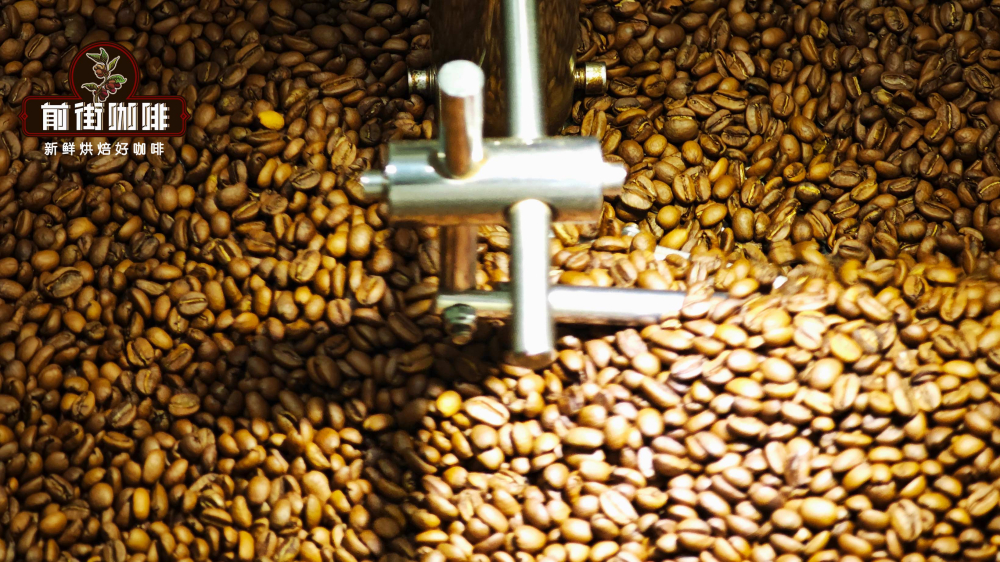
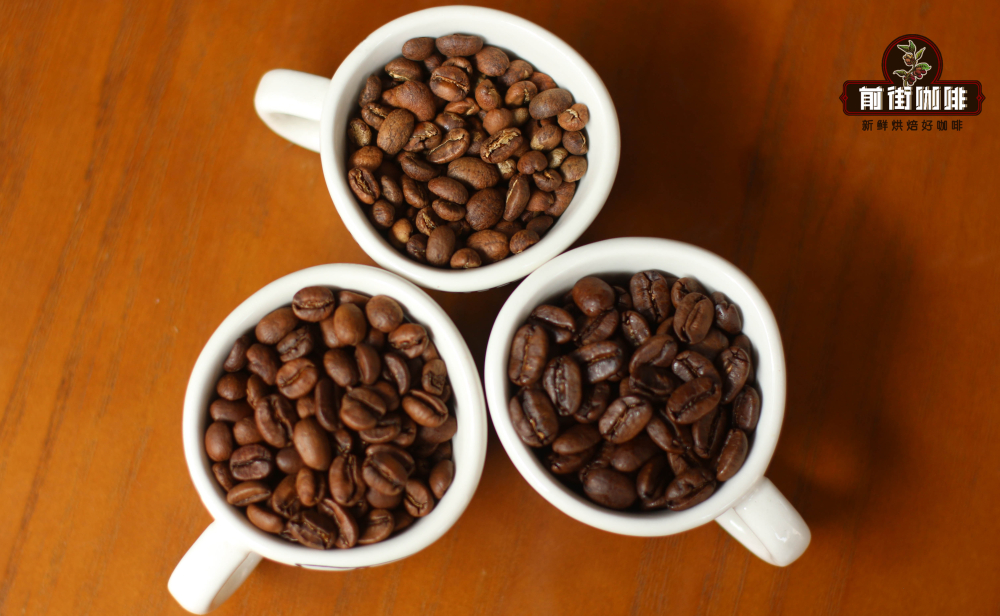
The three most common roast levels on the market are light roast, medium roast, and dark roast. Light roast: prominent fruity character, with sweet and sour floral and fruity acidity, and a relatively strong perception of acidity. Medium roast: mainly nutty character, with more obvious notes of caramel, cocoa, and malt. Dark roast: with a slight chocolate bitterness, relatively low acidity, rich caramel aroma, accompanied by spice, woody, and charred notes.
FrontStreet Coffee dark roast, medium roast, light roast comparison
Light roast. When mentioning light-roasted beans, the first thing that often comes to mind is Ethiopia's Yirgacheffe. Under light roasting, Yirgacheffe can clearly present its fruity character.
[Taking FrontStreet Coffee Yirgacheffe Konga coffee beans as an example]
Region: Yirgacheffe Konga Altitude: 1850-2050m Variety: local heirloom varieties Processing method: natural
Front Street brewing suggestions
Dripper: v60 Water temperature: 90℃ Dose: 15g Coffee-to-water ratio: 1:15 Grind size: medium-fine (BG-6S)
Use staged extraction: first bloom with 30 grams of water for 30 seconds, then pour in a small stream in circles until 125 grams and pause the stage. When the water level drops and is about to expose the coffee bed, continue pouring to 225 grams and stop. When the water level drops again and is about to expose the coffee bed, remove the dripper. Start timing from the beginning of the bloom; total extraction time is 2 minutes 00 seconds.
[Flavor description] Berries, cream, honey, citrus, juicy mouthfeel, bright acidity.
The purpose of medium-roasted coffee beans is to retain a certain sweet and sour sensation while also drawing out nutty flavors. During brewing, the grind size is slightly coarser than for light roast, and the water temperature is lowered accordingly. Generally speaking, the darker the roast, the looser the texture of the coffee beans (caused by the continuous release of substances during roasting), and the stronger their water absorption capacity. To avoid extracting burnt, bitter, and astringent off-flavors, it is necessary to coarsen the grind and lower the water temperature accordingly during brewing.
[Taking FrontStreet Coffee Brazil Queen's Manor coffee beans as an example]
Region: Mogiana Estate: Queen's Manor Altitude: 1400-1950m Variety: Yellow Bourbon Processing method: natural
*Reason for choosing the Kono dripper: The Kono dripper has few ribs and they are positioned lower, allowing the filter paper to fit closely against the dripper wall, thereby restricting airflow and extending the contact time between water and coffee grounds, allowing the coffee grounds to be fully extracted and enhancing body.
[FrontStreet Coffee brewing method]
Dripper: kono Water temperature: 88℃ Dose: 15g Coffee-to-water ratio: 1:15 Grind size: medium-coarse (BG-6W)
Staged extraction: bloom with 30 grams of water for 30 seconds, pour in a small stream in circles until 125 grams for the stage, and when the water level drops and is about to expose the coffee bed, continue pouring to 225 grams and stop pouring. When the water level drops and is about to expose the coffee bed, remove the dripper. Start timing from the beginning of the bloom; extraction time is 2 minutes 00 seconds.
[Flavor description] Obvious sweetness on the palate, accompanied by a faint lemon aroma, rich nutty flavor, and a pronounced dark chocolate note in the finish, with an overall rounded feel. Dark-roasted coffee beans are meant to highlight their rich chocolate flavor. During brewing, a slightly coarser grind than for light roast is also used, and the water temperature is appropriately lowered.
[Taking FrontStreet Coffee Indonesia Golden Mandheling coffee beans as an example]
Region: Sumatra Altitude: 1100-1600m Variety: Typica Processing method: wet-hulled
[FrontStreet Coffee brewing suggestions] Dripper: kono Water temperature: 88 degrees Celsius Dose: 15g Coffee-to-water ratio: 1:15 Grind size: medium-coarse (BG-6W)
Bloom with 30 grams of water for 30 seconds, pour until 125 grams for the stage, and when the water level drops and is about to expose the coffee bed, continue pouring to 225 grams and stop pouring. When the water level drops and is about to expose the coffee bed, remove the dripper. Start timing from the beginning of the bloom; extraction time is 2 minutes 00 seconds.
[Flavor description] Complex layers, full-bodied and clean, highly balanced, with strong woody fragrance, rich malt and caramel aroma, accompanied by fruity notes, and a lasting finish.
For more specialty coffee beans, please add the private WeChat of FrontStreet Coffee, WeChat ID: kaixinguoguo0925
The above content is compiled by CoffeeHunters, a coffee news website.


