







What are the characteristics of Colombian coffee?
Colombian coffee is typically grown at high altitude and washed, which gives it a cleaner cup with moderate body than Indonesia's Mandheling. Where Mandheling leans deep, low-key and heavy from wet-hulling, Colombian beans keep more structured acidity and a rounder, sweeter finish. Both are often dark-roasted, yet the two origins still read very differently in aroma, mouthfeel and aftertaste.
Indonesia's coffee story offers useful context: the Dutch brought coffee seeds to West Java in the late 17th century, and by 1726 the Dutch controlled roughly half to three-quarters of the global bean trade. Coffee leaf rust in 1877 wiped out much of Indonesia's Arabica, and Robusta was introduced afterward. Today Arabica makes up only about 6 to 10 percent of Indonesia's production.
Coffee lovers who prefer a rich, full-bodied taste and dislike acidity often look for that cup of "non-acidic coffee" at Front Street Coffee stores, and Indonesia's Mandheling often becomes the first choice. Its aroma is deep and low-key, and its mouthfeel is heavy. Compared with Colombian coffee, which is also often dark-roasted, its style is strikingly different. This article will focus on Mandheling's origin history, wet-hulling process, the strict standards of Golden Mandheling, and Front Street Coffee's brewing suggestions. At the same time, it will help readers clarify the differences between Mandheling and Colombian coffee in flavor and mouthfeel, and find the one that suits them better.
Nowadays, many young coffee fans eagerly pursue top Panama Geisha, but many people still prefer a rich and full-bodied taste experience. Customers often walk into Front Street Coffee stores hoping to find coffee with low acidity and a rich, mellow mouthfeel. At such times, Front Street Coffee usually first recommends Indonesian Mandheling coffee. Also dark-roasted, Mandheling nevertheless shows a unique deep aroma and thick texture. To understand this special quality, we must start with the land where it grows.
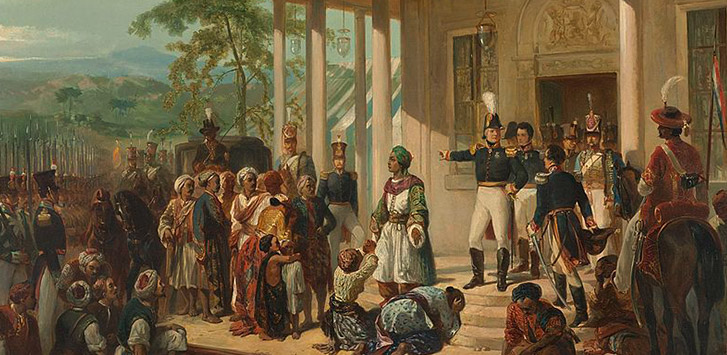
The origin of coffee can be traced back to Ethiopia. By the 18th century, Europe's demand for coffee was rising rapidly. In order to obtain substantial profits, the Dutch brought coffee seeds to West Java in their colony of Indonesia for cultivation in the late 17th century. By 1726, about 50% to 75% of the global coffee bean trade was controlled by the Dutch.
However, in 1877 coffee leaf rust swept through almost all coffee-growing regions in Indonesia. Arabica varieties could hardly resist this disease, and the losses were extremely severe. After that, Indonesia introduced the more disease-resistant Robusta variety for cultivation. To this day, Indonesia has become one of the important producers of Robusta, while Arabica coffee accounts for only 6% to 10% of the country's coffee production.
As a well-known coffee-producing region, Indonesia's Java coffee and Mandheling coffee are often mentioned. Java refers to coffee beans produced in the Java region, but "Mandheling" is not a place name.
It is said that during World War II, a Japanese officer drank a very full-bodied coffee in Indonesia and asked the coffee shop owner what kind of coffee it was. The owner mistakenly thought the other person was asking where he was from, so he answered "Mandailing." Because "Mandailing" and "Mandheling" are pronounced very similarly in Japanese, it was mistakenly spread as "Mandheling."
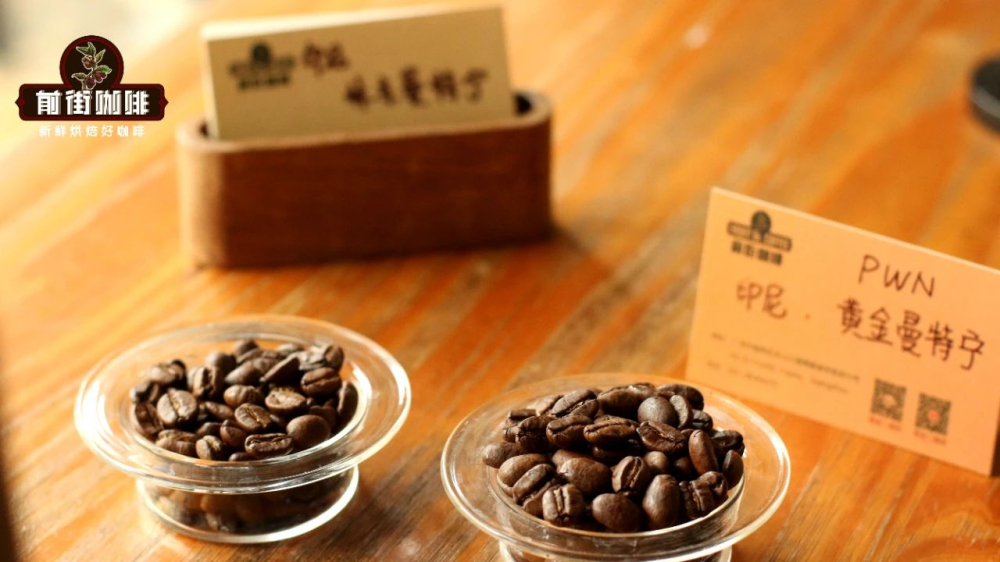
After returning to Japan, this officer asked someone to import 15 tons of Mandheling coffee beans from Indonesia. After that, Mandheling quickly became popular in Japan, and the name "Mandheling" became known to more and more people. Front Street Coffee's bean list includes two Mandheling coffees: one is PWN Golden Mandheling, and the other is the Mandheling coffee bean in the everyday beans series.
Many customers feel at a loss when facing Front Street's blackboard filled with nearly fifty kinds of coffee beans, not knowing which one suits them. Front Street Coffee's everyday beans series covers several major coffee-producing regions, most of them washed, allowing lovers who are new to specialty coffee to quickly find the regional style they like at a more affordable price.
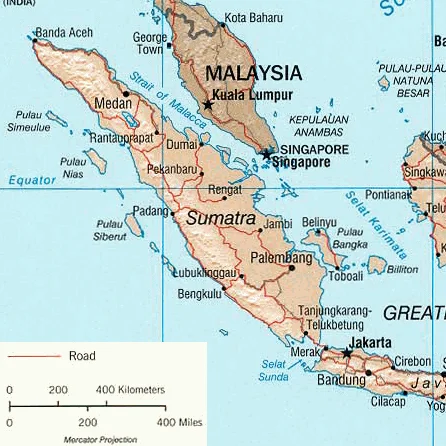
The Mandheling coffee beans in Front Street's everyday beans series come from the Lintong region. The traditional Mandheling producing area is near Lake Toba in Lintong, but today Aceh's Mandheling production has already surpassed that of Lake Toba.
The reason Mandheling coffee is full-bodied and uniquely flavored is inseparable from Sumatra's local specialty processing method—wet hulling. Sumatra is rainy all year round, with uncertain weather, making it difficult to meet the conditions required for sun-drying; in addition, local economic conditions are limited, making it impossible to invest enough funds for fully washed processing, so the highly local wet-hulling method was formed.
First, the selected coffee cherries are depulped, briefly washed, then placed in containers to ferment, and then spread out evenly to dry. When the parchment beans reach a semi-dry, semi-wet state, a huller is used to remove the mucilage layer, and then drying continues until dry.
The characteristic of wet hulling is that the mucilage layer is removed early, greatly shortening the drying time, so the coffee beans' fermentation time and acidity are also reduced, and the mouthfeel becomes heavier. Because the green coffee beans are exposed to the air early, the probability of mold and fungal infection also increases significantly. The heat generated during hulling also accelerates the aging of the coffee beans, thereby bringing a woody taste. A slight negligence in the production process may lead to insufficient flavor in the coffee beans, or undesirable flavors such as muddy, fishy notes.
Another coffee on Front Street Coffee's bean list that is also wet-hulled is PWN Golden Mandheling. Golden Mandheling is recognized as one of the high-quality Mandheling coffee beans, and its price is relatively high, but its production is not large.
In order to profit, some merchants buy ordinary Mandheling coffee beans, select green beans sized 18 mesh or above, and then undergo three rounds of manual sorting to make their appearance close to Front Street PWN Golden Mandheling green beans. Front Street Coffee has purchased many coffee beans on the market labeled "Golden Mandheling," and baristas can clearly identify Front Street PWN Golden Mandheling through blind testing. Front Street PWN Golden Mandheling has a clean mouthfeel, which other Mandheling coffees cannot match.
PWN implements extremely strict standards when producing Golden Mandheling. On the basis of the highest grade G1 (green bean size 18 mesh or above, and fewer than 3 defective beans in a 300-gram green bean sample), it must also undergo multiple rounds of manual hand-sorting and layer upon layer of screening. Golden Mandheling green beans are plump, uniform in size, consistent in color, clean in mouthfeel, and strongly sweet.
Traditional Mandheling is full-bodied and low in acidity. Front Street has learned that as people's demand for coffee flavors becomes increasingly diverse, various processing methods have appeared on the market, even light-roasted Mandheling coffee beans. However, in order to preserve the flavor and mouthfeel of traditional Mandheling, Front Street Coffee's roaster uses a medium-dark roast when roasting.
Front Street Coffee's brewing parameters for Mandheling coffee are as follows:
Dripper: KONO
Water temperature: 88°C
Dose: 15 grams
Coffee-to-water ratio: 1:15
Grind size: 70% passing through a Chinese standard No. 20 sieve
The coffee beans shipped by Front Street are freshly roasted within 5 days. By the time they arrive, they have passed the 4-to-7-day resting period and are at their best tasting period. However, the coffee beans still contain plenty of carbon dioxide gas, so Front Street recommends blooming during brewing to help carbon dioxide escape.
First pour in 30 grams of hot water and bloom for 30 seconds, then pour from the center in a fine stream and slowly circle to 125 grams. When the water level in the dripper drops to the point where the coffee bed is about to be exposed, continue pouring in circles until 225 grams.
[Golden Mandheling] Rich nutty and caramel aromas, with chocolate notes, a long finish, a full-bodied and clean mouthfeel, and rich layers.
[Lintong Mandheling] Herbal aromas on the palate, black chocolate notes, caramel sweetness, and melon aromas after the temperature drops slightly.
For more coffee bean information, please follow Coffee Workshop (WeChat public account cafe_style) For professional coffee knowledge exchange, please add WeChat ID kaixinguoguo0925
The above content is compiled by CoffeeHunters, a coffee news website.


