







How Do Jamaican Blue Mountain Coffee Grades Work?
Authentic Jamaican Blue Mountain coffee is defined less by the name on the bag than by the grade inside it. The Jamaica Coffee Industry Board sets the standards, and Blue Mountain No. 1 is the top tier, requiring beans of a specified size and a low defect count. Products labeled Blue Mountain that lack an official certificate are often blends or beans from outside the designated growing region.
Four well-known estates shape the supply: Clifton Farm, Wallenford, Mavis Bank, and CLYDESDALE. Clifton Farm also holds Rainforest Alliance certification, which is why some Rainforest Alliance coffee brands source from it. A washed Blue Mountain No. 1 typically shows a mild, balanced cup with soft acidity, so pour-over parameters and fresh roast dates matter more than packaging claims.
Jamaican Blue Mountain coffee is hailed as a gem among specialty coffees, but products labeled "Blue Mountain" on the market are a mixed bag—which ones are truly authentic? This article systematically sorts out Blue Mountain coffee's price references, historical origins, three major production regions, and six official marks, explains in detail the grading standards of the Jamaica Coffee Industry Board (CIB) and the requirements for the No.1 grade, and introduces the characteristics and output landscape of well-known estates such as Clifton Farm, Wallenford, Mavis Bank, and CLYDESDALE. It also includes the pour-over parameters and flavor description for Front Street Coffee's washed Blue Mountain No.1, helping coffee lovers identify authentic Blue Mountain and choose the right fresh, quality beans.
For more specialty coffee knowledge, please follow the WeChat official account: Front Street Coffee (FrontStreet Coffee)
Jamaican Blue Mountain coffee has long been regarded as a high-end representative in the specialty coffee circle—just hearing the name gives people a sense of exceptional class. In the past, drinking a cup of Blue Mountain might have counted as a luxurious indulgence, and even today, its price is still not exactly affordable. But among the large number of products labeled "Blue Mountain coffee" on the market, how many actually come from Jamaica's Blue Mountain production region? And what characteristics should authentic Blue Mountain coffee have? Below, Front Street will walk everyone through a systematic understanding of Blue Mountain coffee.
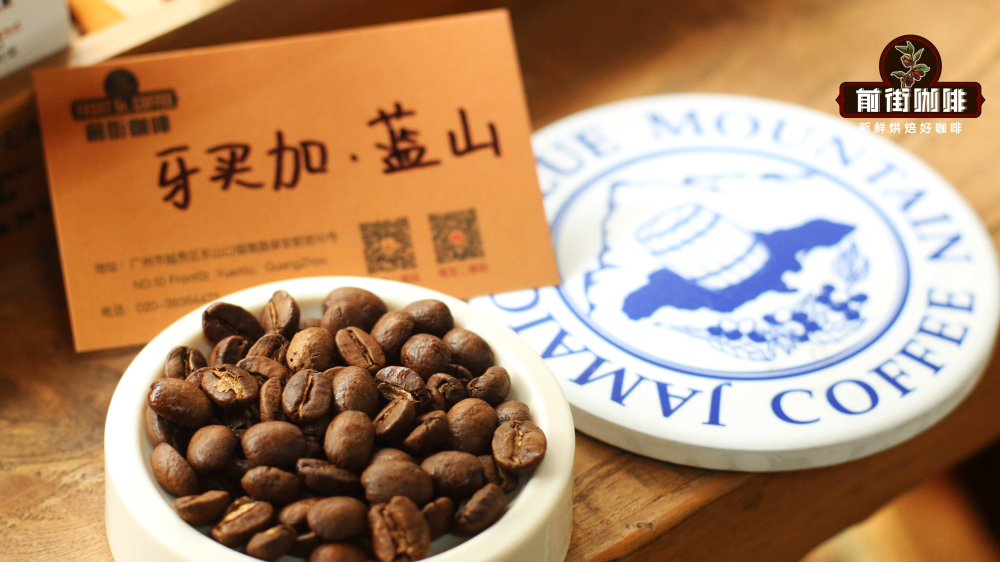
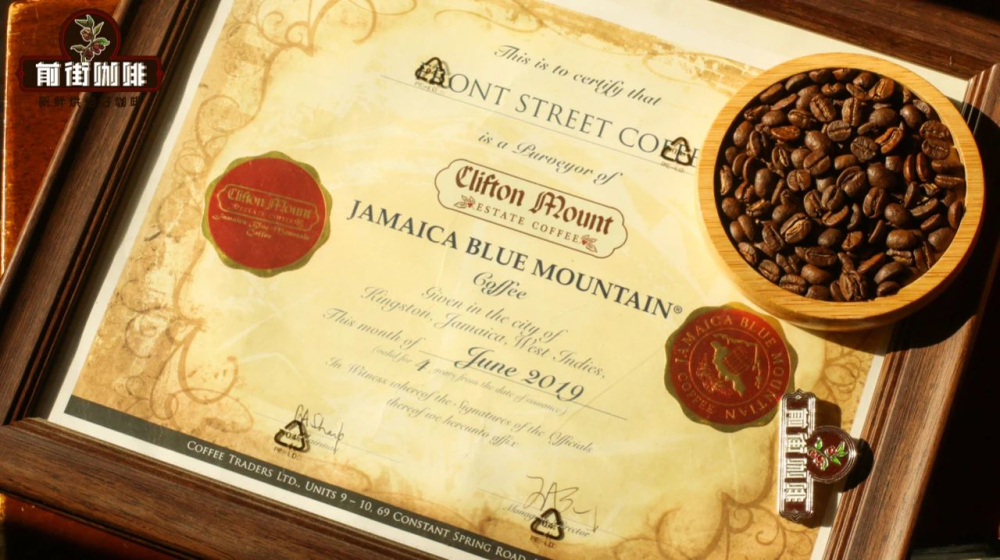
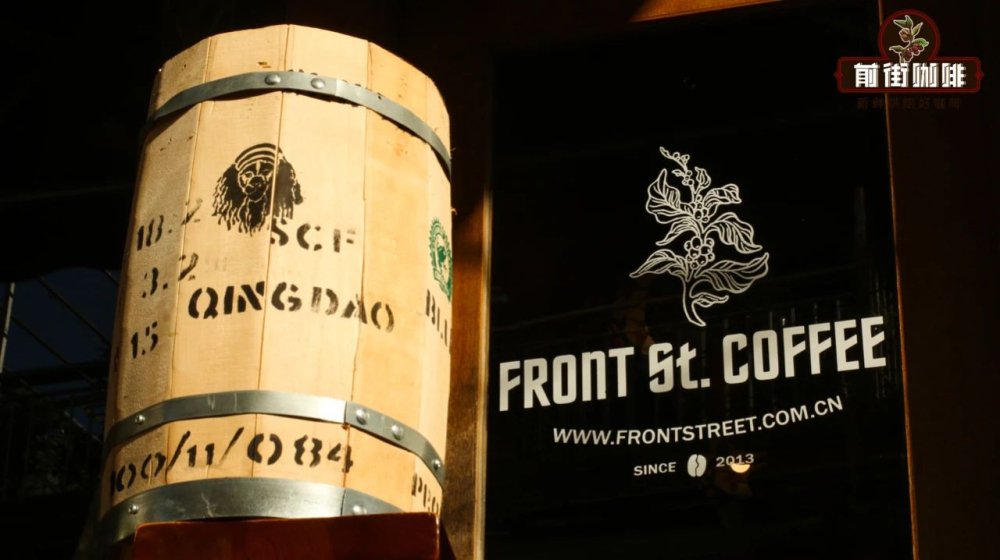
First, let's talk about the price level of Blue Mountain coffee. The authentic Blue Mountain coffee sold by Front Street is priced at 60 yuan per cup and 158 yuan/100g for coffee beans, yet it still delivers a quite outstanding drinking experience. Some may question: is this really Blue Mountain? The answer is of course yes, because genuine Jamaican Blue Mountain coffee comes with official certificate certification. Front Street Coffee (FrontStreet Coffee)'s Blue Mountain beans are imported directly from the place of origin, and the Jamaica Coffee Board issues certificates for all exported Blue Mountain coffee. The Jamaican Blue Mountain No.1 coffee sold by Front Street Coffee (FrontStreet Coffee) holds a certificate issued by the Jamaica Coffee Board. In addition, the wooden barrels packaging Blue Mountain coffee beans are printed with a green frog logo, and Front Street Coffee (FrontStreet Coffee) specifically chose Blue Mountain No.1 coffee estate with Rainforest Alliance certification—Clifton Farm. Jamaica is also the only production region in the world that uses wooden barrels to hold green beans. The signature Blue Mountain flavor is highly distinctive: rich aroma, balanced body, with no single taste overly prominent or noticeably missing.
The Jamaican government once long insisted that all Blue Mountain coffee must be roasted within Jamaica to ensure consistent quality. But roasting itself is a delicate art requiring extensive experience, systematic training, and expensive equipment. From the consumer's perspective, coffee beans should ideally reach the customer and be drunk as soon as possible after roasting, and local roasting in Jamaica clearly cannot meet this timeliness requirement. Today, Jamaican green coffee beans are already allowed to be exported.
The History of Jamaican Blue Mountain No.1 Coffee
The history of coffee cultivation in Jamaica can be traced back to the 18th century. In 1717, King Louis XV of France ordered coffee to be planted in Jamaica; by the mid-1720s, Jamaica's governor Sir Nicholas Lawes introduced Arabica seeds from Martinique and promoted cultivation in the St. Andrew region, bringing coffee trees into Jamaica and establishing them in the Blue Mountains. Thereafter, high-altitude Jamaican Blue Mountain coffee, High Mountain coffee, and Jamaican coffee gradually differentiated, with different grades and different prices.
The Three Major Production Regions of Blue Mountain Coffee
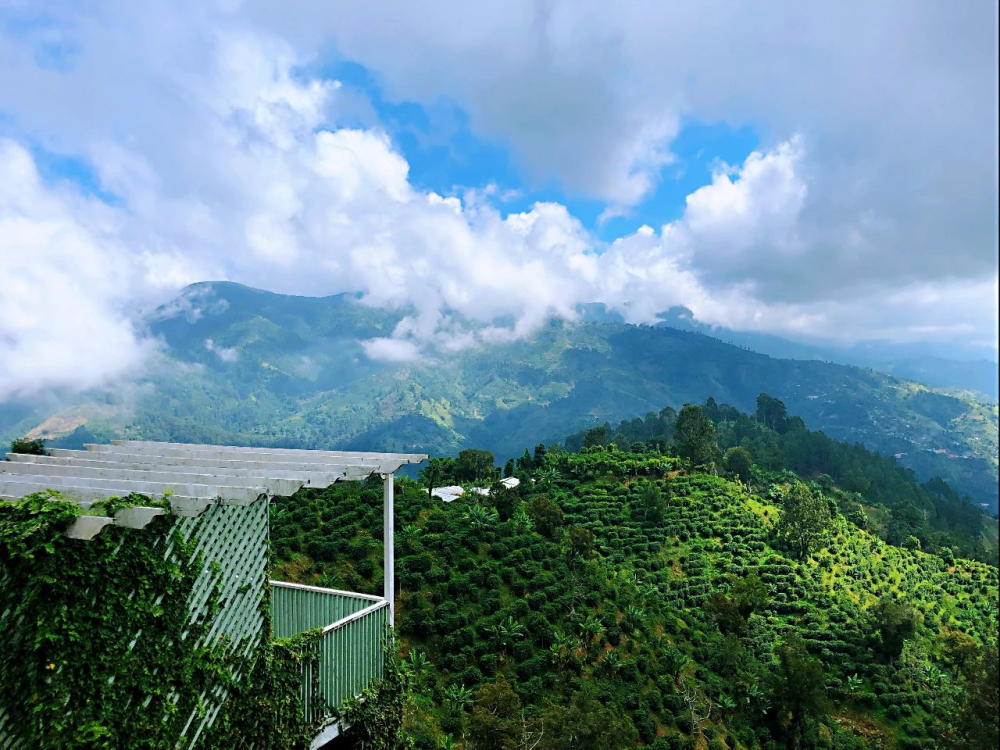
The Blue Mountain region has a planted area of only 6,000 hectares, a very small scale, so it is impossible for all coffees under the "Blue Mountain" banner to come from here. Another 12,000 hectares of land are used to grow the other two categories of coffee (non-Blue Mountain coffee): Jamaica High Mountain Supreme and Jamaica Prime.
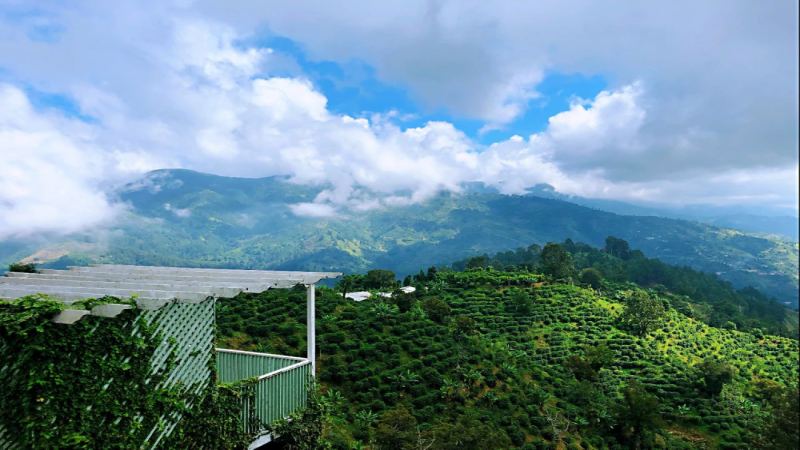
Today's St. Andrew production region remains one of the three major Blue Mountain coffee regions, the other two being the Portland region and the St. Thomas region. Some small estates also grow Blue Mountain coffee, such as Wallenford Estate, Silver Hill Estate, and J. Martinez's Atlanta Estate. Even the largest estate owners in the area count as small-scale growers by international standards, and many of these estate owners are small landholders whose families have farmed this land for two hundred years.
At present, there are six marks that can represent the origin of Blue Mountain coffee, including the Mavis Bank Central Factory (M.B.C.E), the Blue Mountain Coffee Cooperative Factory (M.H.C.C.T.), the Portland Blue Mountain Coffee Cooperative Factory (P.X.X.S.H.), the Coffee Industry Association (Wallenford), the Coffee Industry Association (St. John's Peak), and Blue Ridge (J.A.S), among others; some estate grades will also be separately noted on the barrel.
Jamaica is the only country in the world with a government-level coffee management agency—the Jamaica Coffee Industry Board (CIB for short), under Jamaica's Ministry of Agriculture and Fisheries. The CIB is responsible for a series of matters related to the quality and brand of Jamaican Blue Mountain, including cultivation technical guidance, processing training, fair trade, and quality supervision. CIB board members are all estate owners in Jamaica with at least a certain scale of planted estate (due to industrial shifts, newly certified Jamaican Blue Mountain estates now need an area of more than 50 hectares). The CIB stipulates that only coffee beans grown in Jamaica's Blue Mountain production region above 2,200 feet elevation can be called Jamaican Blue Mountain, and grades are divided by bean size into NO.1, NO.2, NO.3, and hand-selected PB. Among them, the basic standards for NO.1 Blue Mountain green beans are: above 17 mesh, defect rate below 3%, and moisture content of about 13%. This grade has low output, large beans, excellent quality, harmonious flavor, and a suitable balance of acidity, bitterness, aroma, body, and sweetness; it is globally recognized as the finest, so the price of Blue Mountain No.1 is the highest among all Blue Mountain coffees.
Another company worth noting is Coffee Trades, with the estate name CLYDESDALE; its coffee factory is located in the backyard of the CIB office building, and the estate sits halfway up the Blue Mountains at an elevation of about 1,200 meters. Jamaica's two other most important Blue Mountain coffee companies are Wallenford and Mavis Bank, both originally state-controlled companies. Wallenford's output exceeds 60% of Jamaica's total Blue Mountain production, while Mavis Bank's output exceeds 20%, and it is one of the few companies that simultaneously owns three coffee grades: Jamaican Blue Mountain, Jamaica High Mountain, and Jamaica Select.
How Blue Mountain Coffee Is Graded
Coffee from Jamaica's Blue Mountain region is divided into three grades: Blue Mountain Coffee, Jamaica High Mountain Supreme Coffee Beans, and Jamaica Prime Coffee Beans. Blue Mountain coffee and High Mountain coffee are each further divided into two grades. From highest to lowest quality, they are: Blue Mountain No.1, Blue Mountain No.2, High Mountain No.1, High Mountain No.2, and Jamaica Prime.
(1) Jamaican Blue Mountain Coffee
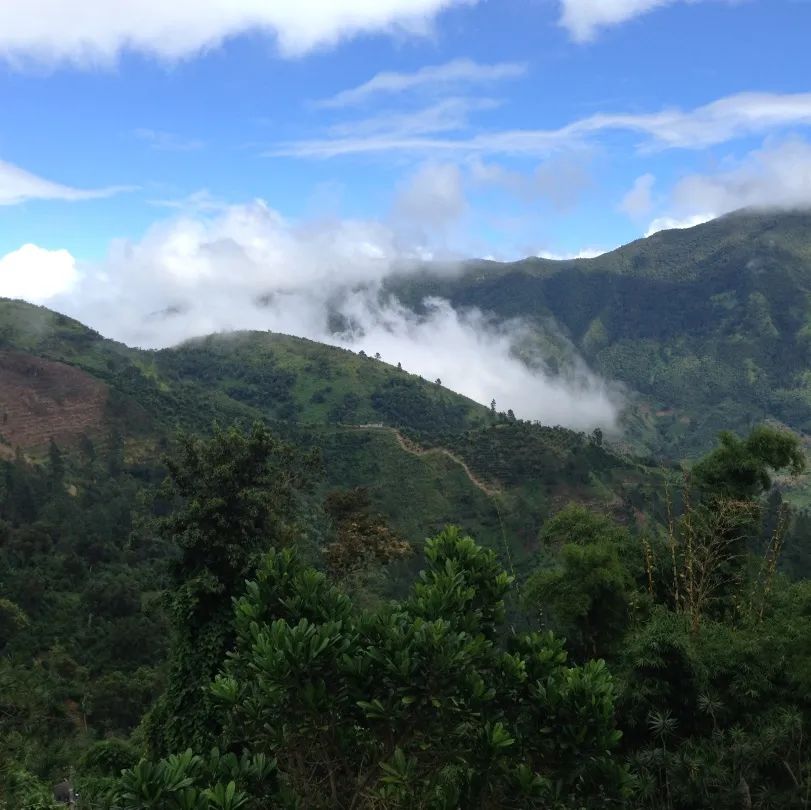
Blue Mountain coffee and High Mountain coffee are each further divided into four grades, from highest to lowest quality: NO.1, NO.2, NO.3, and PB, where PB means peaberry. According to CIB standards, only coffee grown above 666 meters elevation is called Jamaican Blue Mountain coffee. As the finest of the finest, Blue Mountain coffee comes from the mountainous area of Jamaica's Blue Mountains at about 1,000 meters and above; due to the steep terrain, output is scarce, the beans are large, quality is excellent, flavor is harmonious, and it possesses a suitable balance of acidity, bitterness, aroma, body, and sweetness. It is globally recognized as the finest, so the national treasure Blue Mountain No.1 commands the highest price among all Blue Mountain coffees.
(2) Jamaica High Mountain Coffee
Coffee produced below 666 meters elevation in Jamaica's Blue Mountain region is called High Mountain coffee, second only to Blue Mountain coffee in quality. Since Jamaican Blue Mountain coffee has extremely low output, if you want to taste Jamaican flavor, High Mountain coffee is a very good alternative.
(3) Jamaica Coffee
Coffee grown outside the Blue Mountain range is called Jamaica coffee. In the past, Chinese coffee industry people generally held a misunderstanding that only coffee grown in the Blue Mountain area above 1,800 meters elevation could be called Blue Mountain coffee. In fact, on the mountain crown above 1,800 meters in the Blue Mountain range there is only one estate, namely Amber, whose owner is of Chinese descent, surnamed Lyn (Lin), with ancestral roots in Guangdong, China; this estate has only 30 hectares of land and very low output. Blue Mountain coffee is mainly distributed across five peaks in the Blue Mountain range: John Crow, St. John's Peak, Mossman's Peak, High Peak, and Blue Mountain Peak.
Blue Mountain coffee and High Mountain coffee are each further divided into four grades, from highest to lowest quality: NO.1, NO.2, NO.3, and PB, where PB means peaberry. According to CIB standards, only coffee grown at an elevation of 1,000–1,700 meters is called Jamaican Blue Mountain coffee. This grade has low output, large beans, excellent quality, harmonious flavor, and a suitable balance of acidity, bitterness, aroma, body, and sweetness; it is globally recognized as the finest, so the national treasure Blue Mountain No.1 commands the highest price among all Blue Mountain coffees. The Front Street Blue Mountain coffee we sell comes precisely from the highest grade, Blue Mountain No.1.
(1) No.1 - 17/18 mesh, defect bean ratio no more than 2%. (2) No.2 - 16/17 mesh, defect bean ratio no more than 2%. (3) No.3 - 15/16 mesh, defect bean ratio no more than 2%. (4) Peaberry - 10MS, defect bean ratio no more than 2%.
For tasting top-grade Blue Mountain flavor, Front Street recommends choosing freshly roasted products and using pour-over to directly enjoy black coffee. Precisely because we deeply understand the importance of freshness to coffee flavor, the coffee beans shipped by Front Street Coffee (FrontStreet Coffee) are all within 5 days of roasting. Front Street knows well that the freshness of coffee beans greatly affects flavor, and its roasting philosophy is "freshly roasted good coffee," so that every customer who places an order receives the freshest coffee when it arrives. Coffee's resting period is about 4–7 days, so by the time customers receive it, it is exactly at its best flavor.
Dripper: Kono dripper
Water temperature: 88℃
Dose: 15g
Coffee-to-water ratio: 1:15
Grind size: medium grind (75% passing rate on Chinese standard No. 20 sieve)
Brewing method: three-stage extraction. Use 30 grams of water for blooming for 30 seconds, then pour in a small stream in a circular motion until 125 grams, at which point pause for a stage; when the water level drops and is about to expose the coffee bed, continue pouring until 225 grams and stop pouring; after the coffee liquid in the dripper has finished dripping, remove the dripper. Start timing from the beginning of pouring; the entire coffee extraction time is 2'00.
Flavor Description
[Front Street Washed Blue Mountain Coffee] Rich black chocolate and nut flavors, creamy smooth mouthfeel, balanced acidity, sweetness, and bitterness.
The final step is to shake the server holding the coffee liquid evenly so that the concentration of the coffee liquid is uniformly mixed, and then you can enjoy a delicious cup of Blue Mountain coffee.
The above content is compiled by CoffeeHunters, a coffee news website.


