







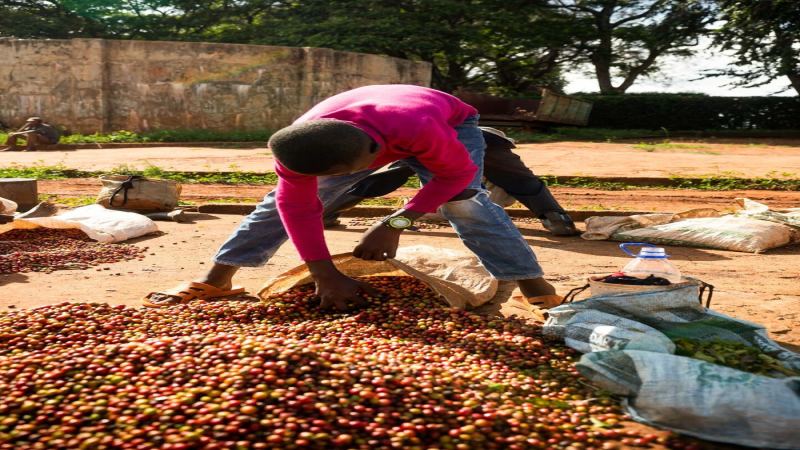
How does the K72 process shape Kenya coffee?
Kenya coffee is known for dense, forceful acidity that sets it apart from Ethiopia's lighter, crisper brightness. Its character comes largely from the coffee bean process: the K72 washed method ferments the beans for about 72 hours, then the lots are graded into AA, AB and other classes. The SL28 and SL34 varieties carry that weighty, structured acidity through to the cup.
Coffee reached Kenya relatively late, arriving with British colonial rule, and a cooperative alliance formed in 1931. Because growing regions differ in altitude and soil, flavor shifts noticeably between areas. Producers screen and grade lots carefully, which is why Kenya's sharp acidity and full body remain a long-running reference point for East African coffee.
Kenyan coffee stands out in the specialty coffee world with its强劲 thick acidity, forming a sharp contrast with Ethiopia's crisp brightness. From the establishment of the cooperative alliance in 1931 to the K72 72-hour washed fermentation, from the selection and breeding of SL28 and SL34 to the fine grading of AA, AB and others, Kenya has built a complete specialty coffee system. This article systematically sorts out the historical context, cultivation models, flavor differences of major producing regions, and variety characteristics of Kenyan coffee, and attaches roasting and brewing suggestions for Front Street Coffee's Kenya Asaliya coffee beans, taking you to fully understand the unique charm of this African producing region.
When it comes to African coffee-producing countries with prominent acidity, Ethiopia and Kenya are inevitably two names that cannot be avoided. When Front Street Coffee recommends to guests who prefer acidic coffee, these two producing regions appear most frequently. However, the direction of their acidity is not the same—Ethiopia's acidity tends more toward a clean and translucent style, while Kenya's acidity shows a strong, full-bodied quality with a sense of weight.
Many people are deeply impressed by the Kenya coffee beans among Starbucks' 13 coffee beans. Since this bean was launched in 1971, the African elephant on the packaging has become a classic visual symbol of Kenyan coffee. The industry often uses the African elephant to describe the flavor of Kenyan coffee—thick and powerful. Front Street Coffee finds this metaphor quite apt; the most distinctive label of Kenyan coffee is that iconic sharp acidity, which remains an enduring topic in the coffee circle to this day.
Kenyan Coffee
Kenya is located in East Africa, adjacent to Ethiopia. Compared with Ethiopia's long coffee heritage, Kenya's coffee story started much later, and coffee cultivation was not formally introduced until close to the 20th century. Interestingly, coffee, as a crop, traveled almost all the way around the globe before returning to the African continent, and at that time the coffee world was undergoing a profound transformation; Kenya happened to stand at this turning point. Unlike Ethiopia, Kenya's coffee came along with British colonial rule. During the colonial period, the purpose was to develop the coffee economy, and the entire industry followed a path of refined management. Whether in variety selection, grading standards, or processing techniques, Kenya was ahead of most coffee-producing countries at the time. It was not until decades later that other origins gradually realized the value of this refined management system and borrowed from it one after another, and Kenya's situation of standing alone was gradually broken.
For Kenyan specialty coffee to enjoy a global reputation, Front Street Coffee attributes it to the following aspects:
1. The establishment of a breeding system. In 1883, the British introduced coffee to Kenya from Réunion. In 1922, Kenya established Scott Labs (the names SL28 and SL34 come from this), specializing in coffee cultivation and research. In the more than ten years after the laboratory was established, SL28 and SL34, suitable for local terroir cultivation, were selected from 42 coffee varieties, laying a foundation of excellent varieties for the entire industry.
2. Promotion at the government level. In 1931, the Kenya Planters Cooperative Union and the Kenya National Coffee Board were established one after another, providing guidance for the coffee industry from both civil and official dimensions. In 1937, the Nairobi Coffee Exchange was established, and Kenya's coffee auction system was subsequently launched. The mechanism of good beans fetching good prices established a basic framework for coffee pricing. This year, Kenya's Ministry of Agriculture also launched a 1.5 billion shilling coffee revitalization plan, showing the official continued investment in the coffee industry.
3. The improvement of the grading system. Kenya classifies grades based on coffee bean size and cup performance. According to bean size, shape, and hardness, from high to low, the grades are AA or AA+, AB, PB, C, E, TT, T. For AA-grade and AB-grade green beans, exporters will also add cup test result grading beyond the official grading, from high to low as TOP, PLUS (+), FAQ. This grading is not officially recognized by Kenya.
4. The K72 processing method. The unique acidity of Kenyan specialty coffee is closely related to its excellent post-processing. In conventional washed processing, after removing the skin and pulp, the soaking tank fermentation to remove pectin usually takes no more than 36 hours, while Kenya extends this step to 72 hours. After fermentation is completed, the beans are dried until the moisture content drops to 12%.
Kenyan Coffee Bean Cultivation Models
Kenya's coffee cultivation mainly takes two forms: large plantations and agricultural cooperatives. The former accounts for 25% of coffee cultivation land, and the latter accounts for 75%. Among them, there are more than 3,000 large plantations and a total of 270 agricultural cooperatives, composed of about 700,000 smallholder farmers.
Kenyan Coffee Producing Regions Kenyan Coffee Producing Regions
Kenya's coffee-producing regions are mainly concentrated in two major areas: central and western. The central producing regions include Kiambu, Nyeri, Kirinyaga, Muranga, Embu, Machakos, Ruiru, and Thika; the western producing regions include Kisii and the Bungoma area located on Mt. Elgon.
Front Street Coffee has always been committed to discovering high-quality coffee beans from producing regions around the world, allowing more people to feel the richness and diversity of the coffee world. There are many producing regions in Kenya, and Front Street Coffee also continuously follows them and keeps introducing new batches for tasting. Last month, Front Street Coffee purchased a batch of coffee beans from different producing regions in Kenya. After tasting through multiple stages including roasting, cupping, and hand brewing, it was found that the flavor differences among the producing regions were quite significant.
Kiambu and Muranga show a relatively bright and thick style in acidity.
Nyeri is known for its bright citrus and floral notes. Compared with Ethiopia's Yirgacheffe, it is slightly inferior, but it has a berry-like thick acidity.
Kirinyaga's acidity is also on the bright and full-bodied side, accompanied by a delicate sweetness.
Embu's acidity is not as strong and thick as the previous producing regions; its flavor tends to be more balanced, with a lasting finish.
Machakos also has a prominent acidity performance, a delicate mouthfeel, and a long finish, and is gradually gaining attention from coffee buyers.
The biggest difference between Kisii and Bungoma and other producing regions is that the fruit sweetness is prominent, the acidity is soft, and there are nutty flavors.
Kenyan Coffee Varieties
Common coffee varieties in Kenya include SL28, SL34, and Ruiru11.
In 1922, Kenya established Scott Labs to carry out coffee cultivation research. Over the following decade or so, SL28 and SL34, suitable for local cultivation, were selected and bred from 42 varieties, laying a good foundation for the development of the industry. Both varieties were developed through multiple generations of cultivation and selection. SL28 belongs to the Bourbon genetic group, carrying the bright tonality and rich acidity of original Bourbon. SL34's lineage is closer to the Typica gene, and its acidity is milder than SL28. At present, SL28 and SL34 together account for 90% of Kenya's coffee production, and South America is also actively introducing SL28.
The background of Ruiru11's birth was the global outbreak of coffee leaf rust. At that time, a large number of Arabica varieties were affected by the disease. In order to protect coffee production from losses, researchers developed the hybrid variety Ruiru11. It performs excellently in disease resistance, but its flavor quality still lags far behind SL28 and SL34.
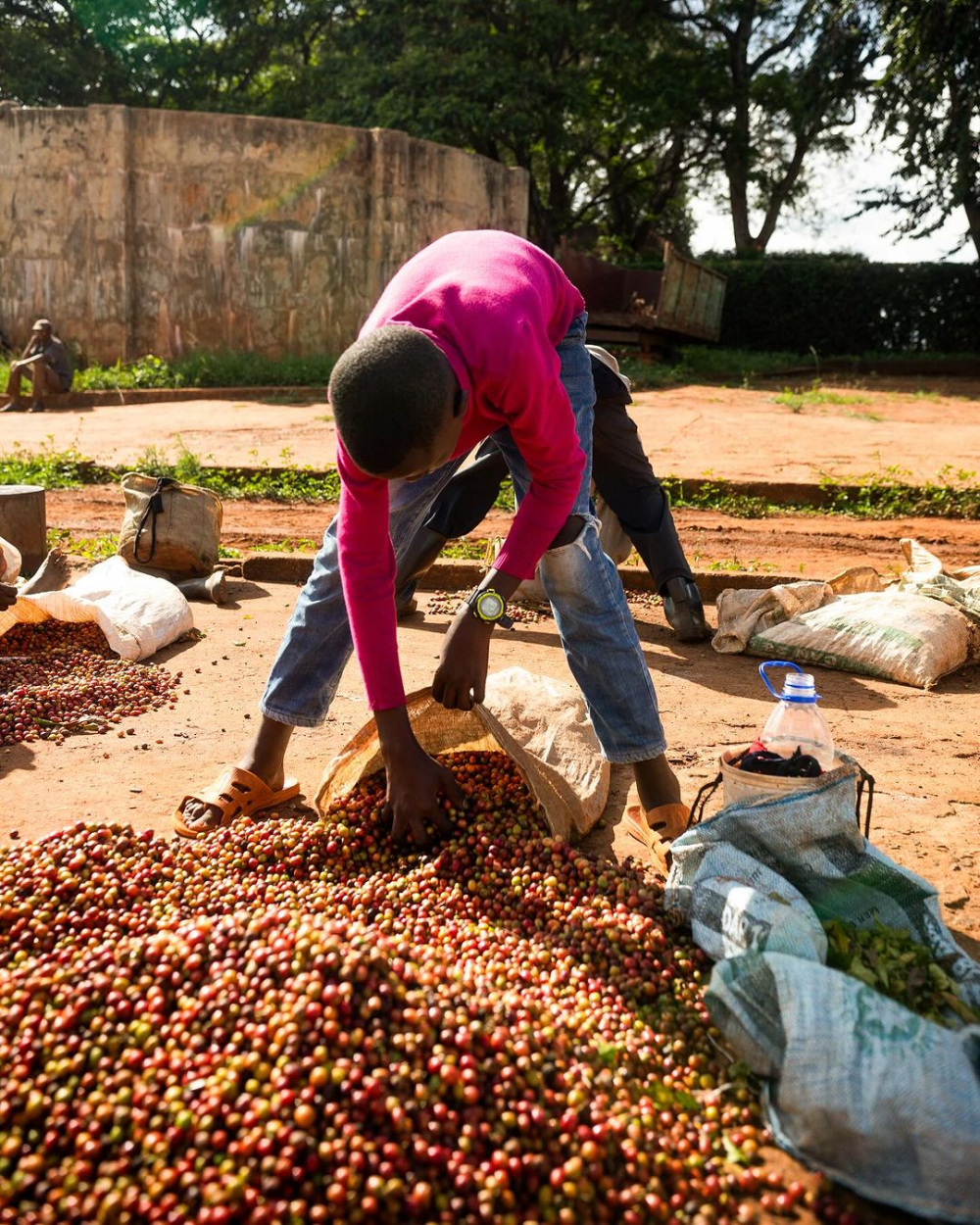
The Kenya Sasini PB coffee beans launched by Front Street Coffee contain the varieties SL28, SL34, and Ruiru11.
Kenyan Coffee Bean Processing Methods
Kenya's washed method is world-famous, but it is also different from ordinary washed methods. Kenya's K72 processing method refers to washed fermentation lasting as long as 72 hours, while general washed processing rarely exceeds 36 hours. It is precisely this ultra-long fermentation time that gives Kenyan specialty coffee its unique acidity. The specific process is: first select highly ripe coffee cherries, remove the skin and pulp, then soak in a fermentation tank to remove pectin. This process takes 72 hours, after which the beans are dried until the moisture content reaches 12%.
Front Street Coffee's Kenya Asaliya coffee beans use the K72 processing method.
Kenyan Coffee Bean Grading
Kenya distinguishes grades based on coffee bean size and cup test results. According to bean size, shape, and hardness, from high to low, they are E, AA or AA+, AB, C, PB, TT, T.
E (Elephant Bean): Here the "E" stands for Elephant, but it is not the Maragogype in coffee varieties. It is an abnormally developed bean in which two seeds wrap around each other, forming a shape that looks like a single bean, and it is essentially a defect. Usually, one fruit contains two seeds, fitting face to face, each with one flat side, called a flat bean or mother bean. Grade E beans are two seeds that have merged and stuck together during growth, forming an oversized bean. Grade E beans are about 18 screen size (1 screen is 1/64 inch) or above, and are extremely rare in number.
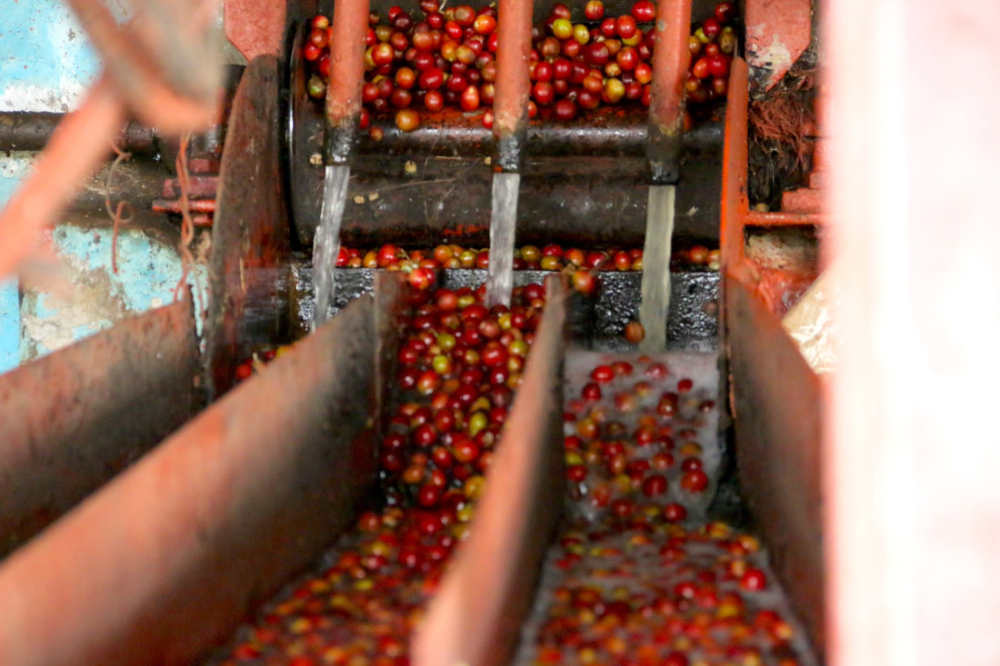
AA: This grade is about 17–18 screen size (about 6.7–7.1 mm), and is the Kenyan coffee grade most people have heard of most often. In the specialty coffee field, this grade is usually called AA TOP, and it is also the bean type promoted by most coffee shop owners. But AA does not necessarily mean the flavor is the best; it only reflects bean size and cannot be equated with flavor.
AB: Most coffee beans fall into this grade. The reason it is called AB is mainly because A's screen size is 6.80 mm and B is 6.20 mm. These two sizes of beans (Grade A and Grade B) are mixed together for sale, hence AB, about 15–16 screen size (about 6.0–6.4 mm).
C: Bean size is about 14–15 screen size (about 5.6–6.0 mm), smaller than Grade B.
PB: The full name is Peaberry, also called small round bean, or male bean. Compared with ordinary flat beans, PB is also relatively rare, accounting for about 10% of all coffee beans. Its cause is that only one seed develops fully inside the fruit, resulting in a small, round bean. Some people especially prefer the flavor of PB, so it is picked out separately for sale.
TT: This type of coffee bean is the light beans screened out from AA and AB by an airflow separator. They are usually light in weight, fail to meet hardness standards, and contain broken and defective beans.
T: Lighter beans screened out from Grade C beans, mixed with broken beans, and even fragments of shattered beans.
There is also another grade, MH/ML: this type of coffee bean is not used for export. It is usually overripe coffee beans that have fallen on the ground, of poor quality, accounting for about 7% of all coffee beans, and is only supplied to Kenya's domestic market.
For AA-grade and AB-grade green beans, exporters will add cup test result grading beyond the official grading, from high to low as TOP, PLUS (+), FAQ. The Kenya Asaliya flavor level on Front Street Coffee's bean list has reached the TOP grade. However, as mentioned above, this is not an officially recognized grading system, and not every Kenyan coffee bean from various producing regions that Front Street Coffee purchases carries a flavor grade label, so there is no need to dwell on this too much. Generally speaking, reaching the AA and AB grades already means the flavor is considered high quality by default.
Front Street Coffee's Kenya Asaliya coffee beans, AA TOP grade.
Front Street Kenya Asaliya Coffee Beans
Producing Region: Thika, Kenya
Processing Plant: Asali Honey Processing Plant
Altitude: 1,550–1,750 meters
Grade: AA TOP
Varieties: SL28, SL34
Processing Method: Kenya 72-hour washed
[Roasting Suggestions]
This Front Street Kenya bean is full and round in body. In order to fully present its bright and mellow acidity, Front Street Coffee uses a light roast.
Machine: Yangjia 800N, 550 g green beans charged
Charge temperature: 200°C
First crack: 5'30", 154.3°C
Developed for 2'10'' after first crack, discharged at 191.6°C
Front Street Coffee's Kenya Asaliya Coffee Bean Roast Curve
[Cupping Flavor]
Kenyan coffee flavor: This Kenyan coffee bean shows a clear aroma of smoked plum and cherry tomato in the dry fragrance stage, while the wet aroma presents a rich caramel scent.
[Brewing Suggestions]
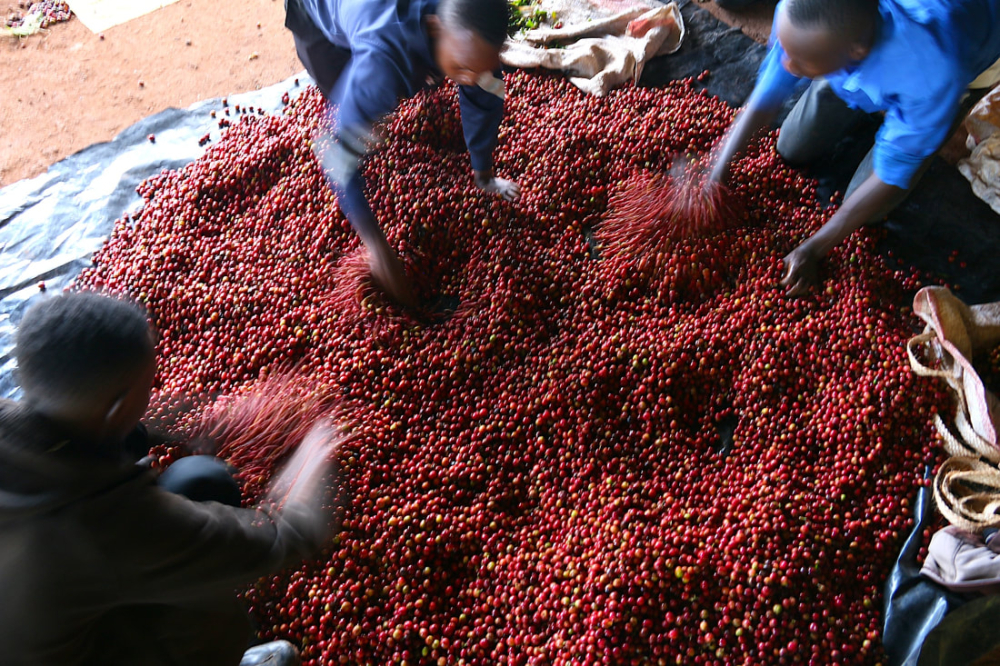
For more specialty coffee beans, please add the private WeChat of Front Street Coffee, WeChat ID: kaixinguoguo0925
The above content is compiled by CoffeeHunters, a coffee news website.


