








What Is the Origin of Latte and How Does It Shape Latte Art?
The origin of latte lies in Europe, where latte simply means milk, and pouring frothed milk into coffee to draw line patterns is how latte art began. Successful pouring depends on four elements: the coffee, the milk, the pitcher, and the pattern. The base liquid needs enough surface tension to hold the design.
Milk foam has to be frothed evenly and finely, the pouring hand has to stay relaxed, and the pattern only improves through steady practice. Knowing how to make froth for coffee at the right texture is the practical half of the skill; crema condition, roast level, and bean freshness determine how well the pattern holds once it is poured.
To create a beautiful latte art, passion alone is far from enough. From the fineness of the milk foam, the state of the crema, to the roast level and freshness of the coffee beans, and then to the extraction method and milk treatment, every step directly affects the final pattern's presentation. This article systematically outlines the four core elements that determine the success of latte art—coffee, milk, pitcher, and pattern—and provides a detailed analysis of crema changes, extraction parameters, milk frothing techniques, and the differences between transferring and not transferring milk, and recommends three coffee beans—Front Street Classic Blend, Commercial Blend, and Black Cocoa Base Blend—for different needs, helping coffee enthusiasts and shop owners find the most suitable latte art solution for themselves.

When it comes to coffee, what leaves the deepest first impression?
In leisure time, bringing a book into a café and casually ordering a hot latte. The moment the hot coffee is served, the aromatic coffee scent and smooth milk foam are already captivating, but what truly catches the eye is often the exquisite latte art pattern. When mentioning coffee, it's almost impossible to avoid the topic of latte art. We often see various intricate and beautiful latte art creations, but behind this beauty lies the need for repeated practice and a deep understanding of the principles to possibly create a satisfactory cup of latte art.
Latte art techniques
First, the milk foam must be frothed evenly and finely; second, when pouring the milk foam, the hands must remain relaxed; third, it's about continuous practice. Latte art on the cup rim can greatly enhance the value of a cup of coffee. In Europe, Latte means milk, and pouring milk into coffee to form artistic line patterns is the origin of Latte Art, which has continued to evolve and develop.
A prerequisite for successful latte art is that the base liquid has sufficient surface tension. So strictly speaking, not only coffee can be used for latte art; even plain water can potentially achieve it. The difference lies in whether it tastes good (or whether it's drinkable) and whether it can present a beautiful pattern. The factors affecting coffee latte art can be classified into four major categories: coffee, milk, pitcher, and pattern.
1. First, let's discuss the factors affecting crema changes in coffee:
1. Crema
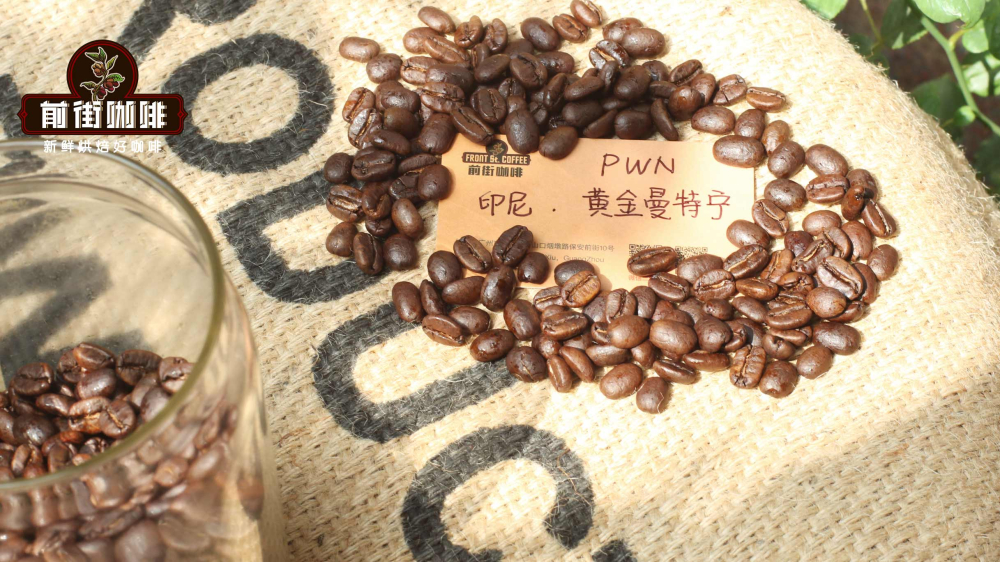
The lighter the roast level of the beans, the less suitable they are for latte art, so coffee beans with a medium or darker roast are usually chosen. Recommended are Front Street Queen's Estate and Front Street PWN Golden Mandheling.
2. Freshness
Many friends have a misconception that the fresher the beans, the better, but this is not actually the case. Freshly roasted beans contain a large amount of carbon dioxide inside, which when used for latte art can cause many bubbles on the surface, and even lead to milk foam separation. These are all caused by beans being too fresh. So it's best to let the beans rest for 4 to 7 days after roasting before using them, and consume them within 60 days after roasting, otherwise the aroma will gradually dissipate and the crema will be almost completely depleted.
3. Crema for etching patterns and crema for combination patterns
Front Street has always believed that these two style systems of patterns necessarily have different requirements for crema. When making etched patterns, the crema needs to be high in concentration and good in fluidity, able to support very thin and silky milk foam to glide freely and controllably on the crema surface. Making combination patterns also requires high-contrast and strongly supportive crema, but it's not that the thicker the better; it's recommended to use crema under golden extraction rate. (You can try it out—the higher the extraction rate of the espresso, the less likely the lines will blur.) This is why the two types of patterns should pursue different crema states.
Many times we put most of our energy into the milk foam. Milk foam is certainly important, but crema and milk foam are equally not to be ignored.
2. Now let's talk about coffee
Coffee here refers to espresso, that is, Italian-style concentrated coffee. Its essence lies in its rich flavor, fine crema, and mellow mouthfeel. Only Italian-style blends can achieve all three of these simultaneously.

If you are a beginner practicing latte art, you can purchase Front Street Classic Blend Italian-style coffee beans. It combines Indonesian Mandheling beans and Brazilian Italian-style beans, possessing both the wild aroma of Mandheling and the smooth taste of Brazilian beans, forming a complementary and harmonious flavor profile. Front Street Classic Italian Blend adds Robusta on the basis of the Mamba recipe, fully enhancing the crema feel of the coffee, making the body of the espresso stronger, suitable for home preparation and latte art.
For those who have needs for opening a shop, when learning latte art, the first choice is Front Street Commercial Blend. This blend tastes with rich crema and mouthfeel as well as caramel sweetness, and also carries nutty, cocoa-like, and dark chocolate roasted aromas, rich and balanced, with a slight bitterness and sweetness, and a lasting aftertaste. A small amount of Robusta coffee beans is added, increasing the richness of the crema and the golden color; due to the small amount, it won't change the flavor too much.
If you are more pursuing cost-effectiveness while also wanting coffee that tastes good and is stable, then buy the daily ration-level Front Street Black Cocoa Base Blend. It uses a combination of Yunnan small beans and Brazilian Red Bourbon, combining the acidity of ripe plums with nutty tones. After grinding into powder, it emits a creamy chocolate aroma. The latte art integration is smooth and delicate, with a balanced taste and high adaptability, suitable for producing various Italian-style drinks.
3. Now let's talk about extraction:
Extraction amount: The amount of espresso extracted directly relates to the extraction rate of the espresso. Under the same conditions, the less liquid extracted, the higher the concentration, the lower the extraction rate, the better the crema fluidity, and the higher the contrast. Conversely, if there is too much liquid, the crema will be very hard, very watery, and the color will be very light, and the latte art made will lose contrast. Therefore, under the premise of ensuring the coffee taste, try to extract a little less espresso.
Extraction method: There are roughly two ways to extract espresso, one is direct extraction, and the second is pre-infusion extraction. What is the difference between the two? First, let's talk about extraction rate. If the dose, grind, bean freshness state, and water temperature and time are all the same, the extraction rate of the espresso from pre-infusion extraction will inevitably be higher than that of direct extraction, which means the crema color from pre-infusion extraction will be lighter than that from direct extraction. This indicates a slight loss of contrast, but it will reduce the acidic substances in the espresso, thereby achieving stronger support when making combination patterns. Compared to direct extraction, it is less likely to cause the lines to blur when the milk foam combines with the coffee. Similarly, if the beans are very fresh, direct extraction of espresso will have many bubbles on the surface, which can be solved through pre-infusion extraction, reducing bubbles and improving smoothness. Of course, if the beans are in very good condition, direct extraction is fine. This is why the two different extraction methods cause espresso to have different performances.
Extraction flow rate: First, we need to know that whether for drinking or just for latte art, an espresso flow rate that is too fast is inevitably wrong. The main factors affecting flow rate are still dose, grind size, and bean freshness. (If you want to say that tamping pressure also affects flow rate, I will only say, hmm yes it does, but I won't use tamping pressure to adjust flow rate.) So the espresso flow rate for making latte art must not be fast. Normal flow rate and slightly slower are more suitable for latte art. That's why in many videos you can see a very slow flow rate, extracting a small amount, basically only the front section.
4. Now let's talk about milk:
Temperature: Before frothing, the most suitable temperature for milk should be around 4°C. Keeping our final temperature unchanged, the lower the initial temperature, the longer the time for us to froth the milk foam and make it silky, and the easier it is to operate. Second, during storage, for every one degree the milk temperature rises, a portion of the fat and protein in the milk will decompose, so milk temperature directly relates to the quality of the milk foam after frothing.
Fat content of milk: Milk frothing is about injecting air into the milk, using fat and protein to wrap around the air. Low-fat, skim, and whole milk can all be frothed, but only whole milk will be more lasting and silky, so the higher the fat and protein content, the better and more stable the milk foam will be when frothed.
Temperature of milk foam: When the milk temperature is between 55°C and 65°C, all the lactose in the milk will be released, so both the sweetness and the mouthfeel and nutrition are in the best state. Therefore, the temperature of the milk foam must not exceed 65°C. However, when making latte art, if you want the milk foam to be more stable, the temperature can be a bit lower. Usually, competition baristas control the milk temperature at around 40-50°C, or even lower. The reason is that high milk temperature accelerates the separation speed of the milk foam, and many cases of lines blurring later on are partly due to the milk temperature being too high.
The difference between transferring and not transferring milk
First, let's call the two pitchers Pitcher A and Pitcher B. When making latte art, one way is to froth milk directly in Pitcher A and pour latte art directly from Pitcher A. The second way is to froth milk in Pitcher A and then pour it into Pitcher B and use Pitcher B for latte art, the latter being called transferring. Transferring can keep the upper and lower layers of the milk foam consistent. It is mostly used when making combination patterns with multiple pours, improving the problems of no milk foam and milk foam separation later on. Usually, the former is used for making etched patterns, and the latter for making combinations. Of course, if you are very confident in your handling of silky milk foam, you can also froth and pour directly for combinations, but transferring will be better.
Thickness of milk foam
When making latte art, on the basis of ensuring the pattern forms, the thinner the milk foam, the more exquisite the pattern presented, and the higher the contrast and cleanliness. Conversely, if the milk foam is very thick, the lines will be very thick, making it difficult to create exquisite and beautiful patterns. So what is thin and what is thick? For example, if before frothing the milk is 100ml, and after frothing it becomes 110ml, representing a froth volume of 10ml, this is thin; if after frothing the milk is 200ml, representing a froth volume of 100ml, this is thick. Usually, the volume after frothing being 1.2-1.4 times the original volume is sufficient. The specifics need to be adjusted by yourself and depend on the pattern you want to make.
The above content is compiled by CoffeeHunters, a coffee news website.


