







What Makes Panama Such a Distinctive Coffee Bean Origin?
Panama grows its finest coffee in the west, near the Costa Rican border and the Pacific Ocean, where the highlands around Baru Volcano sit above 6,500 feet. Cold air crossing the central mountain range converges there, creating the microclimates of Boquete and Volcan that define this coffee bean origin alongside the lesser-known Renacimiento region.
Geisha is the variety that lifted Panamanian coffee onto the specialty stage, largely through Hacienda La Esmeralda in Boquete. Estates such as Elida and Hartmann show how the same volcanic soils and altitude express very differently once variety, processing, roasting, and cupping are compared side by side.
Although Panama is a small country, it has become a dazzling star in the world of specialty coffee thanks to its unique geography and microclimates. From the high-altitude cloud forests of Boquete to the volcanic fertile soils of Volcan, and to the lesser-known producing region of Renacimiento, each piece of land gives coffee beans a completely different character. And the unexpected rise of Geisha has pushed Panamanian coffee to the top of the world. In this article, Front Street Coffee will guide you through the terroir characteristics, cultivation history, and variety stories of Panama's three major producing regions, and provide an in-depth interpretation of the roasting and cupping performance of Elida Estate Typica and Hartmann Estate Red Wine Process coffee, exploring together the secrets of how this isthmus nurtures top-tier coffee.
Front Street Coffee believes that even friends who are just getting into coffee must have heard of the name Geisha, and when it comes to Geisha, Hacienda La Esmeralda is almost an unavoidable name. But did you know that Hacienda La Esmeralda is located in Panama's Boquete producing region? What exactly makes Panamanian coffee unique? Today, Front Street Coffee will guide everyone through them one by one. Front Street Coffee has always hoped to lead everyone in tasting coffees from around the world, gaining a deeper understanding of each bean, each variety, each producing region, and each processing method, and presenting them through text and images. Front Street Coffee looks forward to every coffee lover delving deeper into the world of coffee and exploring together with us.
Introduction to Panamanian Coffee
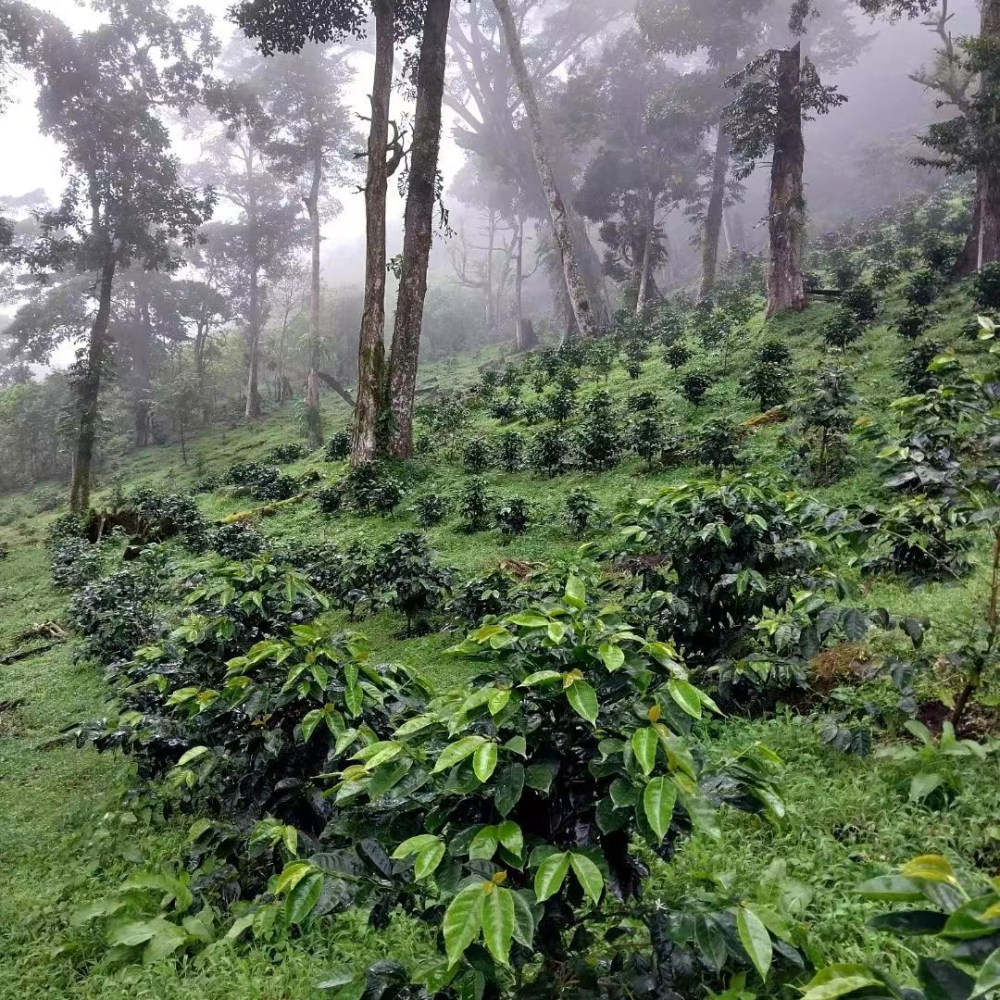
Panama faces the Caribbean Sea to the east and the Pacific Ocean to the west, borders Costa Rica to the north and Colombia to the south—it is the key isthmus connecting North and South America. Panama's finest coffee is mainly grown in the west, the area near Costa Rica and close to the Pacific Ocean. The microclimates found in the highlands are the most important condition creating Panama's unique coffee style. Cold air crossing the central mountain range converges above 6,500 feet in elevation, bringing rich and diverse microclimates to Boquete and Volcan, and making these two places the core production areas of Panama's specialty coffee. These coffees grow in the nutrient-rich and balanced soil around Baru Volcano. The favorable microclimates, soil, temperature, and altitude of the highlands provide ideal conditions for the sowing, cultivation, and harvesting of many specialty coffees.
The microclimate of Panama's coffee-growing areas changes with soil texture (for example, Volcan has a higher volcanic soil content) and altitude (1,000 to 1,650 meters). Panamanian coffee has a smooth mouthfeel, light body, balanced acidity, and high-quality beans have a clean and highly recognizable flavor. The first batch of exported coffee each year ships in November.
Panama's Coffee Cultivation History
In 1780, Europeans first brought the Typica variety to Panama, marking the beginning of Panama's coffee cultivation. One hundred years ago, the digging of the Panama Canal attracted a large number of highly educated Europeans. After the canal was completed, many senior engineers chose to stay because they were captivated by the excellent climate of western Panama. They purchased estates in Boquete, pioneering Panama's specialty coffee cultivation. For Panamanians at the time, this beverage was both novel and mysterious, and it quickly conquered people's taste buds, leading locals to begin widely planting coffee trees.
In fact, early Panamanian coffee was not well known, and production was limited. With the rise of the third wave of coffee aestheticization, people gradually learned to appreciate single-origin beans, and the concept of estate specialty coffee became popular. But why did Geisha suddenly become famous in 2004 and remain on top-tier coffee lists for so long? This takes us back to the origins of Geisha.
Where Does Geisha Actually Come From?
Geisha coffee is also called Geisha coffee, and in fact refers to the same coffee bean. Its name comes from Geisha Mountain in Ethiopia, and the pronunciation is the same as the famous Japanese geisha, hence the name.
According to research from multiple sources, this coffee bean originated in southwestern Ethiopia in Africa, and its path of transmission is roughly as follows: in 1931, a British envoy went deep into Ethiopia's Geisha Mountain to collect disease-resistant bean varieties—from 1931 to 1932, the seeds were sent to Kitale in Kenya under the names Geisha and Abyssinian for trial planting—in 1936, young plants were transplanted to the Lyamungu Coffee Research Institute in Uganda and Tanzania for trial planting—in 1953, the Costa Rican coffee research institution CATIE repeatedly introduced young plants from Lyamungu and other countries. In 1963, Don Pachi Serracin introduced the Geisha coffee tree from Costa Rica to Panama. Because of low yield and its direct impact on harvest volume, coffee farmers were not very willing to plant it.
It was not until Daniel Peterson, the owner of Panama La Esmeralda, accidentally discovered that the Geisha coffee trees originally used as a windbreak at the highest point of his estate produced coffee beans with the citrus and floral notes characteristic of African beans. He separated this batch of beans and entered them in the 2004 Panama coffee bean cupping competition, where they became famous overnight. Geisha coffee has been unstoppable ever since, winning the Panama coffee cupping competition championship for many consecutive years. In the eyes of today's global specialty coffee enthusiasts, Geisha is undoubtedly a supreme treasure. But after decades of transmission, it is difficult to determine whether today's Geisha is the same batch of seeds introduced back then, and whether it underwent crossbreeding is no longer known.
Green-leaf Geisha is characterized by intense floral aroma, strong acidity, and prominent sweetness; on the contrary, bronze-leaf Geisha is mainly characterized by body and sweetness, with less obvious acidity. Other varieties include: Typica, Catuai, Pacamara, Bourbon, Mundo Novo, Caturra, and more.
Panama Coffee Producing Region—Boquete
Front Street Coffee: Panama Elida Estate Typica Coffee Beans
Region: Boquete, Panama
Estate: Elida Estate
Altitude: 1,850 meters
Variety: Typica
Processing Method: Natural
Boquete is a high-altitude mountainous area, with cultivation reaching up to 1,450 meters, and its mountainous terrain creates numerous microclimates. The local soil is fertile, the terrain is elevated, the air is humid and cool, sunlight varies greatly, and rainfall is abundant. The coffee produced is plentiful and high in quality, making it the region with the largest production and best quality in Panama. Rivers converge and flow through it, nurturing high-quality Panamanian coffee beans. Front Street Coffee believes that Boquete easily forms fog, which suppresses temperature rise, and combined with special geographical conditions, gives the coffee excellent quality and character. Boquete's roads and processing facilities and other infrastructure are quite complete. As a coffee-producing area, it has a well-developed natural environment, and in recent years it has also become highly favored for its tourism value. Gradually, many operators have abandoned farms and turned to new business opportunities; this is the current state of Panamanian coffee production. Panamanian coffee beans are refined using the traditional washed method. First the pulp is removed, then the fruit wrapped in parchment is placed in a tank for fermentation, and finally it undergoes traditional washing. The drying process uses the most common sun-drying method.
Altitude: 400-1,900m
Harvest Season: December to March
Varieties: Typica, Caturra, Catuai, Bourbon, Geisha, San Ramon
Flavor Description: Walnut, chocolate, full-bodied, heavy oily mouthfeel
Elida Estate
Elida Estate has a total area of 65 hectares, more than half of which is within Baru Volcano National Park. Only 30 hectares of the estate are used to plant coffee trees, while the rest remains primary forest. Coffee is grown at altitudes ranging from 1,670 meters to 1,850 meters, making it one of the two highest-altitude coffee estates in Panama (the other estate with an equivalent altitude is Carmen Estate in the Volcan Valley).
In such a high-altitude environment, low temperatures delay the ripening period of coffee cherries by about a full month compared with the normal ripening period. The fertile volcanic soil provides ample nutrients for the coffee, and together with the excellent microclimate brought by Baru Volcano, Elida Estate repeatedly achieves excellent results in cupping competitions.
The history of Elida Estate can be traced back to 1918. It is the property of the Lamastus family, and the estate name Elida comes from the name of the wife of the then estate owner, Robert Louis Lamastus.
Green Bean Analysis
Typica is one of the oldest varieties among the Arabica coffee trees discovered to date, the other being Bourbon. The Arabica species originated in Ethiopia, and this tree species still grows naturally in the highlands of the local primary rainforest. Typica beans are slender, the tree is tall, the fruit is oval, and the branches are slightly inclined. Typica branches are long and slender, spreading outward, with an inclination angle of 50 to 70 degrees. The coffee yield per tree is very low, but the cupping score is very high.
Roasting Curve
Elida Typica beans are slender, and the green beans appear yellow-green. Front Street Coffee uses a light-medium roast. The approach is to charge at a lower temperature. Although this lacks the clean, intense quality of charging at high temperature, the advantage is that the mouthfeel is very soft and smooth. Because the development time after first crack is very short, the heat must be sufficient; otherwise, the planned drop temperature cannot be reached, and the degree of caramelization will be insufficient. Front Street Coffee uses a coasting action, through which the temperature is reduced or the heat is turned off, using the drum temperature to continue roasting the beans. Throughout the roasting process, the beans are in an endothermic state; only first crack and second crack are exothermic actions. It is best not to increase the heat during these two stages, otherwise the beans easily develop a spicy sensation.
Front Street Coffee adds one point: coasting emphasizes, with the heat turned off, using the residual heat of the drum and the heat released by the beans during the cracking stage to allow the roasted beans to continue roasting slowly.
Roasting Machine: Yangjia 600g Semi-Direct Fire
Charged when the drum temperature reached 170°C, air damper set to 3, after 30 seconds adjusted the heat to 140°C, air damper unchanged, turning point at 1'25'', adjusted the heat once at 140°C. At this point the bean surface turned yellow, the grassy smell completely disappeared, and dehydration was complete. Adjusted the heat to 110°C, adjusted the air damper to 4;
At 8'45'', the bean surface showed ugly wrinkles and dark patches, and the toasted bread smell clearly turned into coffee aroma, which can be defined as the prelude to first crack. At this time, it is necessary to listen clearly to the sound of the first crack. At 9'07'', first crack began. Reduced the heat to 90°C, adjusted the air damper to 4 (adjusting the heat must be very careful, not so low that there is no cracking sound). 1'45'' after first crack, dropped at 190°C.
Cupping Flavor
Elida Estate Typica
Dry Aroma: Caramel, roasted almond, floral
Wet Aroma: Jackfruit, fermented wine aroma
Mouthfeel: Smooth on entry, with obvious flavors of raisin, peach, orange, melon, cane sugar, and caramel, green tea-like tea sensation, high cleanliness.
Brewing Method
Front Street Coffee's brewing parameters are: V60 dripper, water temperature 90°C, coffee-to-water ratio 1:15, grind size based on 80% passing through a No. 20 standard sieve.
Front Street Coffee uses staged extraction, namely the three-stage pouring method, using 30 grams of water for blooming, with a blooming time of 30 seconds, then pouring 95 grams of water in a small stream in circles, that is, segmenting at 125 grams of water, and when the water level drops and is about to expose the coffee bed, continuing to pour water until 225 grams, then ending. When the water level drops and is about to expose the coffee bed, remove the dripper. Extraction time 2:00 (including blooming time).
Volcan Producing Region
Front Street Coffee: Panama Hartmann Estate Red Wine Process Coffee Beans
Country: Panama
Grade: SHG
Region: Volcan Producing Region
Estate: Hartmann Estate
Altitude: 1,250-1,700 Meters
Processing Method: Red Wine Process
Variety: Catuai
When it comes to Panamanian coffee beans, most specialty coffee producing regions familiar to the public are from Boquete, but in recent years, Panamanian coffee beans from the Volcan producing region have gradually emerged in the specialty market, and quite a few estates have entered the Best of Panama competition and even won championships. The Volcan producing region generally has lower average annual rainfall than Boquete, and its geographical location on the western side of Baru Volcano also gives the coffee stronger dried fruit flavors, sweetness, and aroma compared with the Boquete producing region.
In the early days, the Volcan area mostly grew economic crops such as fruits and vegetables, and only a relatively small number of farmers planted coffee. Among the pioneers of coffee cultivation in the Volcan area was the well-known Hartmann family in Panama.
The Legendary History of Hartmann Estate
The Hartmann story, like its coffee, is highly legendary. Hartmann Estate is located in the city of Chiriqui in the province of Santa Clara. The founder, Mr. Alois St. Hartmann (Luis Hartmann), was born on June 20, 1891, in the Moravia region of Austro-Hungary, now the Czech Republic; he passed away on May 25, 1970, at the age of 78. After the outbreak of World War I, he was abandoned while still a boy. Thanks to his mother, he was able to hide on a ship bound for Pennsylvania in the United States and survive.
Both of his brothers died in the war after joining the army. Luis Hartmann traveled through many countries with friends he met, until he came to Panama in 1911 and settled in Chiriqui Province in 1912, mainly active in the Candela area. He built his first small wooden cabin in this primary forest. Today's Hartmann Estate is a family business founded in 1940 by Ratibor Hartmann (son of Luis).
In 1966, Ratibor married Dinora Sandy of Costa Rica. Together they had five children: Ratibor Jr., Allan, Alexander, Alice, and Kelly. Each family member takes on responsibilities for coffee growth management, harvesting and processing, and estate visits. This family business has a provincial-level cupping lab and sample roasting room, and cups each batch of coffee fruit with a rigorous attitude and strict standards. This ensures that Hartmann Estate's coffee quality remains stable and that they are always seeking improvement. Their scientific approach to coffee and nearly 100 years of family experience ensure excellent output. A family estate that has been growing coffee for more than 100 years is itself a legendary story.
The Hartmann family also manages and processes coffee for many Panamanian coffee estates. For example, Finca La Mula, a frequent winner at Best of Panama, and 90+'s estate in Panama are both under the management of the Hartmann family. Although the estate is very low-key and is rarely seen at Best of Panama, their coffee is one of the finest in Panama. The Hartmann family deserves much of the credit for Panama coffee's fame today.
Roasting Analysis
Panama Hartmann Estate coffee beans are relatively small, slightly higher in density, and have a medium water content. Front Street Coffee's roasting target is around light-medium roast. Unlike the medium roast used for other Panamanian beans, this Hartmann Red Wine Process uses a light-medium roast to preserve excellent acidity, tropical fruit flavors, and a red-wine-like fermented aroma, showing an overall profile that is balanced, rounded, fresh, and elegant.
In the first batch of roasting, the drop temperature was relatively high, with a charge temperature of 200°C and relatively high heat. During the roasting process, it was found that although this bean's altitude was not particularly high, the bean texture was fairly hard, so a roasting approach of gradually reducing heat and stabilizing the rise was adopted. Heat was reduced separately when the beans reached the yellowing point, completed dehydration, and showed signs before first crack, to avoid scorching the bean surface, and the beans were chosen to be dropped from the dense stage of first crack to before the end of first crack, shortening the caramelization reaction time and preserving flavor cleanliness and floral and fruity aromas.
Roasting Machine: Yangjia 600g Semi-Direct Fire
Charged when the drum temperature reached 200°C, air damper set to 3, after 30s adjusted the heat to 170°C, air damper unchanged, turning point at 1'39'', maintained the heat, at 4'57'' the bean surface turned yellow, the grassy smell completely disappeared, entering the dehydration stage, reduced the heat to 130°C, maintained the air damper at 3.5;
At 8'00'' dehydration was complete, reduced the heat to 80°C. At 8'00'' the bean surface showed ugly wrinkles and dark patches, and the toasted bread smell clearly turned into coffee aroma, which can be defined as the prelude to first crack. At this time, it is necessary to listen clearly to the sound of the first crack. At 8'43'' first crack began. Reduced the heat to 60°C, opened the air damper fully to 5 (adjusting the heat must be very careful, not so low that there is no cracking sound). After first crack, developed for 1'43'', dropped at 195.5°C.
Cupping Report
RENACIMIENTO
Renacimiento is a producing region in Chiriqui Province, bordering Costa Rica. This region itself is relatively small, so it is not a major specialty coffee producing region in Panama.
Altitude: 1,100-1,500m
Harvest: December to March
Varieties: Typica, Caturra, Catuai, Bourbon, Geisha, San Ramon.
Panama Coffee Grading System:
Strictly High Grown (SHG): Above 1,300 meters.
High Grown (HG): 1,220-1,300 meters and above.
Central Standard (CS): Grown at altitudes above 600 meters.
The above content is compiled by CoffeeHunters, a coffee news website.


