







What defines brazilian coffee taste and how is it processed?
Brazilian coffee taste is generally balanced, low in acidity and built around nutty, caramel, chocolate and peanut aromas with a rich, smooth mouthfeel. A distinct roasted peanut note often shows on the first sip. That balance is why Brazil, the world's largest producer, is a common base for espresso blends and a safe choice for drinkers who avoid sour and bitter cups.
Coffee reached Brazil from French Guiana in the 1720s, and today single-origin lots such as Cerrado and Queen Estate Yellow Bourbon draw steady interest. Coffee beans processing and regional differences shape the final cup, so varietals like Yellow Bourbon can taste sweeter and rounder than the blends Brazil is usually associated with.
Brazil is the world's largest coffee producer, and coffee is as important to this country as tea is to China. Although Brazilian beans are often used as the base for espresso blends, its single-origin coffees are equally worth attention. This article will start with the historical origins of Brazilian coffee, outline its main regions, varieties, and processing methods, analyze the flavor characteristics of Brazilian coffee—low acidity, nutty and chocolate notes, and balanced mouthfeel—and share Front Street Coffee's brewing parameters and tasting experience. Whether you are just getting into specialty coffee or looking for a daily bean that is neither sour nor bitter, you will find practical reference here.
For more specialty coffee knowledge, please follow our WeChat official account: Front Street Coffee (FrontStreet Coffee)
Brazil firmly holds the top spot in global coffee production, and coffee's status in this country is comparable to the importance of tea in our daily lives. Many friends do not usually encounter Brazilian single-origin beans that often; it appears more frequently as an espresso blend. However, in Front Street's daily bean lineup, Front Street Brazil Cerrado Coffee and the Front Street Brazil Queen Estate Yellow Bourbon on the single-origin list both enjoy considerable popularity.
Brazilian beans are often used for espresso blends, which is directly related to their flavor characteristics. If someone asks Front Street how to choose a cup of coffee that is neither sour nor bitter, Front Street usually recommends Brazil first. What exactly does Brazilian coffee taste like? American coffees are generally known for balance, with aromas of nuts, caramel, chocolate, and peanut interwoven, and a rich, smooth mouthfeel. On the first sip, you can often catch a distinct roasted peanut note. Because of its overall balance, Brazil is often used as the cornerstone in blends; for those who dislike sourness and bitterness, Brazilian coffee is also a fairly safe option.
Next, let's look at the legendary history of Brazil as a coffee powerhouse:
The history of coffee cultivation in Brazil is full of drama. According to Front Street's understanding, coffee was introduced to Brazil from French Guiana in the 1720s. At that time, a Portuguese captain named Francisco de Palheta won the favor of the wife of the governor of Cayenne, the capital of French Guiana, and used this opportunity to bring coffee seeds into Brazil. After that, coffee quickly took root in Brazil, expanding from the north all the way to São Paulo in the southeast and Paraná in the south. However, Paraná is at a relatively high latitude, and winter frosts were frequent, causing serious losses for coffee farmers.
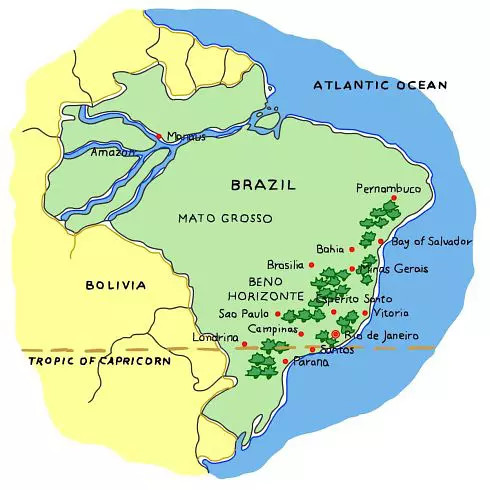
Between 1970 and 1980, Brazilian farmers turned to developing the warmer Minas province and Bahia in northern São Paulo, where there is no winter frost. To this day, Minas province remains one of Brazil's core specialty coffee regions.
Before 1990, the Brazilian government exercised strict control over the coffee industry, with both strong intervention and price protection. The state long set minimum purchase prices for farmers, which resulted in overproduction.
After 1990, with the liberalization of the free market, the former "Brazilian Coffee Institute" (IBC) was replaced by the National Economic Association, a non-investment administrative body that follows a principle of non-interference and allows producers and exporters to trade directly. Exporters' business activities are supervised by government legislation, and legal exporters must register. Continuing from three hundred years ago to today, coffee has become Brazil's most important economic pillar, and Brazil remains firmly in first place in global coffee production.
Brazilian Coffee Regions
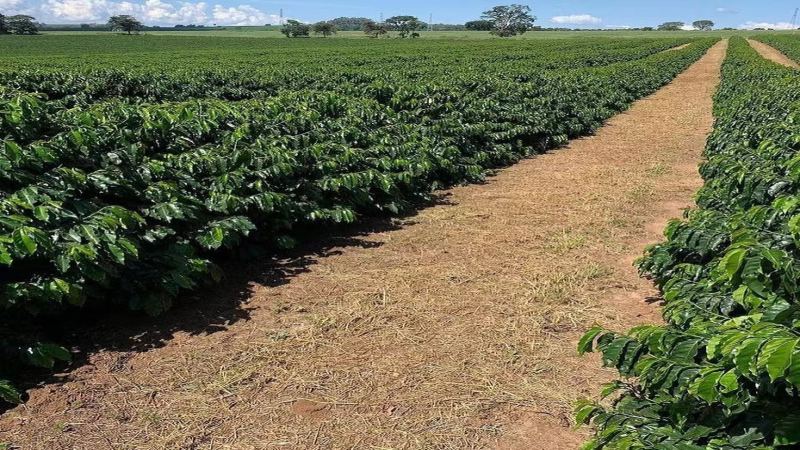
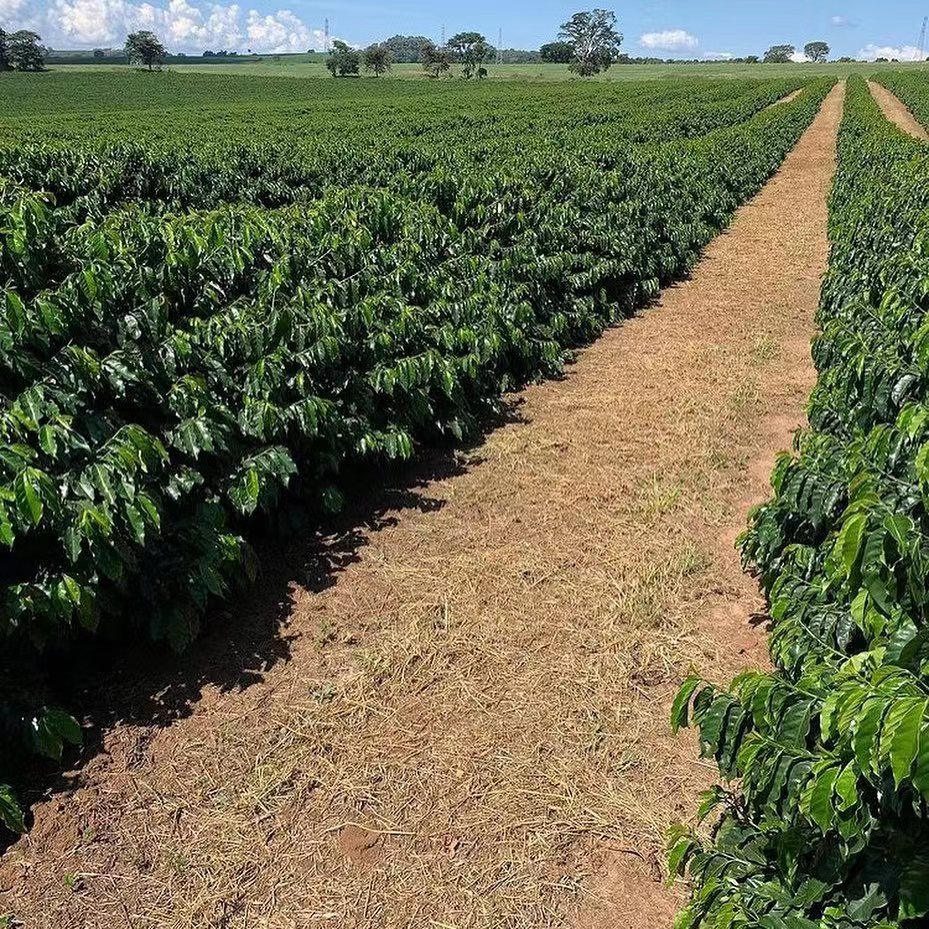
Altitude is closely related to coffee flavor. Take Panama Geisha as an example: the higher the altitude and the harsher the environment, the more outstanding the flavor tends to be. Compared with other producing countries in Central and South America, Brazil's altitude is noticeably lower. The terrain here is flat and uniform, lacking microclimates, and shaded cultivation is not customary; instead, sun-exposed cultivation is common. This creates Brazil's distinctive soft-bean style—low acidity, prominent nuttiness, good chocolate sweetness and body, but possibly with slight woody and earthy notes, while floral and citrus notes are not obvious. Simply put, Brazilian coffee tends toward mildness and balance, and it is hard to find the bold acidity and citrus notes of African beans.
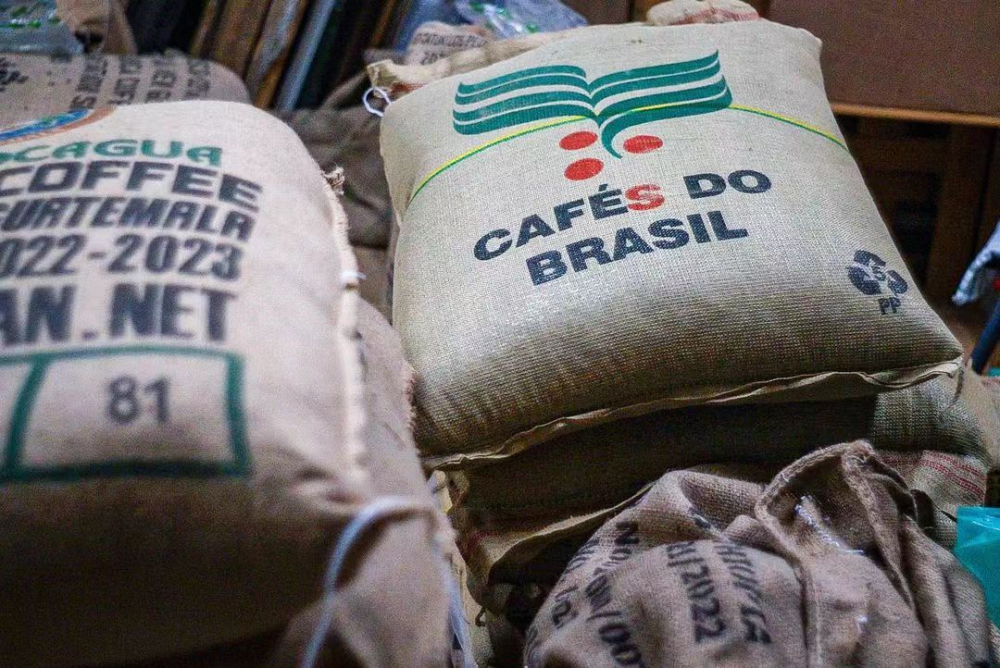
Brazilian coffee beans The producing areas are concentrated in the central and southern regions, spanning 7 states and about 14 coffee-producing regions, including: Sul de Minas, Minas Mountains, Chapada de Minas, Matas de Minas, Mogiana, Centro-Oeste de São Paulo, Montanhas do Espírito Santo, Conilon Capixaba, Cerrado, Planalto da Bahia, Atlantic Bahia, Paraná, Rondônia, and Cerrado. Among them, the most representative is undoubtedly the Cerrado region. It can be said that Sul de Minas and Cerrado have played an immeasurable role in driving the rise of Brazilian coffee.
Sul de Minas:
Altitude 700m-1200m, a hilly area, and Brazil's earliest coffee-producing region. Due to rising labor costs, mechanical harvesting is now mostly used. It is also the earliest commercially developed coffee region, and many large exporters have offices here. Sul de Minas's ability to become a specialty region owes much to its terrain and climate. With an altitude above 1100 meters, varied landforms, distinct dry and wet seasons, large day-night temperature differences, and rich microclimates, it is very suitable for growing Bourbon and Yellow Bourbon varieties.
Cerrado:
The Cerrado region is located in central Brazil, spanning eight provinces and covering the southern highlands of the approximately two-million-square-kilometer "Cerrado savanna climate zone." This savanna accounts for 22% of Brazil's total area and lies deep inland; Cerrado means "closed place" in Portuguese. The Cerrado savanna begins in Mato Grosso in southwestern Brazil, passes through west-central Minas, and reaches western Bahia in the north. The so-called Cerrado Coffee Region refers to the area where the savanna extends into Minas province at elevations of 850–1200 meters, and in Brazil's regional classification it is different from "Sul de Minas," which is also in Minas province. The flat, open terrain of the savanna is especially suitable for establishing large estates, and together with distinct dry and wet seasons and the cooler climate of the plateau, it forms unique growing conditions.
The Cerrado coffee-producing region referred to by Front Street is not the entire Cerrado savanna, but only the coffee-growing area in west-central Minas province above 1000 meters in altitude that can truly be called the Cerrado coffee region. This area is the finest part of the Cerrado savanna, with high altitude and fertile soil, making it possible to grow specialty coffee beans with clean sweetness, high body, and high cleanliness. Front Street believes that coffee from this region has a rich flavor without earthy notes.
Among Front Street's daily bean series, one Front Street Brazil Coffee comes from Brazil's Cerrado region and uses semi-washed processing. Because it has nutty flavor and balanced characteristics, it is often used in espresso blends. If you also want to taste the classic Brazilian flavor, Front Street Classic Espresso Blend is recommended, available for purchase at Front Street's Tmall flagship store.
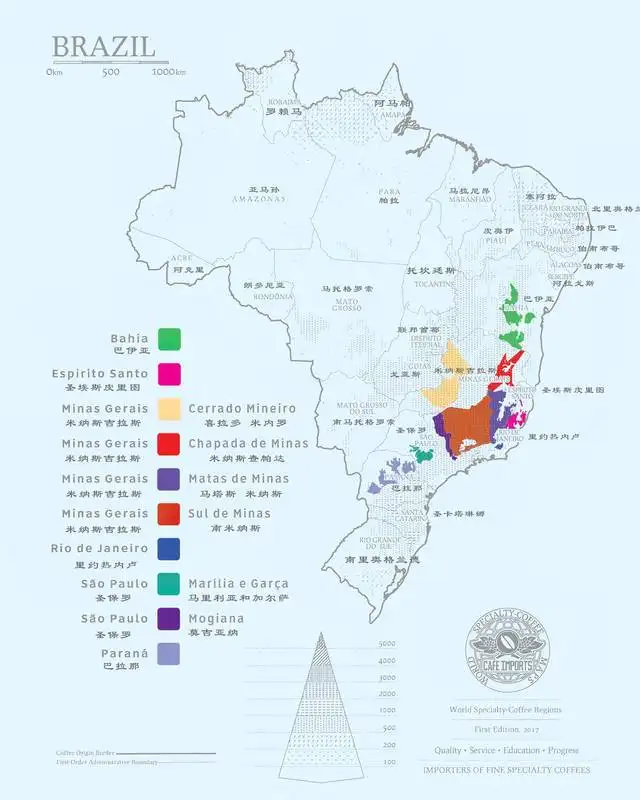
Mogiana:
This area is very close to southern Minas. Coffee is grown among shrubs, grasses, and other vegetation. There are many farming families in this region; some use traditional large-farm operations, while others adopt small-scale modern methods. Modern technology combined with mountain coffee-growing culture has produced coffee green beans of the highest quality.
Front Street Coffee (FrontStreet Coffee) currently has two Front Street Brazilian coffee beans in store, namely Red Bourbon coffee beans from the Cerrado region and Yellow Bourbon from Mogiana.
Brazilian coffee beans Varieties
There are many coffee bean varieties, and their flavors naturally differ. Everyone sees on the packaging of Front Street Coffee (FrontStreet Coffee)'s Brazilian coffee that it says: Variety Red Bourbon. What exactly is this variety? Ethiopia, as coffee's genetic treasury, has extremely rich varieties, and some undisclosed varieties are labeled as local heirloom. So what are the origins of Red Bourbon and Yellow Bourbon? Front Street will introduce them:
Red Bourbon
Red Bourbon is actually a secondary variety produced by a mutation of Typica, and belongs with Typica to the oldest surviving coffee varieties. Those that generally bear red fruit are called Red Bourbon; there are also Yellow Bourbon and Pink Bourbon. After the Red Bourbon coffee tree flowers and bears fruit, the color change path of the fruit is: green > slightly yellow > slightly orange > mature red > riper dark red, hence the name Red Bourbon. Its flavor usually has better aroma and brighter acidity, and when drunk it even has a charm similar to red wine. Red Bourbon is currently the most widely planted variety in Brazil's coffee-producing regions.
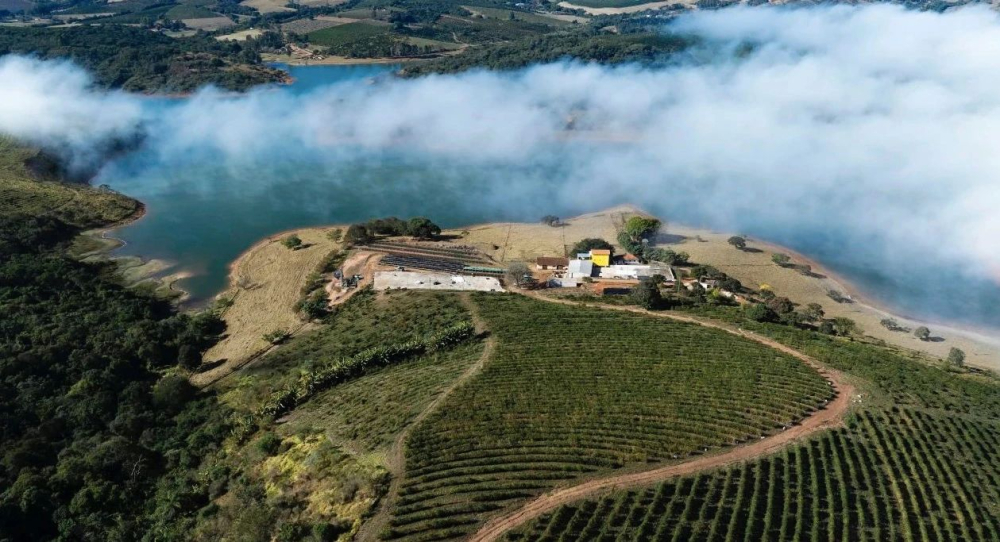
The Front Street Brazil daily coffee beans launched by Front Street are of the Red Bourbon variety.
Yellow Bourbon
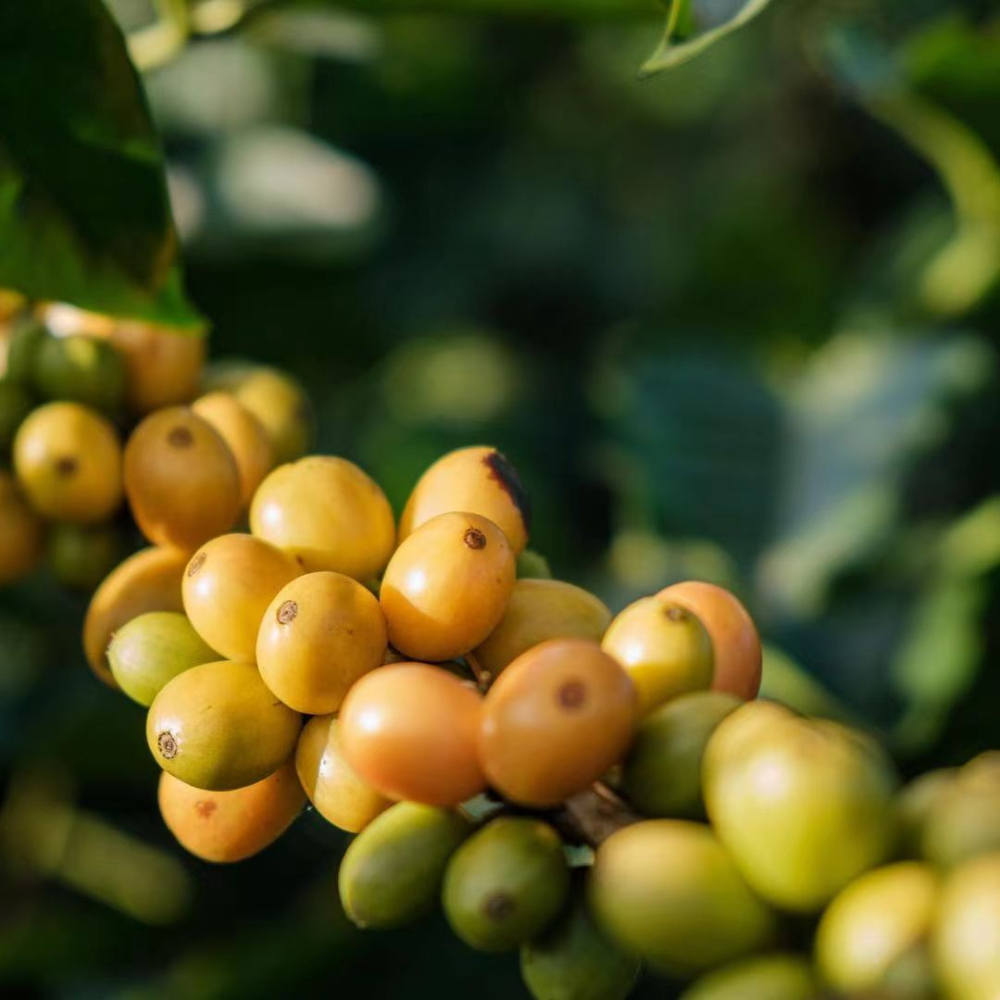
Yellow Bourbon is likewise a genetic mutant of Bourbon. Bourbon has always been regarded as outstanding among coffees for its high yield and good quality. Yellow Bourbon is a Bourbon variant unique to São Paulo, Brazil. When the fruit matures, it does not turn red like Red Bourbon but instead turns orange-yellow, hence the name Yellow Bourbon. Because Yellow Bourbon is grown at very high altitudes, its flavor performance is excellent.
The flavor of Yellow Bourbon usually has nutty and chocolate notes, with balanced, smooth acidity, weak and clean bitterness, and an overall bright and refreshing profile.
The Front Street Brazil Queen Estate Coffee on Front Street's bean list blackboard is of the Yellow Bourbon variety.
Brazilian coffee beans Processing Methods
You may have heard of washed processing and natural processing for coffee, but have you heard of semi-washed processing? Front Street has discussed with everyone that the flavor of coffee beans is not only related to their own variety and climate, but also closely related to the processing method, and the processing method is inseparable from local climate conditions. In the early days, Brazil basically used natural processing. Brazil's climate is relatively dry, so using the natural method was also reasonable; but natural processing is relatively rough, and it is easy for Brazilian beans to pick up a rotten-wood taste. On rainy days, there is also the risk of coffee beans molding, making it quite passive. So Brazil created a unique processing method called semi-washed, greatly shortening the drying time.
Semi-washed processing method flow:
First, remove the skin and pulp of the coffee cherries. Fully ripe pulp is easy to remove, while the skin of unripe green cherries is not easy to handle, so a second screening is carried out to standardize the ripeness of the coffee fruit. Semi-washed processing can control the degree of fermentation of the mucilage after depulping. Traditional methods, by contrast, cannot show the degree of mucilage fermentation. The semi-washed processing method does not have the "tank fermentation, clean water rinsing" process of tank processing. With the fermentation step reduced, the flavor of the coffee beans is completely different.
Compared with natural processing, Front Street believes that coffee beans processed this semi-washed way can greatly improve cleanliness and ripeness. Front Street Brazil Cerrado daily beans use the semi-washed processing method.
Front Street Coffee Brewing Suggestions:
Regarding coffee brewing, Front Street has always believed that the freshness of coffee beans is a very important part; fresh coffee beans allow you to experience coffee's rich flavors to the greatest extent. The coffee beans shipped by Front Street Coffee (FrontStreet Coffee) are all within 5 days of roasting, because Front Street deeply understands that the freshness of coffee beans has a great impact on flavor. Front Street's roasting philosophy is "Freshly roasted good coffee," so that every customer who places an order receives the freshest coffee when they get it. The resting period for coffee is about 4-7 days, so when customers receive it, it is exactly at its best flavor.
Of course, some customers need Front Street to help grind the coffee. That is no problem either, but Front Street must remind you: once coffee beans are ground in advance, they no longer need to be rested, because during transportation the pressure generated by carbon dioxide inside the package can also make the coffee flavor rounder, so once you receive the ground coffee, you can immediately brew a cup and drink it. But ground coffee needs to be brewed promptly, because after ground coffee contacts air it oxidizes relatively quickly. In other words, the coffee's flavor will dissipate fairly quickly and will not be as good. Therefore, Front Street recommends buying whole beans and grinding fresh before brewing, so you can better taste the coffee's flavor.
Front Street Parameters for brewing Front Street Brazil Coffee:
Front Street chose: KONO dripper, 88°C water temperature, 1:15 coffee-to-water ratio, 15g coffee, grind size (75% passing through China standard No. 20 sieve).
Use staged extraction: bloom with 2 times the coffee grounds' weight in water, that is, 30g water for 30 seconds, then pour in a small stream in circles until 125g for the first stage, continue pouring until 225g and stop. After the water in the dripper has dripped through, remove the dripper. Start timing from the beginning of pouring; extraction time is 2'00". Next, pick up the whole cup of coffee and swirl it to mix evenly, then pour it into a cup for tasting.
Front Street Brazil Semi-Washed Cerrado Coffee Bean Flavor : Obvious sweetness on entry, with a faint lemon aroma, containing rich nutty flavor, and a clear dark chocolate note in the finish; the overall impression is relatively round.
Front Street Brazil Queen Estate Natural Yellow Bourbon Coffee Bean Flavor : Balanced mouthfeel, with the main note of almond and cocoa highlighting the sweetness of sugarcane; it is a coffee with good body and full sweetness.
As for whether Brazilian coffee is good or not, Front Street believes it depends on personal taste. After all, everyone's palate is different, and the flavors they like are different, but Brazilian coffee's balanced mouthfeel is still quite good. Of course, if you do not like this flavor, you can try Front Street Ethiopia Yirgacheffe's fresh, bright floral and fruity notes, or you can try Front Street Colombia's nutty, dark chocolate, and soft fruity acidity notes!
The above content is compiled by CoffeeHunters, a coffee news website.


