







What Makes Rwanda's Coffee Growth So Suited to Arabica?
Rwanda grows delicate Arabica coffee on high-altitude volcanic soil under a tropical highland climate, and most of it is washed. Washed Bourbon, Caturra, and Catuai lots show plum, citrus, berry, and honey-like sweetness. Coffee supports roughly one in thirty Rwandans, and agriculture contributes about one-third of the gross national product.
The country's many mountains and plateaus give it the name Land of a Thousand Hills, and abundant rainfall plus volcanic soil create natural conditions for arabica coffee. A pandemic-era live-streaming sales event by Rwanda's ambassador to China sold thousands of pounds of beans instantly, showing both market demand and the quality buyers expect from these lots.
Rwanda, an African landlocked country known as the "Land of a Thousand Hills," nurtures delicate and refined Arabica coffee thanks to its high altitude, volcanic soil, and tropical highland climate. From the silence of the colonial period to the rise of specialty coffee, Rwandan coffee, mainly washed, showcases plum, citrus, berry, and honey-like sweetness. Front Street Coffee has continuously introduced Rwandan beans, and this article will take you through the region's characteristics, historical evolution, variety composition, and brewing parameters to fully understand the charm of Rwandan coffee, and explore the flavor codes of three bean varieties: Bourbon, Caturra, and Catuai.
When you think of Rwanda, what comes to mind? Although this country is not large in size, those who know coffee are well aware that the coffee beans produced here are famous for their delicate and refined flavors. The enthusiasm of domestic coffee lovers for Rwandan coffee is no exaggeration to describe as "sold out as soon as it's listed."
Front Street mentioned earlier that in Rwanda, about one in every thirty people relies on coffee cultivation for their livelihood, and agricultural output accounts for one-third of the gross national product. Due to the pandemic, this year Rwanda's coffee beans and other agricultural products have experienced unsalable conditions. Rwanda's Ambassador to China, James Kimonyo, therefore tried a live-streaming sales event. As the countdown "54321" fell, thousands of pounds of coffee beans were instantly snapped up. This instant-sellout style of sales, on one hand, demonstrates the huge potential of consumption upgrading in the Chinese market, and on the other hand, confirms that Rwandan coffee beans can indeed meet the expectations of coffee lovers. So, what exactly are Rwanda's regional advantages?
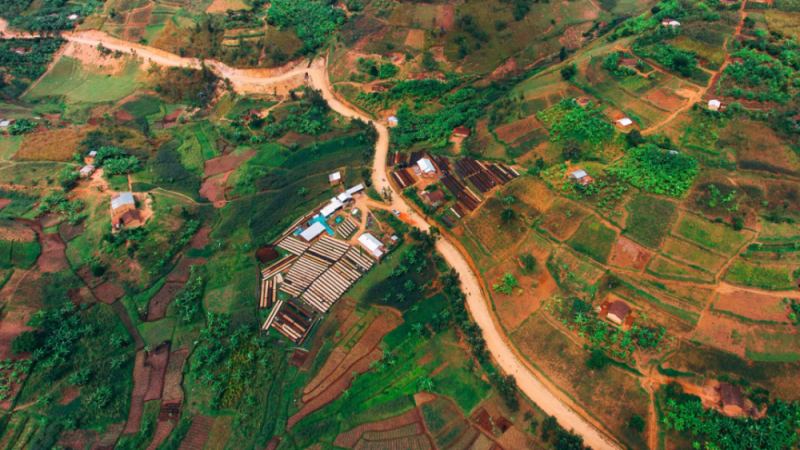
Rwanda has long been known as the "Land of a Thousand Hills." According to Front Street, this name comes from its terrain characterized by many mountains and plateaus throughout the country.
Most of Rwanda has a tropical highland climate and tropical savanna climate, which provides abundant rainfall for coffee growth; at the same time, volcanic soil combined with suitable climatic conditions gives the country a natural advantage for growing Arabica coffee and lays the foundation for the birth of high-quality coffee cherries.
According to information reviewed by Front Street, coffee exports alone account for more than 70% of Rwanda's total export trade. The country has about 33,000 hectares of coffee plantations, with 500,000 people engaged in coffee cultivation, mainly smallholder farmers. Rwandan coffee is basically grown without chemical fertilizers or pesticides, and soil fertility mainly comes from natural ground cover and traditional fertilization methods.
Friends familiar with Front Street should know that Front Street Coffee has always reserved a place for Rwandan coffee, and related products can also be found on Front Street Coffee's Taobao store. Today, let's have a good talk about Rwandan coffee.
Rwandan coffee has not actually been in the specialty category for very long. According to information reviewed by Front Street, Rwanda is located in central Africa and is a standard landlocked country, having been a colony of Germany and then Belgium. It was during this period that coffee was introduced to Rwanda by German missionaries. During the colonial period, coffee production was mainly supplied to the then-ruling country Belgium. Although production was large, the labor force was exploited, resulting in less-than-ideal coffee bean quality.
It was not until after Rwanda's independence, when the first official coffee organization OCIR was established, that coffee bean production gradually received attention. After that, Rwanda's coffee production continued to climb from the 1960s to the 1980s and reached a historical peak in 1986. In the early 1990s, domestic political turmoil (the Rwandan genocide) caused the coffee industry to stagnate. At that time, Rwandan coffee still did not meet specialty standards. It was not until 2001, after the political situation stabilized, that the Rwandan government established NAEB (National Agricultural Export Development Board), focusing on increasing coffee exports to earn foreign exchange.
Front Street Coffee has recently also introduced several batches of Rwandan coffee beans from different producing regions. There are two reasons: first, Rwanda's coffee industry is developing rapidly and quality is guaranteed; second, Rwanda has gradually developed a highly recognizable regional flavor that is different from Ethiopia and Kenya.
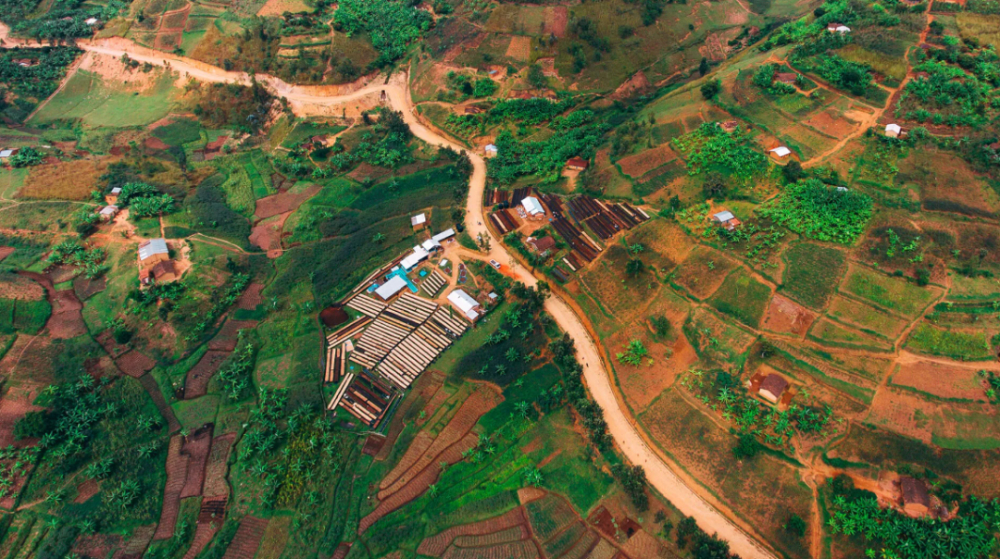
Although the flavor is different from Kenya and Ethiopia, the business model is quite similar. Rwandan coffee is also mainly operated by smallholders, and farmers send the harvested coffee cherries to nearby processing plants. According to Front Street, in just over a decade, Rwanda's washing stations increased from two to 220, all currently privately owned by exporters or farmer cooperatives. Because the average farm size is very small (each farm has on average fewer than 200 coffee trees), each washing station serves about 50 to 100 farms. NAEB employs 200 botanists and cuppers who regularly inspect quality at washing stations and teach farmers about soil management, organic farming, pruning, pest control, and harvesting.
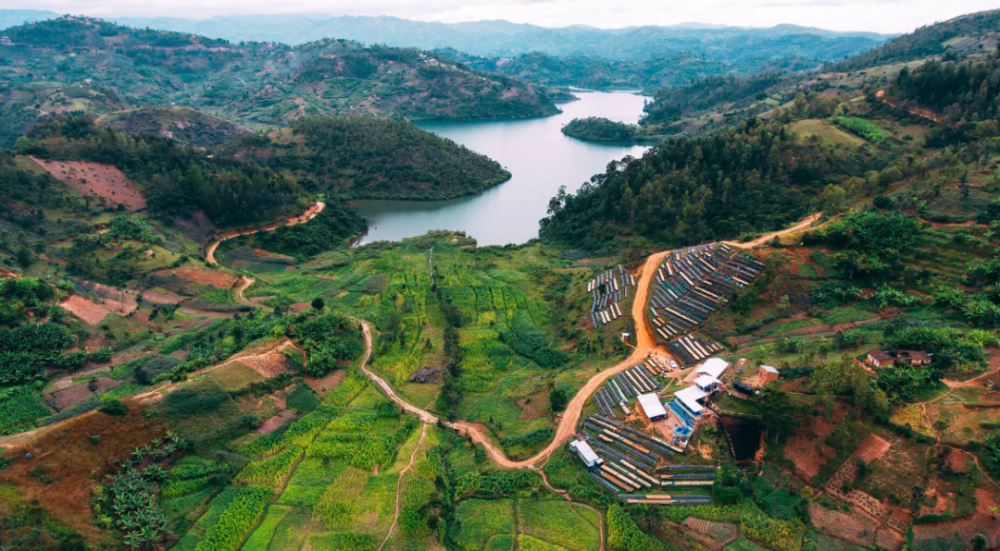
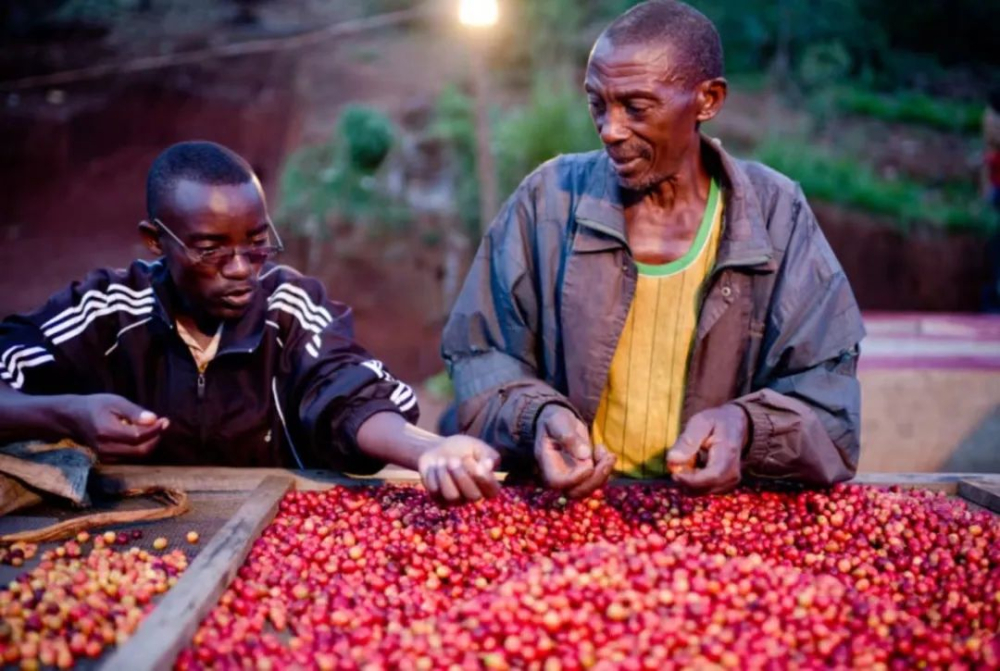
Therefore, Rwandan coffee beans are currently mainly processed by the washed method. Every year during the harvest season, farmers pick ripe coffee cherries and send them in batches to washing stations. First, manual sorting removes immature or damaged fruit. Then the skin is removed, and washing fermentation is carried out for 12 to 18 hours in a cool, low-temperature environment, after which residual mucilage is washed off in channels. During the raised-bed drying stage, washing station staff manually turn and carefully tend the beans to ensure that the parchment green beans do not lose too much water or dry unevenly under sufficient sunlight, until the moisture content of the green beans steadily drops below 14%.
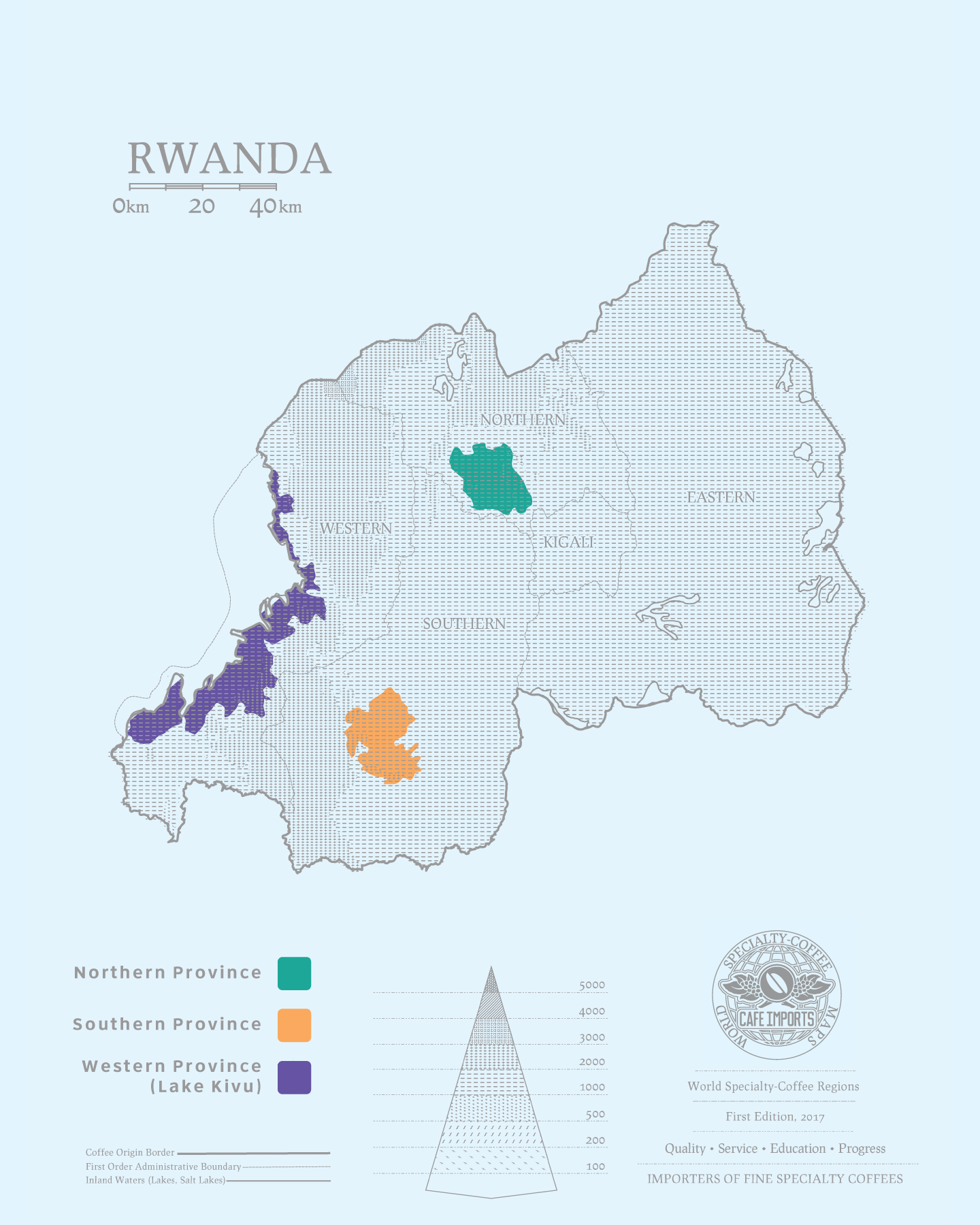
Front Street's current Rwandan coffee is a washed bean from the Nyamasheke region in western Rwanda. This region is close to the famous Lake Kivu and is known for rich, complex, and sweet coffee.
Front Street Coffee: Rwanda Gaseke Coffee Beans
Country: Rwanda Region: Nyamasheke region, western Rwanda Altitude: 1700-200m Varieties: Bourbon, Caturra, Catuai Processing Method: Washed Flavor: Plum, citrus, berries, nuts, bright acidity, honey sweetness in the finish
According to Front Street, the green bean buyer for Gaseke coffee beans, Fidele Ndagijmana, is a young trader. He recognized the development potential of Rwanda's specialty washed coffee and applied to the government to build this processing plant, successfully producing 170 tons of coffee berries in the first year. He also used the off-season to improve and expand production equipment so as to provide better machines and a better storage environment in the next harvest season. With shrewd business acumen, he ultimately also secured more land around the processing plant for cultivation. Gaseke Washing Station thus became widely known.
As you can see, Front Street's Rwandan coffee is a blend of three varieties: Bourbon, Caturra, and Catuai. Since we are introducing it, let's explain these three varieties clearly as well. According to Front Street, more than 90% of Rwandan coffee varieties are the early-introduced Bourbon and its mixed varieties, which have a certain ability to resist natural disasters. Bourbon coffee was first planted on Reunion Island, introduced to Brazil in 1860, and then quickly spread northward throughout Latin America. Several Latin American Bourbon coffees currently introduced by Front Street Coffee include Brazil Red Bourbon, Brazil Yellow Bourbon, and Colombia Pink Bourbon.
Bourbon Coffee Beans
However, the advantage of Bourbon in Latin America no longer exists because of its poor disease resistance. In contrast, Rwandan Bourbon still retains its advantage, which is also one of the reasons Front Street Coffee introduced Rwandan coffee beans.
According to Front Street, Rwanda also grows a small amount of Caturra and Catuai coffee cherries. What is special about these two varieties? Caturra is a natural mutation of Arabica Bourbon, discovered in Brazil in 1937. Its tree is shorter than Bourbon. Because it inherits Bourbon lineage, its disease resistance is weaker, but its yield is higher than Bourbon.
Catuai is a artificial hybrid of Caturra and Mondu Novo, with strong resistance to natural disasters, especially wind and rain. The Catuai tree is shorter, and its fruit is firmer than that of other coffee trees and not easy to pick. The fruit can be red or yellow. So far, there is no evidence that yellow fruit is superior to red fruit; on the contrary, some have found in cupping that although coffee processed from certain yellow fruit has good acidity, its cleanliness is not as good as that of red fruit.
Having said so much, friends who have never drunk Rwandan coffee may still not understand why it is so popular. Now Front Street will guide everyone through brewing a pot of Rwandan coffee to experience its charm firsthand.
Front Street Coffee's brewing parameters:
V60 dripper
Water temperature 91℃
Water-to-coffee ratio 1:15
Coffee dose 15g
Grind size (80% passing through China standard No. 20 sieve)
Front Street brewing method: Use twice the coffee powder weight in water for blooming, about 30 seconds; pour in a circular motion with a small stream until 125g, then pause; when the water level drops and is about to expose the coffee bed, continue pouring until 225g and stop; when the water level drops again and is about to expose the coffee bed, remove the dripper (start timing from the beginning of blooming). The total extraction time is about 2 minutes 00 seconds.
Rwandan coffee flavor and mouthfeel characteristics: Front Street believes this coffee has bright acidity, reminiscent of orange or tropical fruit aroma, with a slender and smooth mouthfeel.
For professional coffee knowledge exchange and more coffee bean information, please follow Coffee Workshop (WeChat public account cafe_style)
For more specialty coffee beans, please add private WeChat Front Street Coffee, WeChat ID: kaixinguoguo0925
The above content is compiled by CoffeeHunters, a coffee news website.


