







How Do Arabica Varieties Like Typica and Bourbon Differ?
Coffee is grown in 66 countries, and the beans sold worldwide fall into three species: Arabica, Robusta, and Liberica. Arabica and Robusta dominate both the commercial and specialty markets. Typica, Bourbon, Geisha, Caturra, and Catuai are not separate species at all; each one belongs to the Arabica family, yet their cupping performances differ noticeably.
Arabica accounts for roughly 30% of global coffee production. It is generally weak in disease and pest resistance, demanding about its growing environment, and yields less per unit area than Robusta. Robusta, by contrast, supplies nearly 70% of world production and most often appears in instant coffee or is drunk with sugar and milk.
The global coffee-growing map covers 66 countries, and the coffee beans on the market can ultimately be classified into three major species: Arabica, Robusta, and Liberica. Among them, the first two account for almost the entire commercial and specialty markets. The Arabica family has a vast number of branches, and its flavor expression is generally clean and elegant; almost all specialty coffee comes from this camp. Robusta, on the other hand, is known for its strong resistance to pests and diseases and its heavy bitterness, and it appears more often in instant products. Names often mentioned such as Typica, Bourbon, Geisha, Caturra, and Catuai actually all belong to Arabica, but their cupping performances differ noticeably. Based on Front Street Coffee's observations and cupping, this article will sort through the origins, bean characteristics, and flavor tendencies of these varieties one by one, and provide corresponding Front Street product recommendations, making it easy for coffee lovers to follow the guide.
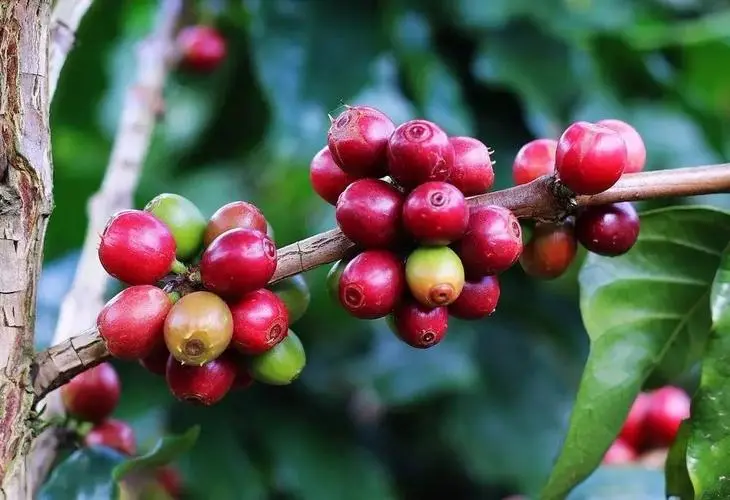
Coffee cultivation is spread across 66 countries worldwide, and at the species level it can be grouped into three major categories: Arabica, Robusta, and Liberica. Among these three, Arabica and Robusta have the strongest presence in the market and are also the two types of coffee beans encountered most frequently in daily life.
The number of varieties under Arabica is considerable, and most have a clean and high-quality flavor foundation; the beans seen in the specialty coffee field basically all belong to this broad category. However, Arabica is generally weak in disease and pest resistance, is quite demanding about its growing environment, requires meticulous management during cultivation, and has relatively limited yields per unit area, accounting for about 30% of global coffee production.
Robusta has far fewer varieties, and in flavor most present intense bitterness, so it is often used in the production of instant coffee, or drunk together with plenty of sugar and milk. This species has outstanding disease and pest resistance, strong environmental adaptability, does not require too much meticulous care, and also has high yields; nearly 70% of global coffee production comes from Robusta.
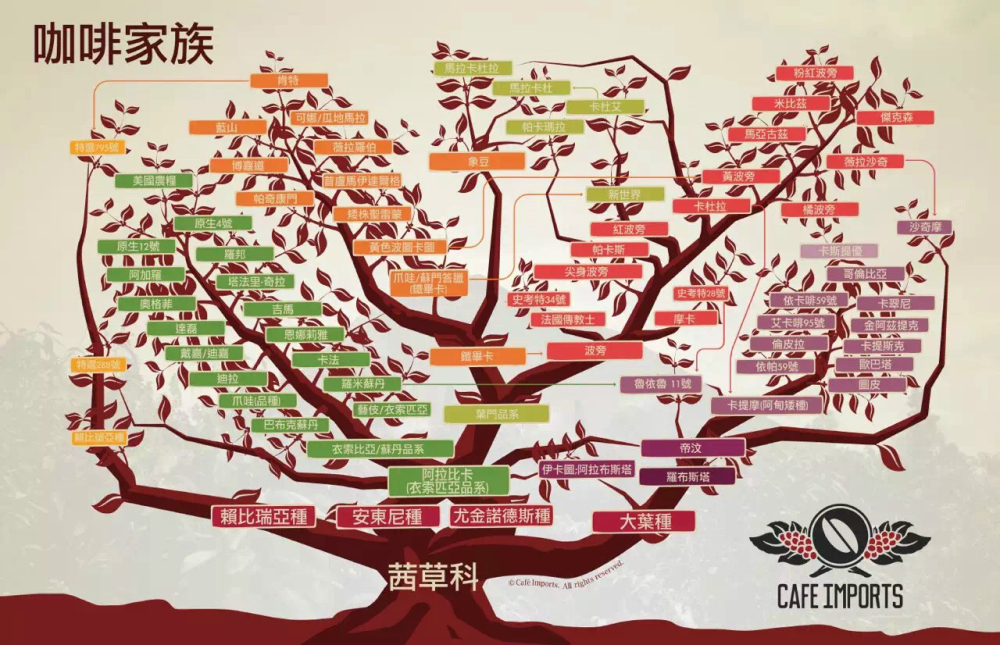
Names often heard in daily life such as Typica, Bourbon, Geisha, Caturra, and Catuai all belong to the Arabica camp, but their performances in flavor and mouthfeel are far apart.
Typica
Typica's place of origin can be traced back to Ethiopia and southeastern Sudan, and it is one of the oldest varieties in Arabica. Its young leaves at the top of the plant are a red-copper color, which is why it is also called "red-top coffee." Most of the Arabica varieties we can see today are derived from Typica.
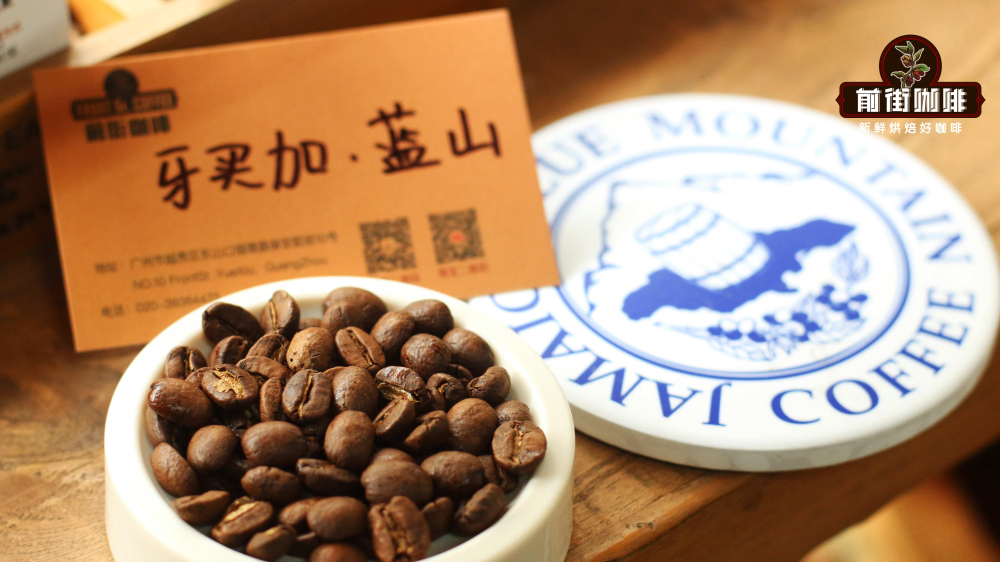
Through observation and cupping, Front Street Coffee found that Typica's bean shape is oval, the bean body is somewhat slender and plump, the mouthfeel is clean, and the flavor is delicate. If you want to try Typica, you can give priority to Front Street 2013 Yunnan Small Bean and Front Street Blue Mountain No. 1, from which you can experience the pure flavor of high-quality Arabica.
Bourbon
Bourbon is a variety produced by the natural mutation of Typica, and the most notable change in its coffee beans lies in the bean shape—from Typica's long body to a round body. Bourbon coffee was first planted on Reunion Island in Brazil, which was called le Bourbon before 1789, and the variety name comes from this.
Through observation and cupping, Front Street found that Bourbon's bean shape is short and round, the bean body is thick and substantial, the mouthfeel is smooth, and the sweetness is prominent. If you want to taste it, you can choose Front Street Queen's Estate Yellow Bourbon. It is a rare variety within the Bourbon branch, with a rich charm and clear finish; besides pour-over, it is also suitable for extraction with a moka pot and a home coffee machine.
Gesha/Geisha
Gesha originates from the Gesha forest in Ethiopia. Compared with other varieties, Gesha's most prominent characteristic is extremely low yield; the plant shows long branches, large internodal spacing, few flowers, and few fruits.
Through observation and cupping, Front Street Coffee found that Gesha's bean shape is slender, with pointed ends and a plump, substantial middle. Front Street Emerald Red Label belongs to the highest-grade Gesha variety, produced at the famous Emerald Estate; when brewed, it can present a delicate and refined complex fruit flavor, as well as the aroma of citrus and flower tea.
Caturra
Caturra is a natural mutation of Bourbon. Its plant has very close branch spacing, and the fruit is smaller than Bourbon's, so more fruit can be produced in the same space, and the yield increases noticeably as a result.
Through observation and cupping, Front Street Coffee found that Caturra's bean shape is round and long, with a curve at the tail end of the bean body, a bright and clean mouthfeel, and clear sweetness. If you want to try Caturra, you can choose Front Street Colombia Huila. This bean has been medium-dark roasted, fully highlighting the aroma of dark chocolate and roasted nuts, and is very friendly to those who are afraid of acidity.
Catuai
Catuai is a hybrid artificially bred from Caturra and Mundo Novo. On the one hand, it inherits Mundo Novo's characteristics of high yield, strong disease resistance, and good cupping performance; on the other hand, it also inherits Caturra's advantages of small size, high-quality acidity, and tolerance to sun exposure. Because the plant itself is relatively short, it can be planted at twice the density during cultivation.
Through observation and cupping, Front Street Coffee found that Catuai's bean shape is oval and flat, the tail end of the bean body is relatively slender, the acidity is soft, the mouthfeel is clean, and it carries a rich fruit aroma. This variety is mainly distributed in Central and South American production regions, among which Central American countries are more representative. If you want to learn about Catuai, you can buy Front Street Elida Estate Catuai to taste it.
The above content is compiled by CoffeeHunters, a coffee news website.


