







What Does Crema Reveal About Coffee Quality?
Espresso is often used as a benchmark for coffee quality and barista skill. A double portafilter takes 19 to 20 grams of grounds and a single takes 13 to 14 grams, extracted at about 9 bar. Freshly pulled espresso shows a golden layer of crema, called Cream, which forms because heated, pressurized water carries soluble compounds and gas out of the coffee.
Tasting follows three steps: smell, observe, then drink. The crema's color, thickness, and persistence give clues about freshness and extraction, while the aromas point to the roast and origin. A common starting point is a blend of Brazilian and Colombian beans, which yields a medium-thick crema with dark chocolate, cocoa, and caramel notes.
Espresso has long been hailed as the "soul of coffee," conquering countless coffee lovers with its rich and intense flavor, while also becoming an important standard for judging coffee quality and barista skill. A good cup of espresso—from the extraction parameters to the golden crema on the surface, and then every step of smelling, observing, and tasting—hides details worth exploring. Front Street Coffee will take you through a comprehensive understanding of the key points of making Espresso, the formation principles of the Cream crema, and how to appreciate a cup of espresso through the three steps of smelling, observing, and drinking, so you can truly understand the rich charm contained in this small cup of coffee.
For more specialty coffee knowledge, please follow: Front Street Coffee (Frontsteet Coffee)
Espresso has long been hailed as the "soul of coffee"! However, because of its strong mouthfeel and powerful taste, many first-time tasters find it hard to accept, but once you get used to this style, you can instead appreciate its unique flavor. At the same time, Espresso is also an important benchmark for measuring coffee quality and barista skill.
The fact that Espresso is loved by so many people naturally means it has its own unique qualities. Next, Front Street Coffee (FrontStreet Coffee) will introduce Espresso to everyone!
| Espresso
With high temperature, high pressure, and an appropriate amount of coffee grounds, a cup of Espresso can be made.
Taking Front Street Coffee (FrontStreet Coffee)'s [Specialty Blend] as an example, this recipe is made from a combination of Brazilian and Colombian beans. The espresso made from it will have a medium-thick crema and present aromas of dark chocolate, cocoa, and caramel. It is very friendly to people new to espresso and can be purchased at Front Street's Taobao store or Front Street's Tmall flagship store.
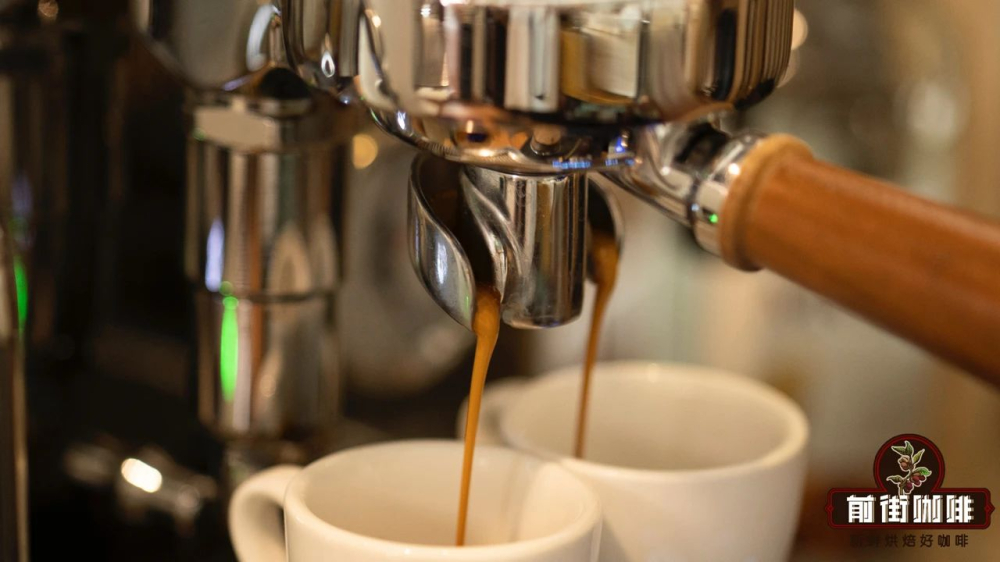
Usually, a double portafilter uses 19-20 grams of grounds, and a single portafilter uses 13-14 grams of grounds, extracting the required Espresso under the condition of 9 atmospheres of pressure (that is, 9Bar).
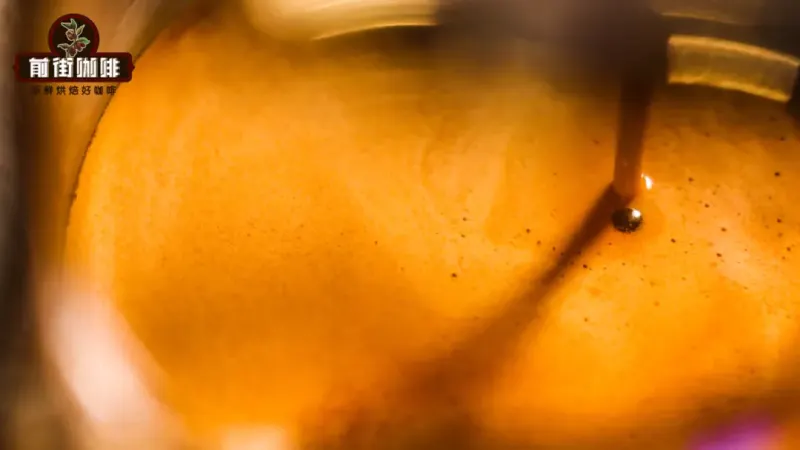
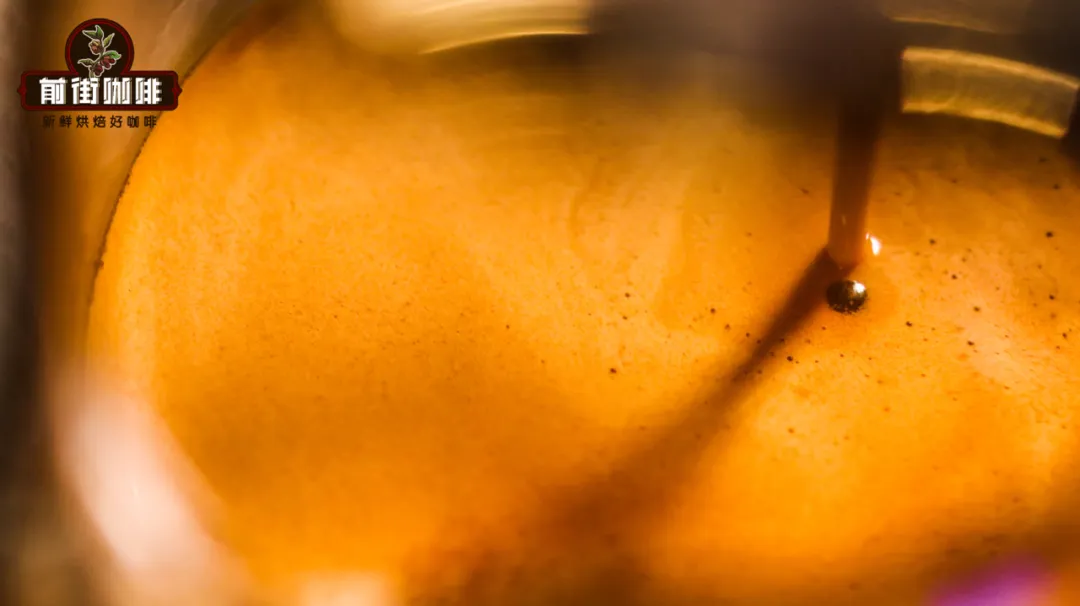
A freshly extracted Espresso will have a beautiful layer of golden crema floating on the surface, and this layer of crema is usually called "Cream." The formation of "Cream" is closely related to that 9Bar of pressure—water, when heated and pressurized, extracts the soluble substances from the coffee grounds layer, and this process emulsifies the natural fats and oils contained in the coffee. In addition, freshly roasted coffee beans contain carbon dioxide inside, and when making Espresso, these carbon dioxides dissolve into the coffee under pressure.
Many people pay special attention to the layer of Cream when drinking Espresso, thinking that the thicker the Cream, the better the beans. Indeed, the amount of Cream is related to the freshness of the beans, but one thing to note: Robusta beans also have very abundant Cream!
|How to taste Espresso?
*Smell
When you get a cup of Espresso, the first thing is usually to smell the aroma. You will feel the scent of nuts and caramel. If the roast level is not so dark, you may also smell a fruity sweet-and-sour aroma.
*Observe
After smelling the aroma, observe the color and thickness of the Cream, because from these details you can roughly judge how well this cup of coffee was made.
An espresso with a lighter color and thin crema can basically be judged as under-extracted.
A very dark color with inconsistent crema color on the surface can be judged as over-extracted.
Spots appearing on the surface crema can be judged as channeling causing partial over-extraction.
*Drink
Finally comes the tasting step. How should we drink a cup of Espresso? For the first sip, drink the Cream; for the second sip, drink the combination of Cream and espresso; for the third sip, drink the coffee liquid.
From it, we can taste the flavors of fruit acidity, nuts, chocolate, and caramel.
Different places also have different ways of drinking it. Some serve it with a glass of ice water; some place a sugar cube on top and watch it slowly sink and melt; and some add milk, which turns it into a latte, cappuccino, macchiato...
Espresso is unforgettable for a long time thanks to its unique mouthfeel and taste. Due to the characteristics of its preparation method, both its strengths and weaknesses are magnified, so the quality requirements for the coffee beans themselves are also quite high! If you have the chance, everyone can also order a cup of Espresso and experience the unique charm contained in this small cup of coffee.
The above content is compiled by CoffeeHunters, a coffee news website.


