







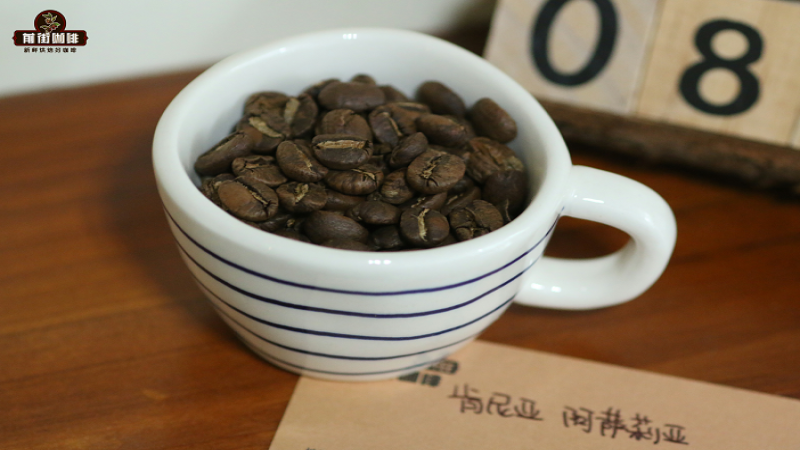
What makes Kenya coffee taste so fruity and juicy?
Kenya coffee stands out for vivid fruit notes and juicy acidity, and the Asali station beans from Thika show why. Grown at 1550-1750 meters from the SL28 and SL34 varieties and washed in the Kenyan 72-hour fermentation style, they cup with nashi pear, dried plum, yellow sugar, plum and cherry tomato. The roast and V60 recipe follow from those traits.
Although Kenya borders Ethiopia, its cup profile differs sharply, shaped by the equator, the East African Rift Valley and plateau terrain averaging about 1,500 meters. Mount Kenya rises to 5,199 meters with year-round snow. The tropical monsoon setting, lifted elevation and uneven seasonal rainfall give the mild plateau zones that suit coffee bean trees.
Kenyan coffee is renowned for its vivid fruit tones and juicy acidity, making it one of the most recognizable African origins in the minds of many coffee lovers. This article focuses on the Kenya Asali coffee beans selected by Front Street Coffee, systematically covering their origin terroir, variety lineage (SL28 and SL34), the unique Kenyan-style 72-hour fermentation washed process, and sharing specific roasting curves along with V60/cake cup brewing recipes. At the same time, by incorporating the historical background of Starbucks Kenya coffee beans, it helps readers fully understand the appeal of this bean from the dimensions of flavor, processing method, and brewing details.
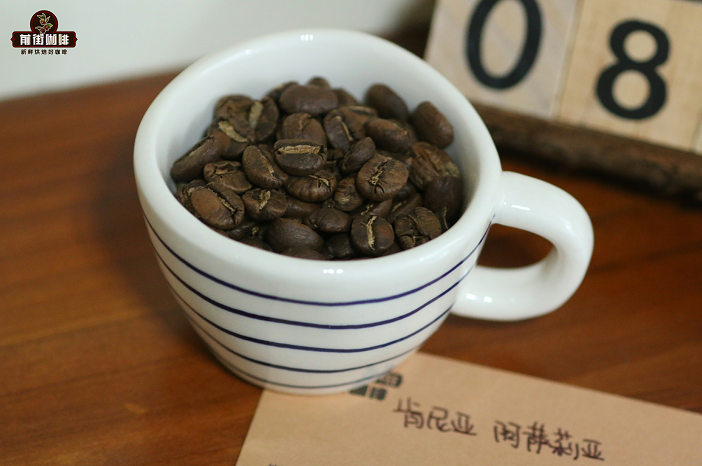
Front Street Coffee: Kenya Asali Coffee Beans
Region: Kenya, Thika Region, Asali Processing Station
Altitude: 1550-1750m
Processing Method: Washed
Variety: SL28 & SL34
Flavor: Nashi Pear, Dried Plum, Yellow Sugar, Plum, Cherry Tomato
Kenya is located in eastern Africa, with the equator running through it horizontally and the East African Rift Valley running from north to south across the entire country. It borders Somalia to the east, Tanzania to the south, Uganda to the west, Ethiopia and Sudan to the north, and faces the Indian Ocean to the southeast. Although it is adjacent to Ethiopia, the flavor profile of Kenyan coffee is strikingly different from that of the latter.
Regional Information Kenya's unique climate and geographical environment create excellent conditions for cultivating high-quality coffee beans. The country is located in eastern Africa, with the equator crossing through its center and the East African Rift Valley running north to south. It borders Somalia to the east, Tanzania to the south, Uganda to the west, Ethiopia and Sudan to the north, and faces the Indian Ocean to the southeast, with a coastline of 536 kilometers. The terrain is dominated by plateaus, with an average altitude of about 1,500 meters. Mount Kirinyaga (Mount Kenya) in the center has an altitude of 5,199 meters, with snow covering its summit year-round, making it the second-highest peak in Africa. The country lies in a tropical monsoon zone, but due to its higher elevation, it actually exhibits a tropical savanna climate, with significant differences in seasonal rainfall distribution.
The coastal areas have a hot and humid climate, while the plateau regions are much milder, with annual maximum temperatures ranging from 22-26°C and minimum temperatures around 10-14°C. Coffee is a pillar industry in Kenya, and coffee trees are mostly planted between 1,500 and 2,100 meters above sea level, with two harvests possible each year. The most prominent characteristic of Kenyan coffee is its bright fruit aroma, with citrus notes being the most common. It has rich flavor layers, juicy acidity, and often presents grapefruit and wine-like nuances, with moderate body, making it highly favored by many coffee professionals.
SASINI Estate is located in the KIAMBU region, at an altitude between 1,500 and 2,000 meters. The area has beautiful scenery, a comfortable climate, and abundant sunshine. The soil is fertile acidic red loam, loose in texture with deep soil layers and excellent drainage, and the water pH is maintained between 5.5 and 6.5.
SL-28 is one of the two most highly regarded varieties developed by the Scott Laboratories in Kenya in the 1930s. Although Scott Laboratories no longer exists, its predecessor is now the National Agricultural Laboratories, under the Kenya Agricultural and Livestock Research Organization. Both varieties belong to the Bourbon derivative line, though their source lineages differ: SL-28 originated from drought-resistant varieties initially grown in Tanganyika (parts of present-day Tanzania); it is generally recognized as having the highest quality, but its yield is lower compared to other commercial Arabica varieties. The young leaves of these SL variants are all bronze-colored.
Processing Method Introduction The beans obtained by Front Street use a washed processing method.
The Kenyan-style washed process uses a repeated cycle of fermentation followed by washing. On the day of harvest, the finest coffee cherries are selected, depulped, and fermented for 24 hours, then rinsed with clean river water. Next, they are fermented again with clean river water for 24 hours and washed again, repeating this cycle 3 times for a total of 72 hours, which is why it is called the Kenyan-style 72-hour fermentation washed process, or K72 for short. This processing method allows the coffee beans to ferment for an extended period at low temperatures, giving them a brighter, cleaner, and fuller flavor.
Front Street Coffee Roasting Analysis
This Kenyan coffee has a rich flavor and, due to its high growing altitude, the beans are relatively hard. In the early roasting stage, a higher rate of temperature rise is used to climb, with the yellowing point appearing at about 5 minutes. Then the heat is reduced to enter the Maillard reaction stage. When the temperature reaches 166°C, the heat is lowered again to extend the Maillard reaction time. After first crack begins, the beans absorb heat strongly, so it is recommended to maintain heat supply at this stage to avoid a stall in temperature rise. The first crack development period takes longer, which helps reduce acidity and fully develop the flavor.
Roaster Yangjia 800N (batch size 300g)
Charged at 170°C, heat setting 100, airflow opened to 3; turning point at 1'42", when the temperature reaches 140°C, open airflow to 3.5 with heat unchanged; at 149°C the bean surface turns yellow, the grassy smell completely disappears, entering the dehydration stage;
At 7'14'' dehydration is complete, heat and airflow remain unchanged. At 7'30'' the bean surface develops wrinkles and dark patches, and the toasted bread smell turns into coffee aroma—this is the prelude to first crack, and at this point one should listen carefully for the sound of first crack. At 8'20'' first crack begins, airflow opened to 4, heat reduced to 50. Post-first-crack development time is 1'50''. At 188°C the heat is reduced to 30 to flatten the temperature rise, and the beans are dropped at 193.3°C.
Front Street Coffee Brewing Recommendations
Dripper: V60 or cake cup Water Temperature: 88-90°C Coffee-to-Water Ratio: 1:15 Grind Size: Fine grind (80% passing through China standard No. 20 sieve)
Brewing Method: Staged extraction. Use 30g of water for a 30-second bloom, then pour in a slow circular stream until reaching 124g for the first stage. When the water level is about to expose the coffee bed, continue pouring until 228g and stop. When the water level is about to expose the coffee bed again, remove the dripper. (Timing starts from the beginning of the bloom) Total extraction time is 1'55".
When brewed with a V60 dripper, it smells floral, and on the palate you can feel the acidity of cherry tomato, citrus, and nuts. Creamy aroma emerges in the mid-palate, accompanied by brown sugar sweetness, while the finish has a cocoa and oolong tea-like tea sensation. The flavor layers are relatively rich, with floral notes particularly prominent. When switching to a cake filter cup, it smells of herbal notes and cherry tomato, the overall juiciness is more obvious, and the acidity appears more lively.
The above content is compiled by CoffeeHunters, a coffee news website.


