







Where did coffee originate from, and how does that shape pour-over?
Front Street Coffee's COE22 lot is a sun-dried Typica from Sidamo Arsi in Ethiopia, auctioned at 22nd place and harvested in 2020. Many home brewers found their pour-over fell short of the café cup. The fix is four variables: grind size, water temperature, dripper choice, and powder-to-water ratio with pouring technique, using a reproducible V60 three-stage recipe.
Before brewing, the bean's background sets the strategy. Arsi sits between Yirgacheffe and Hararge at 1900-2200 meters, and its coffees share berry juice texture and plum-like acidity, so water temperature should be neither too high nor too low. Knowing where coffee originated from helps explain why this Typica, an arabica variety, carries strawberry, lychee, honey and creamy layers.
After Front Street Coffee launched the COE22 coffee beans, many enthusiasts reported a gap between the flavors they brewed at home with pour-over and those in the store. This article takes the Ethiopian Sidamo Arsi region sun-dried Typica obtained by Front Street Coffee at auction as an example, systematically sorting out the complete logical chain of pour-over coffee from the cognition of regional flavors, variety characteristics, understanding of processing methods, roasting curve settings to cupping verification. The article focuses on breaking down the four major variables of grind size, water temperature, dripper selection, powder-to-water ratio and pouring technique, and provides reproducible brewing parameters using the V60 three-stage extraction, helping readers understand how to let a sun-dried bean rich in acidity display strawberry, lychee, honey and creamy smooth layers.
After Front Street Coffee launched the COE22 coffee beans, many friends gave feedback that the flavor they brewed always seemed to be missing something, with a gap from what they drank in the store. Exactly which step went wrong? Today Front Street Coffee will talk about how to brew this sun-dried Typica from the Sidamo Arsi region.
Front Street Coffee — Ethiopia Cup of Excellence 22nd place
Region: Sidamo Arsi
Processing method: Sun-dried processing
Variety: Typica
Harvest season: 2020
Before brewing a coffee bean, Front Street Coffee's habit is to first understand its regional flavor, variety characteristics and processing method, then combine roasting and cupping results to determine the brewing strategy. First, let's get to know this COE22 coffee bean obtained at auction. West Arsi is sandwiched between the two major producing regions of Yirgacheffe and Hararge, at an altitude of 1900-2200m, located in the western part of the Sidamo region, and the place name originates from the Oromo branch that has lived here for a long time. Front Street Coffee has cupped many beans from the Arsi region and found that they share a common trait: berry juice texture and plum-like acidity. From this it can be judged that coffee beans from the Arsi region have relatively high acidity, and when brewing, the water temperature should be neither too high nor too low.
This COE #22 coffee bean obtained by Front Street Coffee at this auction is labeled as Typica in the official information. This is Ethiopia's oldest native variety, and all Arabica is derived from Typica. Typica's top leaves are bronze-colored, and the beans are oval or slender-pointed; the flavor is elegant, but the plant is relatively weak, has poor disease resistance, and low fruit yield. Front Street Coffee has cupped Typica from different producing areas, and no matter where it is planted, it carries a unique quiet and clean flavor, balanced characteristics and mouthfeel imprint, spreading to coffee-growing regions around the world.
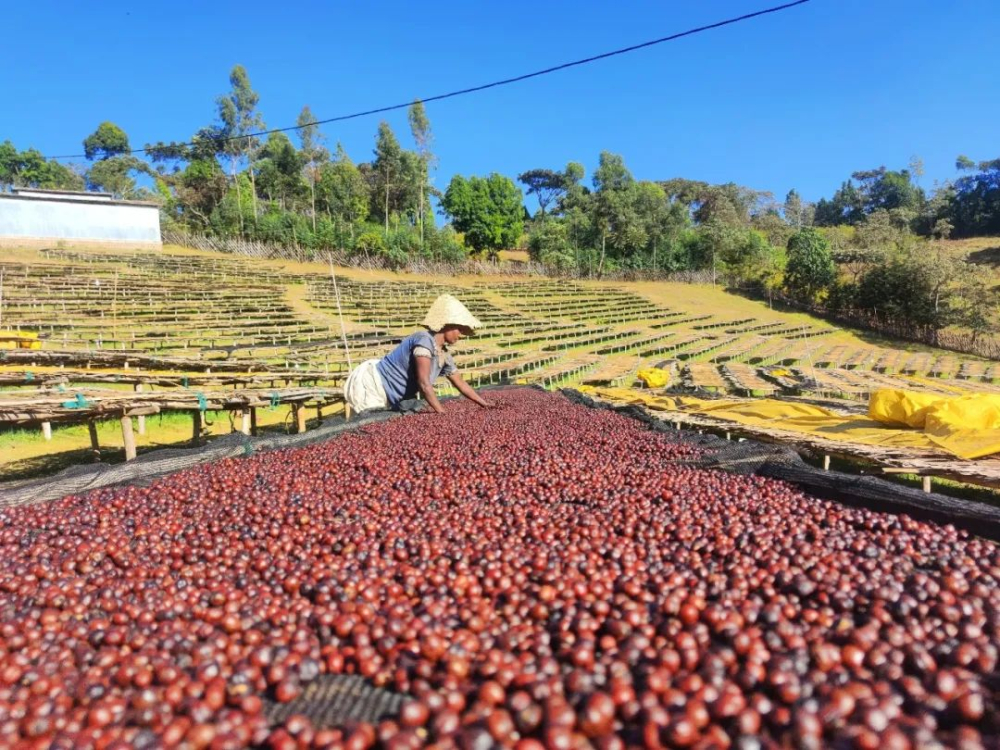
This COE22 uses the sun-dried processing method. To make the quality of sun-dried coffee beans more stable, coffee farmers use African raised drying beds, allowing the fruit to dry with ventilation above and below, reducing the risk of rot and mold. But doing sun-dried processing well still requires more effort: before the moisture content drops to 25%, manual uniform turning is required, turning once every 30 to 60 minutes, to avoid unpleasant over-fermentation flavors, which also leads to higher labor costs for sun-dried processing. Coupled with weather risk factors, the sun-dried processing takes a longer time, and obtaining better-quality sun-dried coffee beans requires more labor costs and resources. Judging from the scores of the sun-dried coffee beans in the top 28 of this COE event, good sun-dried processing is indeed a method where risk and reward coexist.
Based on the above information, Front Street Coffee's roaster drafted three roasting curves, and finally chose the second medium-light roast curve to roast this coffee bean. Front Street Coffee's roaster used a Yangjia 800N semi-direct fire, roasting amount: 480g. Charged at a drum temperature of 170°C, heat power 130, air damper opened to 3; the turning point was 1'32", and when the drum temperature was 100.2°C the heat power remained unchanged; at 3 minutes the air damper was adjusted to 4, and at 4 minutes the heat power was increased to 140. When the drum temperature was 150.5°C, the bean surface turned yellow, the grassy smell completely disappeared, and it entered the dehydration stage; at 8'36" ugly wrinkles and dark blotches appeared on the bean surface, and the toast smell clearly turned into coffee aroma, which can be defined as the prelude to first crack. At this time, one should listen clearly to the sound of the first crack point. First crack began at 9'10", developed for 1 minute 30 seconds after first crack, and the beans were dropped at 192.5°C.
Within 8-24 hours after roasting is completed, Front Street Coffee's barista will conduct cupping. The cupping bowl used is a 200ml ceramic bowl, with a water temperature of 94 degrees Celsius. The cupping grind size is a No. 20 standard sieve (0.85mm) with a passing rate of 70%-75%. The ratio is 11 grams of coffee powder plus 200 milliliters of hot water, i.e. 1:18.18, so that the extracted concentration exactly falls within the golden cup range of 1.15%-1.35%, with a steeping time of 4 minutes. Front Street Coffee finally concluded the flavor direction of this coffee bean — dry aroma: citrus; wet aroma: citrus, camellia; flavor: citrus, lychee, honey, cream, wine aroma, mango, strawberry.
Finally comes the coffee brewing stage. How did Front Street Coffee's barista determine the coffee brewing plan? First, Front Street Coffee's barista will use a medium-fine grind size according to the grind size for medium-light roasted coffee beans (80% passing rate on the China standard No. 20 sieve). Because the coffee bean itself is rich in acidity, it was decided to brew at 90-91 degrees Celsius. If the water temperature is too high, a woody taste will appear; if the water temperature is too low, there will be sourness but a lack of flavor. Then a V60 dripper is used for brewing, increasing the chance of extracting the coffee's rich acidity.
The structure of the V60 has three major characteristics: first, the 60-degree conical shape; second, the clockwise spiral ribs; third, the single flow hole. The existence of the ribs leaves a certain space between the filter paper and the dripper, and together with the single flow hole, it helps the water flow down quickly, so that hot water can rapidly pass through the coffee powder bed to extract rich acidity, while not over-extracting the mellow flavor molecules, making the whole cup of coffee appear fresh and clean.
Changes in the ratio of coffee powder to water directly affect the concentration of the coffee. Currently, the most commonly used powder-to-water ratio at Front Street Coffee is 1:15, which is a parameter made based on the ratio extraction reference provided by the SCA.
Regarding the pouring flow rate, Front Street Coffee chooses a medium-fine flow for brewing. A flow that is too fine cannot allow the coffee powder bed to tumble properly when pouring, and the powder bed is essentially just quietly soaking in the water, so the resulting coffee flavor is prone to bitterness. A flow that is too large will cause the powder bed to tumble too much, and the water can also easily flow away from places without a powder bed, so the resulting coffee is prone to having sourness but being very flat.
Next is the brewing technique. Front Street Coffee uses three-stage extraction: use 30 grams of water for blooming for 30 seconds, pour in a medium-fine flow in circles until 125 grams for the stage break, at which point the timer shows 1'00"; when the water level drops and is about to expose the powder bed, continue pouring until 225 grams and stop, and when the water level drops and is about to expose the powder bed, remove the dripper, at which point the timer shows 1'40", and the final total extraction time (timed from the start of blooming) is 2'02".
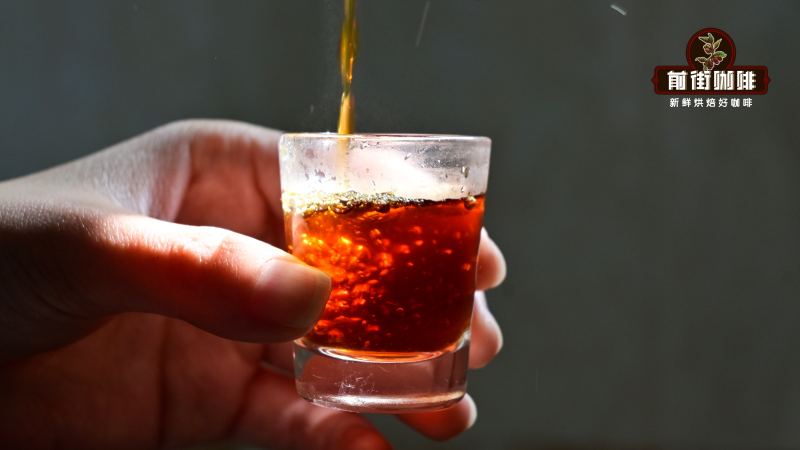
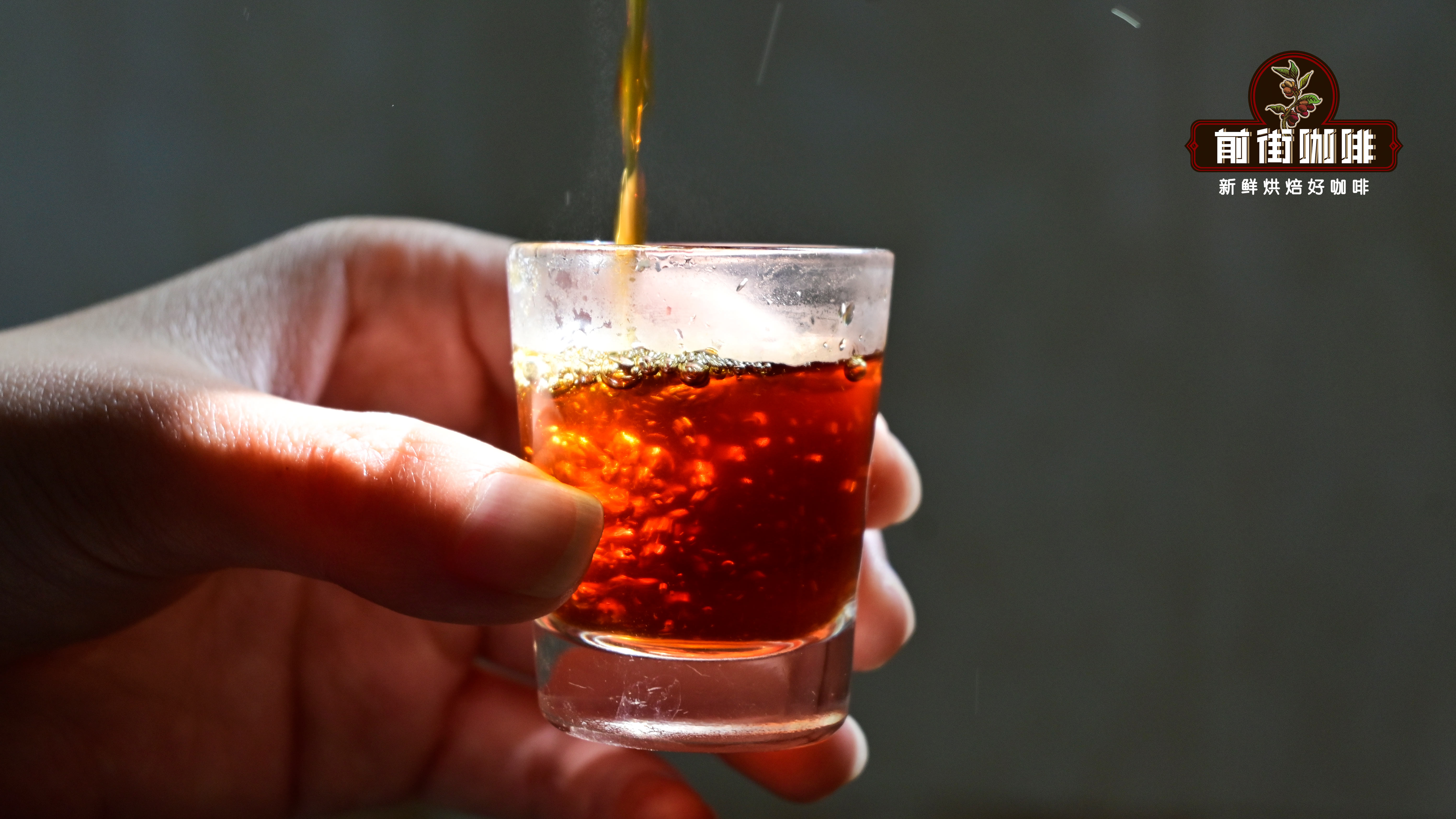
COE22 brewing flavor: the front section has almond aroma, and after slowly cooling there is the sweet-and-sour taste of strawberry and lychee, fermented wine aroma, creamy smoothness, and a honey-like finish.
For more specialty coffee beans, please add the private WeChat of Front Street Coffee, WeChat ID: kaixinguoguo0925
The above content is compiled by CoffeeHunters, a coffee news website.


