







Where Are the Places Where Most Volcanoes Occur, and Why It Matters for Coffee
Papua New Guinea's Sigri Estate grows Typica, the variety introduced from Jamaica Blue Mountain, which is why the country's coffee is nicknamed Little Blue Mountain. The beans are washed, roasted to a medium-light curve, and cupped for floral aroma, soft acidity and a rounded body, with pour-over parameters built around those notes.
The growing conditions explain the comparison. Papua sits around 6 degrees south latitude at high altitude with steady rainfall, and volcanic soils supply mineral-rich ground. That same link answers where are the places where most volcanoes occur: the Pacific Ring of Fire, which runs through Indonesia, Papua New Guinea and up the Americas. Typica farms on those soils tend to show the Blue Mountain resemblance, though who grows coffee beans there remains mostly smallholders around the estate.
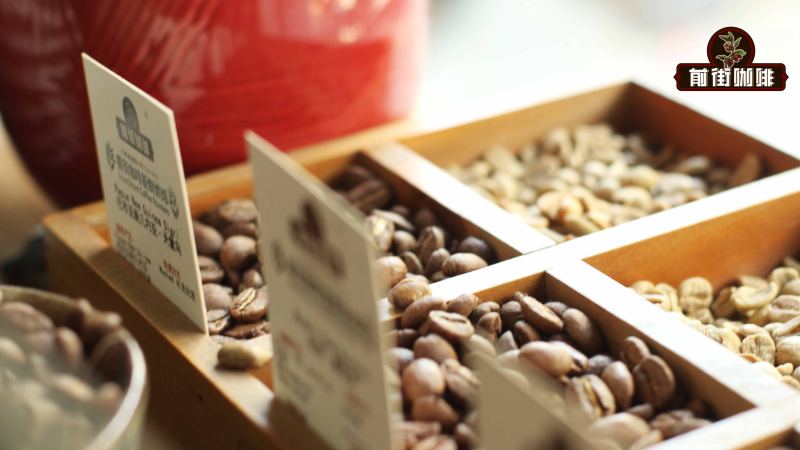
Papua New Guinea is often called the "Little Blue Mountain" in coffee circles, a nickname that stems from both varietal origins and similarities in terroir. This time, Front Street Coffee has acquired Bird of Paradise coffee beans from Sigri Estate, and will dissect the complete picture of this bean layer by layer—from the country's coffee-growing history and the introduction of Typica, to Sigri Estate's production system and washed processing method, and further to roast curve settings, cupping performance, and pour-over parameters. The article also compares the flavor similarities and differences between Bird of Paradise and Jamaica Blue Mountain, and provides Front Street Coffee's actual brewed flavor notes, making it a useful reference for enthusiasts who want to understand Papua New Guinea coffee in depth.
To many people, Papua New Guinea is both somewhat unfamiliar and seemingly heard of somewhere. Its coffee beans are often crowned with the title "Little Blue Mountain"—where exactly does this reputation come from? With this curiosity, Front Street bought a bag of Bird of Paradise coffee beans from Sigri Estate. By sorting through the country's coffee-growing history, tracing the bean's origins, and then having Front Street Coffee baristas complete roasting, cupping, and brewing, let's see how this Bird of Paradise actually performs.
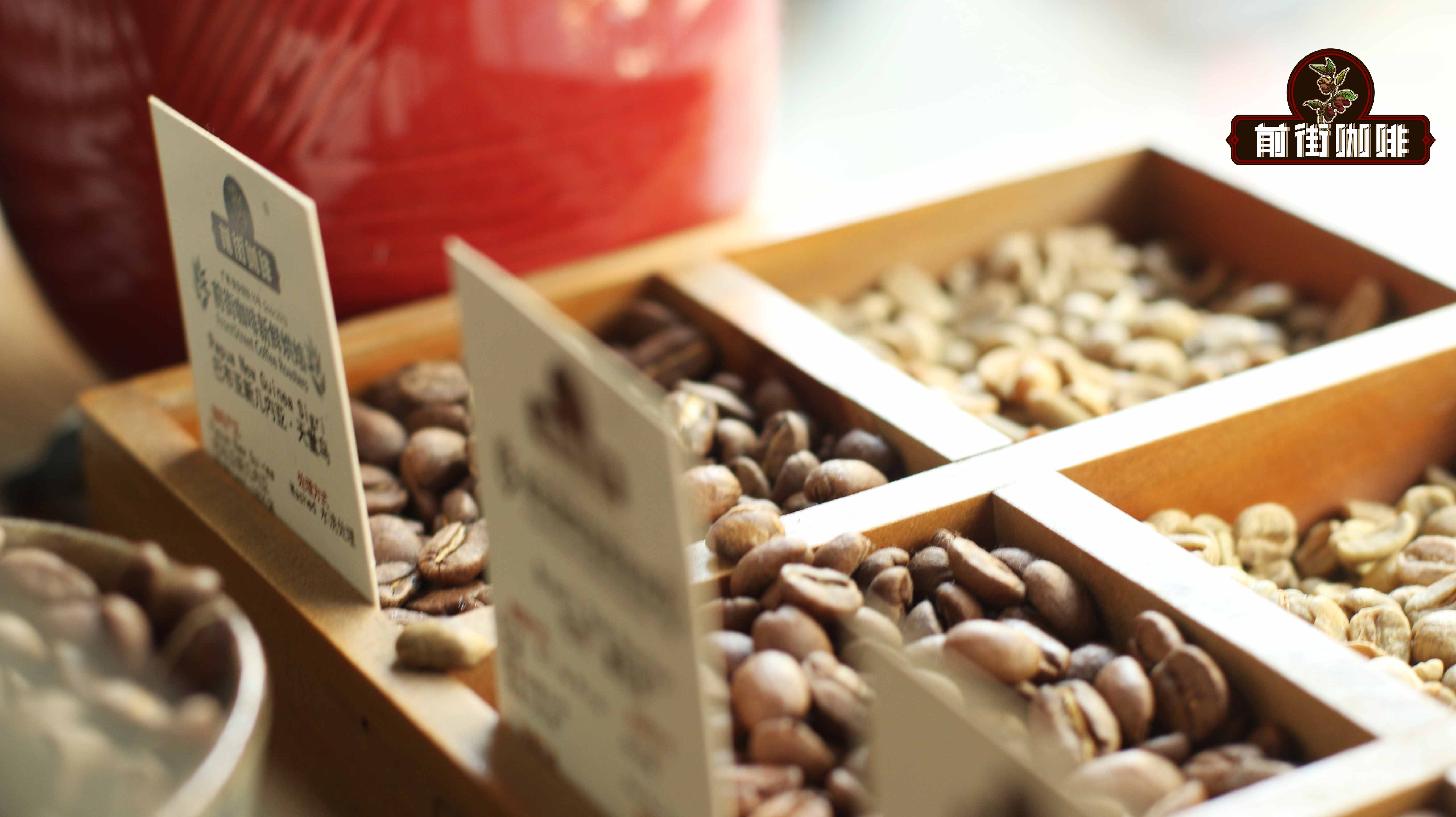
Papua New Guinea Geography
The vast majority of this country's territory lies on the island of New Guinea, with a straight dividing line splitting the island in two: the western half belongs to Indonesia, while the eastern half is Papua New Guinea. Because the full name is too long, it is usually shortened to "Papua" or referred to by the English abbreviation "PNG." Many people call Papua coffee Little Blue Mountain because Papua's coffee variety is Typica introduced from Jamaica Blue Mountain, and the growing environment, altitude, and rainfall conditions are all quite similar.
After introduction, Typica quickly adapted to the environment of the island of New Guinea. Whether from the perspective of variety or from the environmental conditions of both being island-type producing regions, calling Papua coffee Little Blue Mountain is entirely justified.
Papua New Guinea's coffee-growing regions are located at 6 degrees south latitude, closer to the equator than the Blue Mountain region (about 18 degrees north latitude). After cupping, Front Street found that its flavor, upon careful tasting, still differs from Blue Mountain—Papua coffee has an extra layer of dark fruit sweetness and acidity.
Papua New Guinea Planting History
In 1931, Typica was introduced to Papua New Guinea from Jamaica. At that time, Britain had ruled Jamaica for nearly three hundred years, and Jamaica's most representative coffee was precisely Typica-variety Blue Mountain coffee. Because Australia and Britain had friendly relations, it was only natural that Papua New Guinea could introduce Typica. When introducing Papua New Guinea coffee to customers, Front Street Coffee often uses the name Little Blue Mountain—after all, the historical origins are there, well-founded, and Little Blue Mountain is indeed much easier to remember than Papua New Guinea coffee.
In 1950, Bourbon coffee beans were introduced from Kenya. Coincidentally, Kenya was also a British colony at the time. The government encouraged open cultivation, causing the coffee industry to grow substantially in the 1970s and 1980s.
In 1962, Mundo Novo and Caturra were brought in from Brazil, and the quality of Papua New Guinea coffee beans has since improved greatly. In 1975, frost in Brazil destroyed most coffee crops, which instead stimulated the development of Papua New Guinea coffee. The government funded rural areas to establish about 20 hectares of coffee plantations, increasing coffee cultivation's penetration into the local economy, and by 1990 annual production had reached 1 million bags.
Sigri Estate
This year Front Street Coffee selected Bird of Paradise coffee from Sigri Estate. Sigri Estate is located in the Wahgi Valley of Western Highlands Province, Papua New Guinea (PNG). The estate was founded in 1950 and has a history of over 60 years, making it a pioneer of the local coffee industry. Bird of Paradise Estate is located in the Waghi Valley of Western Highlands Province, at an altitude of about 1,500 meters, with mineral-rich volcanic soil, a cool climate, fertile soil, and abundant rainfall.
The first Papua coffee beans introduced domestically came from Sigri Estate, and at that time they were given the name "Bird of Paradise." Later, coffee sacks introduced from Prosa Estate also had a Bird of Paradise pattern printed on them, but to distinguish the two beans, later arrivals could only be called by the estate name. Although this seems somewhat unfair to the later arrivals, after years of subtle influence, Sigri has already become bound together with Bird of Paradise in the subconscious.
Bird of Paradise Estate also places great emphasis on ecological protection. To protect soil and water sources, it refuses to use pesticides and insecticides, caring for the ecosystem and nearby birds. Bird of Paradise Estate has adhered to a high-standard planting and processing system for many years. During the harvest season from April to September each year, only fully ripe red coffee cherries are hand-picked, bringing the acidity and sweetness in the coffee berries to perfect balance.
The coffee beans produced by Sigri Estate absolutely live up to the name Bird of Paradise. Front Street observed that the green beans from the 2020 crop season were plump, emerald green, and had excellent bean appearance. Front Street Coffee chose this Bird of Paradise Estate coffee precisely because of the estate's strict production chain—only in this way can the quality of the coffee beans be guaranteed.
Coffee Bean Variety
Papua New Guinea mainly grows Typica. Typica has an elegant flavor but is physically weak, with low disease resistance, and is susceptible to leaf rust. Front Street Coffee believes that the most distinctive feature of the Typica coffee tree is its bronze-colored young leaves, which some also call "red-top coffee." Typica beans are relatively large, with a pointed oval or slender pointed shape, different from the round beans of the Bourbon variety. Front Street believes that Typica coffee has its own unique clean, serene flavor and balanced characteristics, with high cup cleanliness.
Coffee Bean Processing Method
After harvesting ripe, fully red coffee cherries, Sigri Estate sends them to the estate's own washing station for processing. Papua New Guinea's local washed processing differs from the washed processing methods of Central and South America.
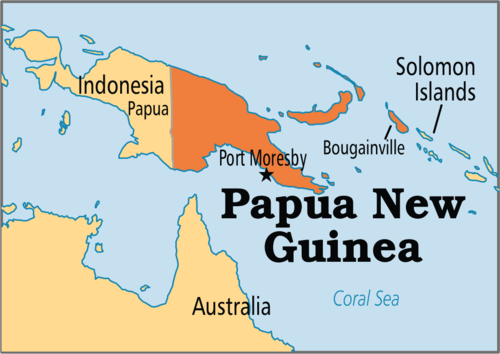
It uses three rounds of washing and fermentation, each soaking for about 24 hours, with clean water replaced to control the coffee's flavor; after washing, the green beans are hulled and then graded in various ways, such as AA, AB, PB peaberry, and so on. This meticulously crafted post-processing method brings bright, delicate fruity acidity to the coffee itself, along with a clean and lingering sweet taste. Front Street Coffee has found that in producing regions with strict coffee grading systems, the coffee beans they produce share a common trait: uniform bean size and fewer defective beans. In this case, the beans color evenly during roasting, and the cup is much cleaner.
Front Street Coffee — Papua New Guinea Bird of Paradise
Producing Country: Papua New Guinea
Estate: Sigri Bird of Paradise Estate
Altitude: 1600-1800m
Processing Method: Washed
Variety: Typica
Grade: AA
Front Street Coffee Papua New Guinea Coffee Bean Roast Curve
Front Street Coffee recommends medium roasting. Typica is a lower-density green bean, and in order to highlight its inherent refreshing acidity and fruity aroma, the focus will be on heat adjustment after first crack. Charge at a drum temperature of 170°C, set airflow to 3, heat to 140°C, turning point at 1'36"; at 140°C, open airflow to 4; roast to 6'25'' at 151°C, when the bean surface turns yellow, the grassy smell completely disappears, and dehydration is complete; at 176°C, lower heat to 110;
airflow to 4; at 180°C lower heat to 90. The bean surface shows ugly wrinkles and dark streaks, and the toast smell clearly turns into coffee aroma, which can be defined as the prelude to first crack. At this point raise heat to 183.5°C, and at 10'08'' first crack begins, open airflow fully, at 188°C reduce heat to 60, airflow fully open (adjusting heat requires great care—do not reduce it so much that there is no cracking sound; control the rate of temperature rise after first crack to within 6 degrees), first crack development time 3'00", drop at 198.5°C.
Front Street Coffee Papua New Guinea Coffee Bean Cupping Report
Front Street Coffee conducts cupping within 8-24 hours after sample coffee beans are roasted. The cupping bowls generally used by Front Street Coffee baristas are 200ml ceramic bowls marked with 150ml and 200ml graduation lines. According to SCAA standards, the TDS of water is around 150ppm; TDS that is too low easily causes over-extraction, while too high affects the mouthfeel and easily causes under-extraction. The water temperature used for cupping is 94°C, and the grind size is controlled so that the pass rate through a No. 20 standard sieve (0.85mm) is 70%-75%. The ratio is 11 grams of coffee powder to 200 milliliters of hot water, i.e., 1:18.18, so that the extracted concentration falls exactly within the golden cup range of 1.15%-1.35%, with a steeping time of 4 minutes.
Dry aroma: caramel, citrus
Wet aroma: spices
Flavor: citrus, nuts, cocoa, soft fruity acidity, balanced sweet and sour
Front Street compared Bird of Paradise coffee beans with Jamaica Blue Mountain through cupping. Bird of Paradise coffee beans have a faint spicy note that Jamaica Blue Mountain coffee lacks. Its balance of sweet, sour, and bitter is somewhat close to Jamaica Blue Mountain, but it is not as full-bodied as Jamaica Blue Mountain.
Front Street Coffee Brewing Papua New Guinea Coffee Bean Notes
Front Street Coffee recommends using a Kono dripper, because its ribs are few and located at the lower end, allowing the filter paper to cling to the dripper and restrict airflow, thereby slowing the flow rate and increasing water-coffee contact time. This allows soaking to extract more coffee substances and enhance the full-bodied mouthfeel. Choose a water temperature of 88°C, which is a relatively low brewing temperature and can avoid extracting too many off-flavors from the coffee beans during brewing, because the darker the coffee bean roast, the more off-flavors increase accordingly.
Dripper: Kono coffee
Dose: 15g coffee, water ratio: 1:15
Grind size: granulated sugar coarseness (75% pass rate through No. 20 sieve)
Water temperature: 89°C
*Regarding grind size, Front Street determines it through sieving. Based on the grind recommendations provided by the Specialty Coffee Association of America (SCA) for pour-over coffee, and combined with practical verification through operation, Front Street found that brewing with different grind sizes produces clearly different results, and each coffee bean's grind size will differ somewhat—this is the significance of sieving. If you do not have a sieve at home, Front Street Coffee suggests judging by observing the flow rate: if the flow is too fast, the grind is coarse; if the flow is too slow, the grind is fine.
First, wet the filter paper with hot water while preheating the brewing equipment. Front Street Coffee uses staged extraction: use 30 grams of water for a 30-second bloom, then pour in a small circular stream until 125 grams for the stage break; when the water level drops and is about to expose the coffee bed, continue pouring until 225 grams and stop; when the water level drops and is about to expose the coffee bed, remove the dripper. (Timing starts at the beginning of the bloom.) The extraction time is 2'00".
Brewed flavor: toasted bread sweetness, nutty sweetness, a slight fruity acidity bringing out a pleasant sweet-sour note that forms a nice layered complexity, and a rather distinctive spicy sweetness in the finish; it tastes rich and balanced, with a sweet taste and bright acidity, and aromas similar to fruit.
For more specialty coffee beans, please add the private WeChat of Front Street Coffee. WeChat ID: kaixinguoguo0925
The above content is compiled by CoffeeHunters, a coffee news website.


