







What does SOE meaning in coffee look like in the cup?
SOE meaning in coffee is single origin espresso: espresso pulled from one coffee rather than a blend. Colombia's Finca El Paraiso Sakura beans, from a COE-winning estate run by Diego Samuel Bermudez Tapia, are a clear example. A double anaerobic washed Castillo lot, they show strawberry sweetness, tart fruit, and spice notes, whether brewed as pour-over or as soe espresso.
Finca El Paraiso has set a record bid price at Colombia's COE auction, reflecting demand for distinctive fermentation. The farm uses microbial fermentation techniques refined since 2008, and the Castillo variety carries those flavors well. Pulling the lot as soe espresso lets drinkers taste the fermentation character directly, without milk or blend components softening it.
In the specialty coffee wave, Colombia's Finca El Paraiso stands out with its unique fermentation processing methods and outstanding flavors. Since taking over in 2008, farm owner Diego Samuel Bermúdez Tapia has continuously innovated microbial fermentation techniques, enabling Finca El Paraiso to set a record for the highest bid price in Colombian history at the COE auction. In this article, Front Street Coffee will provide an in-depth analysis of the growing region background of Finca El Paraiso's Sakura coffee beans, the characteristics of the Castillo variety, the double anaerobic washed processing method, and the specific parameters and flavor performance of pour-over and SOE espresso extraction, giving you a comprehensive understanding of this Colombian specialty coffee that combines strawberry sweetness and tartness with spice notes.
Coffee was once perceived by the general public as nothing more than a functional beverage with a burnt, bitter taste; today, more and more drinkers are paying attention to the unique flavors presented by coffee beans from different origins and different lots. Luckin Coffee's entry into the specialty coffee field objectively accelerated ordinary consumers' acceptance of the concept of specialty coffee. Luckin once launched a Huakui SOE series, which drew criticism from many veteran coffee enthusiasts. However, the production capacity of Huakui coffee beans is ultimately limited, while market demand continued to expand, so after Huakui inventory ran out, Luckin chose Colombian Finca El Paraiso coffee beans to fill the gap.
The name Finca El Paraiso is full of poetry, making many consumers naturally feel favorable toward it. So how do the coffee beans from Finca El Paraiso actually perform? Now let Front Street give everyone a detailed introduction to this place that sounds as if it exists only in legend.
Coffee from Central and South America has always presented nutty and dark chocolate notes. Yet the coffee from Finca El Paraiso displays a series of fresh elements such as unique fruit flavors and fermented notes, making people marvel: this actually comes from a Colombian growing region?
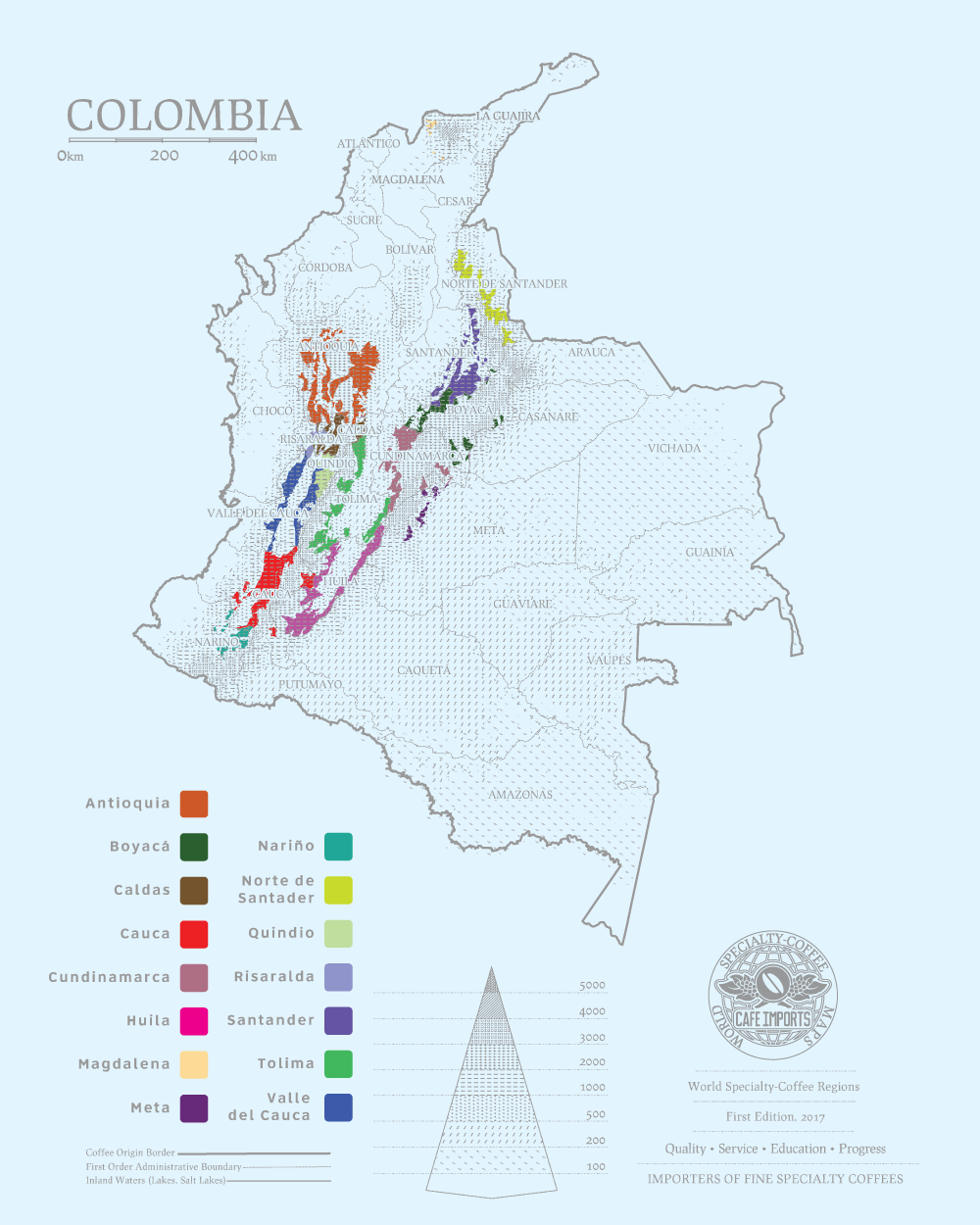
Within Colombia, three Cordillera mountain ranges run north to south across the entire country and extend toward the Andes. Local coffee farmers plant coffee along the high-altitude zones of these mountains, enjoying diverse climatic conditions; at the same time, because the terrain and elevation differences are significant, Colombia's coffee industry is largely dominated by smallholder production.
Colombia's coffee-growing regions are mainly concentrated on the western side of the country's territory. Among them, the northern "MAM" region produces coffee with moderate acidity, good balance, rich aroma, and a mellow, smooth mouthfeel that leaves a deep impression.
With the continued advancement of specialty coffee, more and more coffee-growing regions within Colombia are gradually having their potential uncovered. Cauca Department, where Finca El Paraiso is located, is a typical example. Cauca is a certified Colombian coffee origin region, with an altitude of about 1,500 to 2,100 meters. The complex and changeable mountainous terrain and climatic conditions cause the coffee to grow slowly, but also give this Colombian coffee rich flavors and balanced taste.
Compared with other Colombian growing regions, the Cauca region, due to significant temperature differences between day and night, produces coffee beans with more prominent acidity and sweetness. The higher growing altitude and lower nighttime temperatures slow the ripening speed of the coffee fruit, allowing more ample time to absorb nutrients from the soil.
Located in Cauca Department, Finca El Paraiso is a small family-style coffee farm. The current farm owner, Diego Samuel Bermúdez Tapia, took over Finca El Paraiso in 2008. Since then, Diego has continued to educate himself and constantly innovate, creating a series of high-quality Colombian coffees. He is one of the earliest Colombian growers to try adding different types of microorganisms and yeast to coffee beans for fermentation processing, and his innovative post-harvest green bean processing methods have also won him impressive results in competitions.
In 2015, he participated for the first time in a local regional competition and won first place, becoming famous overnight and gaining industry recognition, which also gave him more motivation to promote specialty coffee cultivation. Finca El Paraiso currently mainly cultivates bean varieties such as Bourbon, Laurina, Geisha, and Castillo, and is planning to try more different varieties, making it an admirable specialty estate. The estate also once achieved tenth place in the COE auction and won the title of annual top lot, setting the highest auction price record in Colombian history.
The reason Finca El Paraiso has achieved such dazzling results is inseparable from the farm owner's efforts and his innovation in post-processing methods. Front Street Coffee's bean list naturally also includes coffee beans from Finca El Paraiso. Finca El Paraiso produces many coffees, and Front Street chose one with a beautiful artistic conception just like the estate's name, called "Sakura."
The Colombian Sakura that Front Street selected uses the double anaerobic washed processing method, and the variety is Castillo.
[Castillo]
The Colombian Coffee Growers Federation began researching the Castillo variety in 1961. This variety is the result of five generations of crossbreeding and selection between Caturra and Timor, inheriting both Caturra's characteristics of a short plant and high yield and Timor's ability to resist coffee leaf rust. In 2005, FNC vigorously promoted the cultivation of Castillo, and in just ten years, more than 40% of Colombia's coffee-growing area was planted with this variety.
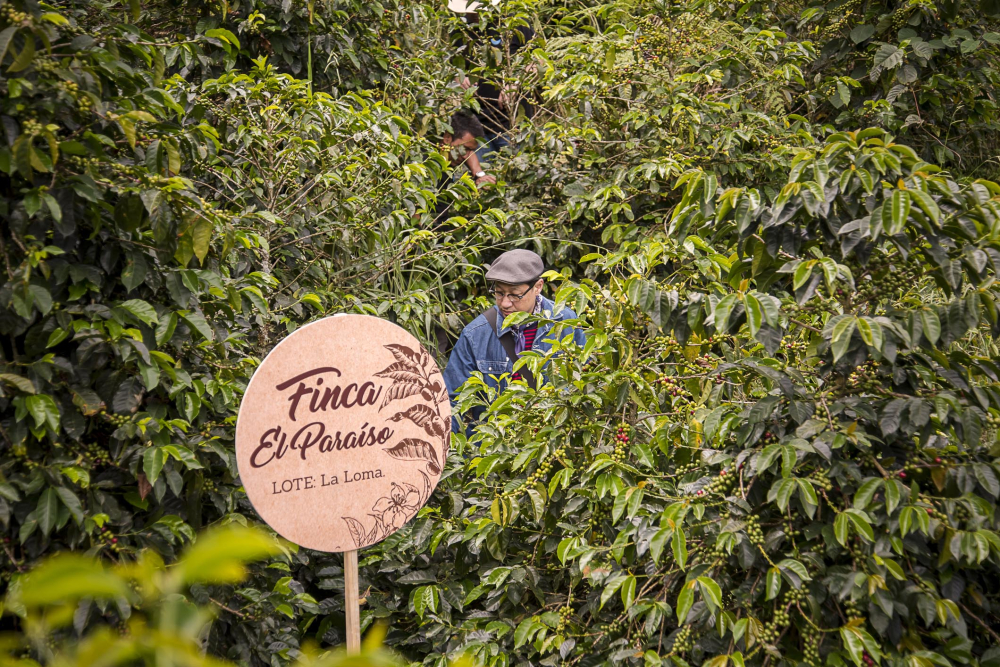
[Double Anaerobic Washed Processing Method]
The double anaerobic washed processing method used for Front Street's Colombian Sakura is to first place whole coffee cherries into sealable containers for anaerobic fermentation, then remove the skin and pulp, and place the parchment beans with the mucilage layer still attached into sealed containers for a second anaerobic fermentation. After fermentation is complete, the coffee beans are removed and washed to remove the mucilage layer, and finally sun-dried.
Through cupping comparisons, Front Street found that coffee beans processed with the double anaerobic washed method perform more richly in acidity.
Front Street Coffee Colombian Finca El Paraiso Sakura Coffee Beans
Region: Cauca, Colombia
Farm: Finca El Paraiso
Altitude: 2,050 meters
Variety: Castillo
Processing Method: Double Anaerobic Washed Processing
Front Street Coffee Brewing Recommendations
Dripper: Hario V60
Water Temperature: 90°C
Dose: 15 grams
Coffee-to-Water Ratio: 1:15
Grind Size: 80% passing through Chinese standard No. 20 sieve
First pour 30 grams of hot water for a 30-second bloom, then from the center point slowly pour in a thin stream in circles up to 125 grams. When the water level in the dripper drops to the point where the coffee bed is about to be exposed, continue pouring in circles up to 225 grams. Total extraction time is about 2 minutes.
Some friends may notice that every time coffee is brewed, a blooming stage is required. This is because the coffee beans shipped by Front Street are freshly roasted within 5 days, and by the time they arrive they have already undergone a 4-to-7-day resting period. The purpose of blooming is to speed up the degassing process in the coffee grounds and lay the foundation for more stable flavor extraction afterward. Front Street also provides grinding service for friends who do not have grinding equipment at home, but once coffee beans are ground into powder, degassing activity accelerates sharply and flavor compounds dissipate along with it. Therefore, Front Street recommends that friends who have grinding equipment at home buy whole beans and grind fresh before brewing for better flavor.
After grinding Front Street Coffee's Colombian Finca El Paraiso Sakura coffee beans, the dry aroma presents basil and rosemary notes; during brewing, the sweet aroma of chamomile and strawberry jam can be smelled; on the palate, there are notes of basil and mugwort, along with a soft strawberry-like sweet-and-tart sensation.
The brewing parameters provided above by Front Street are for reference only. Of course, some friends also want to recreate Luckin Coffee's Paradise SOE Latte at home. This method is actually using single-origin coffee beans to extract espresso, known as SOE. SOE stands for Single Origin Espresso, meaning espresso from a single origin. Because the principle of making espresso is to use about 9 bar of high pressure to force nearly boiling hot water through the coffee bed in a relatively short time to extract the coffee liquid, its flavor is intense and highly concentrated, and not everyone can accept it.
The SOE made from Front Street's Colombian Sakura after parameter adjustments has a rich strawberry sweet-and-tart sensation, accompanied by spice notes, with a full and intense mouthfeel.
Because the extraction principle of espresso amplifies the flavor of coffee beans to a certain extent, single-origin coffee beans are usually brewed as pour-over. If used for espresso extraction, their unique flavors may also be further amplified, and some originally pleasant acidity may turn into acidity that is difficult to drink.
For professional coffee knowledge exchange and more coffee bean information, please follow Coffee Workshop (WeChat public account: cafe_style)
For more specialty coffee beans, please add the private WeChat of Front Street Coffee, WeChat ID: qjcoffeex
The above content is compiled by CoffeeHunters, a coffee news website.


