







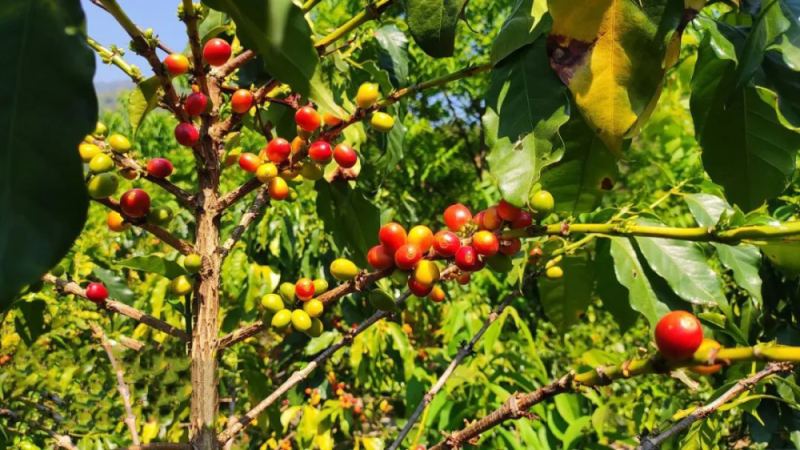
How does Yunnan peaberry compare to other arabica lots?
Yunnan sits in southwestern China, and its growing regions have expanded over the past two decades with Catimor and Typica plantings. Peaberry is not a variety but a mutation: a single round seed forms inside the cherry instead of the usual pair. Because that one seed absorbs the space of two, it often roasts more evenly.
In the cup, Yunnan peaberry tends to show medium body, mild acidity, and notes of cocoa, brown sugar, and sometimes dried fruit. Compared with other arabica lots, it is softer and less bright, which suits drinkers who prefer a rounder profile. Roast level matters, since darker profiles push it toward chocolate and nut flavors.
Coffee is an evergreen small tree or shrub in the Rubiaceae family. About 70 coffee-producing countries worldwide are concentrated in the tropical and subtropical regions between 25 degrees north and south latitude, an area often called the "Coffee Belt." Among the many producing regions, Yunnan Arabica coffee is attracting more and more attention. This article will focus on Peaberry in Yunnan Arabica coffee, introducing its formation, scarcity of yield, and concentrated flavor characteristics. It will also outline the main sub-varieties of Yunnan Arabica and their respective advantages and disadvantages, and recommend three representative Yunnan coffee products under the Front Street brand, covering everyday beans, classic Typica, and espresso blends, to help coffee lovers gain a more comprehensive understanding of Yunnan coffee's regional flavors and purchasing directions.
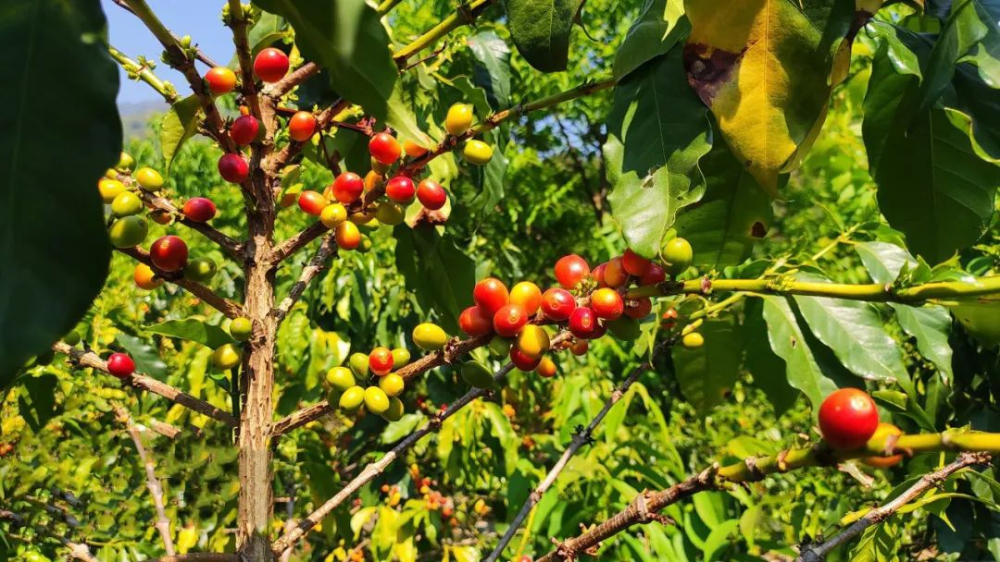
Coffee is an evergreen small tree or shrub in the Rubiaceae family, with long ovate leaves that have pointed tips and white flowers. About 70 countries worldwide engage in coffee cultivation, and these origins are mainly located between 25 degrees north latitude and 25 degrees south latitude. Most of this region has a tropical and subtropical climate, and climate conditions are the key factor determining whether coffee can be grown. Some also believe that the zone between 25 degrees north and south latitude, that is, between the Tropic of Cancer and the Tropic of Capricorn, is the most suitable area for cultivating coffee, commonly known as the "Coffee Belt" or "Coffee Zone."
Most of the world's most famous coffee-producing regions are distributed in this zone, such as Ethiopia, Kenya, Indonesia, and Hawaii. There is also a type of coffee bean—namely the peaberry to be discussed next. A peaberry occupies the entire interior space of the berry, and in appearance it looks like two slightly smaller flat beans stuck together; this bean is called a peaberry and often appears at the top of the canopy of young coffee trees. Peaberry production usually accounts for only about 5% of the total yield of a single coffee tree. Yunnan Arabica coffee Peaberry green beans, grown at an altitude of 1,200–1,500 meters, on the Gaoligong Mountains beside the Nujiang Gorge.
The peaberry (single-cell bean) itself is a result of a type of abnormal mutation, so its appearance is often not neat enough. If you see very uniform single-cell beans, that is the result of high-quality post-processing and sorting. Most coffee beans consist of two halves and form flat beans, and only a small number of special fruits form just one round bean; perhaps precisely because of its unique growth pattern, its taste is also more distinctive compared with flat beans, and as its volume is concentrated, its flavor is concentrated as well. Because peaberry coffee contains the nutrients of two halves of a coffee bean, and because of its special growth characteristics and extremely low yield, its price is naturally higher than that of ordinary flat beans.
Yunnan Arabica refers to Arabica coffee produced in Yunnan. It is a major category within coffee and includes sub-varieties such as Typica, Bourbon, Caturra, Catuai, and Catimor. The earliest variety introduced to Yunnan was Typica, so locals also call it the old tree variety.
Typica's most prominent advantage lies in its serene, clean flavor. When planted in suitable altitude areas, it can display rich coffee aroma. Well-known single-origin coffees such as Front Street 2013, Front Street Jamaica Blue Mountain, and Front Street Bird of Paradise use the Typica variety. But its shortcomings are equally prominent: Typica has low yield and weak disease resistance, and its economic benefits are far inferior to those of other varieties, which is also why many places are unwilling to grow it and prefer high-yield replacement varieties.
1. If you want to get an initial taste of Yunnan Arabica's flavor, you can try Front Street Yunnan Arabica Everyday Coffee Beans.
Front Street Yunnan Arabica coffee uses the Catimor variety, with washed processing and medium roasting, allowing you to taste the basic regional flavor of Yunnan coffee. After brewing, it presents nutty notes, as well as herbal, chocolate, and caramel tones, with a hint of light fruity acidity in the aftertaste. Suitable for pour-over and drip bags.
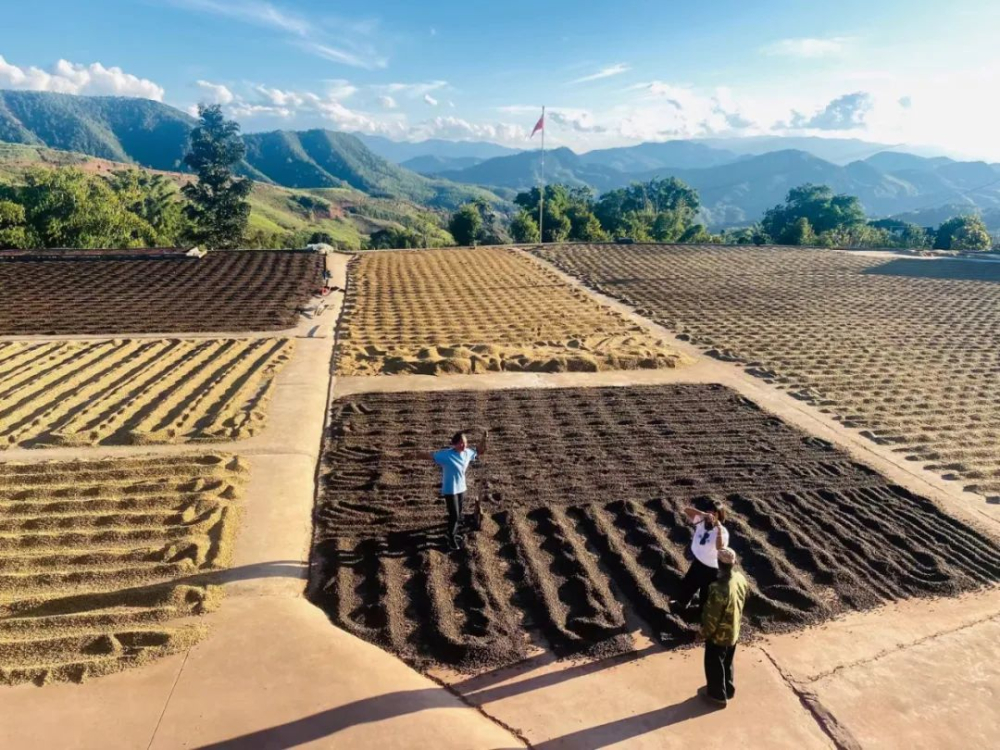
2. To experience the classic Yunnan Arabica Typica flavor, Front Street 2013 Yunnan Typica Coffee Beans is the first choice.
Front Street 2013 Typica coffee is grown in high-altitude areas, thus displaying the rich aroma of pure Arabica coffee. It uses natural processing and medium roasting. After brewing, it has an apricot-like sweet and sour taste, nutty notes, and brown sugar sweetness, with a tea-like aftertaste. Suitable for pour-over, cold brew, clever dripper, and drip bags.
3. If you want to make Yunnan espresso coffee, you can buy the espresso coffee beans strongly recommended by many baristas—Front Street Dark Cocoa Blend Coffee Beans.
The espresso coffee beans recommended by many baristas—Front Street Dark Cocoa Blend—uses two single-origin coffees, Brazil Red Bourbon and Yunnan AA, and is dedicated to moka pots and espresso machines. The extracted espresso has chocolate, roasted nut, butter, and cocoa flavors, with moderate crema, high cost-effectiveness, and a rich flavor.
The above content is compiled by CoffeeHunters, a coffee news website.


