







Which Costa Rica Coffee Producing Regions Matter Most?
Costa Rica has eight coffee producing regions: West Valley, Central Valley, Tarrazu, Tres Rios, Orosi, Brunca, Turrialba and Guanacaste. Coffee cultivation began there about two hundred years ago on the slopes of the Poas and Barva volcanoes, now part of the Central Valley. Volcanic ash soil and cool highlands let cherries ripen slowly, building layered flavor.
The country runs a dry season from December to April, which lines up with the harvest, and a wet season from May to November. Canet Estate's Musician Series Mozart comes from the highest part of Tarrazu at about 1,950 meters, using Caturra and Catuai varieties and a raisin honey process. Front Street Coffee suggests a V60 pour-over at 90°C.
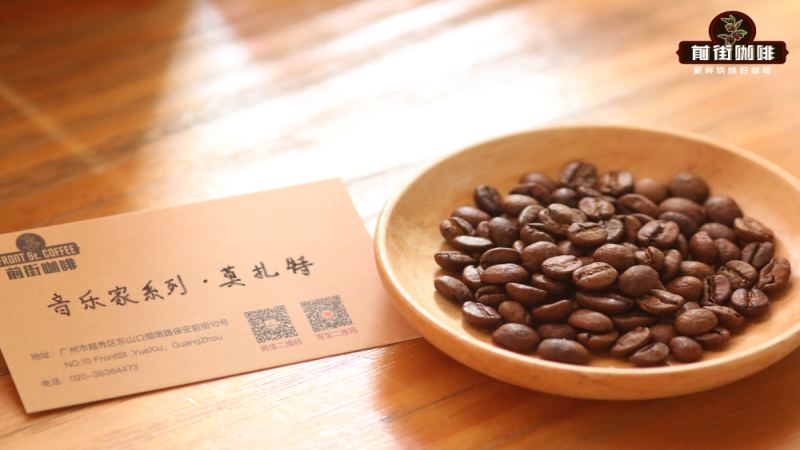
Costa Rica's Canet Estate Musician Series Mozart is a specialty coffee crafted using the raisin honey processing method. The estate is located at the highest elevation area of the Tarrazu region, where coffee cultivation areas are limited and yields are scarce. Mozart uses Caturra and Catuai varieties, hand-picked and meticulously processed, presenting rich layers of raisin, osmanthus, sweet orange, berry, pineapple, caramel, and toffee. This article will provide a complete analysis of this coffee's flavor code, from terroir and estate background, processing techniques, green bean varieties, roasting curves, to brewing suggestions. Front Street Coffee recommends hand-brew extraction using a V60 dripper with 90°C water temperature to fully showcase its complex floral aroma and fermented sweetness.

Costa Rica Canet Musician Series Mozart
Costa Rica Canet Estate Mozart
Region: Tarrazu
Varieties: Caturra, Catuai
Altitude: 1950
Processing: Raisin Honey Processing
Costa Rica is located in the Central American isthmus, where ocean currents and sea breezes from both the Pacific and Atlantic oceans jointly regulate the local climate. Several volcanoes reaching elevations of up to 2000 meters are distributed throughout the country. Coffee cherries grow slowly in fertile volcanic ash soil and cool high-altitude environments, thereby cultivating coffee beans with full-bodied flavor and rich layers.
Costa Rica can be divided into two seasons throughout the year: December to April of the following year is the dry season, which coincides with the coffee harvest period; May to November is the wet season. In recent years, micro-processing mills have continued to emerge. These processing mills consume only 5% of the water used by traditional washed processing mills, and require no large tanks or sun-drying areas, greatly lowering the investment threshold. Honey-processed coffee, with its lower acidity, enhanced complexity, and rich sweet aroma, has therefore become a popular category that the coffee industry has been eagerly pursuing in recent years.
Costa Rica's coffee cultivation history can be traced back two hundred years, with the earliest plantings on the slopes of Poas and Barva volcanoes, which is now the Central Valley. Currently, the country has eight major producing regions: West Valley, Central Valley, Tarrazu, Tres Rios, Orosi, Brunca, Turrialba, and Guanacaste.
Tarrazu is one of Costa Rica's important coffee producing regions. Coffee cultivation in this region also has a long history, having gained the favor and recognition of the British royal family, and was even praised in a papal speech.
| Canet Estate
Canet Estate is located at the highest elevation area of the Tarrazu region, and is also the most densely fruit-planted area in Costa Rica. The estate primarily grows passion fruit, with very limited coffee cultivation, planting coffee only in one specific area with special care. All coffee cherries are hand-picked, selecting only ripe red cherries, and after harvesting, before processing, they undergo an additional screening process to remove underripe or overripe beans once more.
Processing Method
| Raisin Honey Processing Method
This processing method retains 100% mucilage and uses a zero-water processing approach. This technique increases the difficulty of honey processing and requires strict control of timing. On the day the coffee cherries are harvested, the fruit is poured into a large water tank. Fully ripe and plump fruits sink to the bottom, while underdeveloped or overripe fruits float to the surface; these floating beans need to be removed. The screened coffee cherries are placed on raised beds to dry for at least three days, then the cherry skin is removed, and after retaining the mucilage, drying continues. At this stage, climatic factors are key to the success of honey processing.
During the drying process, the coffee cherries need to be constantly turned to ensure even drying, but the frequency of turning must be properly controlled. Drying must be slow to allow the coffee to develop a fermentation effect, yet not so slow as to cause over-fermentation.
Green Bean Analysis
| Caturra, Catuai
Caturra and Catuai are relatively common among American coffees, especially in the Central American region.
Caturra
Caturra is a Bourbon variety mutation, discovered in Brazil in 1937. Its productivity and disease resistance are both superior to Bourbon, and its tree is shorter, making harvesting easier. It has strong adaptability and requires no shade trees, growing vigorously even when directly exposed to sunlight, hence its common name "Sun Coffee." Caturra is suitable for planting at low elevations of 700 meters to high elevations of 1700 meters, with strong altitude adaptability, but the higher the altitude, the better the flavor, while productivity relatively decreases—this is the fate of specialty beans.
Catuai
Catuai is also an Arabica hybrid variety, crossed from Mundo Novo and Caturra. It possesses good resistance to natural disasters, especially wind and rain. It inherits the advantage of Caturra's short tree height, correcting the shortcomings of Mundo Novo; another advantage is that its fruit holds firmly and is not easily knocked off by strong winds, compensating for Arabica's weakness of fragile fruit.
The green beans appear yellow-green, which is the typical appearance of honey-processed coffee beans. They smell of fresh orange acidity and a faint fermented fruit aroma.
Roasting Analysis
Roasting machine Yangjia 800N semi-direct fire (roasting capacity 300g)
Preheat the drum to 200°C and charge. Adjust the gas to 160, open the damper to 3, turning point at 1'36", maintain the gas; at 140°C adjust gas to 160, open damper to 4. At 5'20" the beans turn yellow, the grassy smell disappears, and the dehydration phase begins. At 166°C lower the gas to 130, keep damper at 4. At 176°C adjust gas to 100, damper unchanged.
At 8'05" dehydration is complete, wrinkles and dark streaks appear on the bean surface, the toast aroma turns to coffee aroma, which is the prelude to first crack—at this point, listen carefully for the sound of first crack. At 8'55" first crack begins, open damper fully to 5, gas unchanged. Post-first-crack development time is 1'30", dropping at 193.2°C.
Cupping: Raisin, Osmanthus, Sweet Orange, Berry, Pineapple, Caramel, Toffee
Brewing Suggestions
Recommended brewing method: Hand-brew
Parameters: V60/1:15/90°C/Grind size EK43s setting 10 (80% passing through China standard No. 20 sieve)/Brewing time 2 minutes
Technique: Bloom with 30g water for 30 seconds, slowly pour water at the center to 120g in stages. When the water level drops and is about to expose the coffee bed, pour with a slightly stronger flow until reaching 225g to end the brew.
Flavor: The entry is complex floral aroma and fermented sauce-like fragrance, with raisin and dried fruit-like sweetness, star fruit and berry acidity, and sugarcane sweet aftertaste.
The above content is compiled by CoffeeHunters, a coffee news website.


