







Where can coffee be grown, and what makes Konga beans distinct?
Konga is a sub-cooperative under the Yirgacheffe Coffee Farmers Cooperatives Union in Ethiopia's Gedeo Zone, where coffee grows at roughly 1,700-2,100 meters. Local heirloom varieties and natural processing give the beans fermented fruity aromas. The Yirgacheffe region itself holds 28 member cooperatives, mostly smallholder plots.
Knowing where can coffee be grown matters here: Konga's altitude and soil shape its cup. A common starting recipe is a V60 with 91C water, 15g of coffee and a 1:15 ratio, paired with a medium-light roast. Ethiopia is where coffee from originally spread to the wider world, and Yirgacheffe remains one of its recognizable regions.
Yirgacheffe is a highly recognizable specialty coffee region in Ethiopia, and the Konga Cooperative is one of its standout sub-cooperatives. This article focuses on Konga coffee beans, outlining the terroir of the Yirgacheffe region, the geographical and soil advantages of the Konga Cooperative, the characteristics of local heirloom varieties, and the fermented fruity aromas brought by natural processing. It also combines Front Street's medium-light roast recommendation with specific brewing parameters such as V60 dripper, 91°C water temperature, 15g coffee, and a 1:15 coffee-to-water ratio, to help you better understand this coffee's flavor logic from origin to cup.
Many friends who prefer acidic coffee are haunted by the unique character of Yirgacheffe. So what exactly does the so-called "Yirgacheffe flavor" mean? This time, Front Street will introduce you to the Konga Cooperative in the Yirgacheffe region.
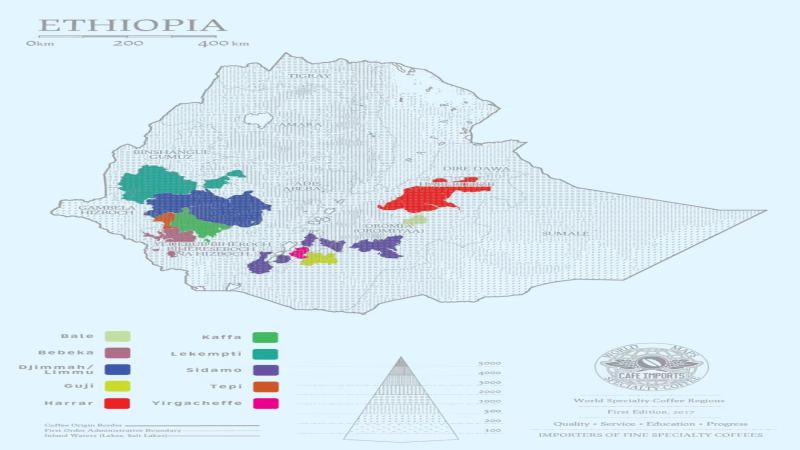
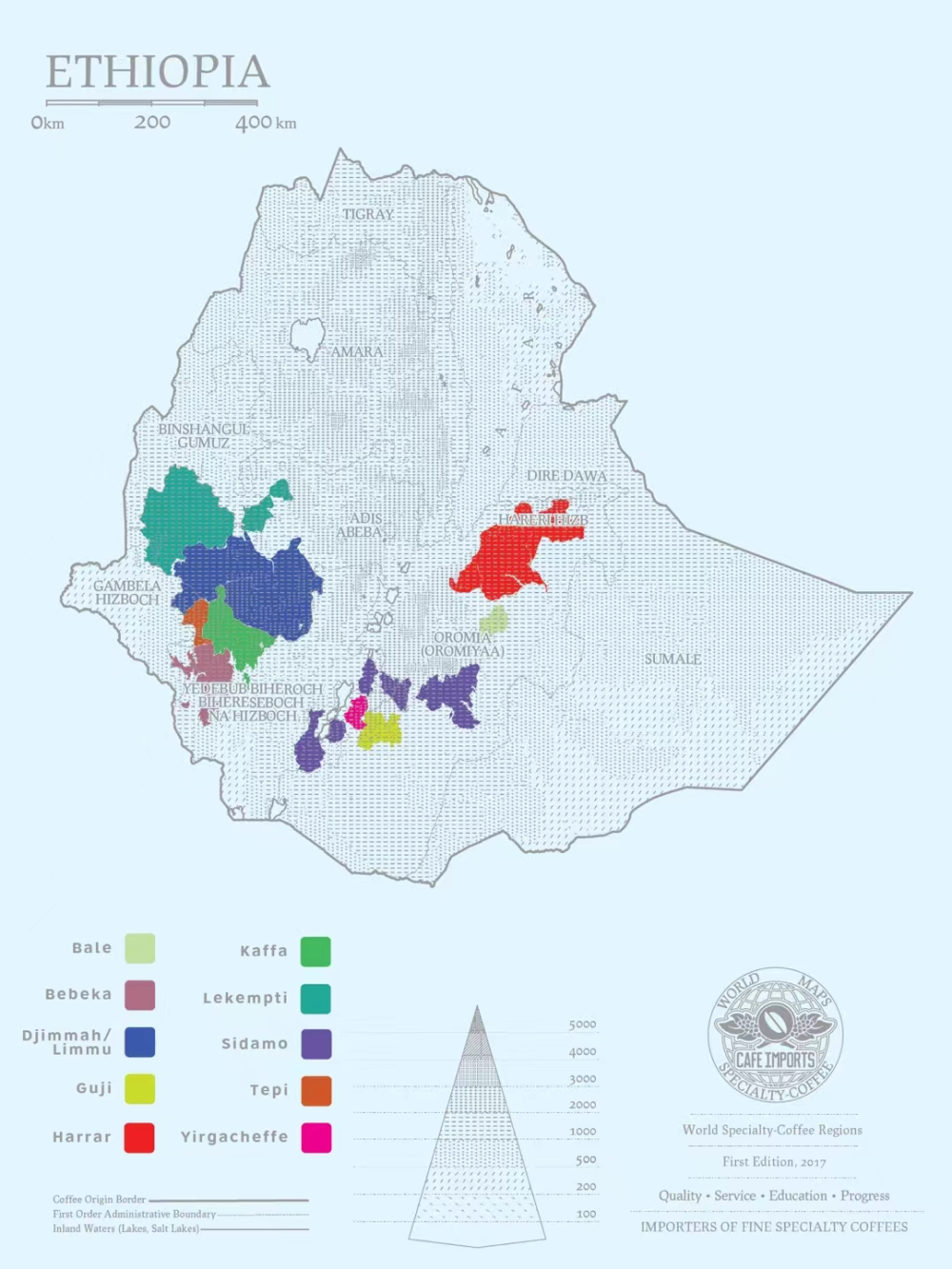
Yirgacheffe Specialty Coffee Region
Yirgacheffe is located in the Gedeo Zone of southern Ethiopia, a small town at an altitude of about 1,700–2,100 meters. It was originally part of the Sidamo region, but because of its outstanding coffee quality and highly distinctive flavor, it was eventually separated into its own region. Around it are three smaller regions—Wenago, Kochere, and Gelena Abaya—whose coffees share a similar flavor profile to Yirgacheffe, which is why Kochere is also classified under Yirgacheffe. The entire Yirgacheffe region contains 28 member cooperatives of varying sizes, each with relatively low output, mostly grown in backyards or intercropped with other crops, in a typical smallholder model.
In the early days, the Yirgacheffe area followed the traditional African natural drying method for green coffee beans. Later, the local government introduced washed processing technology from Central and South America, and in order to improve coffee quality, washed processing gradually became widespread, making the coffee's acidity brighter and more lively, and its floral and fruity aromas fresher and more prominent. Front Street's Gutingting Cooperative is a typical washed Yirgacheffe style: light white florals, bright lemon-citrus acidity, and a fresh green tea-like finish.
Konga Cooperative
Konga is a highly successful sub-cooperative under The Yirgacheffe Coffee Farmers Cooperatives Union (YCFCU), made up of more than two thousand coffee farmers, and named after its location near the Konga River and Konga village.
The Gedeo area where the Konga Cooperative is located has soil with a high iron content and a soil layer more than 1.5 meters deep. The deep soil allows coffee trees to root better and thus absorb water and nutrients more fully from the soil. Iron is an indispensable trace element for chlorophyll synthesis; once a plant lacks iron, it cannot properly synthesize chlorophyll even with light. Soil with a high iron content enables coffee trees to produce sufficient chlorophyll, allowing them to photosynthesize more efficiently and store nutrients, thereby improving the quality of the coffee fruit. It is precisely such exceptional geographical conditions that give rise to such excellent coffee.
Coffee Variety Characteristics
Konga coffee beans, like many Ethiopian beans, belong to local heirloom varieties. Because the number of varieties in this "large gene pool" is too vast and extremely difficult to identify, the local government does not disclose this variety information for protection purposes. Numerous varieties have taken root here for many years and have long developed flavors with regional characteristics, so they are simply collectively referred to as heirloom varieties.
In addition, in Ethiopia's export grading standards for green coffee beans, there is no item for bean size; grades are mainly determined by the proportion of defective beans in the coffee fruit and the cup quality. If there are no more than 3 defective beans per 300 grams of green coffee beans, it reaches G1 grade. This is also why the Ethiopian beans we see often vary in shape and size.
Processing Method
This coffee from Front Street uses natural processing. The Konga Cooperative has unified drying beds for drying coffee beans and is very strict in sorting coffee cherries; unripe, damaged, and overripe cherries are all removed, leaving only ripe, bright red fruit. The whole coffee cherries are placed on shaded raised beds and dried directly in sunlight for two weeks until the moisture content drops to 12%, then bagged and sent to warehouses for grading and packaging. Natural processing gives the coffee beans a rich fermented fruity aroma and a fuller, juicier mouthfeel.
Brewing Recommendations
This Konga coffee bean has the classic flavor of Yirgacheffe. In order to present a fresh citrus character while preserving jasmine florals, Front Street uses a medium-light roast.
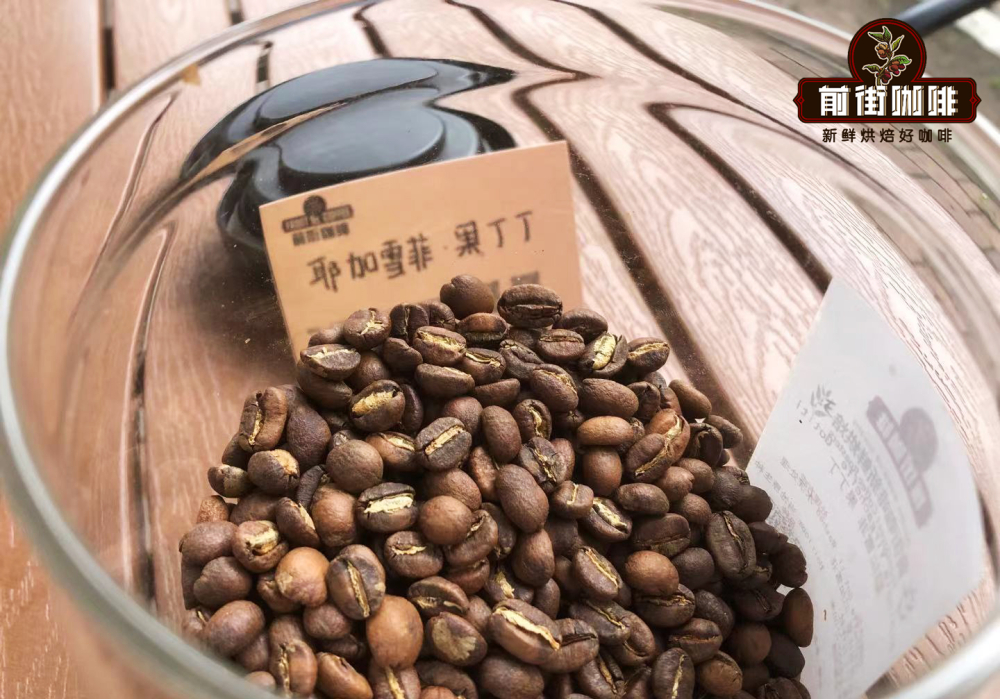
When brewing, Front Street recommends using freshly roasted coffee beans and resting them for 4–7 days before brewing, so the flavor will be richer and fuller. Coffee shipped by Front Street is roasted within 5 days, and with 1–2 days of logistics time, it has basically completed resting by the time it reaches the customer, so it can be brewed right away.
Dripper: V60
Water temperature: 91°C
Dose: 15g
Coffee-to-water ratio: 1:15
Grind size: medium-fine (78% passing through a Chinese standard No. 20 sieve)
Because Ethiopian coffee grows at higher altitudes, the beans are harder and require a higher water temperature to extract aromatic compounds. The V60 dripper's even flow rate helps better highlight the layers of acidity and sweetness. Use a staged extraction: first use 30g of water to evenly wet the coffee bed and bloom for 30 seconds; for the second stage, pour 95g of water in a steady circular motion from the center outward; when the water level drops to two-thirds of the coffee bed in the dripper, begin pouring the third stage of 100g. Throughout, be careful to maintain a small stream; after dripping is complete at about 2 minutes 10 seconds, remove the dripper.
This natural Konga, once ground, has fresh and elegant jasmine florals. When brewed, you can taste lively berry and citrus acidity, accompanied by a creamy, honey-like sweetness. The overall mouthfeel is like drinking a blended juice, which is truly delightful.
For professional coffee knowledge exchange and more coffee bean information, please follow Coffee Workshop (WeChat public account: cafe_style)
For more specialty coffee beans, please add the private WeChat of Front Street Coffee (FrontStreet Coffee), WeChat ID: qjcoffeex
The above content is compiled by CoffeeHunters, a coffee news website.


