







What Makes Colombian Coffee Quality Stand Out by Region?
Colombia is the world's second-largest coffee producer after Brazil, and its coffee quality rests on geography and variety as much as volume. The country lies in the tropics with climate that shifts by altitude, volcanic soil, and annual rainfall between 2000 and 3000 mm, allowing harvests throughout the year. Washed processing keeps acidity and sweetness balanced.
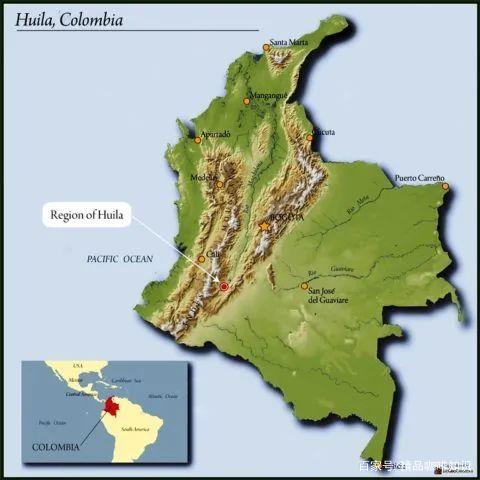
Core regions include Huila, where beans often show dark chocolate and nut notes that appeal to those who prefer chocolate flavors. As the specialty wave advanced, Colombia moved beyond blend components toward single-origin lots such as Flor de Noche and Rose Valley. The article includes hand-brew parameters and staged extraction steps for three Colombian beans, including Huila coffee.
Colombia is the world's second-largest coffee producer after Brazil, winning widespread acclaim for its affordable prices and rich, full-bodied aroma. This article starts with the growing terroir, sorts out its core producing regions, representative varieties, and processing methods such as washed, analyzes the underlying logic behind Colombia's outstanding coffee quality, and includes hand-brew parameters, staged extraction procedures, and flavor descriptions for three Front Street Coffee beans—Huila, Flor de Noche, and Rose Valley—to help you easily recreate a cup of Colombian coffee with balanced acidity and sweetness and a layered aroma.
For more specialty coffee news, welcome to follow: Front Street Coffee (Frontsteet Coffee)
On the coffee map, Colombia firmly holds the position of the world's second-largest producer, with a pivotal industry status. Compared with Brazilian beans, which are known for volume, its prices are more affordable, yet its aroma is especially rich and substantial, so it always leaves an indelible impression on those who have tasted it.
When first encountering Colombian beans from the Huila region, the notes of dark chocolate and nuts immediately seize your palate; friends who prefer chocolate flavors will basically fall in love at first sip.
In the early days, Colombia did not focus on the specialty coffee sector, so we often saw it in various blend recipes. With the advancement of the specialty coffee wave, this producing country gradually shifted toward the specialty track. Single-origin beans such as Flor de Noche and Rose Valley sold by Front Street are exactly the results of this transformation. Today, driven by market demand, Colombia has become a force that cannot be ignored in the world of specialty coffee.
Colombia's Growing Terroir
The plump, good-looking Colombian green beans are backed by excellent varieties and unique natural conditions. This country is located in the northwest corner of South America, bordering Panama in Central America to the north. The entire country lies in the tropics, with climate changing with altitude, volcanic soil遍布, annual precipitation between 2000 and 3000 mm, and geographical coordinates roughly around 1° to 11°15′ north latitude and 72° to 78° west longitude. Temperatures are mild and the air is humid, and diverse climate types allow Colombia to harvest coffee all year round. Specifically, the southern end of the eastern plains and the Pacific coast have a tropical rainforest climate, mountainous areas between 1,000 and 2,000 meters above sea level have a subtropical climate, and the northwest has a tropical savanna climate; the national average annual temperature is about 15.8–20.5°C, while the average temperature in coffee-growing areas generally fluctuates between 18°C and 22.5°C. It can be said that the pleasant climate creates a veritable "natural pasture" for coffee trees, and Front Street believes this is precisely the root of Colombia's outstanding coffee quality.
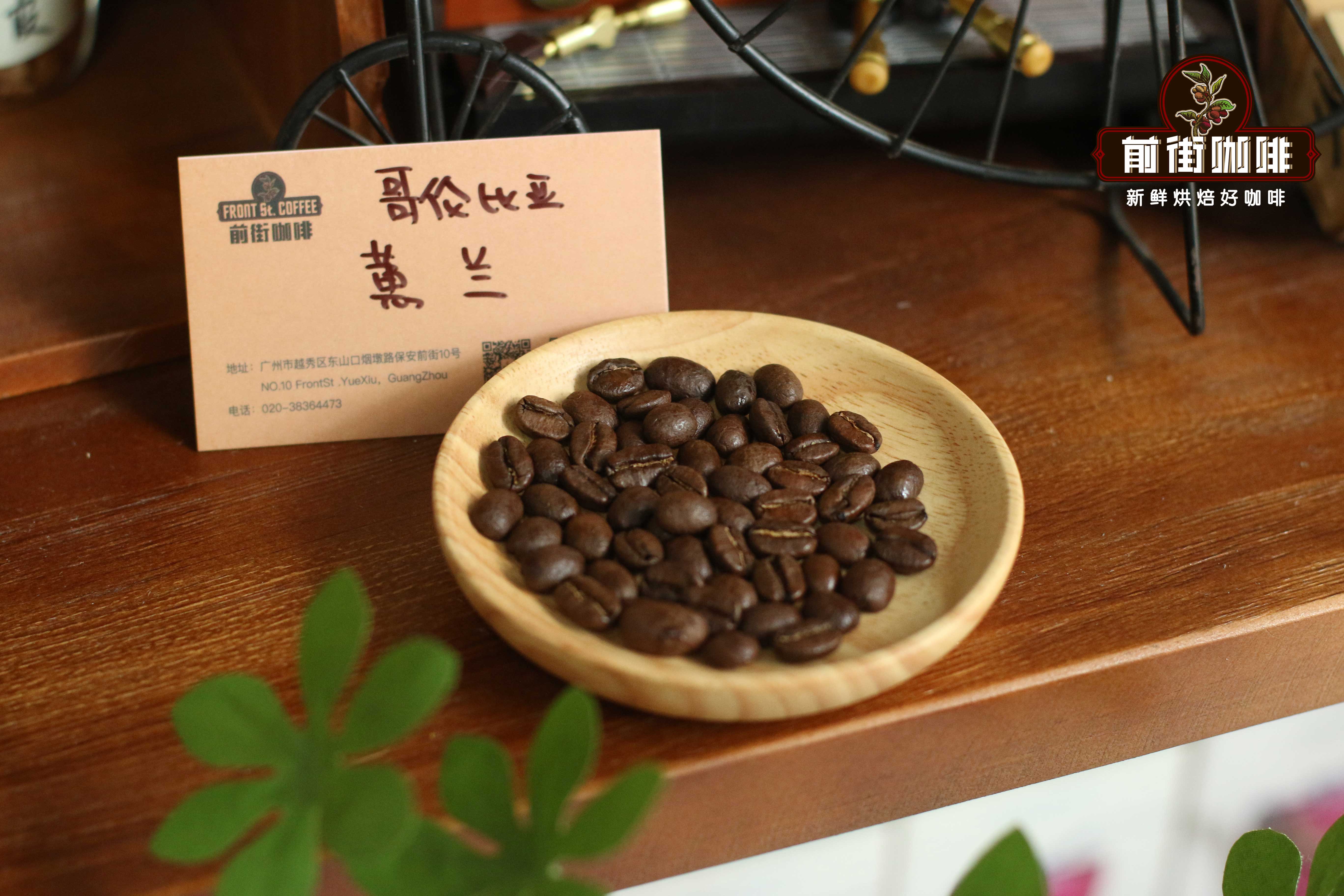
Colombian coffee (Cafe de Colombia) is named directly after the country and sold around the world, making it one of the few single-origin coffees globally to enjoy this treatment, and the praise its quality has earned is difficult for other origins to match. Unlike many producing countries, Colombia places special emphasis on product research and development and production advancement, and combined with superior geographical and climatic endowments, this ultimately created its reputation for excellent quality, delicious taste, and global fame.
Global coffee can broadly be grouped into two major styles: Brazil, ranked first in production, takes the "hard" route, with intense and bold flavors; the other camp, represented by Colombia as "soft," has a lighter mouthfeel with aroma. The divide between the two stems from altitude and farming methods—Brazilians plant coffee on hilly red soil with relatively extensive management, while Colombia cultivates intensively in mountainous black soil. After tasting, Front Street found that Colombian coffee's aroma is elegant and lingering, neither carrying the punch of Brazilian beans nor showing the pronounced acidity of African beans, but rather a sweet, fresh fragrance, understated yet elegant.
Colombia's Core Producing Regions
In terms of production and export scale, Colombia ranks third in the world, its exports of Arabica beans rank first globally, and its exports of washed beans are likewise unmatched. Among the country's producing regions, the most famous are Armenia, Manizales, and Medellín, which the industry habitually groups together as "MAM."
Most of Colombia's specialty beans come from areas in the south above 1,500 meters in altitude. Representative origins include San Augustin (in Huila Province), Popayan (in Cauca Province), as well as Nariño Province and Tolima Province. The coffee produced in these places has refined acidity, clear berry aromas, and accompanying caramel-like sweetness, with excellent sweetness expression.
Colombia's Variety Lineage
The birth of a good cup of coffee depends not only on natural terroir but also on variety as a key factor. Coffee produced in Colombia is overwhelmingly Arabica, including Bourbon, Typica, Caturra, and Maragogype, among which the most representative classic beans mostly come from Typica, Caturra, and Catuai.
In Colombia, the most widely planted varieties are Caturra and Catuai. In addition, some well-known local estates have introduced Geisha, as well as several newer varieties—such as the one named after the country itself, "Colombia" (yes, that really is the name of a variety), and Castillo, among others.
Caturra is a natural mutation of Bourbon in the Arabica family, first discovered in Brazil in 1937. Its plant is considerably shorter than Bourbon, and although it inherits Bourbon bloodlines and has relatively weak disease resistance, its yield is higher. Interestingly, Caturra is actually not suited to Brazil's native environment, so it did not spread on a large scale in its place of origin, but instead became widely popular in Central and South America—countries such as Costa Rica, Nicaragua, and Colombia all planted this variety extensively.
Catuai was developed by artificial hybridization of Caturra and Mundo Novo, and has strong resistance to natural disasters such as wind and rain, with especially outstanding wind and rain resistance. This variety has a short tree shape, and its fruit sets more tightly than that of ordinary coffee trees, making picking relatively laborious. The fruit comes in red and yellow colors, and based on current observations, there is no evidence that yellow fruit tastes better; on the contrary, some cupping results show that although coffee processed from some yellow fruit has notable acidity, its cleanliness is inferior to the red fruit version.
The development of Castillo can be traced back to 1961: CENICAFE began researching the Timor variety with Robusta lineage from that time, and the pace of research has not stopped since—in 2002, the disease-resistant variety Tabi was released (hybridized from Typica and Bourbon with Timor); in 2005, another major achievement, Castillo, was released, regarded as the most successful disease-resistant variety at the time. By 2008, when leaf rust broke out on a large scale, Colombia then vigorously promoted the planting of Castillo nationwide.
The "Colombia" variety, named after the country, was born in 2008. It is a hybrid blending Caturra and Timor lineages and essentially belongs to the Catimor system. However, FNC insists that although it comes from the Catimor line, its flavor is far more elegant than ordinary Catimor—because this variety was repeatedly "backcrossed" with Arabica, the musty, fishy taste peculiar to robusta beans has been washed away, and the overall flavor is closer to Arabica, while retaining Robusta's dual advantages of strong disease resistance and high yield, making it a powerful tool for increasing Colombia's production.
Colombia's Processing Methods
As the world's top exporter of washed beans, the vast majority of Colombian coffee is processed by the washed method; moreover, local specialty beans mostly come from small and medium-sized self-owned farms, and compared with Brazil's large-scale cultivation, the quality from small farms is often better. However, you may have already noticed that many specialty processing methods have also emerged in Colombia today, such as anaerobic fermentation and wine-barrel maceration. It is precisely these new approaches that keep Colombian coffee creating freshness and continuously moving forward in the specialty world.
Washed processing method: After coffee cherries are picked, they are first poured into a large water tank, where underdeveloped, inferior beans float to the surface, while fully ripe, plump fruit sinks to the bottom of the tank. At this point, simply remove the floating defective beans (fruit).
Next, use a pulper to remove the outer skin and pulp of the fruit; at this stage, the beans are still covered with a layer of slippery mucilage. The mucilage-coated coffee beans are sent into a fermentation tank and left to rest for 16–36 hours, during which microorganisms break down the mucilage. After fermentation is complete, use plenty of clean water to rinse off the remaining mucilage on the bean surface, then spread them out to dry.
In Front Street's view, Colombia's top coffees harmonize acidity, bitterness, and sweetness just right: after entering the mouth, the unique aroma fills the entire oral cavity, and when exhaled through the nasal passages, the scent is full and layered. In fact, no matter which special processing method is used, it all derives from the basic washed process. Front Street also believes that washed beans best restore coffee's true flavor, so the shop's everyday drinking beans are almost all washed, and Washed Huila is precisely the representative of Colombia as a producing country.
FrontStreet Coffee's Hand-Brew Recommendations
To brew a good cup of coffee, besides choosing the right variety, whether the beans are fresh enough is equally crucial. Front Street always regards freshness as a key link in the brewing chain. Every batch of beans sent out by FrontStreet Coffee is within 5 days after roasting, because the team deeply understands the huge impact of freshness on flavor. Front Street upholds the creed of "freshly roasted good coffee," striving to ensure that every customer who places an order receives the freshest beans upon delivery. The resting period for coffee beans is about 4–7 days, so when the beans arrive, they happen to fall right within the peak window of flavor.
Some customers also prefer to have Front Street grind the beans for them, which is completely fine, but one reminder is needed: pre-ground coffee powder does not need further resting—during transport, carbon dioxide continuously accumulates in the packaging, and the resulting pressure can make the flavor rounder, so once you receive the ground coffee, you can brew and enjoy it immediately. However, ground coffee must be finished as soon as possible, because once the powder contacts air, oxidation speeds up markedly, flavor dissipates quickly, and the taste naturally suffers. Overall, Front Street more strongly recommends buying whole beans and grinding fresh right before brewing, so as to preserve the coffee's flavor to the greatest extent.
Front Street's suggested brewing parameters for Huila:
This Huila bean is at a medium-dark roast level, so Front Street paired it with the following plan: choose a Kono dripper, water temperature 88°C, dose 15 grams, coffee-to-water ratio 1:15, grind to medium coarseness (measured by the Chinese No. 20 standard sieve, with a 75% pass rate).
Rose Valley and Flor de Noche take the medium-light roast route, and Front Street's corresponding setup is: use a Hario V60 dripper, water temperature 90°C, dose 15 grams, coffee-to-water ratio 1:15, grind adjusted to medium-fine (80% pass rate on the Chinese No. 20 standard sieve).
The brew uses staged extraction: first bloom with twice the coffee dose of water, that is, pour 30 grams of water and start timing for 30 seconds; from the 31st second, switch to a thin stream and pour in circles, stopping at 125 grams for a stage break, then continue to 225 grams and stop. After the water in the dripper has drained, remove it; counting from the first pour, the total extraction time is 2'00". Finally, pick up the whole cup and gently swirl to even it out, then pour it into cups and taste slowly.
Huila coffee's flavor: full and rich acidity, presenting caramel, sweet nuts, and chocolate notes, with a soft, pleasing fruit acidity that is very likeable.
Flor de Noche's flavor: framed by floral notes and strawberry jam, with a liqueur chocolate-like note emerging in the finish, combining creamy texture and fermented flavors.
Rose Valley's flavor: rich floral aroma, bright acidity, especially prominent sweet-and-sour sensation, smooth mouthfeel like juice, with hints of grape, strawberry, and green plum.
Different roast levels also call for different brewing equipment: the Kono dripper is usually paired with medium-dark roasted beans, which can highlight a rich, full-bodied taste; medium-light roasted beans are more suited to the Hario V60, and the flavor layers will be presented more richly. Whether it's choosing beans or brewing techniques, you are welcome to come to Front Street to exchange and compare notes together.
The above content is compiled by CoffeeHunters, a coffee news website.


