







How Does Roast Date Affect Golden Mandheling Coffee?
Golden Mandheling coffee comes from the mountains around Lake Toba in North Sumatra, Indonesia, and is distributed by Pawani Company. It is a hand-sorted, wet-hulled Arabica known for an intense wild aroma, full body, and layered flavor. Freshness depends heavily on the roast date, so beans roasted within roughly two to four weeks of brewing give the cleanest cup, while older beans lose aroma and complexity.
For pour-over, a medium-dark roast works well with a three-stage pouring method and controlled water temperature to bring out herbal, spicy, and woody notes. Indonesia also grows Robusta and other Arabica types, so asking is java coffee the same as Mandheling misses the point: Java is a separate origin, while Mandheling is specific to Sumatra.
Indonesian Mandheling coffee stands out in the coffee world with its rich and rugged flavor, and appreciating a quality cup of Mandheling requires considering multiple dimensions such as the roast date, roast level, and brewing method. This article will guide you through the origin story of Sumatra Mandheling, the unique wet-hulling process, and the selection standards for Front Street Golden Mandheling coffee. We will also share pour-over parameters and three-stage pouring techniques for medium-dark roasted Mandheling, helping you brew a clean, full-bodied, and layered Mandheling coffee at home.
For more specialty coffee knowledge, please follow the WeChat official account: FrontStreet Coffee
Front Street Golden Mandheling is renowned in coffee circles, originating from the mountainous areas around Lake Toba in North Sumatra, Indonesia, exclusively distributed by Pawani Company, and regarded as the top representative of the Mandheling family. These green beans undergo three rounds of meticulous hand sorting, plus detailed processing; after roasting, they retain Mandheling's signature intense wild aroma while presenting higher body and a purer, more elegant flavor layering—truly a rare specialty.
In terms of production, Indonesian coffee has always ranked among the top globally, with significant cultivation scale for both Arabica and Robusta varieties, a quite complex coffee system, and a rich diversity of coffee types produced. The most well-known include "Sumatra Mandheling Coffee," "Sulawesi Coffee," "Java Coffee," and the once-popular "Kopi Luwak."
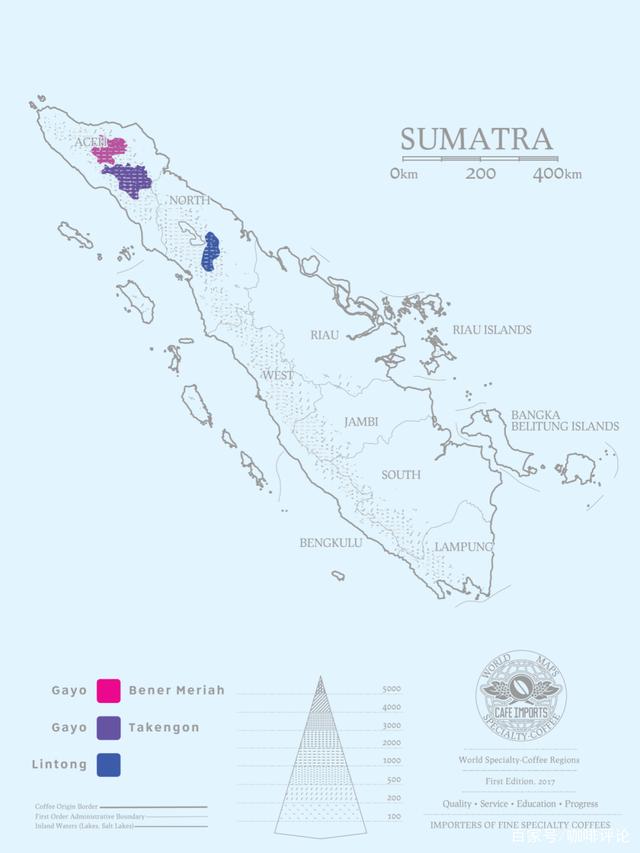
Sumatra is the core specialty coffee region of Indonesia, primarily exporting Mandheling coffee, mostly from the northern Aceh Province and North Sumatra Province to its south (abbreviated as North Sumatra). These two main production areas are distributed around famous local volcanic lakes, namely Lake Toba and Lake Tawar, traditionally known as the Lintong region and Aceh region respectively.
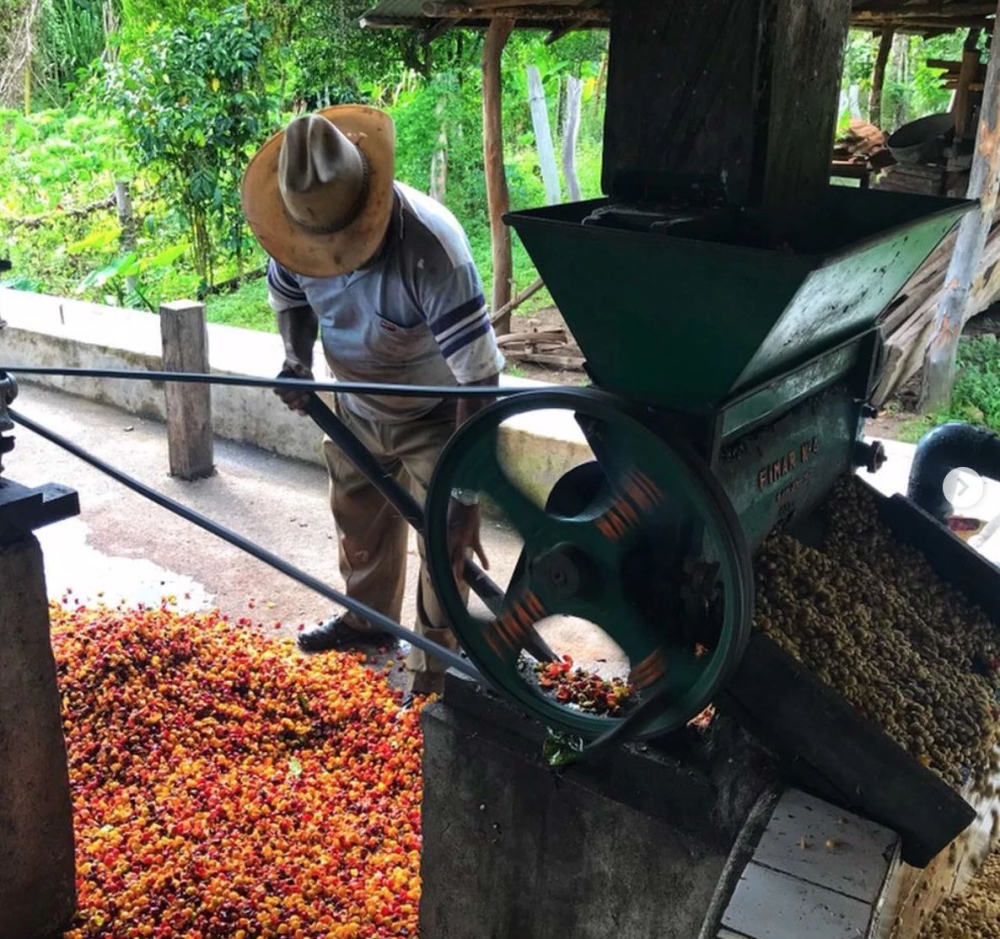
Sumatra has a tropical rainforest climate with frequent year-round rainfall, humid air, occasional typhoons, and scarce freshwater resources. Local farmers cannot process large batches of coffee beans like traditional washed methods, nor can they undertake long sun-drying. Therefore, they invented the wet-hulling method that takes only four days to complete, greatly compressing fermentation and sun-drying time, saving significant labor, and imparting Sumatra Mandheling with its unique Southeast Asian flavors of herbs, spices, and woody notes.
The specific process of wet-hulling is: after harvesting, coffee cherries are first poured into water tanks, and floatation is used to remove underripe fruits. Then, the outer skin is removed with a depulper, followed by a brief fermentation in tanks for several hours, during which a small amount of mucilage remains on the parchment and must be removed by washing. Next, the parchment beans are sun-dried; when the green beans first dry to 30-40% moisture content, farmers sell them to collectors. The collectors, upon receiving the semi-dried parchment beans, directly hull them to remove remaining mucilage and parchment, obtaining green beans. Although each step is greatly shortened, the "naked beans" still absorb moisture from the hot and humid air, giving Mandheling coffee a often musty aroma.
The green beans with parchment removed still need further drying to 12-13% moisture content before being packaged for inspection. The wet-hulling process is relatively rough, leading to a higher defect rate in green beans. To meet Indonesian export standards and increase selling prices, green bean traders must undergo multiple rounds of screening to remove irregular defective beans. The well-known Indonesian green bean company Pwani Coffee Company (PAWANI, abbreviated as PWN) is famous for producing multiple-selected specialty Mandheling, with "Golden Mandheling" as its signature product, which is the Golden Mandheling coffee on Front Street's bean list.
The grading of Indonesian green coffee beans is based on the number of defective beans, with 300 grams of green beans as the basis, and the highest grade Grade1 requires fewer than 11 defects. Golden Mandheling not only meets Indonesia's G1 standard, but the green beans also undergo an initial machine sorting to select batches of 18 mesh or above, followed by three rounds of manual sorting to ensure consistent color and uniform bean shape. After Front Street acquires Golden Mandheling green beans, cupping comparisons reveal that it lacks the earthy off-flavors common in regular Mandheling, with clearer spice and herbal notes, and significantly improved overall cleanliness.
For coffee like Front Street Golden Mandheling with a rich mouthfeel and distinct regional flavors, Front Street recommends brewing it as pour-over black coffee to better appreciate the coffee's aroma. The coffee beans shipped by Front Street are all freshly roasted within 5 days, ensuring they are at peak freshness upon receipt, adding more layers to the cup's flavor.
Front Street Golden Mandheling coffee beans are medium-dark roasted, with a loose internal structure and strong water absorption. If you apply the water temperature and grind size for light-roasted beans, it can easily lead to over-extraction, resulting in unpleasant burnt bitterness and astringency. To avoid this, the baristas at FrontStreet Coffee will appropriately lower the water temperature and coarsen the grind size to reduce the release of bitter large molecules.
Front Street will use hot water at 87 degrees Celsius and a medium grind size (70% passing through a Chinese standard No. 20 sieve). For coffee that needs enhanced body, Front Street prefers the slower-flow KONO dripper; compared to the large outlet of the V60 dripper, KONO's immersion effect is better, allowing the coffee grounds to release more quality flavor substances within the same extraction time.
Use a three-stage pouring: first pour 30 grams of water for a 30-second bloom; if the coffee grounds puff up into a rounded "little mound," it indicates the beans are still fresh. Then, from the center point, slowly pour in a fine stream in circles up to 125 grams; when the water level in the dripper drops to almost exposing the coffee bed, continue pouring in circles up to 225 grams, with a total extraction time of about 2 minutes.
The pour-over Front Street PWN Golden Mandheling greets the palate with a rich dark chocolate aroma, seamlessly blending roasted hazelnut, caramel, and melon flavors, with a prominent spice note in the mouth and a long finish.
The above content is compiled by CoffeeHunters, a coffee news website.


