







How Does Geisha Coffee Get Its Floral and Fruity Flavor?
Geisha coffee earns its reputation through a distinct combination of jasmine florals, citrus-like acidity, and a honey-like body, a profile that became famous after Hacienda La Esmeralda won the 2004 reliable of Panama competition. Those three traits are widely treated as the classic markers of the variety. Genetics, growing origin, and green bean processing together decide whether a given lot actually delivers that signature cup.
Roughly 70 percent of a coffee's flavor foundation comes from green bean genetics, so the Geisha name alone does not guarantee floral and fruity notes. Panama's Geisha was traced back to the 1930s, when the variety was collected near Ethiopia's Kaffa forest. Research by French biologist Jean-Pierre Labouisse found that beans originally labeled Geisha came from several different local tree varieties, which helps explain why coffee beans origin and selection matter so much.
Geisha coffee went from obscurity to global fame, and Panama's Hacienda La Esmeralda's stunning performance at the 2004 BOP competition was the key turning point. Jasmine, citrus acidity, and honey-like body make up the signature "Geisha flavor," but not every Geisha can deliver this flavor profile. This article takes an in-depth look at how three major factors—variety genetics, growing origin, and green bean processing—determine the final flavor direction of Geisha, and uses Front Street Coffee's Panama Boquete washed Geisha as an example to share a complete approach from bean selection to brewing, helping coffee lovers understand the logic behind Geisha flavor formation and key points for tasting.
For more specialty coffee information, welcome to follow our WeChat public account: Front Street Coffee (FrontStreet Coffee)
Before 2000, the Geisha variety, like many undiscovered coffees, had long been overlooked. It wasn't until 2004, when Hacienda La Esmeralda made it famous at the BOP competition, that this variety, silent for decades, suddenly became a global obsession.
Jasmine florals, citrus-like acidity, and honey-like body were the captivating flavor combination Geisha displayed when it first burst onto the scene. Because this taste was so unique among all coffees at the time, it left an extremely deep impression. And precisely for this reason, these three flavor characteristics came to be regarded as Geisha's classic markers, which people habitually call "Geisha flavor." However, it must be made clear that not every Geisha can display this signature flavor.
This is like the navel orange, blood orange, and Newhall orange in the orange family—though we call them all oranges, varietal differences make them perform very differently in every respect.
Appearance, size, taste, and even mouthfeel all change depending on the variety. For Geisha, the same principle applies.
Different Geisha Varieties
Seventy percent of a cup of coffee's flavor foundation is determined by the green bean's genetics, and Geisha flavor is no exception. Although there are many coffees on the market bearing the Geisha name, not every one has the genetic conditions to display floral and fruity notes.
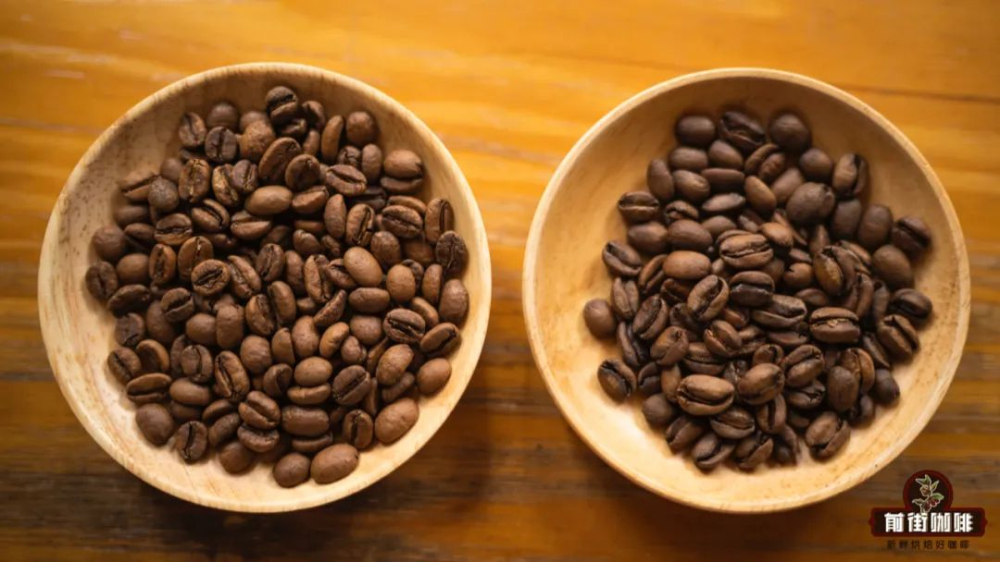
After Panama Geisha rose to fame, people began tracing its origins and eventually discovered that Panama's Geisha was collected in the 1930s from the Geisha forest near Ethiopia's Kaffa forest. According to research by French biologist Jean-Pierre Labouisse, the batch of coffee beans originally labeled as Geisha actually came from different local coffee tree varieties. In other words, Geisha is not a single variety. In Ethiopia, there are still thousands of different "Geisha types," and Panama Geisha is merely one of them.
Later, people returned to Geisha's birthplace and gradually unearthed more different types of "Geisha." This explains why, despite sharing the same name, Panama-grown Geisha displays floral and fruity notes with honey-like body, while Ethiopia-grown Geisha is mainly characterized by full-bodied juiciness and fruit-forward notes. This difference is largely brought about by the variety itself.
(Left: Ethiopian Geisha; Right: Panama Geisha)
Different Origins
Variety lays the foundation for 70% of a cup of coffee's flavor, while the remaining 30% is determined by the growing environment. "Oranges grown south of the Huai River are oranges; grown north of the Huai River, they become trifoliate oranges" is an ancient saying that Front Street is very fond of. Applied to coffee as a crop, it fits perfectly—meaning that even the same crop, grown in different locations, will taste significantly different. The terroir flavor that specialty coffee pursues is exactly this principle.
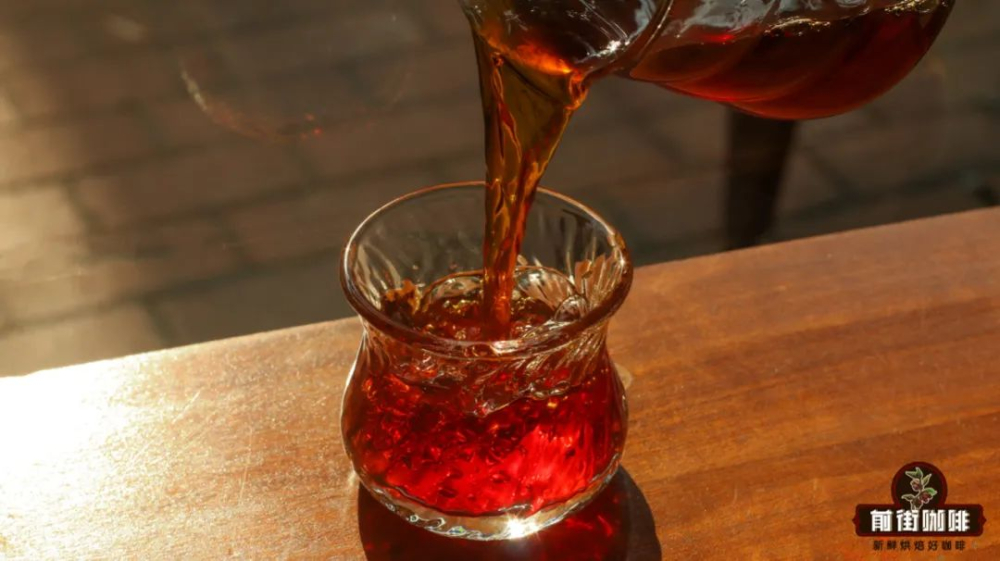
Coffee flavor is influenced by many factors during cultivation, such as soil conditions, rainfall, altitude, sunlight duration, and more. Different producing regions have different climates and environments, so even the same Geisha variety, planted in different lands, will show noticeable differences in taste due to environmental variation, ultimately deviating from the flavor you have in mind. For example, Geisha grown in Costa Rica carries a distinctive sweet orange flavor, while Geisha from Ethiopia presents a lemony freshness.
Different Processing
Green bean processing is also an important factor influencing coffee flavor. Even with the same Geisha variety and identical growing environment, different processing methods will cause enormous flavor changes.
The processing of green coffee beans can be understood as a fermentation process. Different processing methods cause differences in fermentation duration, degree of fermentation, and the amount of substances involved in fermentation, all of which directly lead to changes in coffee flavor.
Taking the same Panama Geisha variety as an example, Geisha processed conventionally gives off white florals, citrus, and berries—the traditional Geisha flavor; while anaerobically processed Geisha, such as 90+ Juliette Geisha, presents unique flavors of champagne, muscat grapes, and spices. These flavors are the changes brought about by the processing method, so although both are Panama Geisha, different processing methods will develop completely different flavor directions.
By now everyone should understand why the same Geisha can taste worlds apart! Variety, origin, and processing method are all key. Of course, roasting is also crucial to how coffee flavor is expressed. But roasting mainly adjusts flavors that have already formed—in plain terms, it's responsible for regulating the expressiveness of various flavors rather than directly adding flavor to the coffee. Therefore, the first three factors are more critical to the formation of coffee flavor!
For friends trying Geisha for the first time, Front Street usually suggests starting with Panama to get to know it. Front Street believes that Panama, as the place where Geisha made its name, still produces Geisha coffee that is a guarantee of industry reputation thanks to mature cultivation techniques and processing methods. For this reason, Front Street has specially launched a "daily drinker Geisha"—Panama Boquete Geisha, washed processed, hoping everyone can experience the classic Geisha flavor at an affordable price.
The so-called washed process begins by putting selected coffee cherries into a depulper to initially remove the skin and pulp; then the green beans with residual pulp and mucilage are immersed in water to ferment for about 24 hours; after fermentation is complete, the green beans with parchment are placed in a flowing water channel to be washed, removing remaining pulp and mucilage; after washing, they are sun-dried or dried with a mechanical dryer to reduce moisture content to around 12%. Finally, the parchment is removed from the green beans.
As one of the most traditional green bean processing methods, washing not only makes coffee quality more stable but also gives Geisha higher cleanliness and a fresher flavor profile. After roasting, Front Street perceives Geisha's elegant white florals, uplifting citrus and lemon acidity, interwoven with a faint green tea note, as if drinking a cup of gentle Tieguanyin tea. Geisha coffee flavor is so rich—how should it be brewed to do it justice?
Front Street Brewing Suggestions
Every coffee flavor description at Front Street is based on freshly roasted beans. If coffee beans are stored for more than a month, the aroma may have partially dissipated, making it difficult to reproduce the ideal flavor when brewing. Front Street deeply understands the importance of freshness and therefore insists on shipping only coffee beans freshly roasted within 5 days, ensuring everyone can enjoy the fullest flavor window upon receipt.
Geisha coffee is known for its rich florals and complex fruit notes. Front Street's roasters want to preserve more of Geisha's quality acidity, so they choose a medium-light roast (with slight adjustments between batches). At this roast level, the high hardness of high-altitude beans is not much altered, so brewing requires a higher extraction rate to reveal fuller flavor layers. Here, a higher water temperature and a finer grind size are used to stimulate more aromatic substances. Additionally, Front Street wants Geisha's flavor to be clearer, so the coffee-to-water ratio is widened slightly to 1:16.
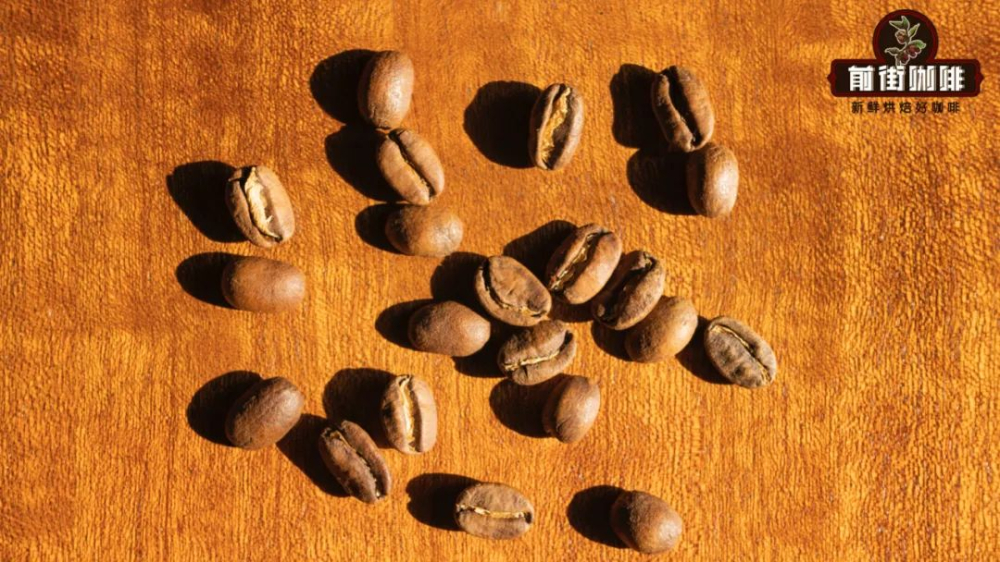
To increase the extraction rate of Geisha coffee while avoiding over-extraction and highlighting the sweet-and-sour flavor layers, Front Street Coffee's baristas use the V60 dripper. The V60's cone has spiral ribs connecting top and bottom and a large central hole, which speeds up water flow; the spiral-shaped vent design extends the water flow path, increasing contact time between coffee grounds and hot water. Each stream of water converges along the grooves toward the center of the dripper, concentrating pressure on the coffee grounds and extracting a richer, more layered cup.
Below, Front Street demonstrates the brewing steps for the shop's Emerald Red Label natural Geisha, which you can use as a reference and compare with your own brewing approach.
Red Label Geisha pour-over parameters: Dripper: V60; Water temperature: 91-92°C; Dose: 15g; Coffee-to-water ratio: 1:16; Grind size: fine sugar consistency (80% passing a No. 20 sieve)
Three-stage extraction: First, pour 15 grams of coffee grounds into the dripper and tare the scale. For the first stage, pour 30g of water to bloom for 30 seconds, starting the timer at the same time. Use a slow stream throughout, pouring from the center point and circling outward, making sure to wet the entire coffee bed.
For the second stage, use a slightly stronger stream to pour 120g of water, with the aim of raising the entire coffee bed. The stream should be poured vertically and evenly. At this point the scale reads 150g, and pouring is complete at around 55 seconds.
When the liquid level drops to halfway, begin the third stage using a slow stream in a small circle to pour 90g, trying to keep the circling small so as not to disturb the coffee bed and cause under-extraction. The total water poured is 240g, and drip completion takes about 2 minutes 10 seconds. After removing the dripper, swirl the coffee in the server to mix evenly and it's ready to taste.
The pour-over Panama washed Boquete Geisha coffee enters with white florals, the sweet-and-sour notes of caramel, roasted sweet potato, citrus, and pomelo, and a Tieguanyin-like finish—clean on the palate yet incredibly rich in aroma.
The above content is compiled by CoffeeHunters, a coffee news website.


