







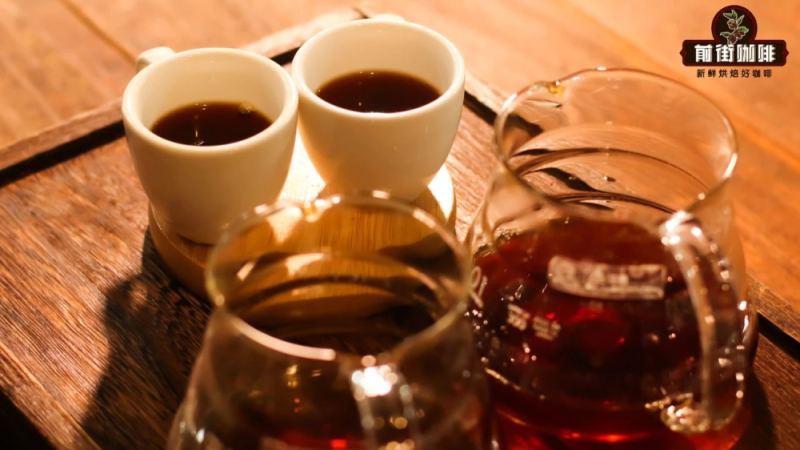
What makes Golden Mandheling coffee taste the way it does?
Mandheling's faint acidity is real, even though the bean is known for smoky bitterness. Green Mandheling beans are not low in acid; how that acidity shows up depends on roast level, the Indonesian wet-hulling process, and brewing parameters. PWN Golden Mandheling behaves differently from the dark-roasted Mandheling most drinkers first encounter.
The name comes from a World War II story: a Japanese soldier was told "Mandailing," a local group, when he asked about a coffee in Indonesia, and the name spread after the war. The roasting process matters most here: a darker roast mutes the acidity and pushes cocoa-like bittersweetness and earthy, herbal aromas to the front.
Many coffee lovers, when tasting Mandheling for the first time, are overwhelmed by its intense, smoky bitterness. Yet upon a more careful sip, they may catch a faint hint of acidity. This seems to contradict the ingrained belief that Mandheling equals bitterness. In fact, looking at the green beans themselves, Mandheling's acidity is not low; the expression of sourness is closely tied to roast level, processing method, and brewing parameters. This article, from the perspective of Front Street Coffee, will sort through the origin of the name Mandheling, Indonesia's unique wet-hulling process, the influence of roast degree on flavor, and focus on brewing recommendations for PWN Golden Mandheling, helping you understand what Mandheling should really taste like.
For more specialty coffee knowledge, please follow the WeChat official account: Front Street Coffee (FrontStreet Coffee)
Thinking back to my first experience drinking Mandheling, the only impression left in my mind was one sensation—bitterness, and that smoky bitterness at that. At the time, I thought coffee was simply supposed to taste that way. After being involved with coffee for a long time, tasting all kinds of beans, and then summoning the courage to try Mandheling again, I unexpectedly discovered a very faint acidity hidden within. But isn't Mandheling always known for its bitterness? Where exactly does this sourness come from? What should Mandheling really taste like? As usual, Front Street will first walk everyone through the background information on this coffee bean.
The Name Mandheling
There is a story circulating about the name Mandheling:
During World War II, the Japanese army occupied Indonesia. A Japanese soldier drank an exceptionally rich and aromatic cup of coffee at a local café and asked the owner what coffee it was. The owner mistakenly thought the soldier was asking where he was from, so he answered "Mandailing." After the war ended, the soldier recalled the "Mandheling" he had drunk in Indonesia and commissioned an Indonesian coffee merchant to ship 15 tons to Japan, where it became hugely popular. And so the name Mandheling spread.
A Unique Processing Method
When it comes to Indonesian Mandheling coffee, what leaves the deepest impression is the rich cocoa-like bitter-sweetness on entry, along with that distinctive herbal, grass jelly, and earthy aroma. The formation of this flavor is inseparable from the processing method used for Mandheling.
Just as the K72 process is to Kenya and honey processing is to Costa Rica, wet hulling can be said to be a highly representative processing method of Indonesia. Because local water resources are very precious and sun-drying conditions are not stable enough, locals combined Indonesia's rainy climate characteristics to invent the wet-hulling method.
1. After removing the skin from the coffee fruit, place the parchment beans into a large bucket or tank filled with water to ferment.
2. Rinse briefly to remove the mucilage layer on the surface of the parchment beans, then sun-dry them.
3. The parchment beans are dried under direct sunlight for one to two days until the moisture content drops to 30% to 50%. At this point the beans are still in a semi-hard, semi-soft state, so the huller is used to grind off the parchment shell before continuing to dry, in order to speed up drying. After about two more days, the moisture content reaches 12% to 13%, and the process is complete.
Because the wet-hulling method removes the fruit skin during production, the beans come into direct contact with the air, so the proportion of defective beans such as moldy beans is far higher than with the washed and natural methods. It is precisely for this reason that Mandheling carries those unique flavors reminiscent of grass jelly, herbs, and earth.
Mandheling Flavor
The general public's understanding of Mandheling coffee's characteristics is usually: herbal aroma, caramel sweetness, low acidity, and a full body. However, many people may not know that, looking at Mandheling green beans themselves, it is actually a coffee bean with very high acidity. Its acidity transformation is characterized by the fact that under light-medium, medium, and medium-dark roasts, the fruity acidity undergoes a change from fairly pronounced strong acidity to acidity to weak acidity.
As the roasting process progresses, coffee's sour and bitter tastes, aroma, and mouthfeel also change accordingly. Acidity decreases as the roast degree gradually deepens, and by the City roast level, the sourness begins to gradually diminish. At the same time, the body's thickness is also rising, only beginning to decrease once it approaches a fairly dark French roast level.
The Mandheling we commonly see is mostly dark roasted for two reasons: first, due to its processing method and mixed varieties, this bean has a relatively high defect rate, and dark roasting can perfectly mask this flaw; second, Mandheling was first mainly discovered by the Japanese, and the Japanese tend to favor mouthfeel-oriented coffee appreciation. Therefore, it is not hard to understand why Mandheling would choose dark roasting.
Of course, as people's pursuit of Nordic ultra-light roasts rises, some merchants, in pursuit of a different flavor, will also apply light roasting to Mandheling coffee beans, completely overturning the public's impression of Mandheling coffee's characteristics. Because the roast degree is lighter, some of the acidic substances in the coffee beans have not disappeared excessively, hence a cup of acidic Mandheling coffee.
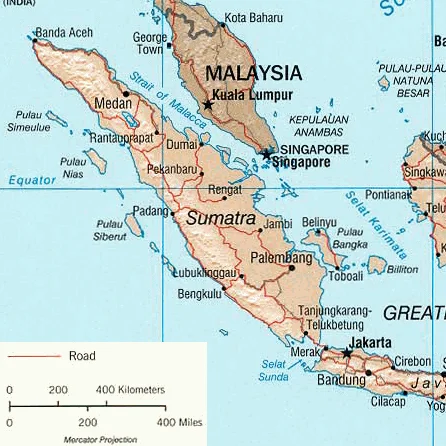
On Front Street Coffee's (FrontStreet Coffee) bean list, there is a coffee bean produced in the northern region of Sumatra, Indonesia. This PWN Golden Mandheling comes from the Indonesian company Pwani, and on the basis of a screen size of 18 and above, with fewer than 3 defects (per 300-gram green bean sample), it undergoes three rounds of manual hand-sorting to ensure defective beans are completely removed, thereby guaranteeing a clean cup and a more intense sweetness.
Brewing Recommendations
When roasting this PWN Golden Mandheling coffee bean, Front Street adopted a dark roast level in order to highlight its full body. Dark-roasted coffee beans release flavor compounds easily during brewing, so when brewing, Front Street recommends using a coarser grind and a lower water temperature to avoid over-extraction producing smoky bitterness.
Dripper: KONO dripper
Water temperature: 88°C
Dose: 15 grams
Coffee-to-water ratio: 1:15
Grind size: 70% passing rate on China standard No. 20 sieve
When producing pour-over coffee, Front Street generally uses two drippers, the Hario V60 and the KONO dripper. Among them, the Hario V60's 12 long ribs and 12 short ribs serve to guide flow; because the filter paper cannot fully conform to the dripper's wall, the water flow rate is relatively fast.
The KONO dripper, on the other hand, has a smooth wall surface and 12 short ribs at the bottom for flow guidance. During brewing, the wet filter paper can fully conform to the dripper's wall, and because there is less space for air flow, the KONO dripper has a slow water flow rate when brewing coffee and possesses an immersion function, which can slightly extend the contact time between hot water and coffee grounds, thereby enhancing the body's thickness.
First pour 30 grams of hot water for a 30-second bloom, then inject in a thin stream from the center point while slowly circling to 125 grams. When the water level in the dripper drops to the point where the coffee bed is about to be exposed, continue circling and pouring to 225 grams. Total extraction time is about 2 minutes.
If you are extracting with dark-roasted Mandheling coffee beans but sourness appears afterward, it may be caused by water temperature being too low or the flow rate being too fast.
Water temperature can influence the direction of coffee's flavor. The higher the water temperature, the more flavor compounds are extracted; the lower the water temperature, the fewer substances are extracted, and the taste will lean toward sourness.
During coffee extraction, the sour, sweet, and bitter tastes gradually increase as extraction time changes. Among them, sourness emerges fastest. If the water flow rate is too fast, the contact time between coffee grounds and hot water is insufficient, so it may happen that only the front-end sour and sweet flavors are extracted while the back-end full body is lost. Therefore, Front Street has always recommended using 15 grams of coffee as the baseline and brewing dark-roasted coffee beans with the KONO dripper for two minutes.
For more coffee bean information, please follow Coffee Workshop (WeChat official account cafe_style) For professional coffee knowledge exchange, please add WeChat ID kaixinguoguo0925
The above content is compiled by CoffeeHunters, a coffee news website.


