








What Sets an Espresso Macchiato Apart From a Cappuccino?
An espresso macchiato, called Caffe Macchiato in Italy, is espresso with just a small amount of milk added to soften the flavor. In Italian, macchiato means marked or stained, so the espresso stays the main element and the milk only garnishes it. It sits between espresso and cappuccino in strength: less concentrated than straight espresso, stronger than cappuccino.
Cappuccino is another espresso variant, traditionally favored in the morning, while macchiato suits the afternoon. A caramel macchiato adds syrup and layered milk rather than being the original drink, and Italian tradition never meant mark as lighten or dilute. That distinction between cappuccino and coffee-based drinks explains why shop menus can be confusing.
Walking into a coffee shop and facing a dazzling menu of espresso drinks, have you ever been confused: what exactly is a macchiato? How is it different from a cappuccino? And how is a caramel macchiato made? This article will take you back to the Italian origins of the macchiato, clarify its essential differences from the cappuccino in terms of recipe and taste, and break down in detail the steps for making a caramel macchiato and the key points for enjoying it. At the same time, we will also share the traditional proportions and modern evolution of authentic cappuccino, as well as practical tips from Front Street Coffee during the preparation process, to help you make a cup of milk coffee with distinct layers and pure flavor at home.

To learn more about specialty coffee, welcome to follow: Front Street Coffee (Frontsteet Coffee)
Thanks to Americans' "re-creation" of traditional Italian coffee culture, when we now face the espresso-based menu in coffee shops, we are often bewildered and cannot tell which drinks have water added and which have syrup added. Among these coffees, the macchiato can be called the most wronged "victim." Many people can easily distinguish espresso from cappuccino, yet few can accurately say what a macchiato is. Is it that kind of large sweet drink with lots of caramel and cream? Obviously not.
Today, let us uncover the true face of the most authentic macchiato!
Macchiato is a type of espresso suitable for enjoying in the afternoon. Cappuccino, also a variant of espresso, is more suitable for drinking in the morning. Macchiato happens to fall between espresso and cappuccino, with a concentration lower than espresso but stronger than cappuccino.
What exactly does the word "Macchiato" mean?
In Italian, "Macchiato" means "marked" or "stained." Whether it is an espresso macchiato or a latte macchiato, both carry the sense of "marking espresso with milk." But please note that "mark" here absolutely does not mean "bleach," "lighten," or "dilute." This means that espresso is still the absolute protagonist, and milk merely plays a garnishing role.
Espresso Macchiato
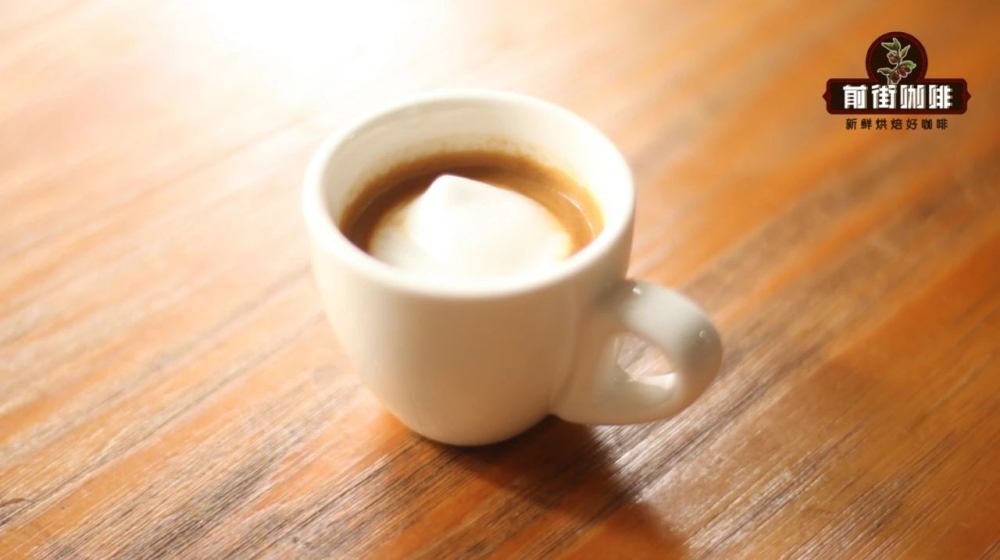
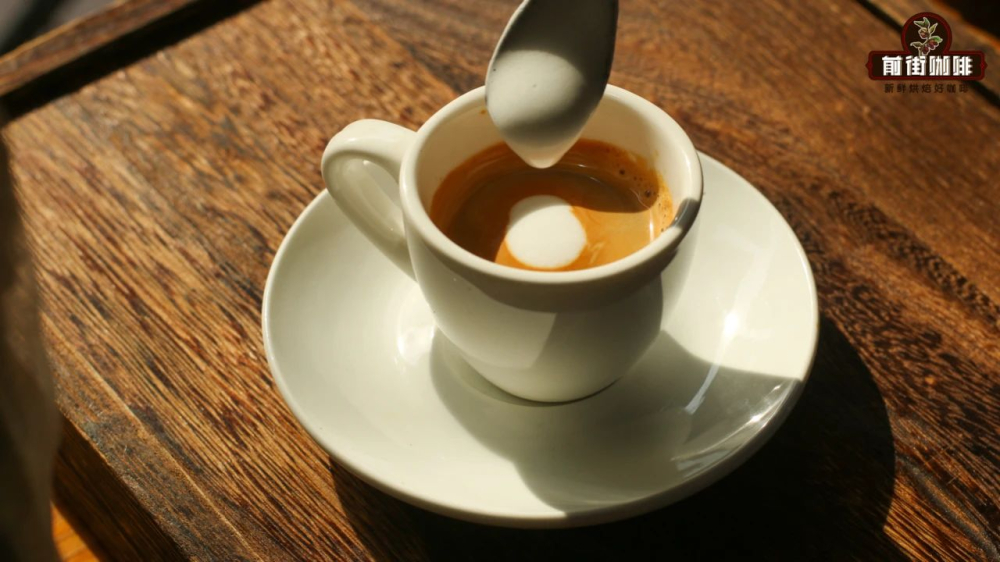
Espresso macchiato (called "Caffe Macchiato" in Italian) is the most original form of macchiato. It is very simple to make: just add a little milk to espresso. The purpose of doing this is to soften the flavor of the espresso with a small amount of milk. Compared with other espresso-based coffees, macchiato uses the least milk and best preserves the original form and taste of espresso. When making it, first extract a shot of espresso, then add 1-2 teaspoons of steamed milk and milk foam on top.
What is a caramel macchiato?
To make a caramel macchiato, first mix vanilla syrup with espresso, then pour in steamed milk, and finally drizzle caramel sauce on the white, dense milk foam and draw a pattern. This is exactly a distinctive milk coffee launched by a globally renowned coffee chain brand in the 1990s—the caramel macchiato.
So first, we need to extract the espresso! For this extraction, Front Street selected Front Street Classic Blend from the bean list, with parameters of 20g grounds and 40ml of coffee liquid extracted in 30 seconds.
After the espresso extraction is complete, set it aside for later use, then begin steaming the milk and milk foam. Here Front Street will use 200ml of milk. Since the milk foam will need to support the caramel sauce afterward, you can introduce a bit more air when steaming, so that the milk foam thickness is just a little thicker than that of a regular latte.
Once steaming is complete, you can begin "assembling" the caramel macchiato! Step one: pour 12ml of vanilla syrup and the steamed milk into the prepared cup. The milk can be poured directly up to a full cup.
Then, pour the espresso in from the center! This method of pouring the espresso last makes the overall appearance more beautiful, but the downside is that when tasting, it is best to stir it evenly with a spoon first before drinking.
After pouring the espresso, you can immediately drizzle on the caramel sauce! The caramel sauce can be chilled appropriately before use, which reduces its fluidity and makes it easier to draw patterns!
Here Front Street drew a simple pattern. Once the pattern is complete, the caramel macchiato is finished.
How do you make an authentic cappuccino? When Front Street looked into the classic cappuccino method, the most widely circulated recipe was "1:1:1," meaning coffee, milk, and milk foam each account for one third. If calculated based on a regular cappuccino cup size (180ml), the espresso would be the Italian standard of 2 shots (60ml), with milk and milk foam each also taking 60ml. The milk foam of the coffee made this way is about 2.5cm thick. After two sips, it is still foam, and by the time you reach the coffee, the concentration is very high.
With the arrival of modern espresso machines with stronger pressure, the quality of espresso has made a qualitative leap, and the cappuccino recipe derived from espresso naturally had to be adjusted accordingly. Italians improved it according to the appearance characteristics and flavor profile of cappuccino. Nowadays, cappuccino is mostly based on 1 shot (30ml).
Also calculated by the standard 180ml cup size, there is no specific numerical requirement for the amount of milk foam, but it needs to be dense and delicate in texture, so generally the milk foam is controlled at around 1-2cm. Since a steam wand is already used to steam the milk foam, the step of scraping the foam with a spoon is also omitted to improve efficiency, so the "little pointed hat" shape no longer appears, but the standard of filling to 11/10 is still retained.

Seeing this, I believe everyone has already reached a conclusion: whether it is a macchiato, caramel macchiato, or cappuccino, all three belong to milk coffee. Macchiato adds a little milk to espresso, so it tastes the strongest; caramel macchiato has a prominent sweetness and weaker bitterness because it contains syrup; and cappuccino has the thickest milk foam, with a rich coffee flavor on the palate and a dense, delicate mouthfeel.
The above content is compiled by CoffeeHunters, a coffee news website.


