







Panama Butterfly Blend: Geisha Character Without the Full Geisha Price
Butterfly coffee beans from Panama's Boquete region blend three varieties: Geisha at roughly 70 percent, plus Caturra and Catuai. The result is a clearer route to panamanian geisha coffee character without paying pure Geisha prices. Sun-dried processing brings a pronounced sweet aroma after fermentation, and the cup shows the floral, fruit-forward traits Boquete is known for.
Boquete sits at 1,200 to 2,000 meters on volcanic ash soil, and cold air converging along the Central Mountain Range creates shifting microclimates that suit coffee trees. Estate figures such as Hacienda La Esmeralda helped bring panama geisha to wider attention, and Geisha itself originated in Ethiopia before settling in Panama.
When it comes to Panamanian coffee, Geisha's fame is deafening, but its high price often keeps people away. Butterfly coffee beans fill exactly this gap—they come from Panama's Boquete region and are composed of three varieties: Geisha, Caturra, and Catuai, with Geisha making up as much as 70%, allowing coffee lovers to experience Geisha's charm at a more accessible price. Front Street Coffee currently uses sun-dried Butterfly, which has a prominent sweet aroma after fermentation. This article will guide you through Butterfly's regional terroir and variety composition, and share how to brew good flavor at home with freshly roasted beans by following Panama Geisha brewing principles.
Nowadays, whenever Panamanian coffee comes up, the first name that pops into most people's minds is Geisha. However, Geisha's price is far higher than ordinary coffee beans, so many friends can only hear of its name but struggle to taste it. Fortunately, there is a bean on the market that fills this regret, letting everyone appreciate Geisha's elegance without spending a fortune—the protagonist Front Street is discussing today is Butterfly coffee beans.
The Production Region of Butterfly Coffee Beans
This bean comes from Panama's renowned Boquete region. This area is home to Hacienda La Esmeralda, Elida Estate, and a host of other specialty estates producing top-tier Geisha. Geisha is not a native Panamanian species; its roots lie in Ethiopia, and it only settled in Panama after many twists and turns. You may wonder why Geisha was only appreciated by the world after arriving in Panama, while previous producing regions failed to select it out separately? Front Street believes this is inseparable from "talent scouts" like Mr. Tang of Hacienda Don Pachi and Mr. Peterson of Hacienda La Esmeralda, and one cannot overlook Boquete's unique microclimate.
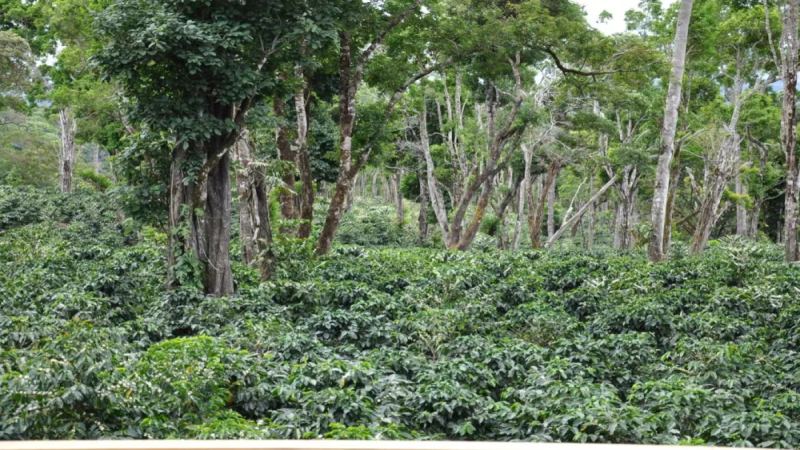
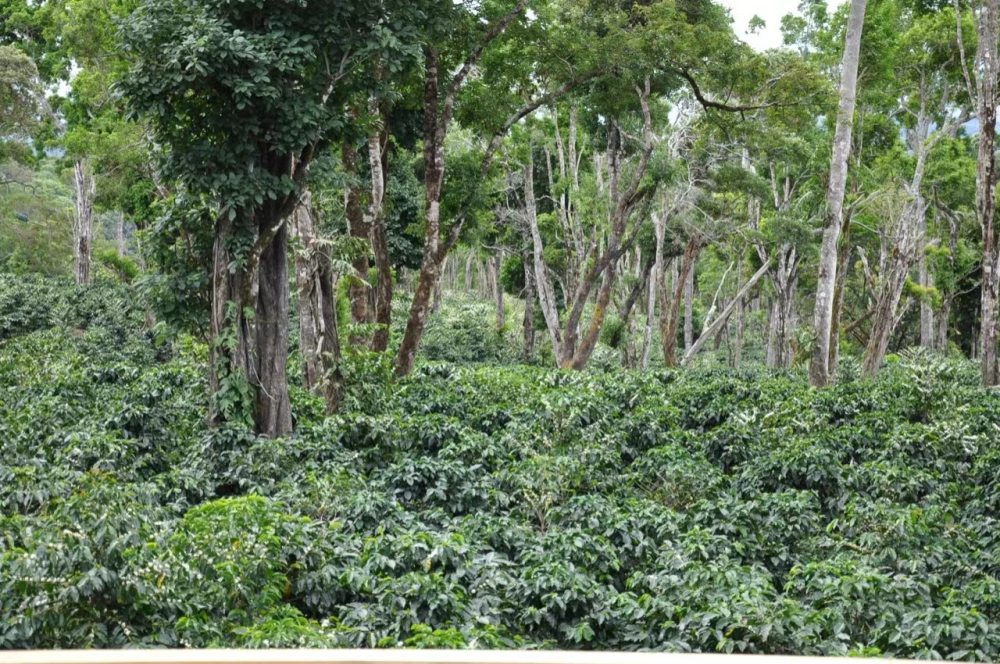
Boquete enjoys a mild climate and fertile volcanic ash soil brought by Barú Volcano. There is also a key condition: the Boquete highlands of Panama possess a variable microclimate. Panama's east-to-west geographical orientation causes cold air to converge along the Central Mountain Range at altitudes between 1,200 and 2,000 meters. The misty rain and variable winds in the mountains create a variety of microclimates around Boquete, with temperatures and rainfall highly suitable for plant growth, so coffee trees on this land thrive exceptionally well.
It is precisely this climate and soil that create the most unique and memorable flavor of Panamanian Geisha coffee.
The Varieties of Butterfly Coffee Beans
Butterfly is composed of three varieties: Geisha, Caturra, and Catuai, with Geisha accounting for 70%, so we can taste the flavor of Panamanian Geisha coffee in it. Many people ask whether Butterfly counts as single-origin coffee or a blend. Regarding this question, Front Street would like to educate everyone a bit.
Single-origin coffee beans refer to coffee beans from the same producing region. Butterfly comes from Panama's Boquete region, fully meeting the definition of single-origin coffee beans, so Butterfly is truly a single-origin coffee bean. Many people see that it contains Caturra and Catuai and assume it is a blend, but in fact, mixing between varieties is quite common—for example, Ethiopian heirloom varieties are collectively a general term for countless local varieties, and because there is no energy to distinguish them one by one, they are simply referred to as heirloom. From this perspective, Butterfly does quite well—at least it clearly states which varieties are contained, though of course, it is also because Geisha coffee beans are so famous that they must be specially emphasized.
Sun-Dried Butterfly
Butterfly coffee beans have two processing methods: sun-dried and washed. Front Street currently uses the sun-dried process, so here we focus on sun-dried. Panama's sun-drying craft belongs to a relatively new school. The first step is to pick only fully red coffee cherries, because red skin means the fruit is ripe and the seed (bean) has fully developed.
After harvesting, the coffee cherries are poured into a water tank for floatation. During picking, unripe fruits may inevitably be mixed in, or fruits may be damaged during the process. Such fruits will float on the water surface, and these defective fruits must be removed.
Then the coffee cherries are spread on raised beds to dry. The raised beds keep the fruit off the ground, maximizing avoidance of contamination from the ground and preventing the lower layer of coffee cherries from rotting due to lack of ventilation near the ground.
After about half a month of drying, when the moisture content drops to 12%, they can be stored in the warehouse. Hulling is only carried out just before leaving the warehouse.
Sun-dried Butterfly coffee beans present a relatively sweet and fragrant flavor.
How to Brew Butterfly Coffee Beans?
Precisely because Butterfly carries Geisha's charm, one can fully follow the brewing method for Panamanian Geisha coffee beans.
Front Street recommends using freshly roasted coffee beans for brewing, as this best allows you to fully experience the coffee's rich flavors. Coffee beans shipped by Front Street Coffee (FrontStreet Coffee) are all roasted within 5 days, because Front Street deeply understands that freshness greatly affects flavor. Front Street's roasting philosophy is "Freshly roasted good coffee," ensuring every customer who places an order receives the freshest state when the coffee arrives. Coffee's resting period is about 4 to 7 days, so when customers receive it, it is exactly at the peak of flavor.
For professional coffee knowledge exchange and more coffee bean information, please follow Coffee Workshop (WeChat public account: cafe_style) For more specialty coffee beans, please add private WeChat Front Street Coffee (FrontStreet Coffee), WeChat ID: qjcoffeex
The above content is compiled by CoffeeHunters, a coffee news website.


