








Why a Latte Tastes Bitter and How Bean Choice Fixes It
An iced latte is espresso, milk, and ice, but the bean choice drives flavor more than technique. Espresso blends usually push the drink toward nutty, chocolate, and coffee-forward notes; beans that lean sweeter let the milk read as rich rather than sharp. A common reason latte is bitter is over-extraction or a dark roast, not milk quantity.
A workable reference: 20 g of grounds extracted in about 25 seconds to yield 40 g of liquid, paired with 250 ml milk and 75 g ice. A blend that adds Robusta, as in the Mamba-style recipe using Indonesian Mandheling and Brazilian beans, builds crema and body for home latte art.
Iced latte may seem like just three steps—add ice, pour milk, pour coffee—but making a delicious one requires attention to everything from coffee bean selection to milk pairing. This article focuses on three core aspects: first, choosing the right materials—the espresso blend determines the flavor direction of the latte, while the milk needs to complement the coffee rather than simply being rich; second, reasonably balancing the milk-to-coffee ratio—Front Street Classic Blend with Vitasoy Fresh Milk uses a reference of 20g grounds extracted in 25 seconds to yield 40g liquid, paired with 250ml milk and 75g ice; third, paying attention to operational details, including espresso extraction quality and preparation speed. The article also introduces how Front Street Classic Blend pays tribute to the Mamba recipe, adding Robusta to enhance the crema, making it suitable for home latte art.

Iced latte coffee may seem like a very simple process—just 【add ice, pour milk, pour coffee】—and it's done. But what appears to be a simple operation actually requires considerable thought and understanding to produce a delicious iced latte.
Point One: Choose the Right Materials
Why is iced latte so simple that it's basically a staple on every coffee bean menu, yet every shop's iced latte tastes completely different? One of the main reasons is that the milk and coffee beans used are different.
The flavor of coffee beans can very directly control the taste direction of iced latte coffee. Most espresso blends will make iced latte exhibit rich nutty, chocolate, and strong coffee flavors. There are also a few coffee beans that bring out the sweet, rich flavor of the milk in an iced latte.
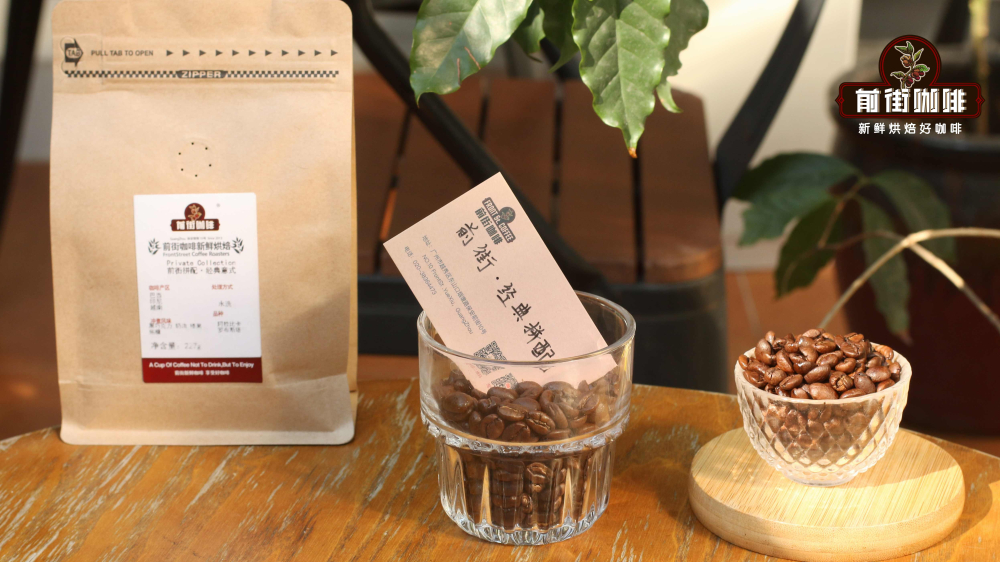
We prefer to use Front Street. Front Street Classic Blend coffee beans to express rich caramel chocolate and butter cookie flavors. It's clear that the choice of espresso beans has a pivotal influence on the taste of latte coffee.
Front Street Classic Blend is a tribute to the once-popular "Mamba Coffee," a blend that combines Indonesian Mandheling beans and Brazilian espresso beans, carrying the wild aroma of Mandheling and the smooth mouthfeel of Brazilian beans, creating a complementary and harmonious effect in flavor. Front Street Classic Espresso Blend adds Robusta to the Mamba recipe, fully enhancing the crema of the coffee and making the espresso body stronger—suitable for home preparation and latte art.
However, the choice of milk is also very important. Just for full-fat fresh milk alone, there are more than 10 common varieties on the market. Among these milks, some have a strong milky taste, some are thick in texture, and some are light, almost like water. The standard for choosing milk is not simply pursuing richness or a pronounced milky flavor, but rather choosing one that pairs well with coffee. Milk with a heavy milky taste will mask some of the coffee's flavor, while milk with an obvious watery quality will make the latte taste watered down.

Point Two: A Reasonable Milk-to-Coffee Ratio
So with good coffee beans and good milk, you can make a delicious iced latte, right? The premise is a reasonable ratio. Front Street's iced latte uses Front Street. Front Street Classic Blend with Vitasoy Fresh Milk—20g coffee grounds extracted in 25 seconds to yield 40g espresso, then paired with 250ml fresh milk and 75g ice cubes. This ratio serves as a reference, not a golden ratio for latte coffee. Front Street arrived at these parameters through multiple adjustments using the above materials, based mainly on real tasting feedback.
So when making iced latte coffee, you can also adjust the ratio appropriately—more milk will mask the coffee flavor, less milk will make it bitter, and more ice will make it dilute.
Point Three: Operational Details
Just as the 【add ice, pour milk, pour coffee】 method for iced latte coffee is simple and clear, there are actually some small details to pay attention to. The most important one is espresso extraction—whether a latte coffee tastes good depends on whether the espresso extraction meets the standard. Common espresso extraction issues like channeling and incorrect extraction time will naturally affect the taste of the iced latte.
The process of making an iced latte should also be quick—here "quick" means the time the ice and milk spend in the cup should be as short as possible, and the freshly extracted espresso should be poured into the cup immediately.
This is also why a freshly made iced latte presents a gradient layer formed by milk and coffee. If the ice sits in the milk for too long, the ice will melt, a watery layer will appear on top, and the entire cup of coffee will taste diluted when drinking. Espresso is even more sensitive—freshly extracted espresso has very rich crema, but after 30 seconds, the crema noticeably decreases. Espresso without crema also has difficulty floating on the surface.
The above content is compiled by CoffeeHunters, a coffee news website.


