







What Makes Yellow Bourbon Coffee From Queen's Farm Distinct?
Yellow Bourbon coffee is a rare Brazilian variety prized for its sweet, juicy cup, and Queen's Farm in the Mogiana region of São Paulo State is one of its standout sources. Grown between 1400 and 1950 meters, the beans are hand-picked at peak ripeness and processed in small lots, which helps most of the production reach specialty grade.
The flavor profile leans toward dark chocolate, cream, peanut, and a clean sugarcane sweetness, typically developed with a medium-dark roast. Front Street Coffee brews the Queen's Farm lot as pour-over on a KONO dripper, and the same beans also work for espresso and moka pot. The variety has placed well repeatedly in Brazil's Cup of Excellence.
Yellow Bourbon is a highly sought-after rare variety among Brazilian coffees. With its sweet and juicy flavor, it almost swept the top three places in Brazil's "Cup of Excellence" for two consecutive years. This article takes Front Street Coffee's Brazil Queen's Farm coffee beans as an example to introduce in detail the high-altitude microclimate of the Mogiana region, the hand-picking and meticulous processing at Queen's Farm, as well as the genetic principles and flavor characteristics of Yellow Bourbon. It also shares Front Street's medium-dark roasting approach for this bean and KONO dripper pour-over parameters, including water temperature, grind size, coffee-to-water ratio, and staged pouring technique, helping coffee lovers recreate at home the balanced flavor of dark chocolate, cream, peanut, and the clean sweetness of sugarcane.
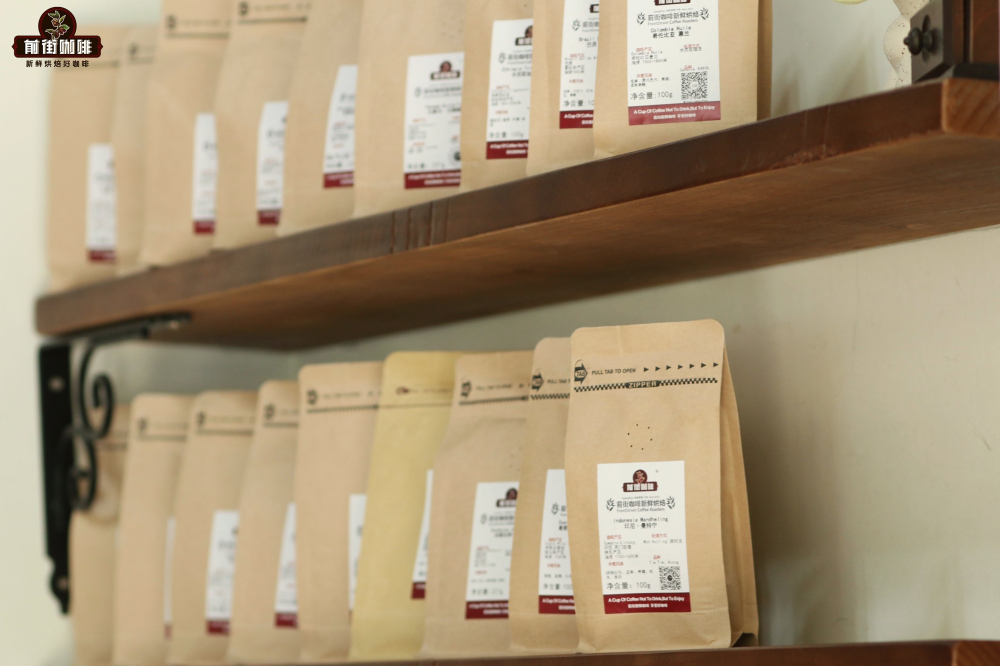
In Front Street Coffee's house-roasted bean lineup, there is a full-bodied Brazil Queen's Farm coffee bean that works well with pour-over, espresso, and moka pot brewing methods. It uses the rare Yellow Bourbon variety and, after washed processing and medium-dark roasting, gives off rich aromas of chocolate, cream, roasted peanut, and nuts, with a clear sweet aftertaste and a long finish.
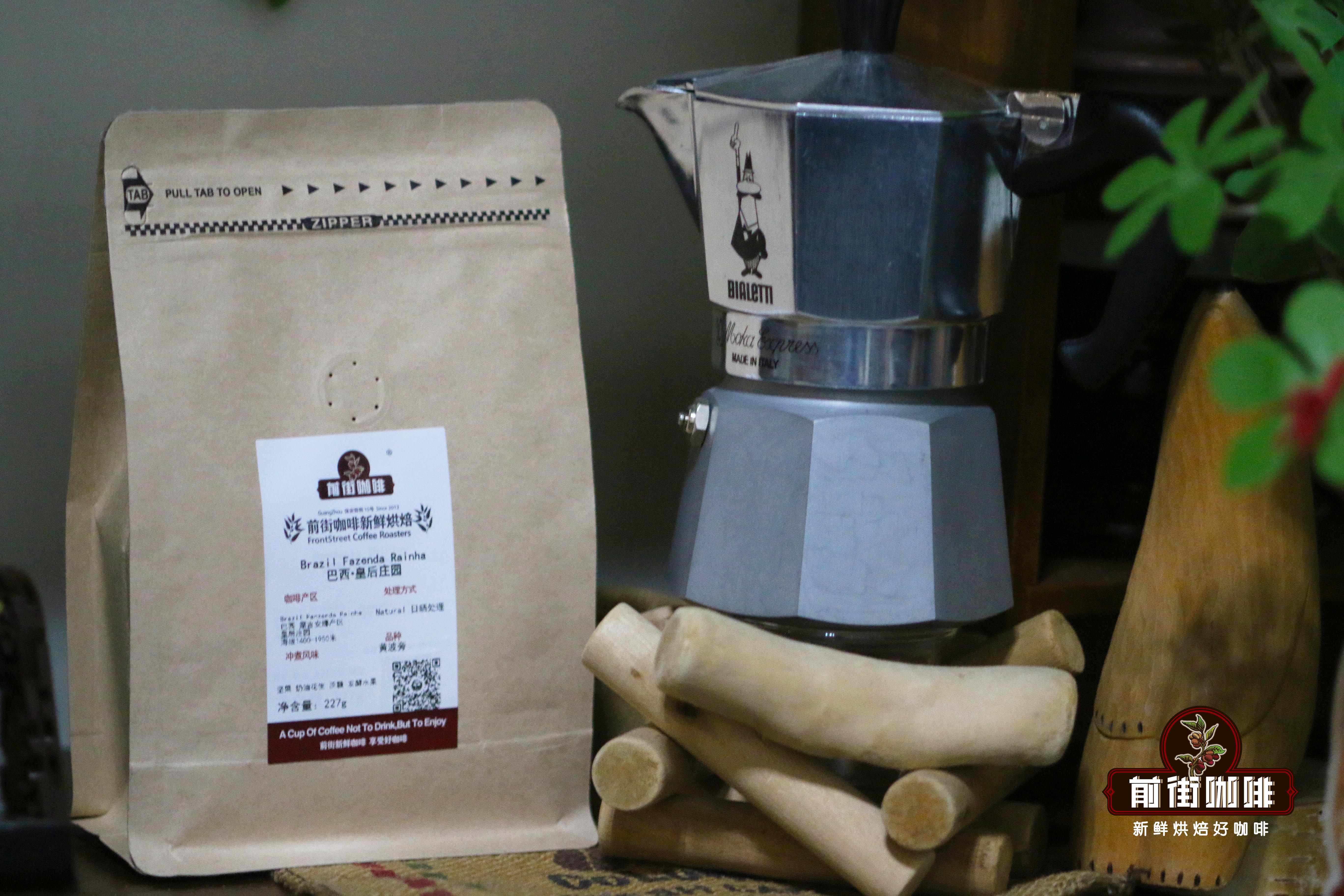
Front Street Coffee: Brazil Queen's Farm Coffee Beans
Region: Mogiana
Farm: Queen's Farm Fazenda Rainha
Altitude: 1400–1950m
Variety: Yellow Bourbon
Processing Method: Natural
Flavor: Nuts, chocolate, cream, peanut, sugarcane
Queen's Farm is located in the Mogiana region of São Paulo State, Brazil. Unlike many large-scale regions in Brazil that rely on volume, this area has a relatively high altitude, forming a distinctive microclimate. The farm insists on hand-picking fruit at the proper ripeness, and each lot is processed in small, refined batches, so most of the coffee beans produced reach specialty grade.
What Queen's Farm is most proud of is the Yellow Bourbon variety, which has won awards in Brazil's COE competition many times thanks to its refined and delicate flavor. Common Bourbon coffee cherries gradually change color from green to slightly yellow, orange-yellow, red, and finally fully ripe dark red, which is what we call Red Bourbon. Red Bourbon grown at high altitude has a balanced flavor, rich aroma, and soft acidity, and Front Street's everyday house bean is made from Red Bourbon.
At the ripe stage, Yellow Bourbon cherries do not turn cherry red but yellow, and it was discovered in 1930. Later, research by the Campinas Agronomic Institute (IAC) showed that plants with a dominant XcXc gene pair bear red berries; plants with a recessive xcxc gene pair bear yellow berries; and in very rare cases, a plant with one dominant gene and one recessive Xcxc gene bears orange berries. So the "yellow" of Yellow Bourbon comes from color inheritance selection. Yellow Bourbon planted at high altitude accumulates a large amount of fructose, showing a sweet and juicy flavor. It swept Brazil's "Cup of Excellence" for two consecutive years, almost taking all top three awards, and became a sensation in the specialty coffee world!
Yellow Bourbon coffee beans grown at high altitude are denser and have higher glucose content, so Front Street's roasting approach is to highlight the classic full-bodied aroma of Brazilian coffee while also showcasing Bourbon's own sweetness. After multiple trials and cupping comparisons, Front Street's Brazil Queen's Farm coffee beans use a medium-dark roast. Next, Front Street will brew this coffee. If you want to understand the taste of Brazilian coffee, you can refer to Front Street's pour-over approach.
After medium roasting, the internal structure of the coffee beans changes significantly and becomes porous, making the ground coffee more absorbent. If the brewing parameters are not adjusted well, the coffee can easily over-extract and turn bitter. To give the coffee enough aroma without over-extracting, the extraction rate needs to be reduced. Front Street uses a relatively low water temperature and a relatively coarse grind to reduce the release of bitter large molecules in the coffee. Brewing with a KONO dripper can make the coffee's body and roundness even better.
Pour-over parameters: 87–88°C water temperature, medium grind (70% passing through China standard No. 20 sieve), coffee dose: 15g, coffee-to-water ratio 1:15, three-stage pouring.
First, wet the coffee bed with twice the coffee grounds' weight in water and let it bloom for 30s to form a dome. Then pour in a small stream in circles from the inside out until 125g, pause, and when the coffee bed drops to halfway down the dripper, continue pouring the third stage with the same thin stream until 225g. Wait until all the coffee liquid has filtered through, then remove the dripper. The time is about 2 minutes. Finally, swirl the coffee liquid in the server to mix it evenly and it is ready to enjoy.
The pour-over Brazil Queen's Farm Yellow Bourbon coffee presents aromas of dark chocolate, cream, peanut, and nuts. On the palate it is as clean and sweet as sugarcane, with a balanced body, bright flavor, and a long-lasting finish in the mouth.
For professional coffee knowledge exchange and more coffee bean information, please follow Coffee Workshop (WeChat public account: cafe_style).
For more specialty coffee beans, please add the private WeChat of Front Street Coffee: qjcoffeex.
The above content is compiled by CoffeeHunters, a coffee news website.


