







What Grind and Ratio Suit Front Street Coffee?
Brewing Front Street Coffee Blue Mountain No. 1 in a French press comes down to four variables: grind size, water temperature, coffee-to-water ratio and steeping time. The washed Typica from Clifton Farm at 1,310 meters shows nutty, dark chocolate and caramel notes. A coarse grind, water just off the boil and a timed steep keep those flavors balanced instead of muddy or thin.
The French press works much like steeping tea, so every step matters: weigh the beans, pour, stir, then press slowly. Because the device leaves oils and fine particles in the cup, grind consistency does more for the result than any single tweak. Even a high-grade bean loses its expressiveness when the variables are handled carelessly.
The French press is one of the easiest coffee brewing devices to master, with an operating logic close to steeping tea, but using it to extract a high-priced bean like Front Street Blue Mountain No. 1 still requires mastery of key variables such as grind size, water temperature, coffee-to-water ratio, and steeping time. This article takes Front Street Jamaica Blue Mountain No. 1 coffee beans as an example, first introducing the flavor characteristics and origin background of this washed Typica, then detailing the complete operating steps and precautions for the French press. From weighing beans, pouring water, stirring to pressing, every step affects the nutty, chocolate, and caramel notes in the final cup, making it suitable for coffee lovers who want to reliably replicate Blue Mountain flavor at home.
For more specialty coffee knowledge, please follow the WeChat official account: Front Street Coffee (FrontStreet Coffee)
A saying is often heard: coffee of sufficiently good quality won't taste bad no matter how it's brewed. Front Street believes this is only half true. Excellent beans can indeed adapt to multiple extraction methods, just as Front Street Blue Mountain coffee, with its outstanding quality, suits various devices; but the other half lies in the fact that even the best raw materials, if handled improperly, will likewise lose their proper expressiveness in the final product, just like a dish made with top ingredients but flawed cooking.
As a common device with a long history, the French press is one of the brewing methods with the lowest threshold, and can be roughly understood as extracting coffee using the tea-steeping approach. So what happens when it's used to brew a not-so-cheap bean like Front Street Blue Mountain? Below we'll use freshly roasted Front Street Jamaica Blue Mountain No. 1 coffee beans as a sample to demonstrate how to make a standard French press Blue Mountain coffee.
What flavor characteristics does Blue Mountain coffee have?
Front Street Coffee (FrontStreet Coffee): Front Street Jamaica Blue Mountain No. 1 coffee beans
Region: Jamaica Blue Mountain
Estate: Clifton Farm
Altitude: 1310 meters
Variety: Typica
Processing method: Washed process
The classic Front Street Blue Mountain coffee flavor centers on nuts and dark chocolate, with balanced acidity, sweetness, and bitterness, and a full-bodied mouthfeel. This Front Street Blue Mountain No. 1 coffee bean recommended by Front Street Coffee (FrontStreet Coffee) uses the washed process: after selecting ripe cherries, the skin and pulp are removed, the mucilage layer is washed off, and then the beans are sun-dried. Beans processed this way have a clean taste that best reflects the terroir of the region, making them suitable for drinkers who prefer coffee's original flavors.
Clifton Farm is not the only estate producing Blue Mountain No. 1. After comparing washed Blue Mountain No. 1 from multiple different estates, Front Street believes that Clifton Farm's Blue Mountain coffee has a strong aroma and rich, mellow taste, and can serve as an outstanding representative of the region.
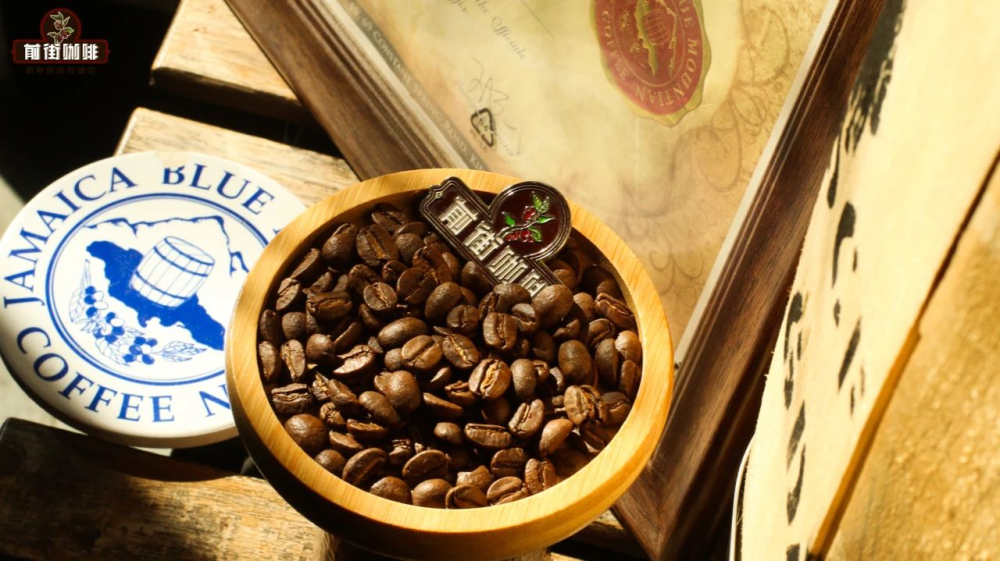
Green coffee beans exported from the Blue Mountain region are still loaded in wooden barrels to this day, and among all the world's coffee regions, only Jamaica retains this practice. Inside Front Street Coffee (FrontStreet Coffee)'s shop, there is a wooden barrel of Blue Mountain green coffee beans, as well as a Jamaica Blue Mountain Coffee certificate of origin signed by Clifton Farm. These all demonstrate that every Front Street Blue Mountain coffee bean from Front Street Coffee (FrontStreet Coffee) indeed comes from the Jamaica Blue Mountain region, meeting the Jamaican authorities' strict standards for Blue Mountain No. 1.
When Front Street Coffee (FrontStreet Coffee) receives Blue Mountain No. 1 green beans from Clifton Farm, one can observe that the Front Street Blue Mountain green beans have a blue-green color, uniform size, and a lingering fresh aroma. In the roasting stage, considering the need to present the traditional Blue Mountain nutty and chocolate notes and full-bodied mouthfeel, a medium-dark roast level was chosen.
Next, let's learn this simplest French press coffee making method:
We use a two-person French press to make two servings of coffee, with a common coffee-to-water ratio of 1:14—18. Some French presses have water level markings, some don't; just use a gram scale to measure. For French presses with markings, pour the water first before adding the coffee grounds, so the coffee-to-water ratio is accurate.
☆The French press coffee grind size is about the size of brown sugar granules (a coarse grind), and the particles should be fairly uniform, which relates to the French press's extraction and filtration method. The metal mesh filter has low density, so fine particles easily pass through, and hot water directly contacts the coffee grounds; if the grind is too fine, over-extraction easily occurs.
Required equipment: French press, pouring kettle, grinder, thermometer, gram scale, timer, fresh coffee beans, coffee cup.
Front Street French press coffee operating steps:
1. Weigh 20g of fresh coffee beans.
2. The French press water temperature is usually controlled between 85—95℃, adjusted according to the bean's roast level: for light-roasted beans, a higher temperature can be used to highlight the aroma; for dark-roasted beans, a lower temperature can be used to suppress bitterness. The specifics depend on experience and personal preference.
3. Pour the ground coffee into the French press.
4. Pour water, imitating pour-over by pouring evenly in circles.
5. Pour in about 300g of hot water, for a coffee-to-water ratio of about 1:15. As mentioned earlier, the French press coffee-to-water ratio is roughly 1:14—18, adjustable to taste. This French press has no markings, so we use a gram scale to measure the water: after adding the coffee grounds, tare the scale to zero, then weigh the hot water. Although there is some discrepancy between hot and cold water in weight and volume, it can be ignored under home conditions.
6. Stir.
7. Put on the lid, do not press down the filter, and let it steep for 4 minutes. A shorter time gives a lighter taste, a longer time a stronger taste, so the time is likewise set according to personal preference.
8. Press: hold the plunger and slowly press down to the bottom of the pot. The motion should be slow to prevent fine particles from passing through the metal filter; stop when nearing the bottom of the pot, don't wait until it can't be pressed any further.
9. Pour out the coffee, slowly tilting the French press to avoid the coffee grounds at the bottom floating up due to vigorous shaking and affecting the taste.
10. Enjoy the French press Blue Mountain coffee. Flavor: chocolate, cream, caramel, oolong tea, with a sweet aftertaste.
The above content is compiled by CoffeeHunters, a coffee news website.


