







Is Huakui the Same as Geisha Coffee?
Huakui and Geisha are not the same variety, despite the frequent comparisons. Huakui is an Ethiopian natural bean from the Guji Hambela area of Sidamo, grown at 2250-2350 meters from local heirloom varieties at the Buku Abel processing station, with a flavor profile of passion fruit, rose and strawberry jam. Geisha is a distinct variety with its own separate history.
The name Huakui comes from the 2017 Taste of Harvest competition run by the African coffee association, where a natural batch from Buku Abel took the Ethiopia championship on its strawberry and cream aroma. That same bean appears in English as Hambella. The coffee bean process behind it is natural drying, which helps explain the jammy fruit character in the cup.
In the specialty coffee circle, Huakui has captured countless palates with its signature creamy strawberry aroma, yet behind its name lies a legendary story that stretches from the TOH competition stage to Chinese coffee competitions. Many people wonder whether Huakui and Geisha are the same variety, but in fact the two are completely different in terms of variety, producing region, and naming logic. In this article, Front Street Coffee will provide a complete overview of the origin of the name Huakui, the terroir conditions of the Sidamo Guji Hambela producing region, the natural processing method at the Buku Abel processing station, and the flavor evolution from Huakui 2.0 to Small-Bean Huakui, taking you through a comprehensive understanding of the unique charm of this Ethiopian natural bean.
Strawberry is the most romantic representative of winter, and in the coffee world Ethiopia's Sidamo Huakui coffee beans have conquered coffee lovers' palates with their bright creamy strawberry flavor. Guests who come to Front Street often notice its name as well. In Han culture, Huakui refers to the top performer among singing and dancing courtesans, so how did this name come about? This article from Front Street will explain.
FrontStreet Coffee Ethiopia Sidamo Huakui coffee beans
Country: Ethiopia
Producing region: Guji (Hambela)
Altitude: 2250-2350m
Variety: Local heirloom varieties
Processing method: Natural processing
Flavor: Passion fruit, rose floral aroma, strawberry jam
The origin of the name Huakui coffee beans
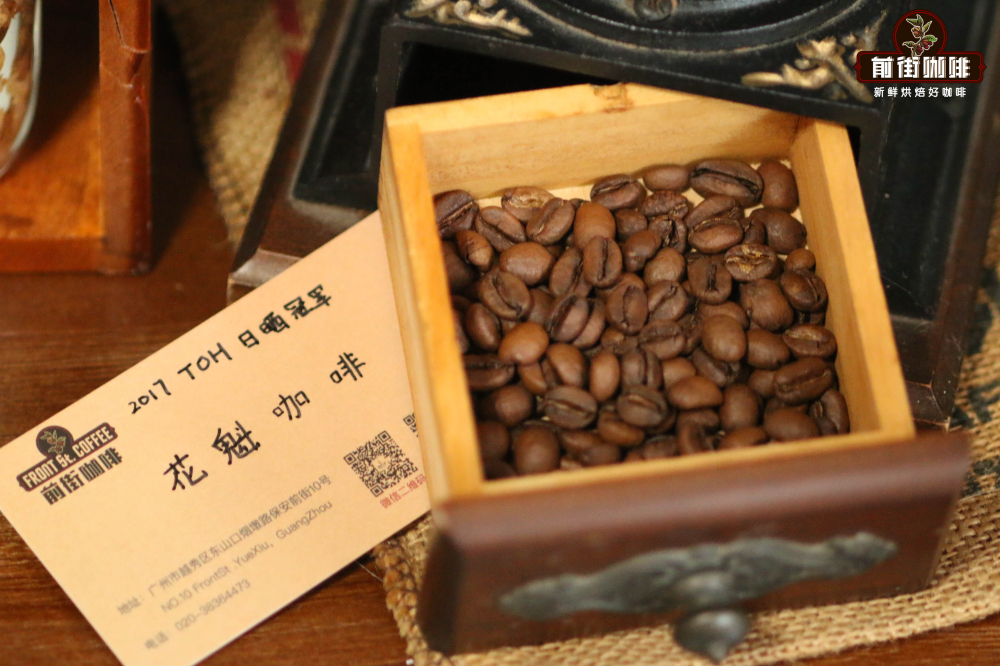
Observant coffee lovers may have noticed that the Chinese name and English name of Huakui coffee do not seem to match at all. In Chinese it is called "Huakui," while in English it is expressed as "Hambella," literally translated as "Hanbeila."
This is because the bean itself was still an unnamed little bean at first. In 2017, the Ethiopian green bean trader DW Company sent this coffee bean to the TOH (the Taste Of Harvest) green bean competition organized by the African Coffee Association, and a natural batch from the Buku Abel processing station won the TOH Ethiopia championship in one fell swoop with its rich strawberry and cream aroma. This bean is the one literally translated into English as "Hambella."
Some people say that Huakui and Geisha are the same coffee bean. Here Front Street will give everyone a brief primer: Geisha is the name of a coffee variety, and because it is called "Gesha/Geisha," some people associated its pronunciation with the Japanese word for "geisha," which gave rise to the term "geisha coffee." Geisha was the name used when it was introduced to the mainland; it was originally translated by Mr. Yuan of Coffee Monroe, and it achieved a wonderful balance of faithfulness, expressiveness, and elegance.
The reason it is called Huakui in China is that this batch of green beans was imported by a Beijing green bean trader that year, and because in the 2017 China coffee regional competition, Li Jianfei stood out from many Geisha coffee competitors with this coffee bean and won runner-up. You have to understand that almost all the competition beans that year were Geisha-specific, and suddenly a non-Geisha coffee bean appeared and defeated this legend, which could be said to be extraordinarily meaningful. Also, because the English word Geisha for Geisha is homophonous with the Japanese word for geisha, in order to highlight the status of this coffee bean, it was named Huakui, meaning the chief of geishas.
Huakui coffee bean producing region
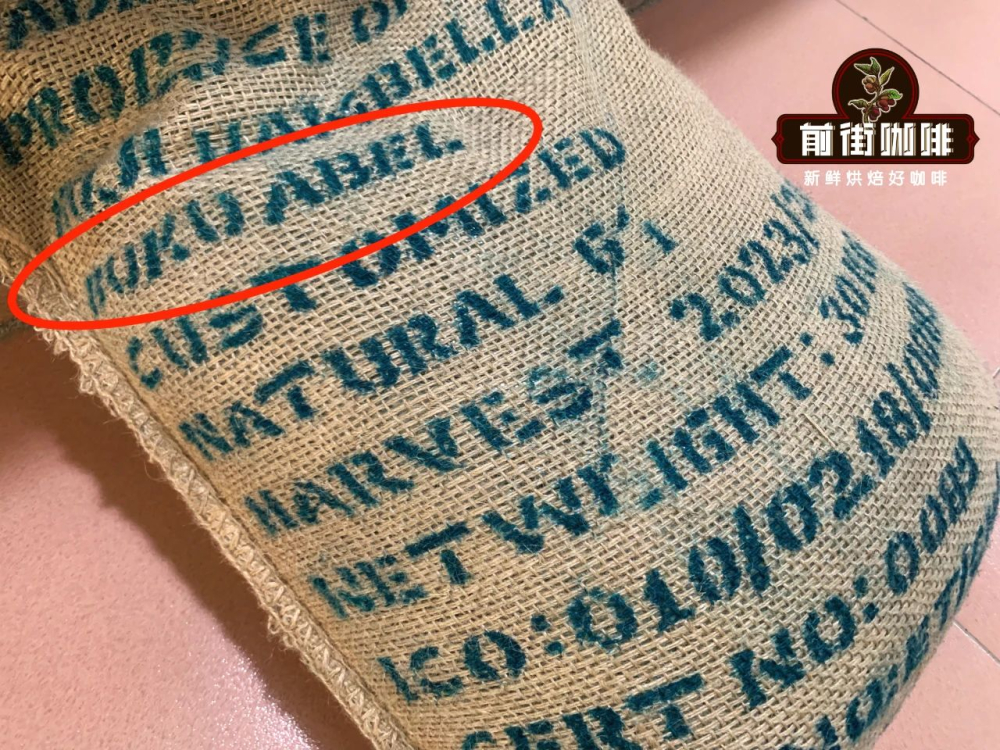
This Huakui from Front Street comes from Ethiopia's Sidamo Guji sub-region Hambela. Sidamo Guji is Ethiopia's largest coffee producing region, facing Yirgacheffe and Kochere across the mountains to the west, and it is also Ethiopia's highest-altitude sub-region. At present there are nearly 20 processing stations in the Hambela producing region, but among all the estates and processing stations, only the Sidamo natural coffee from the Buku Abel processing station is what we call this Huakui.
Buku Abel processing station
According to Front Street's understanding, Buku Abel means "NEW" in the local Ethiopian language, a new place. In this ancient country of more than two thousand years, with a population of 100 million, the East African Rift Valley blocks the road to Asia, but on this plateau new virgin land is still constantly being discovered and waiting to be developed. Compared with a culture of thousands of years, this is a fairly newly developed land.
Buku Abel is located in southeastern Ethiopia and is an extremely high-altitude indigenous tribal area in the Hambela area of the Guji producing region, with a population of about 30,000. This small village is just like most Ethiopian Sidamo coffee gardens, growing among wild virgin forests, and coffee farmers have passed it down here for generations. Front Street believes this is also why Huakui's flavor can be so wonderful, because within these coffee cherries, the farmers' love has also irrigated this land.
Huakui coffee bean processing method
This Huakui coffee bean is processed using the oldest natural processing method. In previous articles, Front Street also mentioned that the flavor of natural processing is more intense in aroma than washed coffee beans, tastes sweeter, and has a slight fermented quality.
Huakui coffee natural processing method flow :
According to Front Street's understanding, the coffee trees at the Buku processing station are all planted on the mountainside at an altitude of 2250-2350m, and the coffee farmers only begin natural processing after the coffee cherries they pick reach a sugar content of 30% or above. Moreover, during the first two days of natural drying, the humidity of the red cherries must be maintained so that they have time for sufficient fermentation.
Because at night the temperature here drops to around 12 degrees, this ensures the red cherries will not over-ferment. Then after 18 days of natural drying, once the skin and pulp are completely dehydrated, the green coffee beans inside can be easily obtained. The green beans are then packed and placed in a warehouse at 12-22 degrees Celsius and 45-55% humidity for about 50 days of bean resting and further dehydration. When the moisture content reaches about 11%, they are hulled and sorted, and then formally sold on the market.
Huakui coffee flavor performance
One more point Front Street must mention is that in a narrow sense, only the 2017 TOH natural group champion entering the country can be called Huakui coffee. However, because of its excellent flavor, Hongshun Company continues to introduce coffee beans from the "Buku Abel" processing station in the Hambela producing region every year, calling them Huakui 2.0, Huakui 3.0, and Huakui 3.1 to distinguish them from the earlier Huakui coffee and to represent different batches or harvest seasons. At this point Huakui coffee still maintains certain characteristics, namely that it is procured and imported by Hongshun, and the producing region is still locked to the Hambela "Buku Abel" processing station. Of course, as coffee is an agricultural product, with different climate changes, the flavor will differ from year to year.
At the same time, 2020 was the fourth year of this Huakui coffee bean, named Huakui 4.0. Its producing region had already expanded to several times its original size, and combined with more scientific cultivation and management, the flavor of Huakui 4.0 was even better, thus winning praise from a host of coffee lovers who came to FrontStreet Coffee to taste it in-store.
By 2021, the latest Huakui 5.0 had already been released, and besides Huakui 5.0, there was also a series called Small-Bean Huakui. Small-Bean Huakui coffee beans differ from the X.0 series in that they do not change with the year. In fact, Front Street selected small-sized coffee beans from Huakui 2.0 and 3.1 and found that they possessed the strawberry flavor of the original 2017 Huakui, thereby concluding that Huakui's unique aroma and sweetness mainly come from these small-sized coffee beans. In 4.0 as well, some batches of Huakui coffee had a high proportion of small beans, and for this reason those batches of Huakui coffee had very good aroma and sweetness.
Up to this year, DW Company began to separate out the small-sized coffee beans to form an independent Small-Bean Huakui coffee bean product line. Front Street compared the flavors of Huakui 5.0 and Small-Bean Huakui coffee and found that the sweetness and strawberry aroma of Small-Bean Huakui coffee beans were more obvious than those of 5.0, while Huakui 5.0 coffee had richer citrus and berry notes and was more comfortable to drink.
The new Huakui of 2022 is expected to be named "Huakui 6.0," likewise through Beijing Hongshun Green Bean Trading. Front Street has already pre-ordered the first batch of Huakui 6.0 coffee beans to arrive at port, expected to arrive this April. By then we can see the performance of this year's new-season Huakui.
Front Street recommends using the pour-over method to express Huakui coffee, because pour-over is the simplest way to bring out coffee's flavor. Below, Front Street will share how to brew Huakui.
The brewing dose is 15g, with a coffee-to-water ratio of 1:15, meaning we need to pour 225g of hot water over 15g of coffee grounds for extraction. First, use 30g for a 30-second bloom, then pour at a flow rate of 4g per second in a 4-second-per-circle pattern from the center outward in a spiral and back to the center until reaching 125g, then stop. Wait for the coffee bed to drop to half its height, then begin pouring in the same way until reaching 225g, then stop. After all the coffee liquid in the dripper has flowed into the server, remove the dripper and end the extraction. The brewing time is 2 minutes 10 seconds.
For professional coffee knowledge exchange and more coffee bean information, please follow Coffee Workshop (WeChat public account: cafe_style)
For more specialty coffee beans, please add the private WeChat of FrontStreet Coffee: kaixinguoguo0925
The above content is compiled by CoffeeHunters, a coffee news website.


