







What is blending coffee, and can blend beans go in a pour-over?
Blending coffee means combining two or more coffees, or beans of one variety at different roast levels, in set proportions. The goal is not random mixing but balance: a blender uses flavor knowledge so beans from different regions offset each other's weaknesses. Medium-dark Italian-style blends built for espresso can also be brewed as pour-over with adjustments.
For pour-over with blended coffee beans, grind size, water temperature and pouring method all need tuning, since the roast sits darker than a typical filter profile. Blends exist for four stated purposes: balanced taste, lower cost, showcasing a bean's character, and stable flavor. A blend can still count as specialty coffee if the beans score 80 or above with the SCA.
Blending coffee is not simply mixing different beans together; rather, through the blender's understanding of flavor, it allows coffee beans from various regions to complement each other's strengths and weaknesses, presenting a more balanced and enchanting taste. Based on four goals—balanced taste, reduced cost, showcasing characteristics, and stable flavor—Front Street Coffee has launched four Italian-style medium-dark roast blended beans. So, can these blended beans designed for espresso also be used for pour-over? This article will analyze the formulation approach of blended coffee, the specific composition of the four Front Street products, and explain in detail how grind size, water temperature, and pouring method should be adjusted when using medium-dark roast blended beans for pour-over.
So-called blended coffee is the mixing of two or more varieties of coffee beans, or beans of the same variety but with different roast levels, in specific proportions.
Blending coffee is not simply stacking beans together; rather, it expects the blender, with a unique insight into flavor, to let different coffee beans compensate for each other's shortcomings, ultimately harmonizing into a blend with outstanding flavor.
Nowadays many people pursue tasting the exclusive flavor of a region, and single-origin beans have almost become synonymous with specialty coffee, but not all single-origin beans can showcase regional characteristics.
Specialty coffee emphasizes presenting everything from green bean quality to service from a professional perspective. As long as the beans themselves can reach a score of 80 or above from the SCA Specialty Coffee Association, and the roaster and brewer can fully understand and interpret the bean, then whether single-origin or blended, it can be considered a cup of specialty coffee.
Blending coffee is like a painter mixing enchanting colors on a palette; the blender, based on the characteristics of different beans, mixes up alluring flavors. It is not an exaggeration to say that blending is an art. As artists, blenders not only need experience and inspiration but also rely on scientific calculation. The birth of a work of art is not accidental but an explosion after long-term accumulation.
Front Street Coffee has four purposes for making blended beans: balanced taste, reduced cost, showcasing the unique flavor of coffee beans, and stabilizing coffee flavor. Currently, based on public taste demands and different consumers' cost requirements, Front Street Coffee has launched four Italian-style medium-dark roast blended beans.
"Front Street - Warm Sun Blend Coffee Beans" 79/227g: Ethiopia natural Red Cherry (30%) + Honduras Sherry wine barrel (70%), presenting rich wine aroma, vanilla cream, berry sweetness and acidity, and roasted nut flavors.
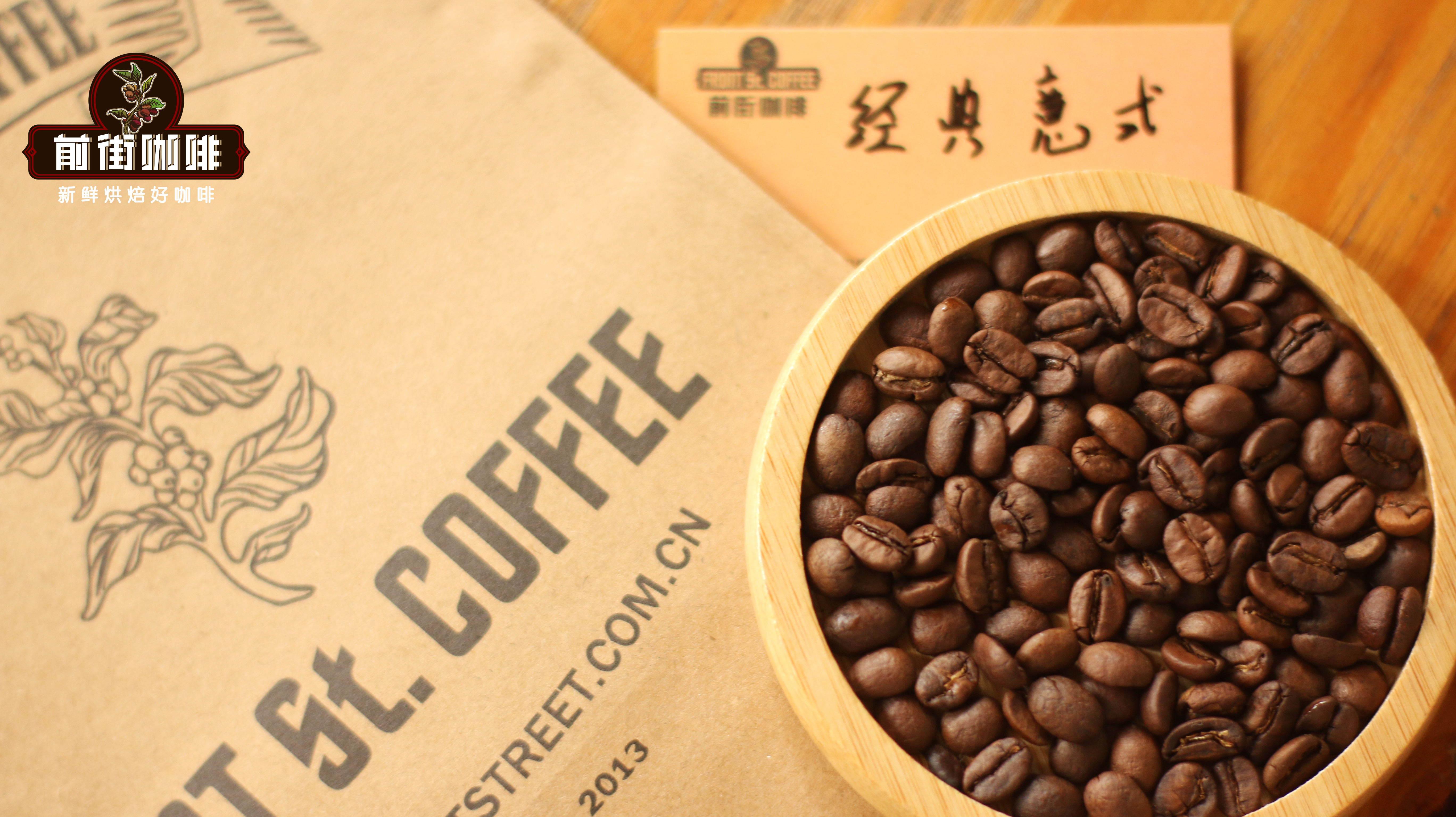
"Front Street - Specialty Blend Coffee Beans" 75/454g: Colombia washed (30%) + Brazil semi-washed (70%), with nut, dark chocolate, and caramel flavors.
"Front Street - Commercial Blend Coffee Beans" 60/454g: Robusta washed (10%) + Colombia washed (30%) + Brazil semi-washed (60%), showcasing nut, cocoa, and caramel flavors.
"Front Street - Italian Coffee Beans Recommended by Many Baristas - Front Street Dark Cocoa Blend Coffee Beans" 50/454g: Yunnan washed small bean (30%) + Brazil semi-washed (70%), with soft fruit acidity, caramel, and nut flavors.
All four of these Front Street Italian-style blended beans use the post-blend method. When formulating the blend plan, the roast level and blending ratio are repeatedly adjusted, and finally the roasting curve and ratio plan are recorded to achieve a stable state. All sold coffee beans are shipped within 5 days after roasting is completed, allowing consumers to drink them at their freshest.
The advantage of this is that roasting separately allows better control of each bean's roasting condition, and post-roast blending allows more precise formulation of the ratio plan (each bean has a different weight loss rate), and also makes it easier to adjust the weight of each component in the blend.
Why are blended beans mainly aimed at espresso?
Coffee beans, as a concentrate, will have flavor differences even if they are the same variety from the same region. Some of the not-so-good flavors in the beans themselves, under no pressure and with a large powder-to-water ratio (usually 1:15) and coarse grinding in drip methods (such as pour-over), become less concentrated, so many fruity acidity notes appear very charming.
However, under the pressure of an espresso machine, high-temperature hot water quickly passes through extremely finely ground coffee powder, extracting an extremely concentrated coffee liquid at a 1:2 ratio. Many flavors become concentrated together, and due to the high concentration, some acidity that is charming in pour-over becomes sharp in espresso.
When blending, Front Street Coffee usually uses Red Bourbon from the Brazil Cerrado region as the main note, providing a rich and solid nutty chocolate base for the coffee, then injecting soft acidity or a richer taste through beans from different regions.
The Warm Sun Blend came into being because using Sherry beans directly for espresso, although the overall fermentation aroma was obvious, it was slightly monotonous. Therefore, Front Street later added Yirgacheffe Red Cherry to inject soft acidity into the coffee and enhance the layering.
Are blended coffee beans suitable for pour-over?
Blended beans can be used for pour-over, but most blended beans are designed for espresso. To ensure a rich and solid taste in espresso, medium-dark and above roast levels are usually used. Therefore, when using blended beans for pour-over, medium-coarse grinding plus lower-temperature hot water is needed.
Dark roasting makes the internal structure of coffee beans looser; a light pinch with the hand and they crumble, indicating strong water absorption after grinding. To avoid releasing too many bitter substances after absorbing water, Front Street will coarsen the grind size and use lower-temperature water for brewing.
Grind size is one of the key factors affecting coffee taste. After coffee beans are ground into powder and come into contact with hot water, they release a large amount of soluble flavor substances. When adjusting grind size, Front Street uses the Chinese No. 20 0.85mm standard sieve. For medium-light roast beans, a 75–80% passing rate is consistently used, while for medium-dark roast beans, 70–75% is used. Compared with light roast beans, medium-dark roast Mandheling has a looser internal structure and better water absorption, making it easy to release large-molecule bitter substances. To avoid over-extraction, Front Street chooses a coarseness with a 70% passing rate on the No. 20 sieve.
Water temperature works similarly to grind size: the higher the water temperature, the higher the extraction efficiency, the easier it is to release various components, and the higher the concentration. If brewing with hot water close to boiling, it is easy to extract unpleasant bitter substances. Therefore, when brewing medium-dark roast beans, Front Street uses parameters different from those for light roast beans. Medium-dark roast beans undergo more caramelization reactions than light roast beans, making it easier to release caramelized bitter large-molecule substances. To avoid extracting too many off-flavors, Front Street lowers the water temperature. The brewing water temperature for light roast beans is 91–93°C, while for medium-dark roast beans 87–88°C is recommended.
Dripper: KONO
Recommended brewing water temperature: 87–88°C
Coffee powder: 15g
Powder-to-water ratio 1:15
Grind size: medium-coarse grind (70% passing rate on Chinese standard No. 20 sieve)
The brewing method uses three-stage pouring. Pouring in three stages can better present the rich taste and caramel sweetness of Golden Mandheling.
For the first stage, pour 30ml for blooming. This pour completely wets the coffee powder, allowing it to degas and preparing for better extraction of flavor substances afterward. For the second stage, pour 100ml, mainly to flush out the golden foam of Mandheling and raise the coffee bed.
The above content is compiled by CoffeeHunters, a coffee news website.


