







The honey process is a method developed by Costa Rican coffee farmers under specific geographical and commercial circumstances. It sits between washed and natural processes and gets its name from the honey-like stickiness of the mucilage after drying. From the perspective of Front Street Coffee, this article traces the origins of the honey process, its complete workflow, advantages and disadvantages, and flavor characteristics, and compares in detail the differences among yellow honey, red honey, and black honey in terms of mucilage retention, drying time, and management requirements. It also introduces two beans currently sold by Front Street Coffee from the Costa Rica Musician Series—Mozart and Bach—covering growing region, altitude, variety, process, and flavor description, along with pour-over extraction parameters and brewing technique so coffee enthusiasts can reproduce them at home.
If you ask which region produces the best honey-processed coffee beans, Costa Rica is almost the undisputed answer. As the birthplace of the honey process, this Central American country has accumulated considerable expertise in this field. In this article, Front Street Coffee (FrontStreet Coffee) compiles the flavor characteristics and backstory of Costa Rican honey-processed coffee beans, and also explains the taste profile when brewing with these beans.
The Origin of the Costa Rican Coffee Honey Process
The honey process came from coffee farmers in the Costa Rican producing region. One reason this method emerged is that most local coffee farms are located on steep hillsides with poor transportation conditions. After coffee cherries are transported down the mountain to large washing stations, many are already damaged, reducing the amount of finished beans and therefore income. The honey process was developed under such circumstances.
Another reason, according to Front Street Coffee (FrontStreet Coffee), is that the number of green bean buyers who go up the mountain to purchase high-quality coffee cherries is limited, and farmers lack sales channels. These buyers offer extremely low prices, and farmers on the mountain lack trust in them, so they developed the honey process on their own, selling coffee beans directly by self-production and self-sales to earn more income and make a living.
Today, because of its good flavor performance, the honey process is widely used in coffee-producing regions across Central America. Costa Rica has also developed several special honey processes locally. For example, the Costa Rica Musician Series Bach coffee beans and Mozart coffee beans sold at Front Street Coffee (FrontStreet Coffee) stores use raisin honey process and anaerobic honey process, respectively.
What Is the Honey Process?
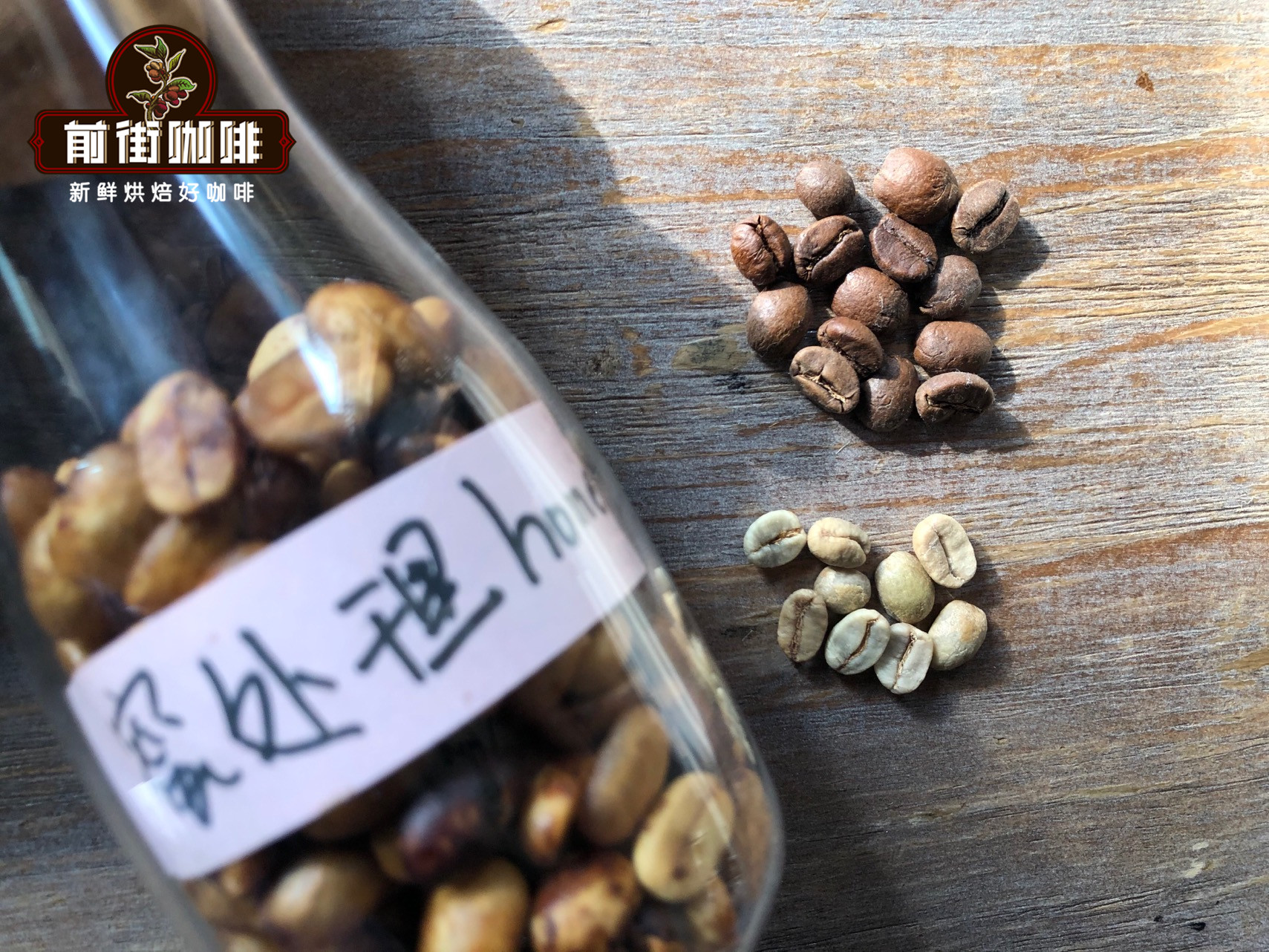
The honey process is written in English as Honey Process, also called Miel Process. The method is to remove the pulp and then dry the fruit while it still has the parchment layer.
As Front Street Coffee (FrontStreet Coffee) mentioned earlier, coffee bean processing methods mainly fall into two categories: washed and natural. The natural method, as the name suggests, is to let coffee beans dry naturally after harvest; the washed method removes the pulp and then uses fermentation to remove the surface mucilage; the honey process sits right between the two. Many people hear "honey process" and think it means honey was added during processing, or that the coffee will taste like honey afterward, but that is not the case. During drying, the moisture in the mucilage layer on the surface of the bean evaporates and becomes sticky like honey, which is where the name comes from.
The Honey Process Workflow
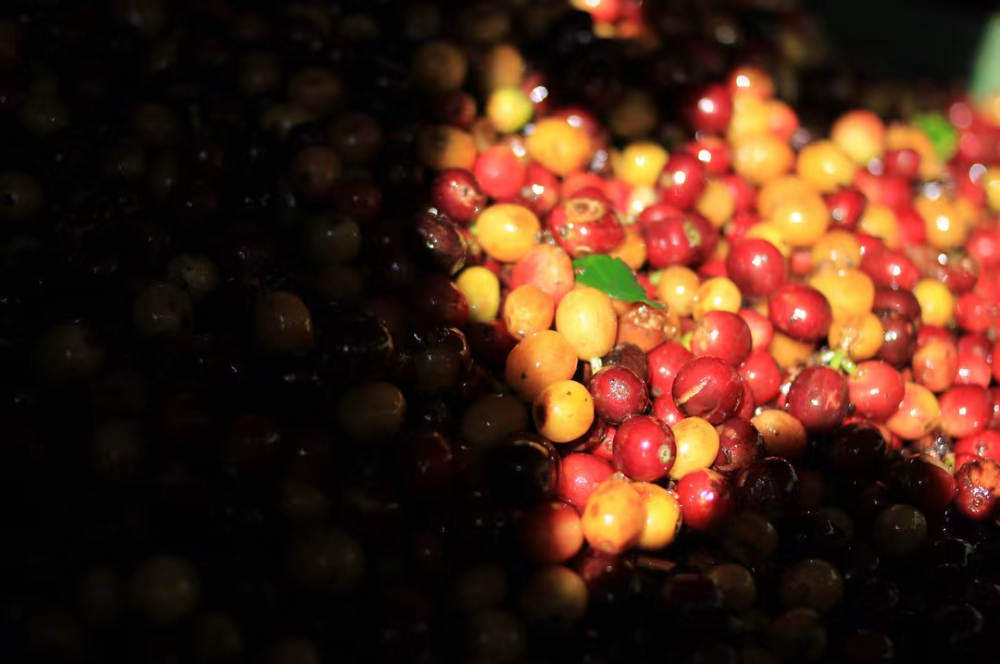
1. As in the first step of the washed method, first pour all coffee cherries into water, skim off floating beans and defective beans, and keep the intact cherries.
2. Place the selected cherries directly on raised beds to dry for at least three days, bringing the moisture content of the cherries down to 20%.
3. Then send the dried coffee cherries into a depulper to remove the skin and pulp while retaining the mucilage—this is also why honey-processed coffee has sweetness; mucilage is the part of the coffee cherry with the highest concentration of sugar.
4. Then dry the coffee beans that still have mucilage attached, reducing the moisture content to 11%, after which they can be stored.
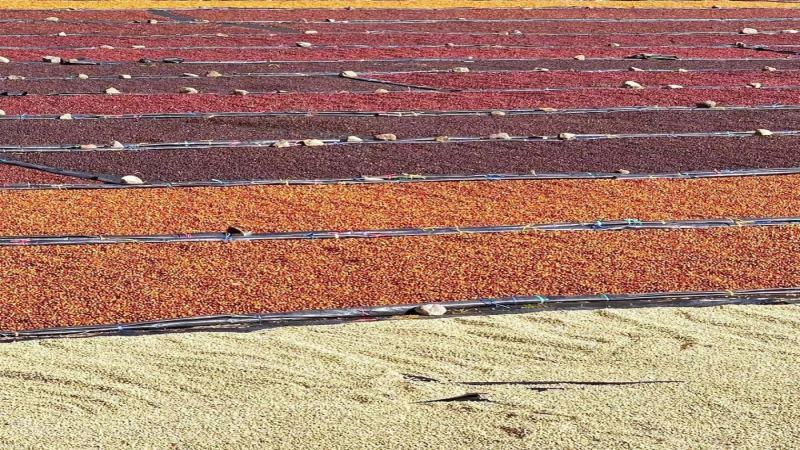
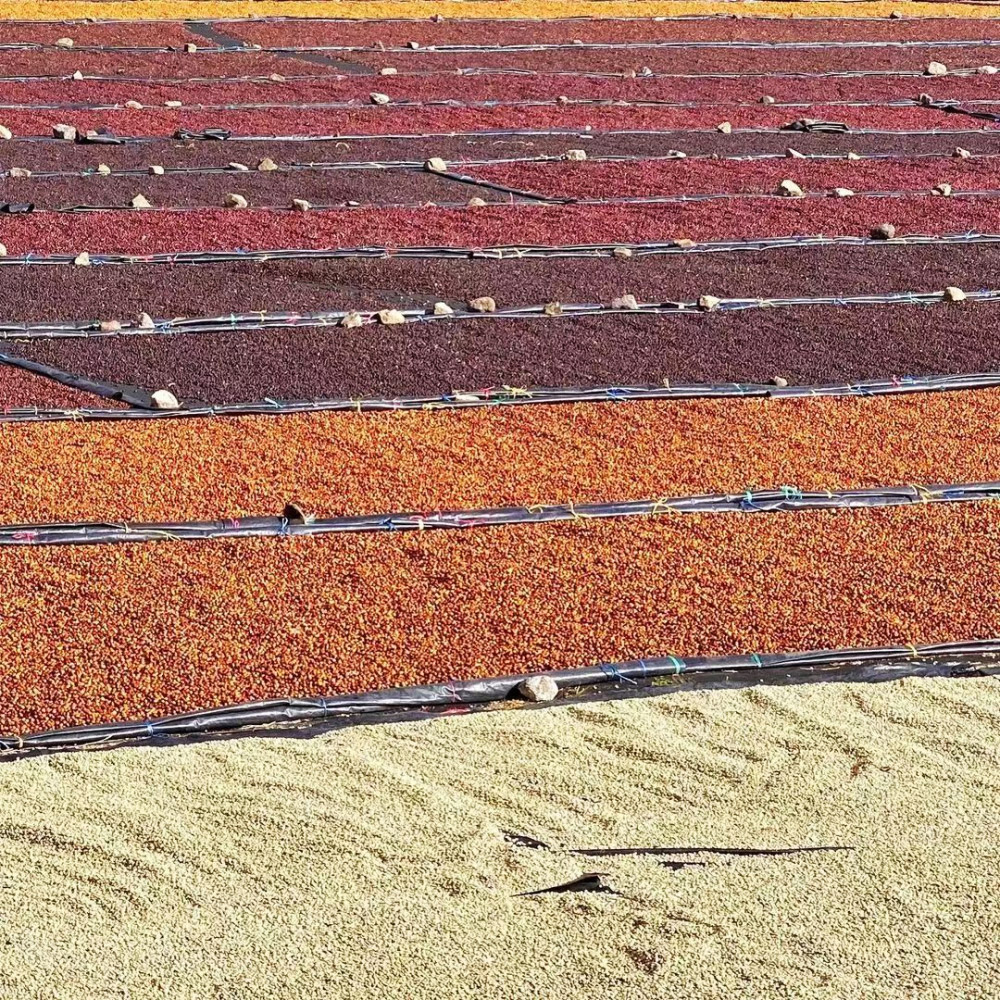
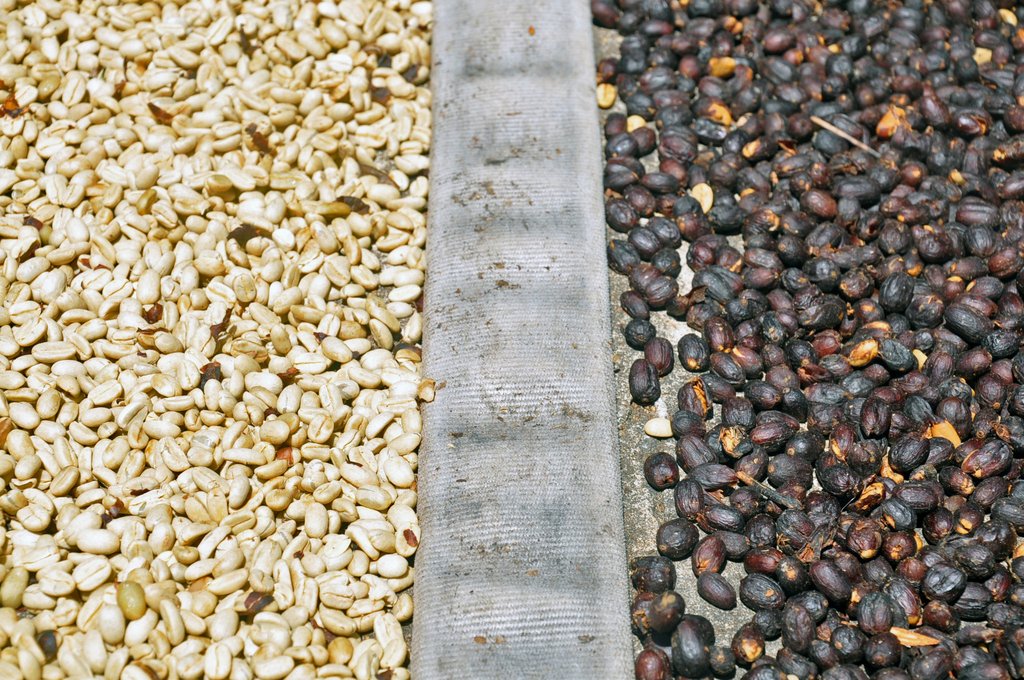
Front Street also learned that the honey process is further classified according to how much mucilage is retained. Generally, beans with 40% of the mucilage removed are called yellow honey; those with 25% of the mucilage removed are classified as red honey; and there is also a type of green bean that retains all the mucilage, called black honey.
Honey-processed green beans require extra care during the drying stage. Because mucilage remains on the surface of the beans and there is a lot of sticky material, they must be constantly turned during drying to avoid mold or over-fermentation.
Advantages and Disadvantages of the Honey Process
Advantages: The honey process can be seen as an improved version of the natural method. Because the pulp is removed at the beginning, it is less prone to mold, and it does not require large amounts of clean water, so the cost is relatively low.
Disadvantages: Among all methods, the processing steps are the most complex and labor-intensive.
Honey Process Flavor
As Front Street said above, the honey process can enhance coffee sweetness, relatively reduce acidity, and make the aroma more delicate—provided, of course, that it is executed well. If executed poorly, it can taste of unpleasant acetic acid, or spicy notes like onion or garlic; even when done quite well, it may still carry a slight muddy taste, a not-clean-enough finish, and more off-flavors than ordinary washed coffee. Overall, the risk of using the honey process is considerably higher than that of conventional wet processing.
The honey process is further divided by color into yellow honey, red honey, and black honey. What are the differences among them? Front Street Coffee (FrontStreet Coffee) will now explain for coffee enthusiasts.
What Are the Differences Among Yellow Honey, Red Honey, and Black Honey?
Black honey: Almost no mucilage is removed, and the drying time is the longest, requiring more than 14 consecutive days. During the process, to prevent drying too quickly, coverings are used to block overly strong sunlight so the sugars can transform more fully.
Red honey: 25% of the mucilage is removed (specific practices vary by estate), sun drying lasts about 12 days, and shade covers may also be used during the process. The coffee is turned several times a day, but not as frequently as yellow honey.
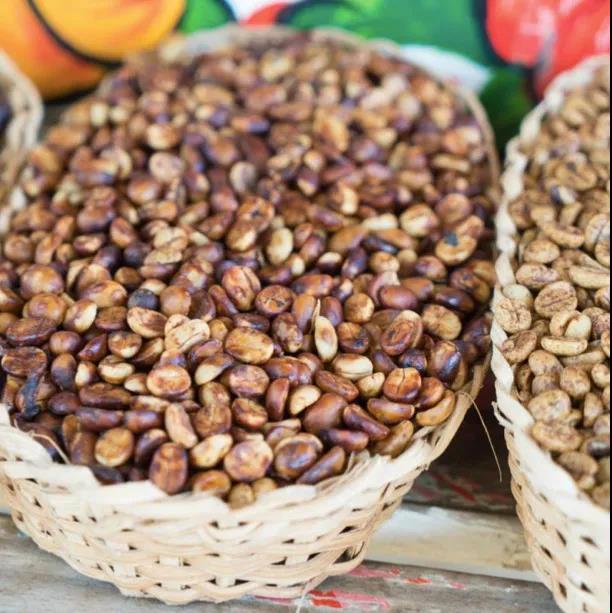
Yellow honey: 40% of the mucilage is removed, receives the most sunlight during drying, lasts about 8 days, and the coffee is placed on raised beds and turned once an hour.
From yellow honey to black honey, the required drying time is longer and the management requirements are stricter. If one must rank the three, Front Street Coffee (FrontStreet Coffee) believes black honey tastes the best because it retains the most parchment layer, giving the fullest and most intense flavor.
The reason yellow honey and red honey are produced is that coffee farmers must also consider business factors, taking cost and price into account, and offering consumers multiple choices is equally viable.
Why Are Honey-Processed Coffee Beans So Popular?
As Front Street Coffee (FrontStreet Coffee) said above, honey-processed coffee beans all have very good sweetness in flavor. This sweetness refreshes coffee enthusiasts' existing impression that coffee "is just bitter," so it is especially liked by people just getting into coffee. In addition, many enzyme processes inspired by the honey process offer even higher sweetness.
Front Street Coffee (FrontStreet Coffee) also mentioned above that the honey process is divided into three types, among which black honey-processed coffee beans have the highest sweetness and the best flavor, with correspondingly stricter processing conditions. This means the bean quality is more assured, so naturally some coffee enthusiasts are willing to pay for deliciousness. This is also why honey-processed coffee beans are popular.
Next, Front Street Coffee (FrontStreet Coffee) will share a few relatively popular Costa Rican honey-processed coffee beans.
Front Street Coffee (FrontStreet Coffee): Costa Rica Musician Series Mozart Coffee Beans
Country: Costa Rica Region: Tarrazú Altitude: 1800m Variety: H1 Process: Raisin honey process Flavor: Raisin acidity, berries, floral, fermented wine aroma
Mozart is hailed as a child prodigy who epitomized classical music and is famous for his ornate style. The ornate aroma of this Mozart coffee bean refers to the elegant floral fragrance it gives off, similar to the white-flower scent of orange blossoms, which Front Street can also sense when brewing; the ornate mouthfeel refers to its abundant dark berries, raisins, and slight red berry flavors, with a touch of plum acidity and gummy bear-like sweetness in the middle and finish, while the floral aroma and sweetness remain after the coffee cools. The flavor is very unique, and you can indeed experience an ornate mouthfeel.
Front Street Coffee (FrontStreet Coffee): Costa Rica Musician Series Bach Coffee Beans
Country: Costa Rica Region: Tarrazú Altitude: 1950m Variety: H1 Process: Raisin honey process Flavor: Fermented wine aroma, berries, fruit tea note
Bach's music is refined, richly layered, and at the same time clear and orderly. The dry aroma of this coffee bean carries fruit aromas such as strawberry, blackberry, and raisin, and it also releases waves of fruity fragrance during brewing. When Front Street has just finished brewing it, you can smell obvious floral and fruity aromas; on the palate there is rich fruit aroma and sweet acidity, with a slight wine aroma in the middle and finish, like red wine. After it cools, it carries candied-fruit sweetness, the wine aroma becomes more obvious, and you can even sense plum wine flavor. Such a refined taste experience is indeed like Bach's music—every sip seems to place you within the splendor and rigor of Baroque aesthetics.
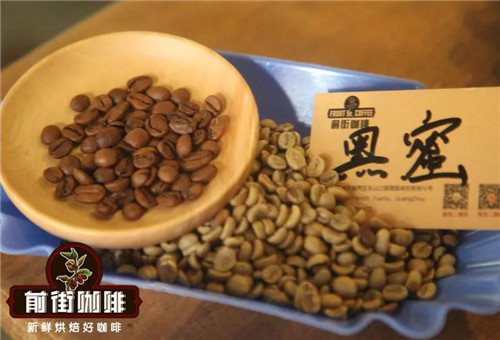
The above two honey-processed coffee beans come from Canet Estate in the Tarrazú region of Costa Rica. The names come from the estate owner's great love of music, so the coffee beans were named after musicians, and their flavors each have their own characteristics. Interested coffee enthusiasts may want to try these two honey-processed coffee beans. Next, Front Street Coffee (FrontStreet Coffee) will share the pour-over extraction parameters for these two beans.
Front Street Coffee (FrontStreet Coffee) Costa Rican Coffee Bean Brewing Suggestions
Dripper: Hario V60#01 Dose: 15g Coffee-to-water ratio: 1:15 Water temperature: 90℃ Grind size: medium-fine grind (81% passing through Chinese standard No. 20 sieve)
Front Street Coffee (FrontStreet Coffee) brewing technique: staged extraction technique.
First use 30g of water to fully wet the coffee bed into a "hamburger" shape, let it bloom for 30s, then begin the second pour. For the second pour, Front Street uses a steady medium-fine stream of water in circular motions, and when the timer reaches 55s, pour until the water amount reaches 125g, then stop and wait for the water level to drop to two-thirds of the coffee bed before pouring the third stage. For the third stage, Front Street continues to use a steady... 1 minute 55 seconds.
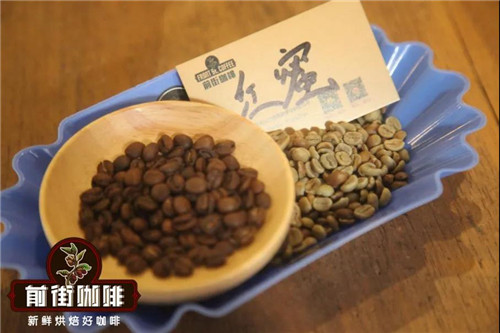
Bach coffee bean brewing flavor: At high temperature, it is grape-like sweet acidity and a wine-like fermented quality; after slowly cooling, it becomes red-berry-like juiciness and rose floral aroma, with a caramel-like sweet finish.
Mozart coffee bean brewing flavor: Berries and fermented aroma; on the palate there are raisins and sweet orange; as the temperature changes, fermented wine aroma and osmanthus aroma become more obvious.
The above are the pour-over Costa Rican coffee bean brewing parameters shared by Front Street Coffee (FrontStreet Coffee). We hope they can help coffee enthusiasts brew the correct coffee flavors in future pour-over brewing.
Professional coffee knowledge sharing. For more coffee bean information, please follow our WeChat official account: Front Street Coffee (FrontStreet Coffee)
The above content is compiled by CoffeeHunters, a coffee news website.


