







How Should Espresso Coffee Beans Be Chosen?
Italian espresso starts with about 30 ml of concentrate pulled under high temperature and pressure, and the cup depends mainly on the beans rather than on barista technique or room humidity. Italy grows no coffee, so roasters blend green beans from several producing regions to create a stable profile that holds up under pressure extraction.
Blending gives consistency and uses crema to carry aroma, and combining two or three origins can also lower cost. Darker roasting suits espresso coffee beans, and the resulting shot becomes the base for cappuccino and latte once steamed milk is poured in. Cafés keep flavor steady by fixing the blend and roast rather than by adjusting technique each day.
The soul of Italian coffee lies in a roughly 30ml shot of Espresso, and the key to its quality is not the barista's technique or the ambient humidity, but whether the right coffee beans have been chosen. Faced with the many products on the market that claim to be espresso beans, how can one identify a blend truly suited to high-temperature, high-pressure extraction? This article breaks down the logic of bean selection, roasting craft, and taste performance one by one, and recommends four Italian-style blends currently sold by Front Street Coffee for different needs, covering scenarios such as rich nutty aroma, commercial shop opening, high-cost-performance daily drinking, and latte art practice for beginners, helping coffee lovers find the most suitable bag.
Italy itself does not grow coffee, but local roasters are skilled at blending green beans from various producing regions around the world in different proportions to create Italian-style blends. These blends are ground and then extracted by a coffee machine under high temperature and high pressure, and the resulting Espresso forms the base and essence of Italian coffee. By pouring steamed milk into this roughly 30ml concentrate, you can make a cappuccino or latte.
To make an outstanding cup of espresso, why can legitimate cafés always maintain a stable flavor that is satisfying no matter when you taste it? This is not because the barista's technique is so superb, nor because humidity is controlled so precisely; the real reason is that the right coffee beans have been chosen.
Many products on the market fly the banner of espresso coffee beans, yet their actual performance struggles to match their name.
Bean Selection Logic
Espresso machines use high-temperature and high-pressure extraction, and compared with pour-over single-origin coffee, they are better suited to specially formulated Italian-style blends. Blending ensures a stable extraction process and uses crema to carry flavor; at the same time, combining beans from two or three producing regions can also reduce costs, allowing consumers to gain a high-quality experience while spending less.
Roasting Points
Coffee roasting is like a magic trick, transforming green raw beans into a dark brown, aromatic finished product. The roasting stage directly determines the quality of the coffee. Some espresso beans use dark roasting, allowing the moisture in the beans to dissipate naturally by comparing the coffee cracking sounds with other roasting parameters, thereby obtaining high-quality coffee beans while preserving their original aroma. Combined with timely and safe one-way degassing packaging, the aroma can be locked in to the greatest extent.
Taste Characteristics
Dark roasting gives espresso beans a richer sense of layers. The darker the roast, the lower the acidity, while body and flavor become more intense, with caramel notes especially prominent, abundant crema, and an overall balanced taste. Under high-temperature extraction, it shows low acidity and high sweetness, low bitterness, mainly featuring caramel sweetness and nutty, chocolate flavors; under low-temperature extraction, it shows medium sweetness and medium acidity, low bitterness, highlighting floral and citrus fruit notes, smooth on the palate, with a lasting viscous mouthfeel.
Front Street Coffee stores currently sell several Italian-style blend coffee beans, among which the following four are most suitable for latte art:
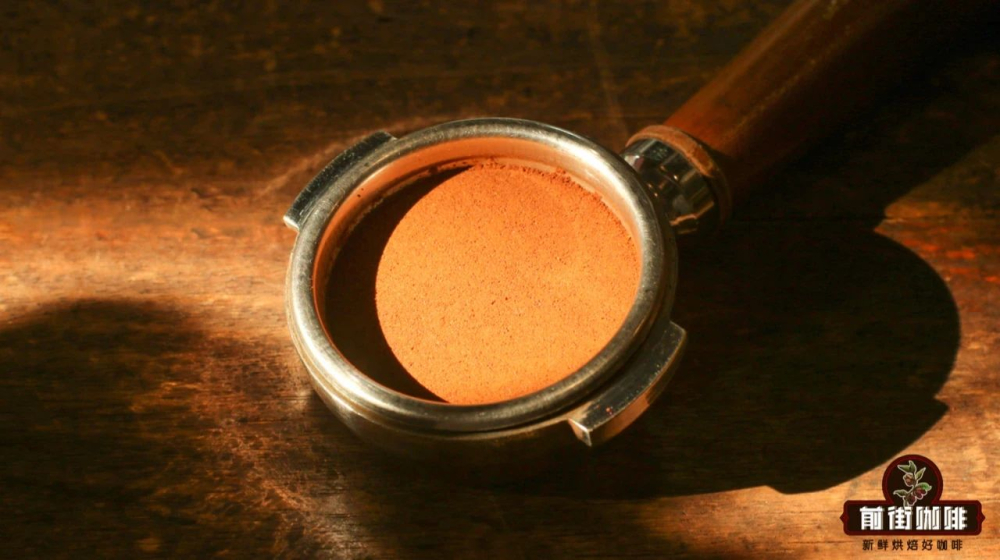
If you prefer a rich nutty flavor, you can choose Front Street Specialty Blend coffee beans. It uses the classic combination of Colombian washed beans and Brazilian semi-sun-dried beans, showing nutty, dark chocolate, and caramel flavors when making espresso, suitable for consumers pursuing a full-bodied taste.
Friends planning to open a shop must consider Front Street Commercial Blend coffee beans. On the basis of Front Street Specialty Blend, this bean adds a small amount of Robusta, intended to increase the production of fine dark brown crema. Whether making Americano, latte, or mocha, it can present nutty, cocoa, and caramel flavors, while also making latte art operations effortless.
If you value cost performance more, the daily-drinking-level Front Street Dark Cocoa Basic Blend is an ideal choice. It is composed of Yunnan small-holed beans and Brazilian Red Bourbon, combining nutty notes with the acidity of ripe plums, and after grinding it gives off a creamy chocolate aroma. When paired with milk for latte art, it is soft and delicate, with a balanced taste and high compatibility, and can be used to make a variety of espresso drinks.
For beginners practicing latte art, Front Street Classic Blend is recommended as the first choice. This bean is intended as a tribute to the once-popular "Mamba Coffee," blending Indonesian Mandheling beans with Brazilian espresso beans. It has both the wild aroma of Mandheling and the smooth mouthfeel of Brazilian beans, with the flavors complementing and harmonizing with each other. Front Street Classic Italian-style Blend adds Robusta to the Mamba formula, greatly enhancing the crema and making the body of the espresso more solid, suitable for making latte art at home.
The above content is compiled by CoffeeHunters, a coffee news website.


