








What Defines Kona Coffee Flavor and Its Growing Region?
Kona coffee comes from the island of Hawaii, where volcanic soil and a favorable climate support mostly Typica and Catuai trees. The cup is dominated by nutty notes with clean, balanced acidity, the sort of clarity that stands out among low-altitude coffees, and washed processing keeps the profile tidy.
Hawaii is an exception to the idea that the United States grows no coffee, since most mainland terrain does not suit the crop and American coffee is largely commercial. Leaf rust has hurt yields and pushed prices, and a three-stage brew helps recreate the sweetness and spice notes in the cup.
When people mention American coffee, most first think of mass-market commercial products, but the state of Hawaii is an exception. The Kona coffee produced here is as renowned as Jamaican Blue Mountain, and thanks to volcanic soil, a suitable climate, and meticulous management, it presents a unique flavor profile dominated by nutty notes with clean, balanced acidity. Front Street Coffee will guide you through the variety composition of the Kona region, its washed processing method, and the impact of this year's leaf rust on yield and prices. We will also share Front Street's usual three-stage brewing parameters to help you better recreate the sweetness and spice notes of this island coffee.
For more specialty coffee knowledge, please follow: Front Street Coffee (Frontsteet Coffee)
Hawaii's tourism popularity has always remained high, yet Hawaiian coffee is rarely mentioned by the general public. Those long immersed in the coffee industry should be familiar with the famous Jamaican Blue Mountain coffee, and will also know of Kona coffee, which is equally renowned as Blue Mountain. Today, Front Street will take you closer to Kona coffee from Hawaii.
Many people mistakenly believe that the United States does not produce coffee, so they have neither tasted nor heard of American coffee. Front Street believes there are reasons behind this: the American coffee industry is dominated by commercial coffee, while customers who frequently come to Front Street for coffee mostly encounter Arabica coffee and rarely explore Robusta. In addition, most of the terrain in the United States is not suitable for growing coffee, so American coffee is not very familiar in people's minds.
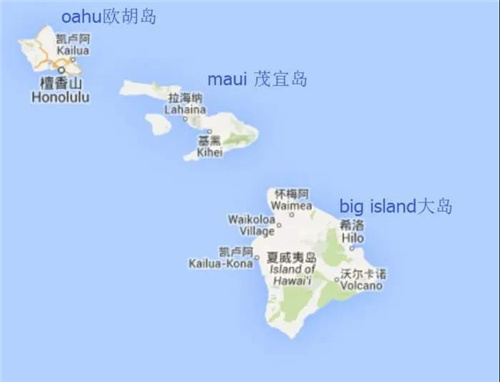
But the state of Hawaii is an exception. Front Street has learned that compared to other islands, the climate conditions on the island of Hawaii are very suitable for coffee cultivation, and the varieties planted are relatively pure, commonly Typica and Catuai, which provides a foundational guarantee for the flavor expression of Hawaiian Kona coffee.
Although the altitude of Hawaii's Kona region cannot compare to coffee giants like Brazil and Colombia, when Front Street cupped coffee beans from the Kona region, the flavor evaluation was quite high, with an overall profile dominated by nutty notes. The fruit acidity is also the cleanest among low-altitude coffees, which is one of the reasons it can be mentioned in the same breath as Jamaican Blue Mountain.
We all know that Ethiopians have deep affection for coffee, and coffee has long been integrated into their lives, becoming part of their culture. Front Street has learned that they like to mix coffee beans with coffee leaves to make tea, or combine them with herbs and honey to make medicine. If you go to Ethiopia and someone invites you to attend a local BUNA coffee ceremony, Front Street suggests you must not refuse — you can decline an invitation to a wedding, but you must not decline a local Ethiopian BUNA coffee ceremony, because this ceremony is highly valued and indicates that Ethiopians have accepted you. Now when Front Street talks about Kona coffee again, actually Americans also often love drinking coffee, and American Kona coffee tastes very rich and mellow, and also carries a fruity aroma mixed with a unique spice flavor.
However, something major happened in the state of Hawaii this year. According to foreign media reports, in mid-October this year, traces of leaf rust were discovered in the Hawaii region — this was Hawaii's first discovery of leaf rust. Front Street tells everyone not to underestimate leaf rust: on coffee trees infected with leaf rust, the pathogen reduces the leaves' photosynthesis, ultimately causing the entire coffee tree to die. Even more frightening is that leaf rust spreads through wind, causing entire coffee forests to become infected.
According to information Front Street has reviewed, as early as a century ago, West Java in Indonesia already experienced a large-scale outbreak of leaf rust that nearly drove all Arabica coffee to extinction. So Front Street believes that if Hawaii does not take relevant measures, it will be a very big crisis for Hawaiian coffee.
This leaf rust outbreak has also had a significant impact on Hawaii Kona coffee. The coffee bean yield of Kona coffee has decreased, and coupled with high market demand, the price is now on par with Jamaican Blue Mountain. Hawaii coffee's strong acidity and sweetness have always been loved by everyone.
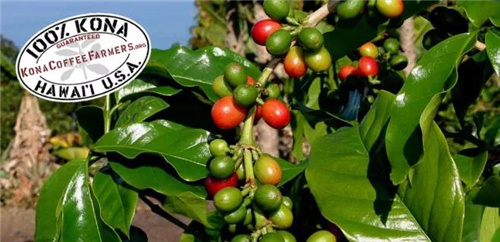
Front Street doesn't know if you're aware that Kona coffee beans are known as the most beautiful-looking coffee beans. That is because they are grown on volcanic slopes, and with fertile soil, ample rainfall and sunlight, plus farmers' meticulous management, Kona coffee has become a specialty on the coffee market. Because of the unique growing environment and careful manual cultivation, the coffee cherries of Kona coffee are exceptionally plump, with round bean shapes and bright luster.
Besides appearance, Kona coffee's flavor is also very unique. In multiple cuppings, Front Street felt that Kona coffee's acidity is balanced and moderate, with excellent mouthfeel and richness, a wine-like acidity combined with spice aromas that leave an endless aftertaste.
Of course, Kona coffee's unique mouthfeel is also inseparable from the washed processing method used in the Kona region: selected coffee cherries are depulped to remove skin and flesh, then the processed cherries are poured into a water tank for fermentation to wash off the mucilage, and then dried in the sun. This washed processing seems no different from other washed methods, but what's most special is that Kona coffee uses clean, sweet mountain spring water to wash the coffee beans, which is also an important reason contributing to Kona coffee's unique flavor formation.
Front Street generally uses a three-stage method to brew Kona coffee, controlling the water temperature between 89°C and 90°C, using a KONO dripper. Front Street suggests that when brewing this Kona coffee, you must control the water flow well and pour slowly. The speed should not be too fast, and the water level should not be too high. You can stop pouring when you reach 225 grams, and Front Street generally controls the time to about two minutes.
If brewed successfully, you will taste the acidity and aroma of Kona coffee, and during brewing it will give off a sweet berry sensation. At this point, you can slowly savor this delicious cup of Kona coffee.
The above content is compiled by CoffeeHunters, a coffee news website.


