








What Makes Wet-Hulling Coffee Processing Unique to Indonesia?
Wet-hulling, called Giling Basah locally, is the processing method behind Mandheling's clean, mellow profile. Farmers dry the parchment-covered beans to 35 to 40 percent moisture, then sell them to collection stations. Beans are sun-dried further to 20 to 24 percent moisture before a wet mill uses strong friction to tear off the parchment while the bean is still soft and swollen.
Collection stations often mix lots and buy without evaluating quality, so moisture levels vary and fermentation stays incomplete, with some mucilage left on the parchment. That inconsistency shapes the final cup, giving Indonesian coffee its heavy body and low acidity. The same soft-bean handling also explains defects such as goat hoof beans, which screening removes before grading golden mandheling.
Wet hulling is a unique processing method for Indonesian coffee and the key to the signature flavor of Mandheling. This article will start with the definition, operational process, and reasons for the formation of wet hulling, deeply analyzing how this processing method gives coffee beans their rich and full-bodied characteristics, while also explaining the principle behind the creation of goat hoof beans. The article will also focus on introducing the production area information, grade standards, and screening process of Front Street PWN Golden Mandheling, and share Front Street Coffee's roasting analysis and brewing parameters, taking you to fully understand the story behind this clean-tasting Mandheling.
In Indonesia's coffee processing system, wet hulling holds a pivotal position, with the vast majority of Indonesian coffee beans processed in this way. Front Street has always believed that wet hulling plays a decisive role in why Indonesian coffee presents such a unique flavor profile. Next, let us take a deeper look into this coffee processing method unique to Indonesia.
What exactly is wet hulling?
In professional circles, wet hulling is also known as Wet Hulling, and in the local Indonesian language it is called Giling Basah. It is a coffee processing method passed down through generations in Indonesia. Compared with conventional washed processing, the cup profile presented by wet hulling is worlds apart.
Because there is a relatively large gap between the parchment shell and the green bean, farmers often resell the beans to collection stations that specifically purchase wet parchment-covered green beans once the beans have been dried for the first time to a moisture content of 35% to 40%. During purchasing, collection stations sometimes use separate bags and sometimes mix them together, which causes the moisture levels of the green beans to vary. These beans may be in an incomplete fermentation state, or some mucilage may still remain on the parchment layer, showing a semi-dried form. However, the collection station does not evaluate quality at the time of purchase and simply mixes and bags everything.
The beans are sun-dried with the parchment until the moisture content drops to 20% to 24%, then they enter the processing stage with a specially made wet mill. This machine relies on strong friction to tear open the parchment layer tightly attached to the green bean. During this process, white or green mucilage usually flows out. Due to prolonged soaking in mucilage and the humid environment, the green beans at this point are soft in texture, whitish in color, swollen, and show a gray-green tone. Under the stirring action of friction, the beans are easily crushed or pinched, especially at both ends, forming small notches, the so-called horse hoof beans or goat hoof beans (locally called kuku kambing).
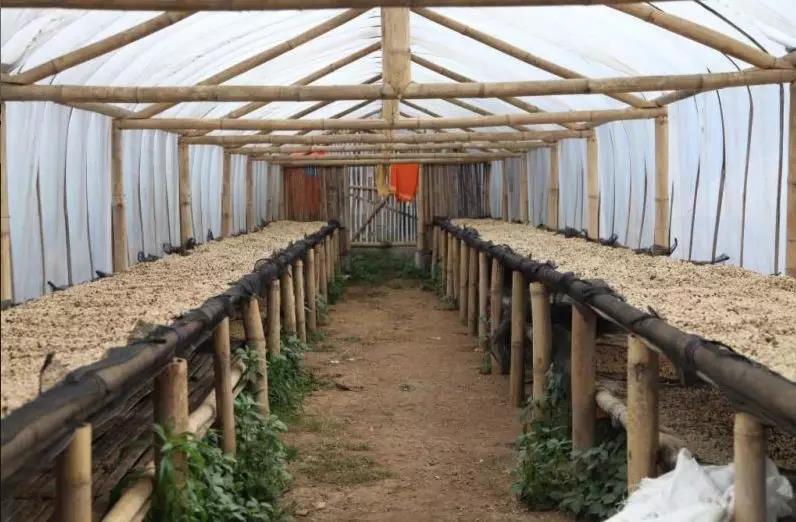
Before export, the hulled green beans are spread directly on patios, tarps, or roads for drying. Green beans that have lost the protection of parchment dry extremely quickly, and the final moisture content drops to 12% to 13%, at which point the green beans appear dark green or blue-gray. The green beans are then sorted and bagged, ready for export.
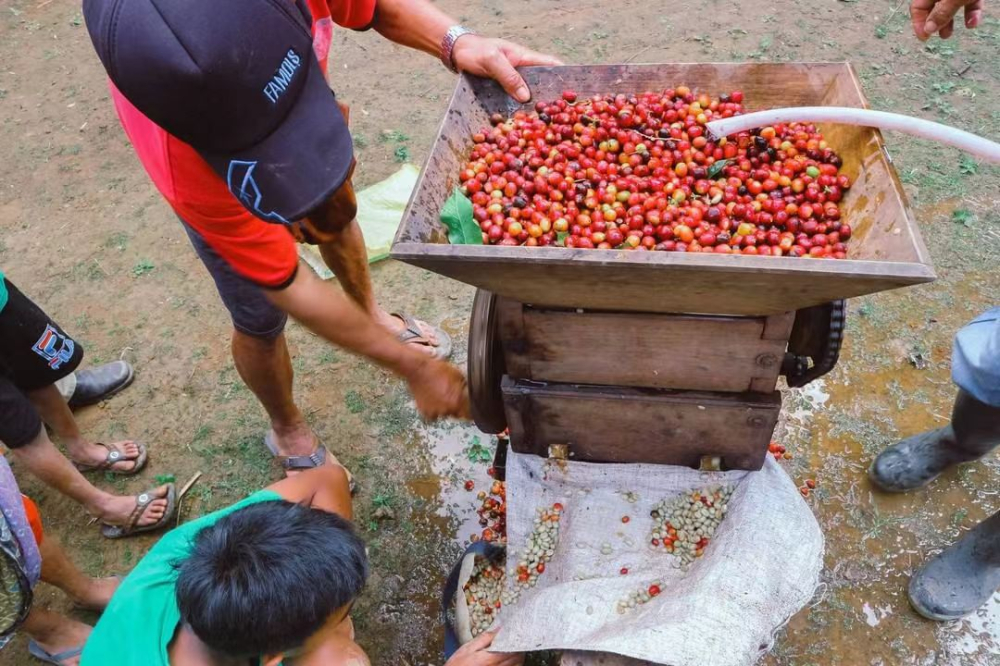
Without the protection of parchment, the green beans are directly exposed to the environment and are susceptible to mold, yeast, and bacteria. When directly exposed to sunlight, moisture evaporates too quickly, causing uneven drying and spots on the surface, which may further lead to inconsistent roasting. Excessive heat generated during hulling may also accelerate coffee aging, which is exactly the source of the woody and earthy flavors we often taste in Sumatran coffee.
Why does Indonesia use wet hulling?
Indonesia's tradition of using wet hulling is inseparable from its local climate conditions. Indonesia's humidity remains between 70% and 90% year-round, typhoons are frequent, and annual rainfall in some areas can reach as high as 2,000 millimeters. Faced with such harsh weather conditions, how does Indonesia produce rich and full-bodied Mandheling coffee? The answer is wet hulling.
In tropical climates, coffee usually takes 2 to 3 weeks to dry. But in Indonesia's extremely humid environment, drying coffee becomes a thorny problem. Coffee drying has to take longer, and during this period the coffee beans remain at relatively high moisture, making it easier for bacteria to invade the interior of the green beans. In the conventional washed process, the drying stage is always carried out with the parchment still on, which protects the green beans from external damage to a certain extent. Wet hulling, however, does the opposite, removing the parchment in the final drying stage and allowing sunlight to directly hit the surface of the green beans, causing the green coffee to dry rapidly, 2 to 3 times faster than washed processing.
Why does wet hulling produce "goat hoof beans"?
When wet hulling removes the parchment, the coffee's moisture content is still as high as 20% to 24%, whereas general processing methods wait until the moisture content drops to 10% to 12% before hulling. In a semi-dry state, the parchment easily sticks to the surface of the green beans, and removing the parchment is more difficult than in a fully dry state, requiring greater friction during hulling. On the other hand, semi-dry green coffee beans are extremely fragile at this time, with far less hardness than fully dry green beans, so the beans are more easily pinched and damaged, forming small notches. This is what we commonly call horse hoof beans or goat hoof beans (locally called kuku kambing).
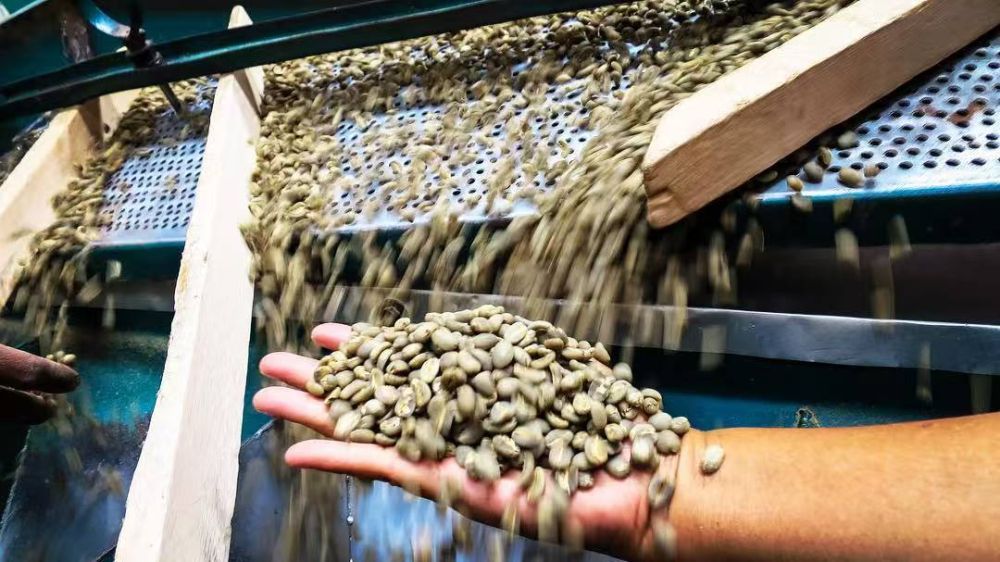
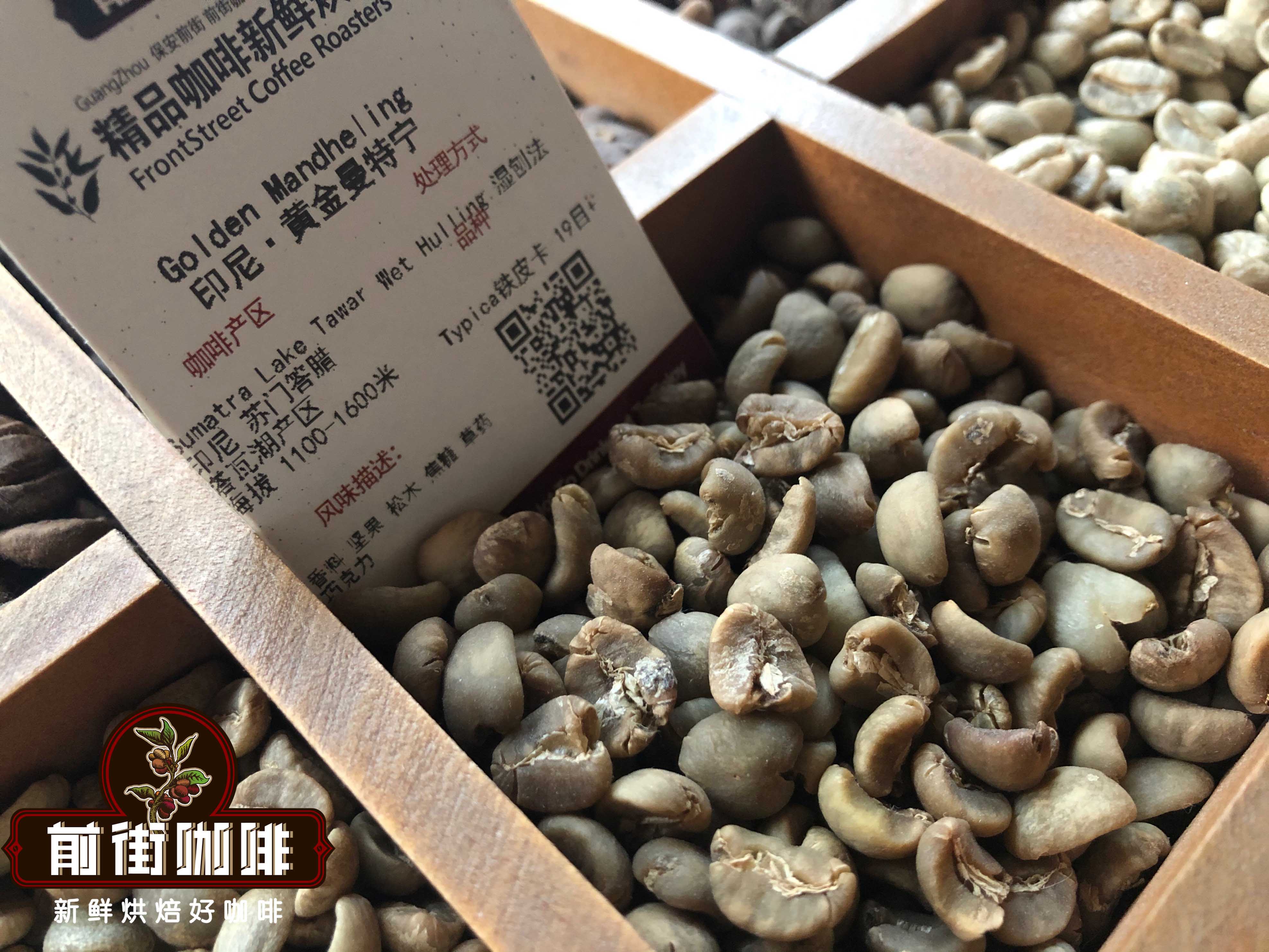
If you want to taste the flavor of wet-hulled coffee, the first recommendation we will make is to buy the highest-grade Front Street PWN Golden Mandheling. These beans are uniform and plump, large and translucent, with a low defect rate. After medium-dark roasting, they carry a rich roasted aroma, and the black coffee brewed from them has a clean mouthfeel and full body, making it very suitable for friends who do not like acidic coffee.
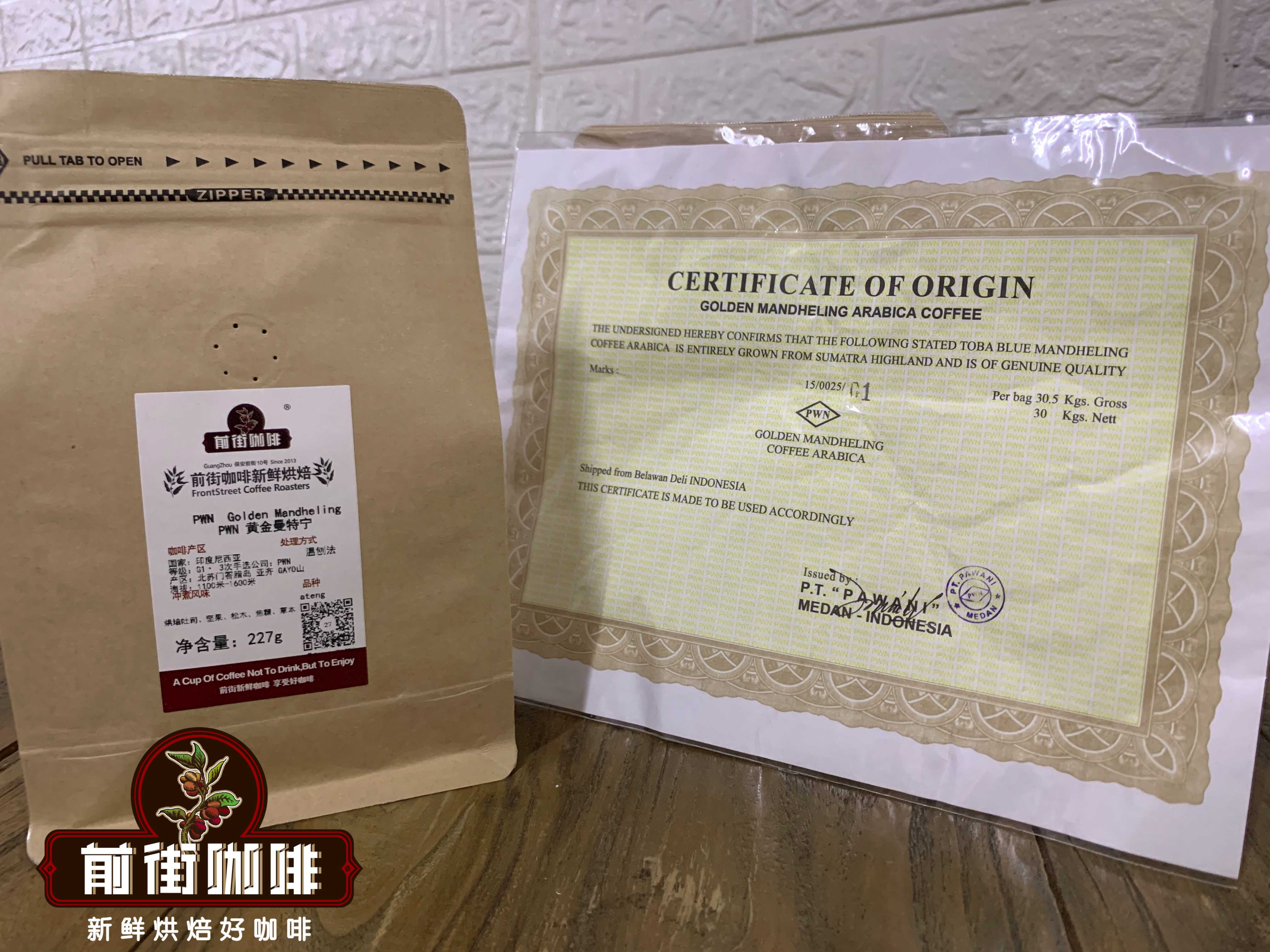
Front Street Indonesia Front Street PWN Golden Mandheling Coffee Beans Region: North Sumatra, Aceh, Mount Gayo Altitude: 1100-1600m Variety: Ateng Processing method: Wet hulling Grade: G1, triple hand-sorted
Front Street Golden Mandheling is a selected top-tier coffee launched by the Indonesian green bean company Pawani. It should be specially noted that Golden Mandheling is a trademark, built as Indonesia's top coffee brand. For this reason, Pawani searched throughout Sumatra and purchased coffee beans of excellent quality. It is worth noting that Pawani registered the Golden Mandheling trademark in Indonesia, but did not register the trademark domestically, so a large number of "Golden Mandheling" coffees not exported by Pawani have appeared on the market. Buyers must be sure to look for the Pawani (PWN) trademark when purchasing; usually the PWN logo is printed on the green bean jute bags. If you cannot be certain, you may ask the seller to provide the certificate that PWN includes with the beans for verification.
As mentioned earlier, wet hulling processing intensifies the effects of environmental mold, yeast, and bacteria, thereby affecting green bean quality. Front Street Golden Mandheling is known for high-quality Mandheling, and its clean, full-bodied taste is impressive. The reason lies in Pawani's strict screening standards. After processing is completed, the green beans undergo one machine sorting and three hand sortings, with the grade marked as "TP," in order to screen out defective beans and small beans and ensure uniform package size and a low defect rate.
Front Street Coffee Roasting Analysis
Front Street Golden Mandheling is a green bean with relatively high moisture, showing a large deviation in moisture compared with sun-dried beans, so special attention must be paid to the dehydration stage. For green beans with high moisture content, you can try closing the damper immediately after loading the green beans, steaming for 30 seconds, then opening it to 3, until the color of the green beans turns light green or white, opening the damper to 4, and after first crack opening it to 5 (maximum). FrontStreet Coffee recommends keeping good data records before roasting, including the coffee beans' moisture content, density, origin, processing method, and the ambient temperature and humidity in the roasting room, and planning the roasting curve well. Recording relevant chemical and physical changes during roasting will help you better understand the final roasting result and improve the roasting curve.
Charge when the drum temperature reaches 200°C, set the damper to 3, after 1 minute adjust the heat to 160°C, keep the damper unchanged, roast until 5 minutes 40 seconds at 148°C, when the bean surface turns yellow, the grassy smell completely disappears, and dehydration is complete, adjust the heat to 140°C and the damper to 4; at 9 minutes 40 seconds, ugly wrinkles and dark streaks appear on the bean surface, and the toast aroma clearly turns into coffee aroma, which can be defined as the prelude to first crack. At this point, listen carefully for the sound of the first crack. First crack begins at 9 minutes 54 seconds. Reduce the heat to 60°C, open the damper fully (adjusting the heat must be done very carefully, not so low that there is no cracking sound), and discharge at 204.5°C.
Front Street Mandheling Coffee Brewing Analysis
For daily brewing, I generally choose the KONO dripper because it can bring out a rounder, fuller body and a more direct flavor expression. However, the KONO dripper has relatively poor venting because its ribs are straight and its depth is only one quarter of the dripper; apart from the area above that one quarter, it fits tightly against the wall to form a sealed state.
So after the beans have passed their resting period, I will choose the KONO dripper, because the only venting part of this dripper is that one quarter of ribs. When the water level passes over the rib area, the water volume in the dripper keeps rising, increasing pressure through the weight of the water. Since the outlet is relatively small, this can extend the contact time between coffee particles and water. As the water flow drives it, soluble substances can be extracted more effectively, generally achieving the high-body effect guests expect. Medium-dark roasted beans generally have a higher dehydration rate, so they are lighter in weight, and during brewing the grounds do not completely settle at the bottom; as soon as water is poured in, it is immediately absorbed. Because venting is vigorous, there are bubbles all around the grounds, thus creating channels, and the fresher the beans, the longer these channels last, causing the water level to drop quickly. I generally use a coarse stream and slowly circle.
Front Street Mandheling Coffee Brewing Sharing Dripper: KONO Dose: 15g Ratio: 1:15 Water temperature: 88°C Grind size: medium-coarse grind (65% passing rate on a No. 20 standard sieve)
In terms of brewing technique, FrontStreet Coffee uses a blooming water amount of twice the coffee grounds, that is, 30g of water for blooming, with a blooming time of 30 seconds. Pour in a small stream in circles until 125g, then pause in stages. When the water level is about to expose the coffee bed, continue pouring until 225g and stop. When the water level is about to expose the coffee bed again, remove the dripper. The extraction time is 2 minutes 00 seconds (starting timing from the beginning of blooming).
Front Street Golden Mandheling Flavor Description: nuts, chocolate, spices, herbs, caramel. Front Street Golden Mandheling tastes cleaner than Front Street Lintong Mandheling. The original herbal, earthy, and woody flavors of Mandheling are almost gone, but the caramel sweetness is stronger, and the fruity acidity is also brighter and more elegant.
The above content is compiled by CoffeeHunters, a coffee news website.


