







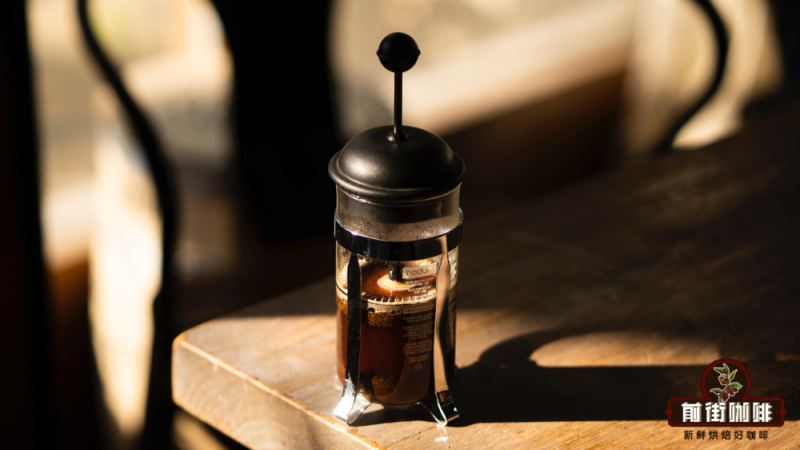
Is Blue Mountain Coffee Good in a French Press?
A French press brews Blue Mountain coffee with little effort: no filter paper is needed and the process is simple. Getting a balanced cup with clear sweetness still depends on grind size, water temperature, coffee-to-water ratio and steeping time. Adjust those four variables and the result is consistent and smooth.
Authentic Blue Mountain coffee is not the cheap Blue Mountain flavor or blend sold in shops, but pure coffee grown in Jamaica's Blue Mountain region and officially certified. The area lies on a seismic belt with mineral-rich volcanic soil, reaching 2,256 meters at its highest peak, and the Jamaican coffee board has graded and regulated the crop since 1948.
Brewing Front Street Coffee's Blue Mountain with a French press actually has few barriers to entry—no filter paper is needed, and the process is simple. However, if you want a balanced, delicious cup with standout sweetness, you still need to pay attention to details like grind size, water temperature, ratio, and steeping time. This article first introduces you to genuine Jamaican Blue Mountain coffee, from its growing region and grading system to green bean quality control and wooden barrel storage, then walks through the complete French press brewing process step by step, and compares its flavor differences with pour-over and AeroPress, helping coffee lovers reliably reproduce a sweet, smooth cup of Blue Mountain coffee at home.
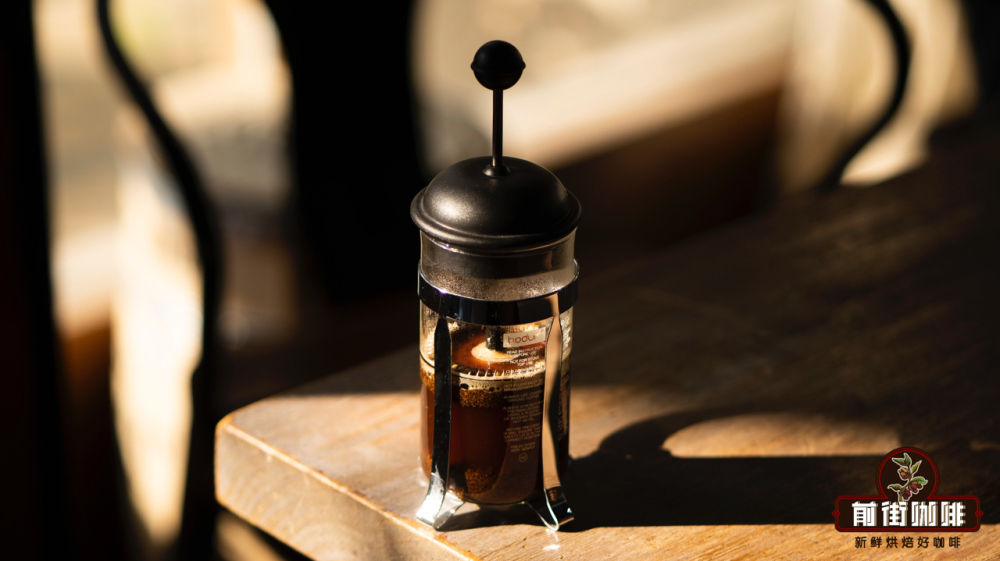
Using a French press to brew Front Street Coffee's Blue Mountain has a low barrier to entry—it saves you filter paper and is very convenient to use.
So-called authentic Blue Mountain coffee is not the cheap Blue Mountain flavor, Blue Mountain blend, or specialty Blue Mountain products on the market, but genuine pure coffee originating from Jamaica's Blue Mountain region, undergoing multiple rounds of selection and receiving official certification.
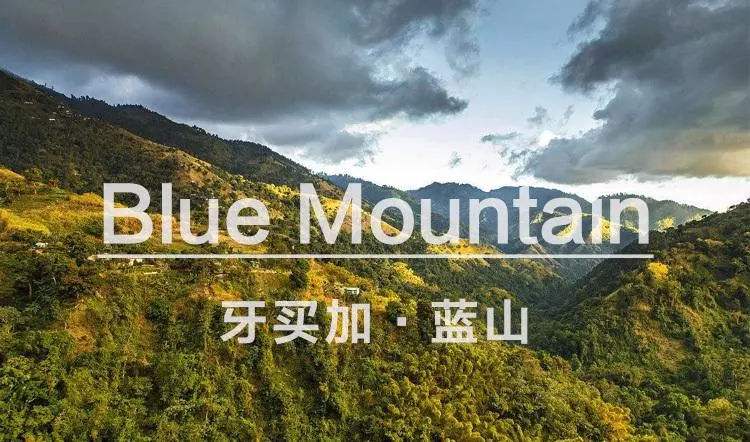
Authentic Blue Mountain coffee comes from the famous Blue Mountain in eastern Jamaica. This area lies on a seismic belt, and volcanic activity has enriched the soil with abundant minerals, making it very fertile. The Blue Mountain boasts the highest peak in the Caribbean region, reaching 2,256 meters, and is itself a well-known tourist destination. With abundant rainfall year-round, coffee trees thrive in the humid, cool, misty environment. The high altitude creates a pronounced temperature difference between day and night, allowing coffee cherries to slowly accumulate nutrients and ultimately develop a rich, sweet flavor.
The Jamaican government has always valued coffee quality. As early as 1948, it established the Jamaica Coffee Industry Board (CIB), hoping to elevate the standard of Blue Mountain coffee through supervision and management, while also setting strict grading rules to ensure the quality of the Blue Mountain coffee produced.
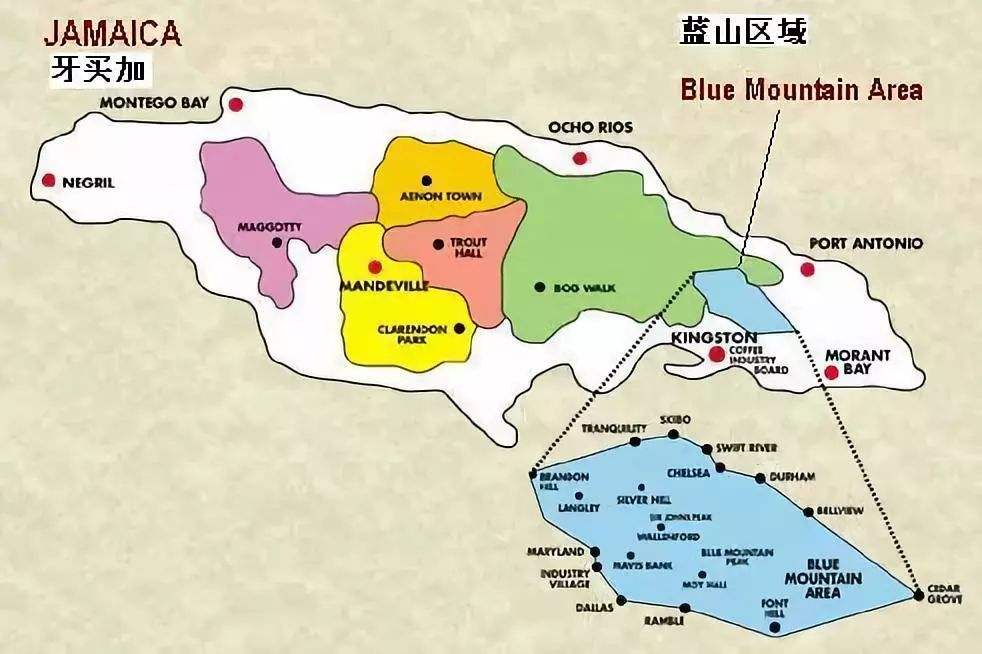
According to Jamaica's Coffee Industry Regulation Act, Blue Mountain coffee cultivation is mainly concentrated in four administrative parishes: Saint Andrew, Saint Thomas, Portland, and Saint Mary. The regulations stipulate that only Typica variety grown at altitudes between 910 and 1,700 meters is eligible to be called Jamaica Blue Mountain coffee. The combined area of these four regions accounts for only one-third of the entire Blue Mountain growing zone, with the remaining two-thirds used for growing Jamaica High Mountain coffee and Jamaica Prime coffee. In recent years, less than 15% of coffee beans produced in Jamaica can bear the Blue Mountain label.
In terms of green bean quality control, the CIB has also set more detailed grading standards, mainly based on bean size and defect ratio, classifying Jamaica Blue Mountain coffee into NO.1, NO.2, NO.3, and Peaberry. The Jamaica Blue Mountain No.1 on Front Street's bean shelf belongs to the highest grade, NO.1—green beans must reach 17-18 screen size, with a defect rate below 3%, uniform bean size, and plump beans. After layer upon layer of screening, very few beans qualify as top-grade Blue Mountain coffee. That's why Blue Mountain flavor coffee and Blue Mountain blend coffee on the market merely borrow the words "Blue Mountain"—in reality, they are likely lower-quality dark-roasted blends and have nothing to do with authentic Blue Mountain coffee.
When Front Street receives Blue Mountain No.1 green beans, the most eye-catching thing is the original wooden barrel holding the beans, which is also the most obvious difference from other growing regions. The wooden barrel keeps the coffee beans in a constant temperature and humidity environment, maintains appropriate moisture content before roasting, and better isolates external interference with the coffee's aroma, thereby preserving green bean quality. At Front Street's Dongshankou store, there is a Blue Mountain wooden barrel used for authenticity verification as well as a Jamaican Blue Mountain coffee certificate of origin on display—you can take a look when you go there for coffee.
1. First, grind the coffee beans, then pour them into the French press. At this point, there's no need to worry about what many people say about grind size—you don't need to grind too coarse, just maintain a medium grind, roughly a bit coarser than usual pour-over. Front Street Coffee recommends grinding the coffee particles as evenly as possible, because when unevenly sized coffee grounds are extracted in water, the very fine particles release compounds faster—meaning the fine particles are already over-extracted while the normal-sized particles are not yet fully extracted, and the resulting coffee liquid naturally won't taste good.
2. The water temperature is best controlled at around 88°C, and the coffee-to-water ratio is best between 1:10 and 1:13. After pouring in the hot water, stir with a spoon to let the coffee grounds and water fully contact.
3. Put the lid on the French press with the filter mesh at the highest position, then let it sit for 4 minutes.
4. Before pressing down the filter mesh, you can open the lid and use a spoon to scoop off the foam and fragments floating on top, then press the filter mesh all the way down.
5. After brewing is complete, immediately pour it into another insulated container! Don't delay, because the coffee grounds are still steeping in it. Then pour it into a cup and enjoy slowly.
Analysis: The French press uses immersion extraction—extraction is faster in the early stage and gradually slows down later; all the coffee grounds are immersed in water for even extraction, making Front Street Blue Mountain coffee taste more balanced and less prone to bitterness. When pressing down to filter the grounds, the metal mesh retains rich oils, delivering a smoother mouthfeel while enhancing body and caramel sweetness.
Compared with pour-over and AeroPress, Front Street Blue Mountain coffee made with a French press has more pronounced caramel flavors, while retaining more dark chocolate finish and fruity acidity, with improved body as well. We recommend that enthusiasts interested in French press brewing give it a try.
The above content is compiled by CoffeeHunters, a coffee news website.


