







How Do Industrial Coffee and Commercial Coffee Differ?
Coffee sold on the market generally falls into three groups: industrial coffee, commercial coffee, and specialty coffee. Industrial coffee is made entirely of Robusta and is the main raw material for instant coffee and concentrate. Commercial coffee blends two or more single-origin beans for espresso, while specialty coffee is 100% Arabica single-origin beans that reflect the terroir of a producing region.
The categories differ in how they are assessed. In the international traditional coffee grading system, quality can be judged by origin altitude, screen size, and defect ratio, and estate coffee adds a traceability mechanism. Higher altitude and lower temperatures slow fruit maturation, which supports denser beans. For cafe operators, matching a grade to the intended use matters more than brand name alone.
Faced with the dazzling array of coffee beans on the market, many café operators and coffee enthusiasts are puzzled: which brand of commercial coffee beans is actually good? What kind of beans are truly suitable for commercial use? To answer these questions, we first need to clarify the basic definitions and usage differences among the three major categories: industrial coffee, commercial coffee, and specialty coffee. This article will systematically sort out the distinguishing standards for these three types of coffee, deeply analyze the evaluation system of specialty coffee in terms of origin altitude, screen size specifications, defect bean ratio, and further introduce the traceability mechanism and terroir characteristics of estate coffee. Finally, combined with Front Street Coffee's commercial product line, it provides readers with a reference for choosing commercial coffee beans that offer both quality and cost-effectiveness.
Coffee on the market can generally be grouped into three categories: industrial coffee, commercial coffee, and specialty coffee. The basis for distinguishing the three is as follows: industrial coffee refers to pure beans composed entirely of Robusta; commercial coffee comes from blends of different producing regions or varieties; specialty coffee is high-quality beans that can reflect the terroir characteristics of the producing region.
●The main uses of these three types of coffee can be understood as follows:
(1) Industrial coffee: its core use is to extract concentrate, and it is the most important raw material source for instant coffee products.
(2) Commercial coffee: usually two or more single-origin beans are combined in different proportions to form a blended coffee, mostly used as the base for espresso. The popular Mamba coffee on the market belongs to this category, with the aim of keeping the flavor of the final product stable while extracting a richer crema layer.
(3) Specialty coffee: refers to 100% Arabica single-origin beans, such as Mandheling, Golden Mandheling, Mocha, Kenya AA, Yirgacheffe, Hawaiian Kona, etc. In the international traditional coffee grading and evaluation system, it can be further subdivided into the following three methods:
(1) Judging quality by origin altitude: generally speaking, the higher the altitude and the lower the temperature, the longer the coffee fruit takes to mature. Fully mature fruit expands well, is easier to roast, and naturally produces better bean quality. However, some producing countries located in the lowlands of the coffee belt, such as Jamaica's Blue Mountain and Hawaii's Kona, although at low altitude, still produce high-quality coffee through strict screening and the creation of the best growing environment—suitable temperature, rainfall, and soil conditions, plus climatic and topographical advantages such as pervasive morning mist and significant day-night temperature differences, combined with top-level processing procedures, including hand picking and manual removal of impurities and defective beans. Coffee growers in Taiwan, whether planting at high or low altitude, as long as they carefully choose and create climatic conditions capable of producing high-quality coffee and carry out high-standard post-processing, can obtain good beans. At the same time, they must clearly tell consumers the climatic reasons and post-processing process behind their coffee beans' good quality, so that buyers can understand and recognize the coffee's quality and pricing.
(2) Judging quality by screen size specifications: this is a method of evaluating quality based on the size of green beans. Well-developed large beans usually have richer and more varied flavors than small beans; after screen grading and then roasting, it is also easier to control the direction of the coffee's taste. Among coffee producers in Taiwan, some do not grade because of low production, some do not know where to buy grading equipment, some have no awareness of grading at all, and some have unclear grading labels. There is still a lot of room for improvement in this area. Coffee producers in Taiwan should face this honestly and truthfully inform consumers whether their roasted coffee has indeed been screened and graded, so as to reach a consensus between both sides.
(3) Judging quality by combining screen size and defect bean ratio: this is an evaluation method unique to Brazil, a major coffee-producing country. It combines the defect bean ratio (deduction method), screen grading, and taste testing to conduct a composite evaluation of coffee. Brazil's taste testing is especially worth learning from. They divide the cupping benchmarks of coffee flavor into different levels such as extremely mild, mild, slightly mild, harsh, and iodine-like, enabling more people, including producers and consumers, to understand how to taste coffee and accurately describe the mouthfeel when drinking coffee, rather than each inventing special vocabulary that leaves people confused.
●Strictly speaking, estate coffee belongs to a level further elevated within specialty coffee. At present, it is evaluated internationally by associations related to specialty coffee, and the known characteristics include the following:
(1) Coffee producers provide buyers with a "Traceability" mechanism.
(2) Taking a single estate as the production unit, and the estate's geographical location being very suitable for growing coffee, is a necessary prerequisite. Usually estate coffee refers to beans from a single coffee estate, or at least coffee beans produced by a cooperative composed of several coffee farmers. The quality of estate coffee can be maintained above a certain standard, and beans from different estates each have their own flavor, also reflecting the local terroir characteristics to a certain extent.
(3) Estate coffee is sometimes shade-grown coffee, sometimes organic coffee, or environmentally friendly shade-grown beans, etc.; some have obtained certification from international organizations, and some are award-winning coffees in specialty coffee competitions. Estate coffee usually also means that the coffee plantation has composite vegetation, which can provide habitats for wildlife, birds, and insects, so that while using natural resources to grow coffee trees, it does not cause deeper harm to nature. Alternatively, a variety of other cash crops and rotation crops are also planted in the coffee plantation, diversifying the farm's income sources and allowing land resources to be recycled and regenerated. Shade-grown coffee beans must also fully comply with the processing standards for organic coffee. In other words, estate coffee represents the pursuit of high quality, not the pursuit of yield.
(4) Many internationally renowned coffee estates introduce themselves online, and various top-level coffee (specialty coffee, also called boutique coffee by some) competitions publish cupping results online, so people interested in estate coffee can easily look up the rankings of competition beans. In Taiwan, some operators even contact estate owners themselves to buy sample beans and test them. However, note that beans from the same estate do not necessarily perform the same every year. After all, coffee beans are agricultural products and will fluctuate with climate change.
After gaining a preliminary understanding of the above coffee classifications, everyone can judge which grade the coffee they drink belongs to. For people who love specialty coffee, the threshold for advancing lies in "removing defective beans." If defective beans are not removed, then one can only be considered to have drunk true single-origin coffee, still one step away from specialty coffee, though it is already quite tasteful.
But for people who love estate coffee, the threshold for advancing is to abandon the fixed notion that "rich and heavy is what coffee flavor should be." Especially in Taiwan, many people drink coffee "for bitterness, not acidity," and think coffee with acidity does not taste good. When drinking estate coffee, do not taste it with preconceived impressions. If you do not taste the very acidic flavor of estate coffee and do not experience the presentation of local terroir characteristics, then it can only be considered "chasing trends" or using estate coffee to elevate one's status, and you have not truly entered the hall of coffee. Because estate coffee is specialty coffee, emphasizing quality over quantity, it often smells rich and fragrant but does not taste like coffee when drunk—for example, the specialty champion coffee Geisha is like this. They all have quite high standards, and the difference lies only in the ranking of the competition. After all, estate coffee represents high-quality specialty coffee.
●Recommended commercial coffee bean brands
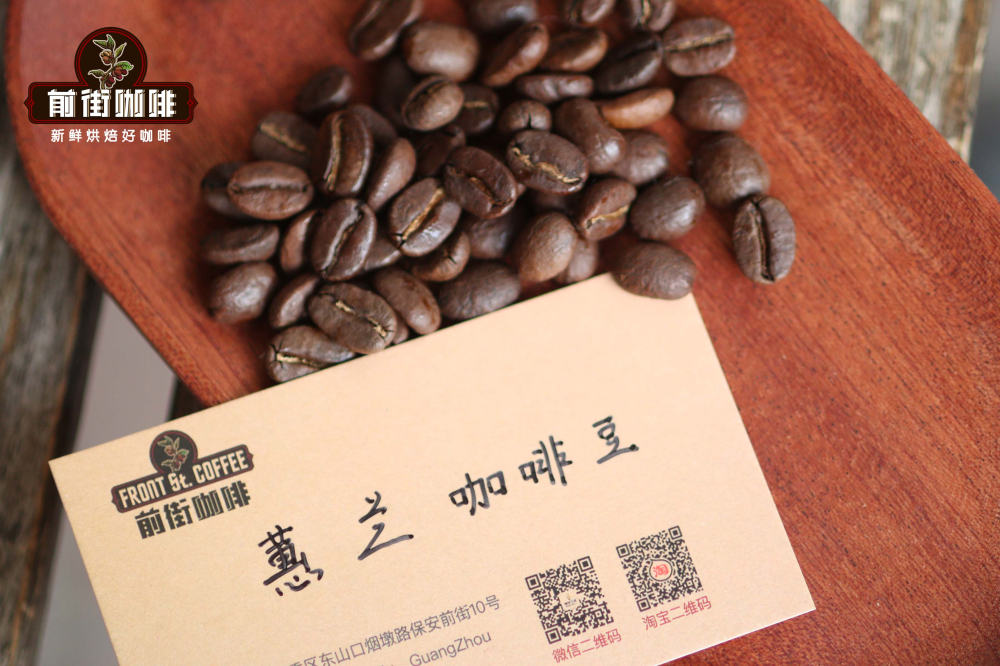
The single-origin and espresso commercial coffee beans roasted by Front Street Coffee, including Yirgacheffe coffee, Kenya AA coffee, Panama Butterfly coffee, etc., are fully guaranteed in brand and quality and are suitable for brewing with various equipment. More importantly, the cost-effectiveness is extremely high—a half-pound 227-gram bag costs only about 80 to 90 yuan. Calculated at 15 grams of grounds per cup of pour-over coffee, one bag can make 15 cups of coffee, and the cost per cup of single-origin coffee is only about 6 yuan. For cafés that normally sell a cup for thirty or forty yuan, the cost-effectiveness can be said to be extremely high.
The above content is compiled by CoffeeHunters, a coffee news website.


