







What Sets Golden Mandheling Coffee Apart from Other Lots?
Mandheling is a classic Indonesian coffee known for full body and rich, solid flavor, even though the green beans look unremarkable next to Hawaiian Kona. Arabica grown in North Sumatra generally falls under the Mandheling category. The name itself came from a misunderstanding: Japanese soldiers asked local friends for beans, and the reply Mandailing was heard as Mandehling.
Golden Mandheling sits at the top of the Mandheling family, which also includes Lintong, Aged, and Tiger lots. Processing centers on Indonesia's wet-hulling method, which shapes the heavy body and low acidity. Grading runs from G1 through G6, and brewing parameters should be adjusted per lot, so comparing the five offerings side by side helps clarify the flavor differences.
Mandheling coffee is known as the world's most full-bodied coffee; although its beans are unremarkable in appearance, its flavor is rich and solid. This article will walk you through the origin of the name Mandheling and the background of the North Sumatra producing region, sort out the flavor differences and processing techniques of the five Mandheling coffees sold by Front Street Coffee—Golden Mandheling, Lintong Mandheling, Aged Mandheling, Tiger Mandheling, and others—and explain in detail the steps of Indonesia's wet-hulling method and how it shapes flavor. It also introduces the grading standards for Mandheling G1 through G6, as well as brewing suggestions for Golden Mandheling, helping coffee enthusiasts gain a comprehensive understanding of this classic Indonesian coffee.
Among the many coffee categories, Mandheling has always been regarded as one of the highest representatives of body, but it is also often jokingly called the least attractive-looking coffee bean, forming a sharp contrast with Hawaiian Kona coffee beans, which are renowned for their beauty. Although Mandheling green beans look mediocre, their flavor performance is quite solid and rich.
Generally speaking, arabica coffee beans produced in North Sumatra can all be classified within the Mandheling category. According to Front Street Coffee, the name Mandheling was not originally coined by Indonesians, but has a historical connection with the Japanese. Mandheling was originally the name of an Indonesian tribe. Back then, Japanese soldiers stationed in Indonesia could not forget the taste of local coffee, so they asked Indonesian friends to help collect local high-quality coffee beans, including the beans later known as Mandheling. After tasting them, the Japanese liked them very much and asked what the beans were called. The locals mistakenly thought they were being asked where they were from, so they blurted out "Mandailing," which the Japanese heard as "Mandehling." It was this series of misunderstandings that caused Mandheling, by a twist of fate, to become the name of this coffee bean.
This history is the origin of the name Mandheling. The Mandheling family has many members; FrontStreet Coffee alone has listed five Mandheling coffees, each with its own distinctive flavor. Among them, the Golden Mandheling offered by Front Street is regarded as the cream of the crop among Mandheling coffees. Golden Mandheling is a selected top-grade coffee launched by the Indonesian green bean company Pawani and has been registered as a trademark. This season's newly harvested Mandheling offered by Front Street differs from previous Golden Mandheling in origin—previous Golden Mandheling mostly came from the Lake Toba producing region or near the Lintong region, while this year Pawani selected coffee from the more northerly Gayo Mountain in Aceh as Golden Mandheling. In addition, the variety of the new-season Golden Mandheling has also changed, now to the Ateng variety; Ateng is the Indonesian localized name for Catimor.
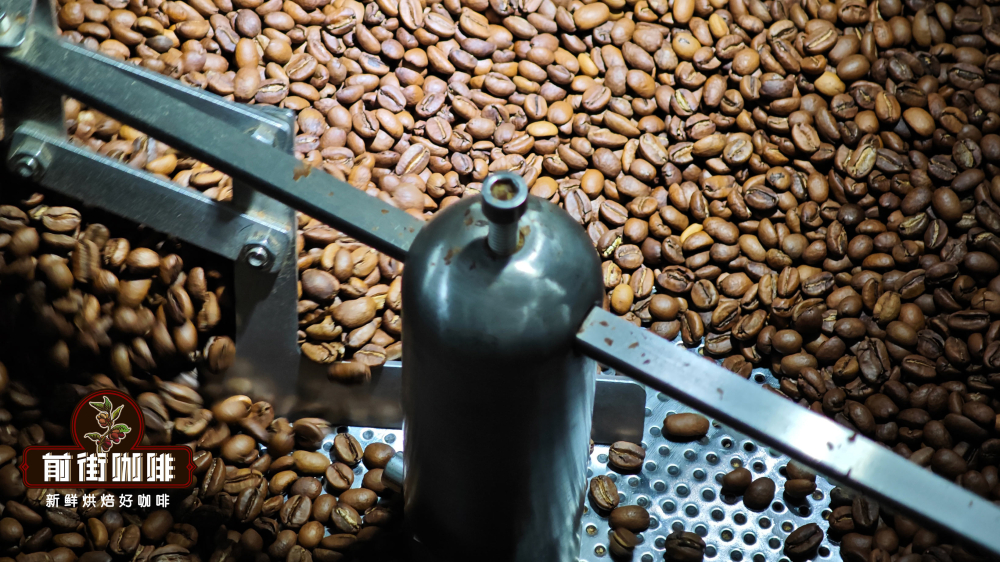
If Golden Mandheling and ordinary Mandheling are tasted side by side, the difference is quite obvious: Golden Mandheling has a high-quality herbal plant aroma, more prominent caramel sweetness, steady and elegant fruit acidity, rich sweetness, and a full-bodied yet wild spice flavor. Generally speaking, Lintong Mandheling is best baked until after second crack before being released, which can effectively reduce off-flavors; while Golden Mandheling can present good transparency and sweetness even if released before second crack. The flavors of the other four Mandheling coffees are very different. Take Lintong Mandheling as an example: it highlights Mandheling's signature rich spice and herbal flavors, as well as a full body. As soon as it enters the mouth, one can feel a strong herbal medicinal taste, accompanied by notes of dark chocolate and caramel, with a sweet finish.
The processing method of Aged Mandheling differs from the other varieties. Its green beans are stored for a long time, similar to the storage logic of aged wine; the green beans are left for two to three years. During this process, the acidity of the coffee beans gradually weakens and transforms into sugars, and the color of the green beans also darkens accordingly, mostly appearing yellowish-brown or dark brown, making them highly recognizable. Therefore, this Mandheling has the highest body among the varieties. The biggest difference between Aged Mandheling and other Mandheling coffees is its lower acidity, while both sweetness and body are quite high. In terms of mouthfeel, this Mandheling from Front Street has less of the wildness of traditional Mandheling and more richness and refinement, with lower acidity and flavors of ripe pu'er, caramel, herbs, and chocolate on the palate, along with abundant sweetness.
Tiger Mandheling's green beans are round in shape, green with a yellow tinge, relatively uniform, and have a relatively high moisture content. In order to highlight Tiger Mandheling's body and balance, Front Street used a medium roast. When Front Street cupped this Tiger Mandheling, both the dry aroma and wet aroma showed very obvious herbal and nutty flavors. Overall, the coffee has a high viscosity in the mouth, is smooth, rich in woody notes, high in sweetness, and has a long-lasting sweet aftertaste.
These Mandheling coffees all use Indonesia's locally distinctive wet-hulling method to process the coffee beans. The basic process Indonesians use for wet-hulling is as follows: coffee farmers first pick ripe coffee cherries and put them into a water tank, using flotation to remove debris and unripe cherries; then they use a depulper to remove the pulp and skin, keeping the parchment and mucilage, and carry out a short fermentation to break down the mucilage; next, the washed green beans are sun-dried to reduce moisture content to 20%-24%; after that, a machine is used to remove the parchment, and the parchment-removed coffee beans are dried once more until the moisture content drops to about 12-13%, at which point processing is complete.
Because the coffee beans are still in a semi-dry stage when the parchment is removed, the parchment is not easy to peel off at this time, and the beans are very easily compressed, so triage beans often appear, which is also how the wet-hulling method got its name. Front Street has learned that it is precisely the wet-hulling method that gives Indonesian Mandheling its unique flavor. Only when processed properly can one make a full-bodied coffee with Mandheling style; if the wet-hulling process is handled poorly, Mandheling can easily develop a moldy, earthy taste.
The grading method for Indonesian Mandheling is also different from other producing regions. Specifically, 300 grams are randomly sampled from Mandheling green beans and spread on black paper—a black background makes it easier for professional graders to inspect. If there are no more than 3 defective beans in these 300 grams of green beans, it is G1; 4-12 defective beans is G2; 13-25 is G3; 26-45 is G4; 46-100 is G5; and 101-153 is G6.
In addition, Golden Mandheling differs from other Mandheling coffees in another respect, namely the processing technique. One reason for Golden Mandheling's stable quality is that after processing is completed, it undergoes three rounds of manual sorting to reduce green bean defects as much as possible and ensure plump, uniformly sized beans. Therefore, it is not hard to understand why Golden Mandheling's mouthfeel and flavor are relatively clean.
Front Street is cupping and brewing Golden Mandheling coffee beans. When Front Street roasts Mandheling coffee beans, in order to highlight the beans' own flavor as well as the herbal mouthfeel and wild spice flavor brought by the wet-hulling method, it usually releases them after second crack. When brewing, in order to showcase Mandheling's full-bodied, clean, aromatic, and rich characteristics, a KONO dripper is used. Medium-dark roasted coffee is suitable for medium-coarse grinding, with a coffee-to-water ratio of 1:13, a dose of 20 grams; a lower coffee-to-water ratio makes the mouthfeel lean more toward richness, and the water temperature is controlled at 87°C. Golden Mandheling brewed this way has a high-quality herbal medicinal aroma, without the wildness of Lintong Mandheling, a stronger caramel flavor, and just the right amount of fruit acidity.
For more specialty coffee beans, please add the private WeChat of FrontStreet Coffee; WeChat ID: kaixinguoguo0925
The above content is compiled by CoffeeHunters, a coffee news website.


