







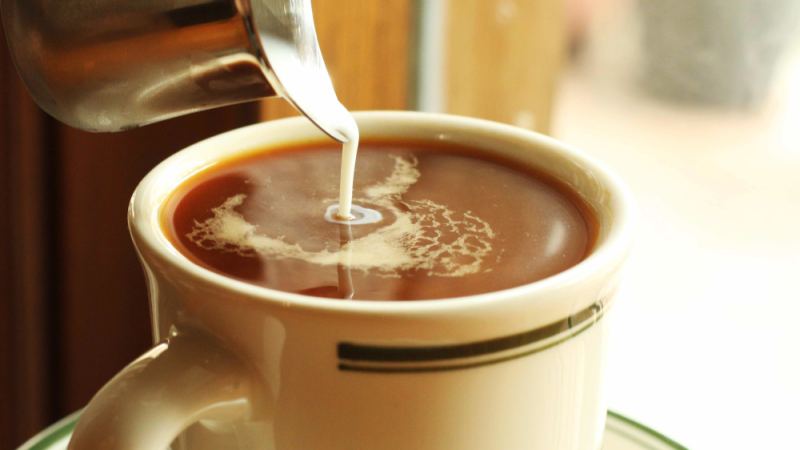
Does adding milk to pour-over coffee actually work?
Yes, milk can be added to pour-over coffee, and the practice dates back to 17th-century France, where it was known as café au lait and made with a pour-over-style base mixed with milk at roughly a 1:1 ratio. The result depends on the roast: medium-dark beans bring nutty and caramel notes that blend into a balanced, buttery, chocolate-like cup.
Medium-light roasted coffee, by contrast, tends to lose its acidity to milk and can taste like diluted sour milk. The café au lait method later spread to Japan, where a more concentrated extraction style developed. For anyone exploring arab coffee traditions, this history shows that milk coffee long predates espresso-based drinks.
Whether pour-over coffee can be mixed with milk is a topic debated by many coffee enthusiasts. In fact, this way of drinking was already popular in 17th-century France, known as "Café Au Lait," translated in China as "欧蕾咖啡" (Café au Lait). Its coffee base is similar to pour-over, mixed with milk at a 1:1 ratio, and later spread to Japan where a highly concentrated extraction version evolved. The key to whether adding milk tastes good lies in the roast level: medium-dark roasted beans carry nutty and caramel notes, and when combined with milk they form a balanced, buttery, chocolate-like flavor; whereas medium-light roasted acidic coffee is easily masked by milk, turning into diluted sour milk. This article will trace this history and, using Front Street PWN Golden Mandheling as an example, fully demonstrate the process of making a cup of café au lait and the tasting experience.
For more specialty coffee knowledge, please follow our WeChat public account: Front Street Coffee (FrontStreet Coffee)
"Boss!! A cup of pour-over coffee, with some milk!"
When faced with this kind of ordering scenario, how would you respond?
Pour-over coffee with milk?
These days, when people talk about milk coffee, the first thing that comes to mind is usually espresso with milk added—latte and cappuccino are already deeply ingrained in people's minds. Once someone suggests adding milk to pour-over coffee, most friends around them will feel puzzled: can pour-over diluted with milk still taste good? In fact, this way of drinking existed long before espresso appeared.
Rewind to the 17th century, when a coffee called "Café Au Lait" was widely popular on the streets of France, literally meaning "coffee and milk." In everyday French family life, breakfast was inseparable from a cup of coffee, but drinking it straight was rather stimulating, so people added milk to neutralize it, and this practice gradually spread.
This milk coffee that swept France is translated in China as "欧蕾咖啡" (Café au Lait), a transliteration of "Au Lait." The base of café au lait is similar to pour-over, using a pour-filter or immersion method to extract the coffee liquid.
Both methods use flannel cloth as the filtering tool: the pour-filter method involves putting coffee grounds into the flannel and repeatedly rinsing with hot water; the immersion method first soaks the coffee grounds, then uses the flannel to filter out the grounds. After extracting the coffee liquid, it is poured into a cup together with milk at a 1:1 ratio, and the café au lait is complete.
Later, this "French-style milk coffee" way of drinking spread to Japan. After a series of research and experiments by locals, a Japanese-style café au lait evolved—using the slow-extraction flannel pour-over method to increase coffee concentration, then using this concentrated coffee as a base, mixing in an equal proportion of milk to make the "Japanese version" of café au lait.
From this, it can be seen that pour-over with milk is not some bizarre operation, but has historical basis. However, some friends still believe: pour-over coffee is all about the original flavor of the coffee—doesn't adding milk destroy this concept?
Actually, that's not the case. Front Street would like to share a concept with everyone: the subject of pursuing the original flavor of coffee lies in the coffee beans. In other words, the flavor concept depends on the coffee beans, not on pour-over coffee itself. Pour-over is merely one extraction method for showcasing the flavor characteristics of coffee beans; French press and siphon also extract "the original flavor of coffee," so this is not exclusive to pour-over—pour-over and coffee beans should be viewed separately.
Furthermore, everyone's preferences differ, and we cannot and should not require everyone to reach a uniform preference. Therefore, what is worth discussing is not whether pour-over can have milk added, but how to add milk to pour-over so it tastes good.
Ultimately, this is actually a matter of roast level. Medium-dark roasted coffee itself carries a rich bitterness, and after adding milk the bitterness is reduced, achieving overall balance, with coffee and milk not masking each other. So for pour-over with milk, it is recommended to purchase medium-dark roasted Front Street PWN Golden Mandheling, Front Street Colombia Huila, Front Street Queen's Estate, and the Front Street espresso blend series. These beans carry rich nutty and caramel aromas, with a mellow and full-bodied mouthfeel, and when paired with milk they present buttery and chocolate flavors.

But according to the current mainstream of pour-over coffee, medium-light roasted acidic tones dominate. They lack the rich bitterness of medium-dark roasts, and after adding milk the flavor is hard to neutralize, easily overpowered by milk, turning into a cup of slightly sour diluted milk—so the degree of pairing is naturally very low.
So today, Front Street will give it a try, to see what different experience this cup of "café au lait" made with dark-roasted coffee will bring.
Experiment Preparation
Coffee beans: 15g Front Street PWN Golden Mandheling
Grind size: Front Street uses an EK43 at a grind setting of 10.5, with a 75% passing rate through a No. 20 sieve.
Coffee-to-water ratio: 1:9 (a more concentrated coffee liquid needs to be extracted, so the coffee-to-water ratio is lowered)
Water temperature: 90°
Filter: flannel cloth
Brewing method: Japanese volcano pour (less water, requiring extended extraction time to increase extraction)
Milk: 80°C, 100ml
Experiment Begins
1. First preheat the milk to 65–70°C and set aside.
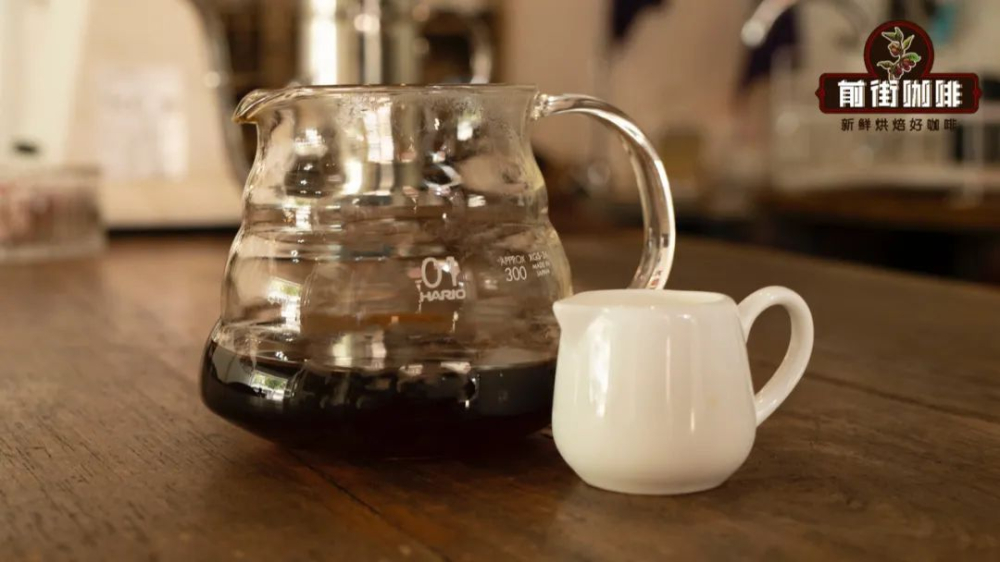
2. Place the flannel cloth over a container and pour in the coffee grounds.
2. Pour in 30ml of hot water for a 30-second bloom.
3. Draw small circles in the center, pouring a small amount of water; after the water level drops, draw small circles and pour again, repeating until the target amount of water is poured.
4. Pour the extracted coffee into any container.
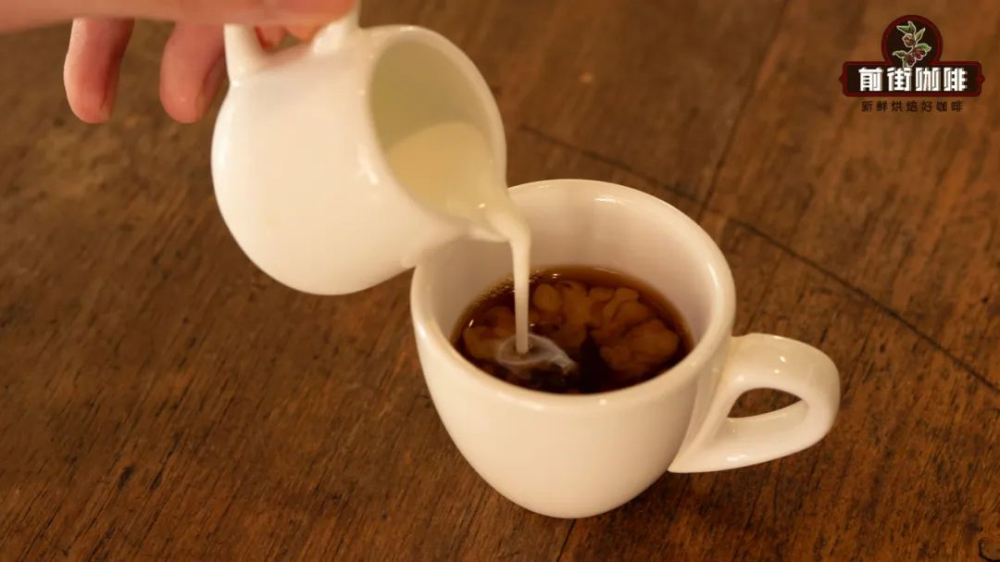
5. Pour an equal amount of milk into the cup. (1:1)

6. The café au lait is complete.
Tasting time: with one sip you can taste the sweetness of milk and the toffee-like sweetness evolved from Mandheling's chocolate aroma, giving off a soft fragrance. In terms of mouthfeel, with the addition of milk it will be more full-bodied than pour-over coffee; the flavor is not masked by milk, just somewhat weaker. For those accustomed to the concentration of pour-over coffee and espresso, it will taste rather thin, so it is more suitable for people who cannot drink strong coffee.
The above content is compiled by CoffeeHunters, a coffee news website.


