







Which Coffee Beans in Starbucks-Style French Press Brewing Work Best?
A French press needs no paper filter, which makes it simple to use, but it demands more from bean quality and roast level. Medium-dark and medium roasts hold up well because the metal mesh lets oils and fine particles through into the cup. The article lists a full seven-step brewing process, covering water temperature, coffee-to-water ratio, and how hard to press the filter.
The device consists of a heat-resistant glass carafe and a metal filter mesh with a plunger rod, and it originated in France around 1850. Because the carafe is simply a container for hot water and grounds, the filter mesh largely decides the final taste, though bean quality and water temperature also matter. Single-origin beans from different regions give distinct flavor directions.
The French press is easy to use and requires no paper filter, making it the go-to choice for many coffee lovers just getting started. But it actually has quite a few requirements when it comes to bean quality and roast level. This article covers the structural characteristics of the French press and the types of coffee beans that suit it best, and lays out the complete seven-step Starbucks-style French press brewing process, with specific references from water temperature and coffee-to-water ratio to the force used when pressing down the filter. It also draws on several Front Street single-origin beans to present different flavor directions for medium-dark and medium roasts, helping readers pick beans according to their preferred taste so they can consistently make a rich, full-bodied French press coffee at home.
These days coffee has long since become part of everyday life, and people's expectations for it have risen accordingly. From initially trying it out in cafés to later brewing it at home themselves, choosing the right equipment has become a source of confusion for many. Front Street's view is this: pour-over coffee has quite a few small details to pay attention to during operation, so if you're just starting out, you might want to try a device jokingly nicknamed the "lazy person's brewing method." That device is the French press.
Why has it earned the title of lazy person's equipment?
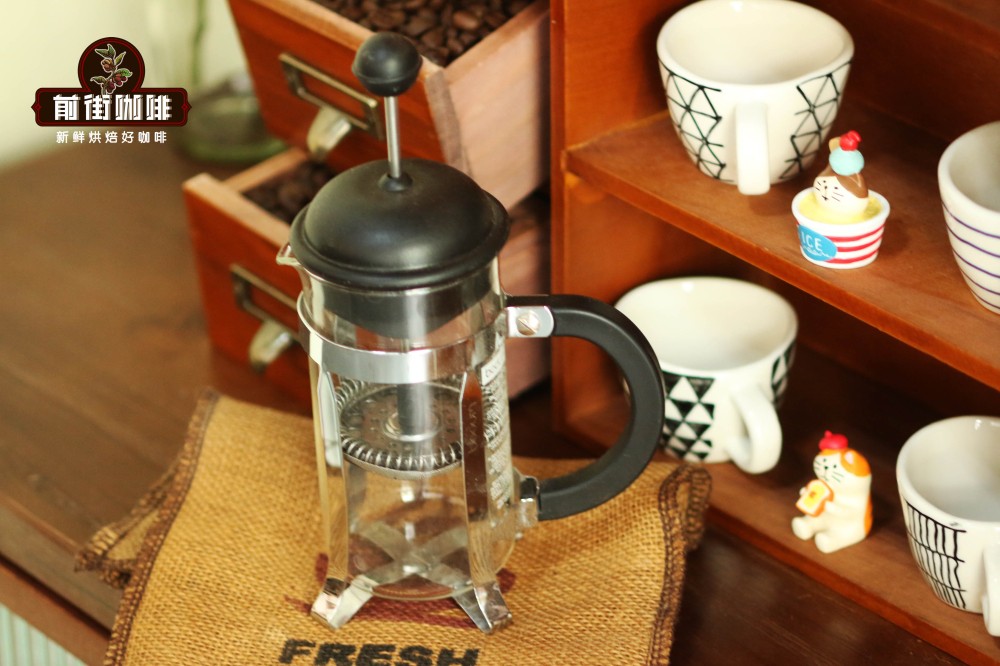
Front Street's explanation is this: the French press brewing process is quite effortless, and at the same time it can bring out the best in good beans as much as possible. Its construction is not complicated—just the carafe and the filter mesh—and making coffee with it doesn't require much auxiliary equipment. The carafe can simply be seen as a container holding hot water and coffee grounds. What really determines the taste of the final cup is that filter mesh, though bean quality and water temperature also play decisive roles. It is precisely for this reason that the French press has long been regarded as the representative device for lazy-person coffee.
It can do more than brew coffee—it can also be used to make tea. The French press is called French Press in English, and is also known as a French press pot. It originated in France around 1850, and is composed of a heat-resistant glass carafe and a metal filter mesh with a plunger rod, making it a very simply structured brewing tool.
Coffee beans come in dark roast, light roast, and medium-dark roast. Regardless of roast level, pour-over can basically bring out their best state. So is the French press the same? Or does it have separate requirements for beans?
Front Street's view is this: as far as the French press is concerned, bean quality is directly reflected in the taste, so when brewing with it, it's best to choose specialty-grade, high-quality coffee beans. What sets the French press apart from other devices is that it doesn't need a filter cloth or paper filter. The filter mesh has relatively large pores, which can keep coarser coffee grounds out while leaving behind a large amount of coffee oils, increasing body and fully presenting the bean's original flavors. In other words, the darker the roast, the lower the acidity, the more pronounced the bitterness, and the faster the extraction. In theory, beans of any roast level can be made in a French press, but in practice, the French press is better suited to medium-dark and dark roasted coffee beans.
Oils affect the richness of coffee's aroma and flavor, which also confirms from another angle: coffee made in a French press with medium to dark roasted beans has a fuller aroma and a more intense taste. You can choose Front Street PWN Golden Mandheling, Front Street Brazil Queen's Estate, or Front Street Colombia Huila—the French press coffee they make will carry notes of chocolate, caramel, and cream.
Put another way, the French press is an immersion-style extraction, which makes it easier to bring out the finish and adds a tea-like quality and fermented aroma to the coffee. If you prefer this kind of flavor, you can go for medium-roasted beans with some fruit acidity, such as Front Street Strawberry Candy, Front Street Washed Butterfly, and Front Street Mozart.
So what's the trick to brewing French press coffee at Starbucks, the place everyone has heard of or frequented? Below, Front Street will walk you through it and brew a pot of French press coffee to taste.
Step one: Start boiling the water first.
Step two: Grind the beans. The French press needs relatively coarse particles, that is, medium grind. Front Street recommends keeping the coffee-to-water ratio between 1:15 and 1:16.
Step three: Place the French press on an electronic scale, pour in 120 grams of hot water and start timing, pouring the water directly at the center.
Step four: Use a wooden stirring spoon or chopsticks to gently stir the coffee grounds back and forth, with a motion a bit like rowing a boat. At this point the coffee grounds will gradually expand, and the whole process takes about 30 seconds—that is, a 30-second bloom.
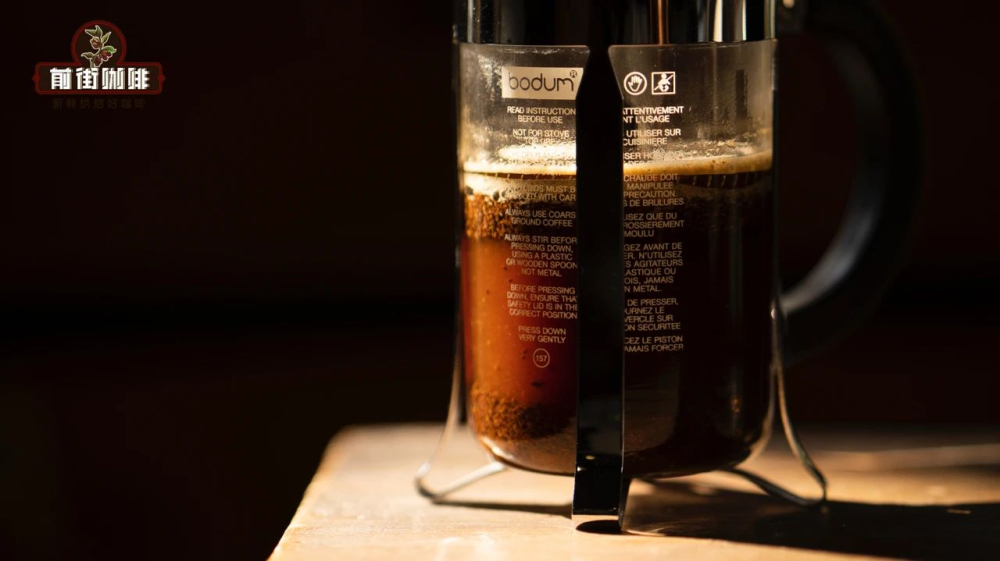
Step five: After the coffee grounds have expanded, add the remaining water, then put on the lid. At this point, don't rush to press down the filter mesh—let it sit for four minutes, and the time cannot be shortened.
Step six: Remove the French press from the electronic scale and slowly press the filter mesh downward. The force needed to press down is roughly between 7 and 9 kilograms. If you can barely feel any resistance, the coffee grounds are ground too coarse; if the resistance is too great, they are ground too fine. Once the filter mesh is pressed all the way down, pour the coffee out immediately, or it will lead to over-extraction.
Step seven: Time to enjoy. Pour the coffee into a warmed mug, and rinse your mouth before drinking so you can taste the coffee's true flavor. The best time to drink French press coffee is within 20 minutes. So when making coffee with a French press, if you plan to finish it within 10 minutes, either roast level works; if you want to drink it over 20 minutes, it's recommended to use dark roasted beans.
That's the complete French press process. If there's anything still unclear, you can consult the baristas at Front Street—Front Street carries more than 50 single-origin coffee beans from different regions, enough to satisfy your curiosity and exploration of coffee.
The above content is compiled by CoffeeHunters, a coffee news website.


