







What Happens to Green Coffee Beans During Roasting?
Green coffee beans hold more than a thousand aromatic compounds along with sugars and lipids, and roasting is what releases them. Heat triggers Maillard reactions and caramelization while the bean fibers gradually carbonize. Roast levels are classified as light, medium and dark based on that carbonization and surface color, and each level produces a distinct balance of acidity and bitterness.
Light roasts keep more precursor aroma compounds, so they taste bright and acidic with weak bitterness and clear regional character. Medium roasts land in the middle, with nutty and creamy notes, while dark roasts turn rich, with bitterness and sweetness intertwined. Health considerations also come into play, since darker roasting reduces some compounds in the bean.
Green coffee beans can only release those thousand-plus aromatic compounds and become a fine cup after roasting. During heating, substances such as sugars and lipids undergo Maillard reactions and caramelization, while the coffee bean fibers gradually carbonize, ultimately approaching a charcoal-like state. Based on the degree of carbonization and surface color, the industry classifies roast levels into three major categories: light, medium, and dark. Under different roast levels, the retention of precursor aroma compounds and the degree of fiber caramelization in coffee beans vary, resulting in distinctly different acid-bitterness balance and regional flavors. Light roasts are bright and acidic, medium roasts are balanced with nutty and creamy notes, and dark roasts are rich with intertwined bitterness and sweetness. This article will start from the principles of chemical reactions, dissect the flavor characteristics of the three roast levels one by one, and recommend representative Front Street specialty coffee beans for each roast level. It will also explore which roast level is more in line with health considerations, providing a reference for coffee lovers' daily purchases.
Turning coffee fruit into that aromatic cup in a café, roasting is an indispensable step. The coffee bean itself contains over a thousand aromatic substances, along with sugars and lipids. Under heat, these substances undergo a series of complex chemical changes, such as sugars triggering Maillard reactions and caramelization at high temperatures. As the temperature continues to rise, the fiber structure inside the coffee bean gradually carbonizes, and in extreme cases, it even turns completely into a lump of charcoal.
Since different temperatures correspond to different carbonization processes, the flavors ultimately displayed by coffee beans vary greatly. Based on the degree of fiber carbonization and the depth of the bean surface color, people classify roasting into several levels, commonly including light roast, medium roast, and dark roast. Each roast level corresponds to a unique flavor direction.
In light-roasted coffee beans, the retention rate of precursor aroma substances inside is quite high, so the extracted coffee often has prominent acidity and weak bitterness, fully showcasing the distinctive regional flavors of the origin. Entering the medium roast stage, the fibers inside the bean begin to partially caramelize, and flavors gradually reveal notes of roasted foods like nuts, cream, and chocolate. For dark-roasted beans, the degree of fiber carbonization is the highest, acidity is greatly reduced, and bitterness becomes dominant. This is exactly the rich mouthfeel favored by many seasoned coffee enthusiasts, while also releasing intense aromas like dark chocolate and caramel.
Next, according to the three roast levels, we will recommend several representative specialty coffee beans for everyone:
For light-roasted coffee, you can prioritize Front Street Fruit Ding Ding (green tea and jasmine flavors), Front Street Red Label Geisha (floral and strawberry flavors), and Front Street Little Tomato (berry and plum flavors).
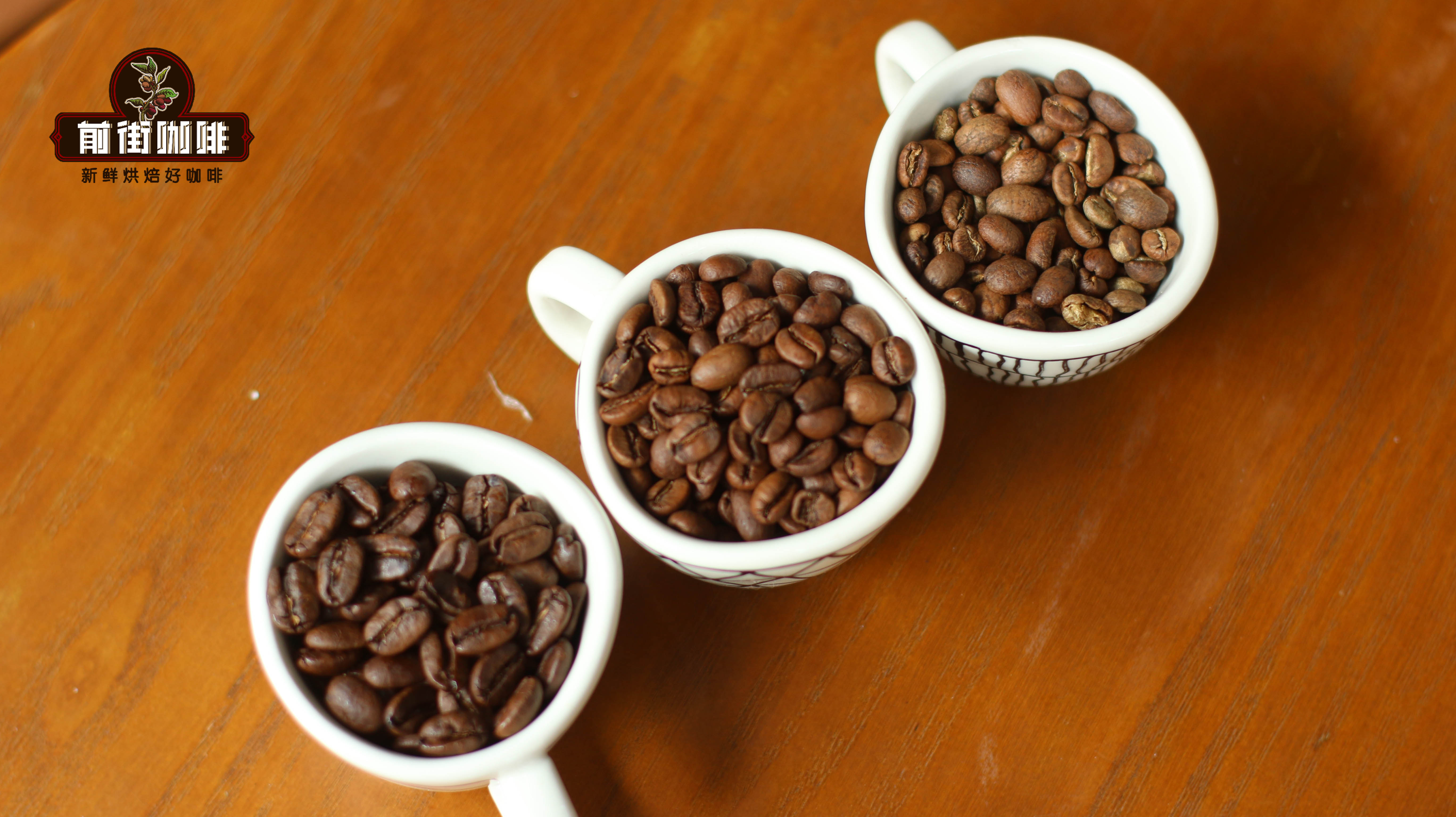
For medium-roasted coffee options, we recommend Front Street Strawberry Candy, Front Street Xizhua (passion fruit and grape flavors), and Bird of Paradise (nut and toasted bread flavors).
For dark-roasted coffee, you might try Front Street PWN Golden Mandheling (herbal, pine, and caramel flavors), and Front Street Queen's Estate (creamy peanut flavors).
The above content is compiled by CoffeeHunters, a coffee news website.


