







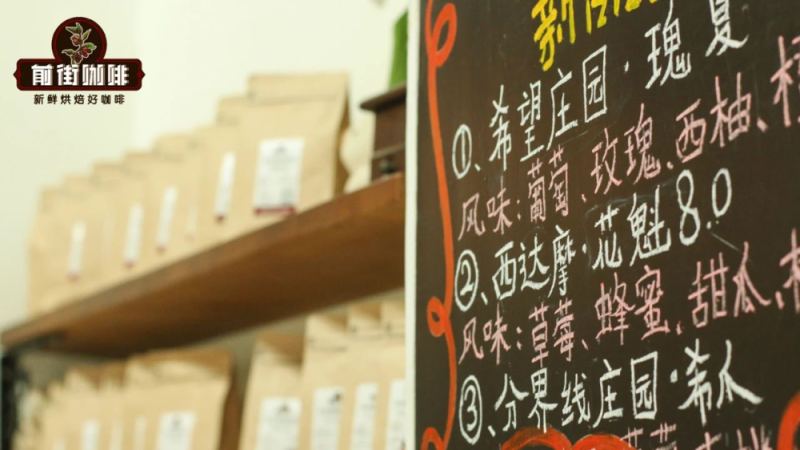
Huakui, with its rich tropical fruit notes and high cost-performance ratio, has become a daily staple for many coffee lovers. But do you know why this bean needs a new "version number" every year? From the sun-dried G1 of the Hambela region, to the meticulous management of the Buku Abel processing station, to the ever-changing batch flavors year by year, the story of Huakui is far richer than imagined. In this article, Front Street will guide you through Huakui's origin background, flavor evolution, and share detailed insights on roasting curve adjustments and pour-over brewing suggestions, helping you better present the unique charm of this Ethiopian star bean.
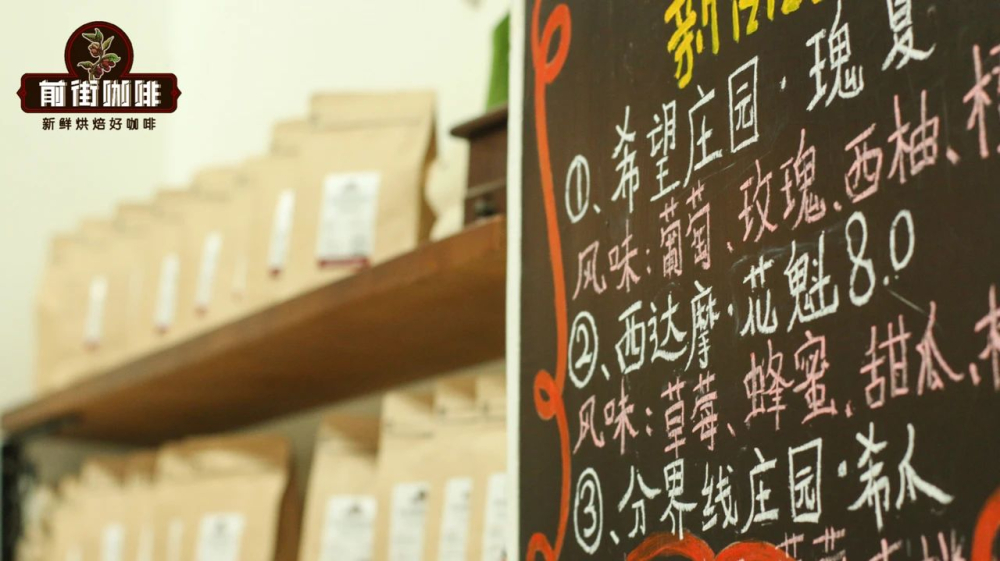
Walking into a Front Street store, what first catches the eye is often the latest seasonal Huakui coffee. With its delicate floral and fruity notes and outstanding cost-performance ratio, it has become the top choice for many people's daily consumption. Today, Front Street will chat with you about this coffee bean that is widely popular in China.
For more specialty coffee knowledge, please follow our WeChat official account: Front Street Coffee (FrontStreet Coffee)
Generally speaking, coffee bean naming follows certain patterns, and once determined, it is rarely changed. For example, Geisha refers to the variety, Blue Mountain represents the origin, and Yutodin is the name of a processing station. However, Huakui is an exception—it's like Apple's iPhone, requiring a new "version number" every year before it can be released. What's the reason behind this?
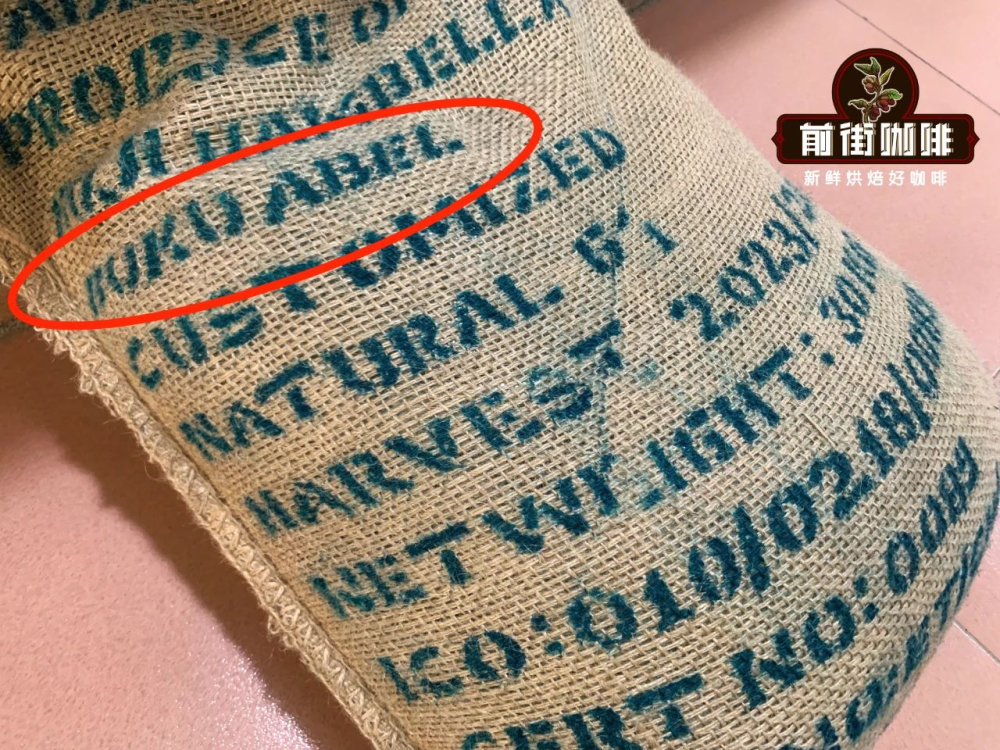
Actually, before this bean was called "Huakui," it had only one English name: "Hambella," which refers to the sun-dried G1 coffee beans from the Hambela region, while "Buku Abel" is more precise traceability information.
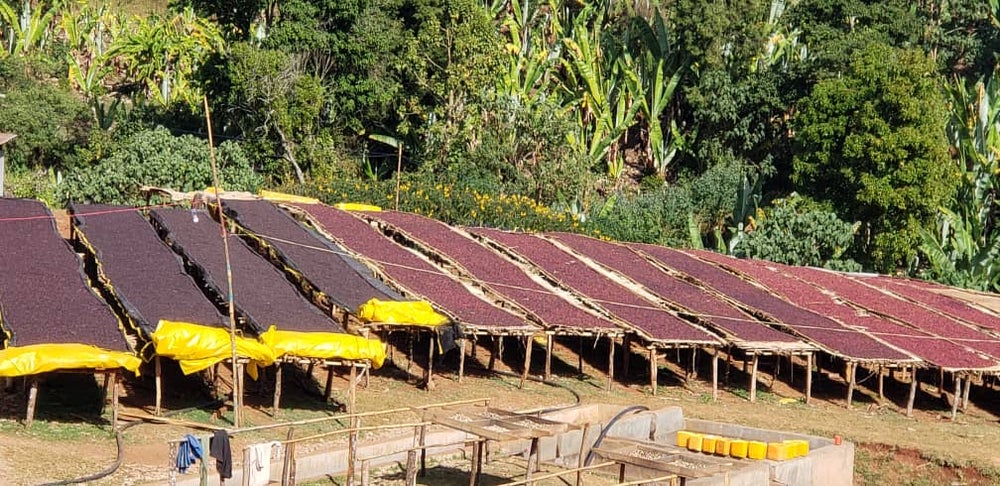
During the coffee harvest season from December to January each year, the Buku Abel processing station arranges for farmers to pick only fully red coffee cherries with a sugar content of at least 30. The selected fruits are placed on African raised beds for sun-drying. Due to the extreme temperature difference between day and night in the area, coffee farmers take shade measures at noon to avoid excessive fermentation caused by high temperatures; at night, they cover with plastic sheets to prevent sudden rain showers. Constant turning throughout the day not only allows the fruits to dry evenly but also prevents sunburn or unpleasant fermentation flavors. After about 18 days of sun-drying, the moisture content of the green coffee beans drops to around 13%, and the husks can be removed by machine.
In 2017, after "Huakui" rose to fame overnight, market demand surged. To meet supply, DW Company added up to 5 independent specialty coffee drying stations in Hambella Wamena Wereda, all located within the core production area of Dimtu town. In addition to the original Buku Abel, four other small villages—Buku Saysay, Haro Soresa, Tirtiro Goye, and Seke Bokosa—also joined the production of sun-dried coffee beans. It is reported that at this point, DW Company's annual production of "Huakui" had reached tens of millions of tons.
To further increase the yield of "Huakui," in addition to adding processing stations, DW Company also expanded the coffee cherry collection range considerably. Some coffee cherries grown in neighboring villages may also be sent to these processing stations for processing, then exported as "Hambella G1." In other words, as long as it is Hambella sun-dried G1 coffee beans processed from these five villages, we can call it "Huakui."
What is the flavor of Huakui?
Huakui—if we look at it purely from the literal meaning, we might think it's a coffee "overflowing with floral fragrance." Actually, that's not the case. Huakui's floral notes are not particularly intense; instead, the fruit aromas are especially prominent, such as creamy strawberry, mango, jackfruit, citrus, blueberry, etc. It possesses the mature tropical fruit flavors unique to Sidamo sun-dried beans, often leaving a deep impression. Moreover, what won "Huakui" first place in that year's TOH green bean competition was precisely this rich berry aroma.
But as everyone knows, coffee is essentially an economic crop. Its annual yield and quality are first affected by factors such as climate, rainfall, altitude, soil, fertilization, and weeding, and then vary in flavor profile due to differences in processing details (sunlight duration, temperature, humidity). Huakui is naturally no exception. Therefore, the Huakui beans produced each year will more or less differ in taste compared to the previous year.
Since the 2018 harvest season, Huakui (sun-dried G1 coffee beans) from the same growing origin and the same processing station has already shown some changes in flavor. Through cupping at the time, Front Street found that although the 2018 and 2019 Huakui had flavors similar to the 2017 Huakui, they were not as good as the "first-generation Huakui" in terms of body, aftertaste, and other mouthfeel aspects.
Therefore, in order to continue selling this sun-dried coffee from Hambela while making some distinction from the original version, domestic green bean trading companies, based on calculations from 2017 onward, added an X.0 suffix to each subsequent year's batch. For example, the 2018 batch is called "Huakui 2.0," the 2019 batch is called "Huakui 3.0 and 3.1"... Last year's release was "Huakui 7.0," and so on. In this way, we can identify which year's batch the Huakui we bought belongs to through this suffix.
Front Street Coffee (FrontStreet Coffee): Sidamo · Huakui 8.0 Coffee Beans
Country: Ethiopia Region: Sidamo · Guji Zone Altitude: 2250–2350 meters Variety: Local heirloom varieties Processing Method: Sun-dried
Flavor: Floral, jackfruit, dried fruit, apricot, juicy
Front Street Coffee (FrontStreet Coffee) Roasting Suggestions
Front Street roasters first look at the flavor description provided by the green bean supplier, then check the bean's moisture content. The freshly received green beans have a faint fermented wine aroma, completely different from the grassy smell of regular green beans. In addition, Huakui green beans vary in size, with many being pointed at both ends (Ethiopia Heirloom). The moisture content is good, around 11%, but they are not the very hard SHB type. Due to the beans' high density and hardness, we start by extending the dehydration time in the early stage, then ramp up the temperature into first crack, trying to preserve the loss of floral and other small-molecule aromatic substances.
Roaster: Yangjia 800N semi-direct flame
After roasting and adjustments, the curve that Front Street Coffee (FrontStreet Coffee) was relatively satisfied with: Charge at 190°C, complete dehydration and turn yellow at nearly 6 minutes (yellow point at around 150–153°C). First crack begins at around 9 minutes 50 seconds (Huakui's first crack comes later than regular beans, and the cracking sound is very weak). For the development time after first crack, it is recommended to control it to no more than 1 minute 30 seconds, and no less than 1 minute. (It is suggested to open the damper wide and lower the heat to regulate speed.) Using a sampling spoon to smell the aroma, at around 193°C you can detect strawberry jam notes, and it's ready to drop. The total time is best controlled within 11 minutes.
Front Street Coffee (FrontStreet Coffee) Barista's Brewing Suggestions
To taste the rich aroma of Huakui, Front Street Coffee (FrontStreet Coffee) recommends brewing with freshly roasted coffee beans, as this preserves more of the coffee's aromatic substances. The coffee beans sold by Front Street are all freshly roasted within 5 days. Combined with the time needed for logistics, by the time customers receive the coffee, it is just within the optimal tasting period and can be brewed and enjoyed directly.
To bring out the aroma of high-altitude coffee beans, Front Street chooses a higher water temperature so that more aromatic substances in the coffee can be released. However, care must be taken to avoid over-extraction. Recommended brewing parameters:
Dripper: V60
Water temperature: 92–93°C
Grind size: Fine granulated sugar (80% passing rate on No. 20 standard sieve)
Coffee-to-water ratio: 1:15
Dose: 15 grams
Three-stage pouring: Wet the coffee bed with twice the amount of water as coffee grounds, forming a dome and blooming for 30s, then pour in a slow stream in circles from inside to outside until reaching 125g, pause, wait for the coffee bed to drop to half the dripper's height, then continue with the same slow stream for the third stage until 225g. Wait until all coffee liquid has filtered through, then remove the dripper. Total time is about 2 minutes.
After grinding the sun-dried Huakui 8.0, you can smell rich tropical fruit aromas and honey-like sweetness. On the palate, it offers abundant berry sweetness, complex aromas like passion fruit, a black tea-like mouthfeel, and a long, memorable finish.
The above content is compiled by CoffeeHunters, a coffee news website.


