







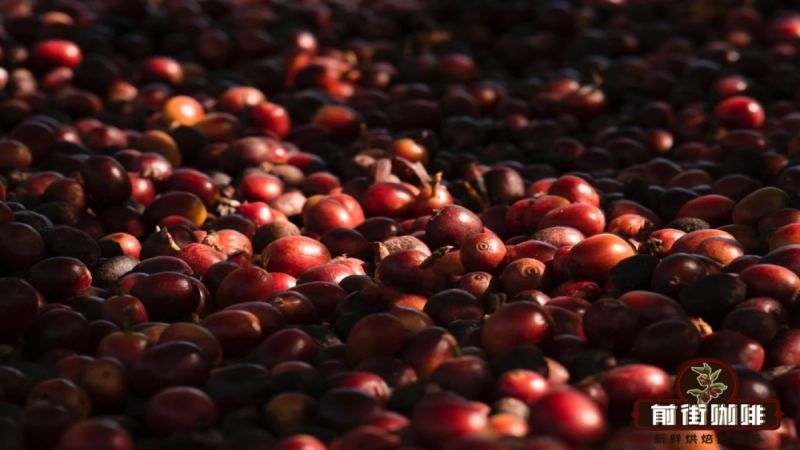
Is Baoshan Small-Bean Yunnan Coffee an Arabica Variety?
Baoshan small-bean coffee is Arabica. Coffee reached Yunnan in 1904, when a French missionary planted the first tree at Zhugula Village in Binchuan, and later seeds carried from Myanmar in 1937 opened the Baoshan growing areas around Lujiangba. Plantings moved from Typica and Bourbon to Catimor, which now dominates local fields and gives the cup its typical profile.
Bitterness in pour-over usually comes from extraction rather than the arabica variety itself. Water that is too hot, a grind that is too fine, or a long contact time pulls out more of the roast's bitter compounds. Yunnan coffee covers 98 percent of China's output, with Pu'er, Baoshan, Dehong and Lincang as the main areas, so the same origin can taste quite different depending on how it is brewed.
Yunnan coffee has come a long way from its former "cheap and low-quality" label, and today it frequently appears on specialty coffee shop menus, with Baoshan small-bean coffee being a representative example. Many people wonder: is Yunnan small-bean coffee actually Arabica? Why does it tend to taste bitter when brewed at home? From the perspective of Front Street Coffee, this article traces the century-long cultivation history of Yunnan coffee, from Typica and Bourbon to the replacement of varieties by Catimor, and then to the birth of Front Street 2013 Sun-Dried Typica, helping you understand the origins and flavor performance of Yunnan small-bean coffee, while also understanding the possible causes of bitterness in pour-over extraction, and helping coffee enthusiasts make clearer judgments when purchasing and brewing.
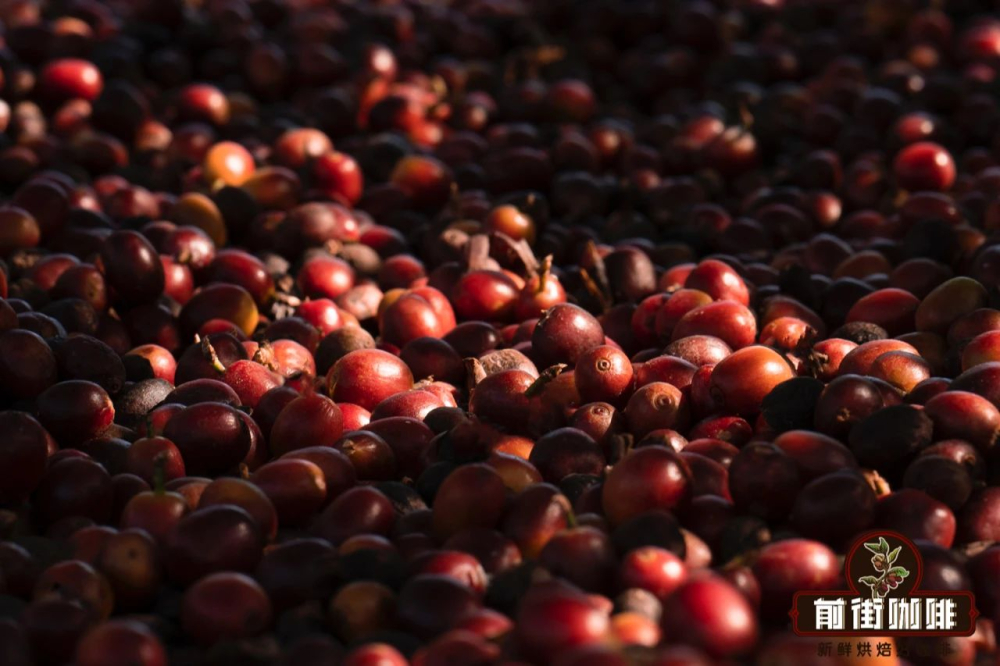
More than a decade ago, when Yunnan coffee was mentioned, many people still pictured the stereotype of "poor quality and low price," and some would even frown at the mere mention of it. But now, when walking into specialty coffee shops, Yunnan small-bean coffee appears more and more frequently, and some baristas even offer choices according to different flavor directions. Taking Front Street Coffee's bean list as an example, there are two single-origin beans from the Yunnan production area available for selection. So just how good is the quality of these Yunnan small-bean coffees? And how do they taste when brewed? Let Front Street guide you through them one by one below.
The Development of Yunnan's Coffee Industry
In 1904, French missionary Tian Deneng planted the first coffee tree in Zhugula Village, Binchuan, Yunnan. This is regarded as the starting point of coffee cultivation in Yunnan and has extended Yunnan's connection with coffee for more than a century.
In the 1950s and 1960s, the scale of coffee cultivation in Yunnan further expanded, and this was also the period when China truly began planting coffee on a large scale for commercial purposes. In 1952, after the founding of New China, under the leadership of agricultural academy expert Ma Guojin, coffee cultivation was officially rolled out on a large scale, with products mainly supplied to the Soviet Union. As early as 1937, patriotic overseas Chinese Mr. Liang Jinshan brought a batch of seeds back from Myanmar to Baoshan, opening up coffee planting areas in Baoshan's Lujiangba. At that time, the varieties planted in Yunnan all belonged to Typica and its variant Bourbon, and the planted area once reached as much as 50,000 mu.
However, not long after, global leaf rust swept through Yunnan, a large number of coffee trees died, and the planted area shrank sharply. By the 1980s, during the reform and opening up, Yunnan coffee gradually moved toward the international market. Around 1988, Nestlé and other foreign-funded enterprises established branches in China and supported Yunnan's coffee industry from multiple aspects. They not only introduced high-yield, disease-resistant varieties such as Catimor, but also promised to purchase Yunnan coffee beans as raw materials at the then-current U.S. futures prices. These actions both expanded the planted area and boosted the enthusiasm of coffee farmers, while also establishing Catimor's position in replacing the old Typica to become the main variety of Yunnan coffee.
In recent years, with the advancement of China's coffee consumption wave and society's attention to rural economy and sustainable development, coffee professionals from around the world have successively come to Yunnan, and Front Street has been among them. Everyone has continued to make efforts in pest and disease control, shade tree arrangement, soil and water conservation, planting altitude, and fresh fruit harvesting and post-processing methods, promoting the improvement of local coffee quality, and Yunnan coffee has gradually gained attention and recognition. Domestic and international brands such as Starbucks, Blue Bottle Coffee, Luckin, and Manner have successively launched products from the Yunnan production area, further broadening people's understanding of the flavor and quality of Yunnan coffee.
Compared with the past, more people today are willing to take the initiative to learn about Yunnan as a "new production area." Many customers who come to Front Street's store to drink pour-over coffee first ask whether there are Yunnan beans, which shows that the impression Yunnan coffee leaves on people is changing in a positive direction, and it is also steadily advancing on the path of specialization, striving for recognition from more coffee consumers.
So what exactly does "small-bean" refer to?
The so-called "small-bean" is actually the Arabica variety. Compared with the medium-bean coffee (Robusta) grown in Hainan in China, its fruit is smaller. Front Street also mentioned above that the coffee trees originally introduced to Yunnan all belonged to the two pure Arabica varieties, Typica and Bourbon. Arabica grown at high altitude has rich sweet and sour aromas and is widely recognized as a high-quality variety.
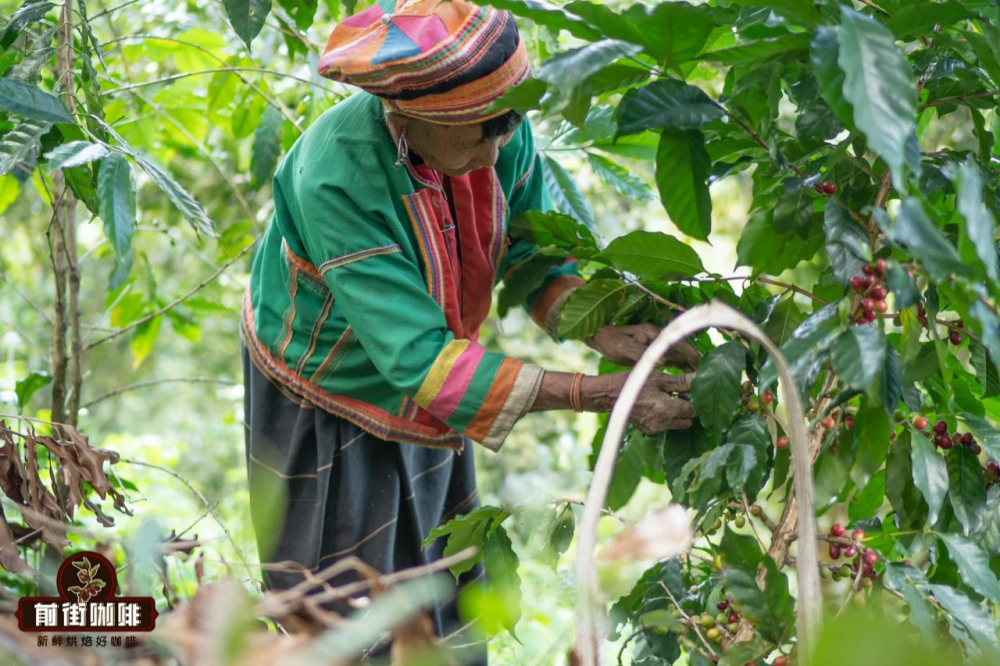
But these two varieties have very weak resistance and are susceptible to disease, and the fruit yield per plant is also relatively low. Therefore, most Yunnan farmers who depend on coffee for their livelihood switched to planting a higher-yielding variety: Catimor.
Although Catimor is classified as Arabica, from a genetic perspective it carries 25% Robusta ancestry. According to information reviewed by Front Street, Catimor "CIFC7963" is a hybrid variety bred by the Portuguese Coffee Rust Research Center (CIFC) to address coffee rust. This variety appears compact in tree shape, dwarf, with many branches and short fruiting nodes. It grows vigorously and has extremely strong vitality. Its most prominent characteristics are astonishing rust resistance and high yield.
Precisely because it inherits the genetic characteristics of Robusta, Catimor has strong disease resistance and high yield, and the surface of the roasted coffee beans is also relatively rich in oils. Front Street Yunnan Small Bean uses Catimor as an introductory representative. Although its flavor performance is not outstanding and its memorable points are not strong, after washed processing and medium roasting, it can still present a neutral and balanced profile: slight plum acidity, brown sugar sweetness, and caramel's slight bitterness all exist at the same time, making it suitable for beginners to try for the first time.
So besides Catimor, does Yunnan now also grow other small-bean varieties? Of course it does. The coffee trees selected and bred by Front Street in Lincang, Yunnan in 2013 are all the ancient variety Typica. After 5 to 6 years of cultivation, Front Street finally harvested the first batch of results in 2020 and processed them using the sun-dried method, naming them "Front Street 2013."
After the ripe coffee cherries are picked, Front Street uses sun-dried processing in order to enrich the fruity aroma and enhance the coffee's body. Positioned as a Yunnan specialty coffee, Front Street 2013 Sun-Dried Typica presents aromas of chocolate, nuts, dried apricot, and brown sugar, as well as a round melon-and-fruit-like sweetness. After swallowing, a black-tea-like aftertaste remains in the mouth.
What to Do If Pour-Over Small-Bean Coffee Tastes Bitter
If you find Yunnan small-bean coffee bitter when brewing pour-over, you can first look for the cause in the extraction process. Pronounced bitterness is often related to water temperature being too high, grinding being too fine, extraction time being too long, or an imbalanced coffee-to-water ratio. It is recommended to appropriately lower the water temperature, coarsen the grind, shorten the extraction time, and pay attention to whether the pouring technique is too aggressive. In addition, Catimor itself has a slight caramel bitterness. If you do not like bitterness, you can choose beans such as Front Street 2013 Sun-Dried Typica, which leans more toward fruity sweetness and has a softer aftertaste, or balance the taste by adjusting the roast level and brewing parameters.
The above content is compiled by CoffeeHunters, a coffee news website.


