







How Do Coffee Producing Regions Shape Sidamo Huakui?
Sidamo Huakui is a naturally processed Ethiopian coffee from the Sidamo producing region, named after a 2017 lot that won the Ethiopian championship at the Taste Of Harvest competition held by the African Coffee Association. The cup shows intense tropical fruit, floral aroma and a honey-like finish, with sweetness that lingers well past the last sip.
Three pour-over recipes suit the bean: a flavor-focused setup using the Hario V60, a body-focused one using the Kalita three-hole trapezoid, and a balanced option using the WAVE cake filter cup. Ethiopia is the birthplace of coffee, and differences in geography, climate and soil trace elements mean each coffee producing region delivers its own distinct flavor direction.
Ethiopian coffee has always been known for its floral aromas and fruity acidity, and among them, the naturally processed Sidamo Huakui stands out with its intense fruit notes and honey-like finish, making it a favorite among many coffee lovers. This article will begin with the origin of the name Huakui and the background of its producing region, then provide a detailed explanation of three pour-over recipes designed by Front Street Coffee for this bean—corresponding to flavor-focused, body-focused, and balanced styles—covering the specific parameters and brewing performance of the Hario V60, Kalita three-hole trapezoid, and WAVE cake filter cups. If you are looking for a naturally processed bean with prominent sweetness and rich layers, or want to understand the actual impact of different filter cups on extraction results, this content will provide a clear reference.
Ethiopian coffee typically presents an interwoven profile of floral aromas and fruity acidity, tasting clean and light, like a cup of fruit tea. The naturally processed Huakui takes this fruity sweetness to the extreme, with tropical fruit notes filling the entry and a honey-like sweetness lingering long in the finish, as if transporting you to a southern orchard abundant with fruit.
In Ethiopia, two producing regions stand out particularly in the specialty coffee circle. One is Yirgacheffe—washed Yirgacheffe has almost become synonymous with Ethiopian coffee and is the first bean through which many people encounter specialty coffee. The other is Sidamo, where natural processing predominates, and Sidamo Huakui is its most representative achievement.
Ethiopia is the birthplace of coffee, but each producing region, due to differences in geography, climate temperature, and soil trace elements, produces coffee with different flavor directions. In order to let enthusiasts taste优质 coffee from different Ethiopian regions, Front Street has introduced over a dozen single-origin beans from this one country alone, covering both natural and washed processing methods.
The Origin of the Name Huakui Coffee
In 2017, Ethiopian green bean company DW sent a batch of coffee beans to the TOH (the Taste Of Harvest) competition held by the African Coffee Association, and the natural batch won the Ethiopian championship in one fell swoop. This championship batch of green beans was named "Huakui." Subsequently, Beijing-based green bean company Hongshun introduced Huakui to the domestic market, retaining the name "Huakui" with high expectations.
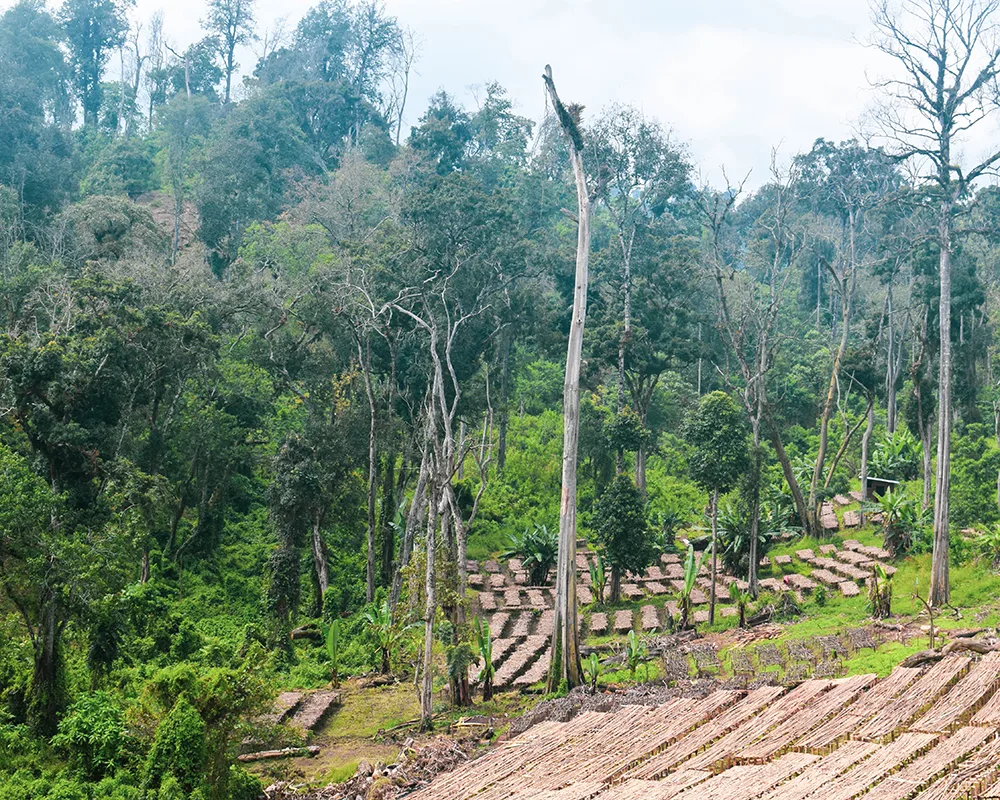
In fact, abroad, Huakui coffee has only one name—Hambella—and it comes from a small producing area in Giji, Sidamo. If you pay close attention, you will find that only naturally processed beans from the Buku Abel processing plant are called "Huakui" by baristas. In other words, what we call "Huakui coffee" is a traditional natural G1 coffee bean from the Hambella producing area, and the "Buku Abel" processing station is its more precise traceability information, located in Dimtu town.
After Huakui became famous, market demand surged, and DW company added up to 5 independent green coffee drying processing stations in Hambella Wamena Wereda, all located within the core producing area of Dimtu town. In addition to the original Buku Abel, four other small villages—Buku Saysay, Haro Soresa, Tirtiro Goye, and Seke Bokosa—also joined the production of naturally processed coffee beans. It is said that at that time, the annual production of "Huakui" under DW company had already reached tens of millions of tons.
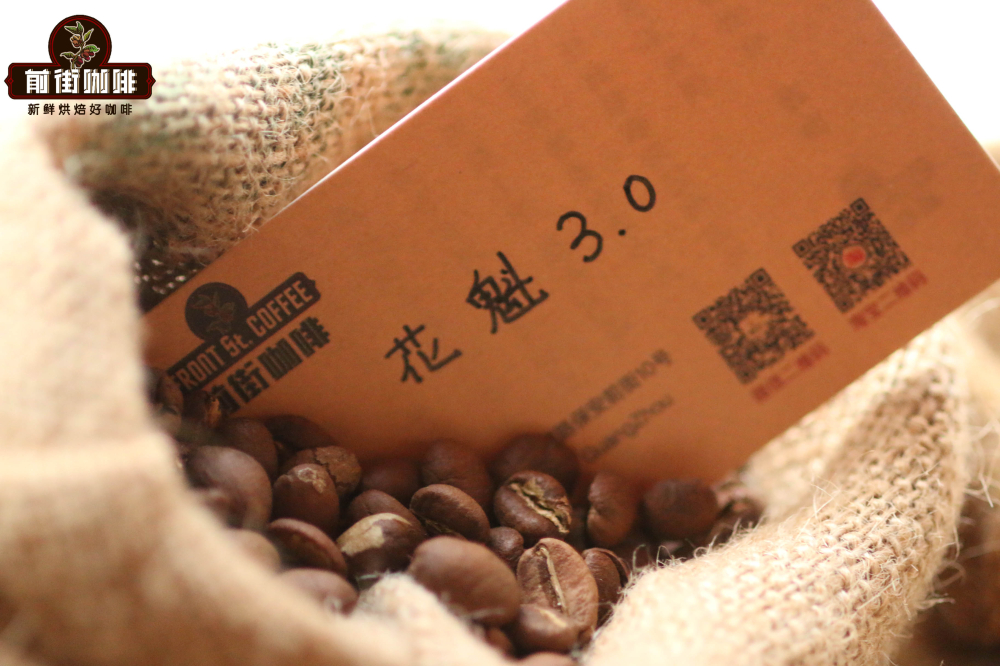
Since the 2018 harvest season, Huakui (natural G1 coffee beans) from the same growing origin and the same processing station has already shown some changes in taste. Through cupping at the time, Front Street found that although the 2018 and 2019 Huakui also had flavors similar to the 2017 Huakui, they were inferior to the "first-generation Huakui" in terms of body, aftertaste, and other mouthfeel aspects. Therefore, in order to continue selling this naturally processed coffee from Hambella while making a certain distinction from the original version, domestic green bean trading companies, calculated from 2017 onward, created an X.0 suffix for each subsequent year's batch—for example, the 2018 batch was called "Huakui 2.0," the 2019 batch was called "Huakui 3.0 and 3.1"... last year's release was "Huakui 7.0," and so on. In this way, we can identify which year's batch the Huakui we bought belongs to through this suffix.
Next, let's talk about the Sidamo producing region
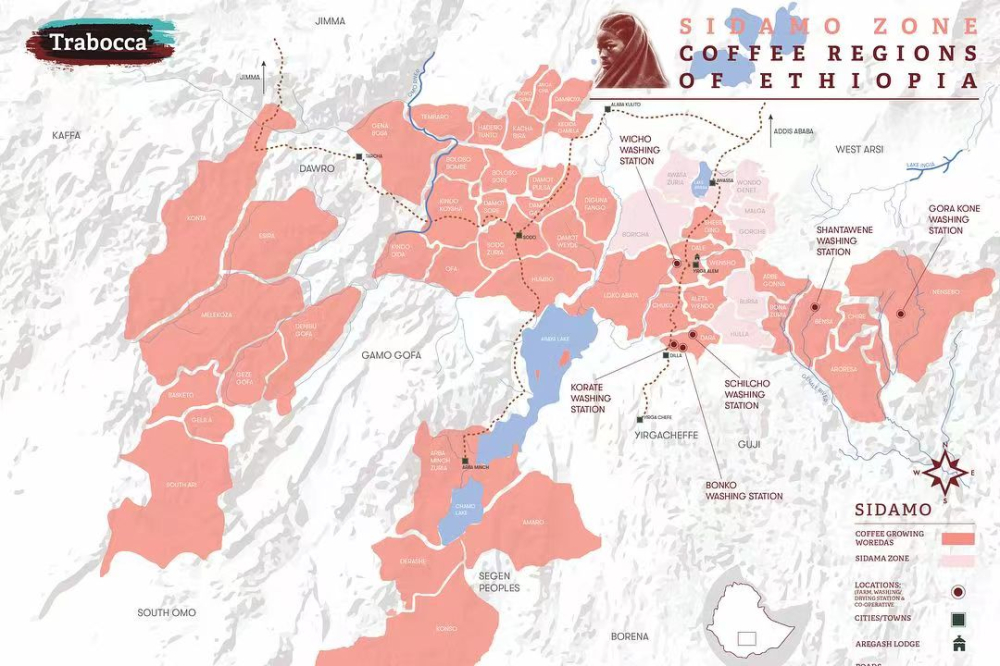
Sidamo is one of Ethiopia's specialty coffee producing regions, adjacent to the Yirgacheffe producing region. It is not only a producing region in the geographical sense but also represents a coffee brand. In 2006, Starbucks attempted to register "Sidamo" as a trademark, which triggered strong dissatisfaction and pushback from the Ethiopian coffee industry. This trademark dispute lasted two years and ultimately ended with Starbucks withdrawing its application; the two sides reached a settlement, and Starbucks continued to purchase and sell Sidamo coffee beans through cooperation.
The Sidamo region is located in southern Ethiopia, extending east to the Arsi and Bale administrative zones and west to the Gamogofa administrative zone, with coffee cultivation at altitudes between 1400m and 2000m. The coffee produced in this region has extremely diverse flavors because different areas have different soil compositions, microclimates, and countless native coffee varieties, making the coffee produced in each area distinctly different and distinctive. According to Ethiopia's administrative divisions, it can be divided into four levels: Region, Zone, Woreda, and Kebele, equivalent to China's province, city, district, and street.
Coffee is essentially an agricultural crop, and flavor changes are closely related to climate and environment. Sidamo's coffee flavors are very diverse; different soil types, microclimates, and countless native coffee varieties have created obvious differences and characteristics in the coffee produced by each town. The Guji producing region was once part of the Sidamo producing region, but in 2010 it was already made an independent new producing region by the Ethiopia Commodity Exchange (ECX). The Guji producing region is located southeast of Yirgacheffe and is an area with complex terrain changes including towering mountain ranges, valleys, and plains. The geology of this area belongs to nutrient-rich black soil (Vertisol), with soil depth of nearly two meters and an average altitude above 1800 meters. The significant day-night temperature difference created by geographical characteristics gives the area all the terroir conditions for producing high-quality specialty coffee.
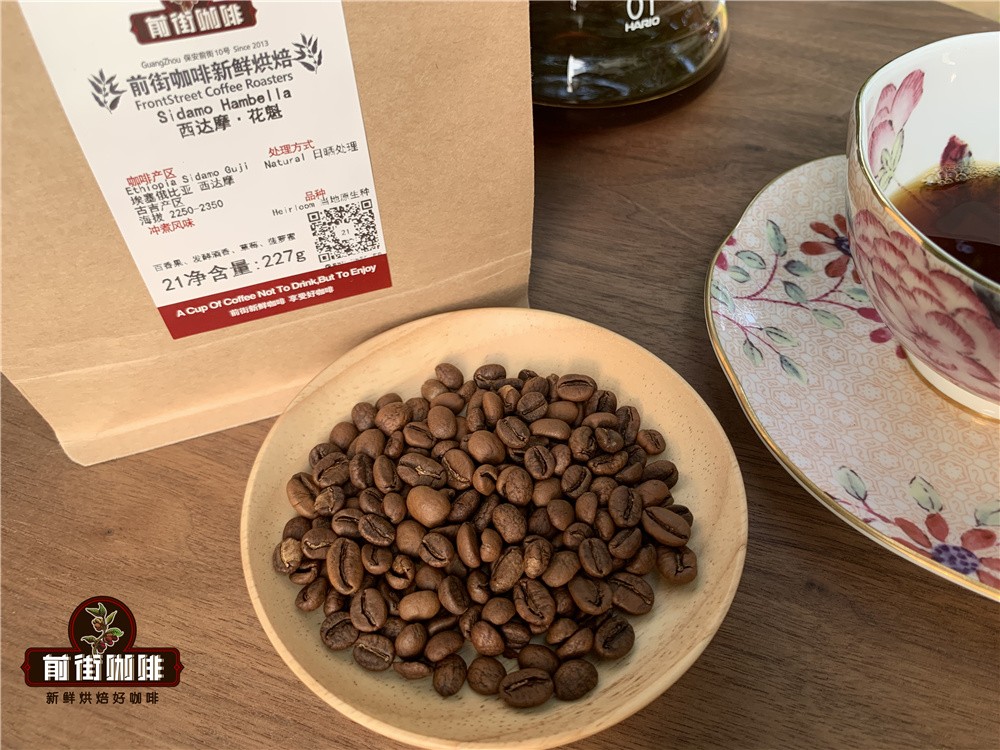
In order to fully extract Huakui's rich layers, Front Street uses a higher water temperature and a finer grind size for extraction.
[About Grind Size]
For light roasts, Front Street Coffee uses a medium-fine grind. The coarseness of the coffee grind directly affects the extraction time and extraction yield. The finer the coffee is ground, the denser the coffee bed, with more coffee particles in contact with hot water, increasing extraction resistance and making it easier to prolong extraction time and raise the extraction yield; however, it is very easy to over-extract.
Conversely, the coarser the coffee is ground, the larger the gaps in the coffee bed, with fewer coffee particles in contact with hot water, weakening extraction resistance and making it harder to prolong extraction time, thus lowering the extraction yield, and it is very easy to under-extract. Therefore, the finer the coffee is ground, the longer the extraction time and the higher the extraction yield; the finer the coffee is ground, the shorter the extraction time and the lower the extraction yield.
Examples of three styles:
1. Flavor-focused 2. Body-focused 3. Balanced
Front Street Coffee Flavor-focused Brewing Sharing
Front Street Coffee chose a resin V60 filter cup to give the coffee richer acidity changes from hot to cold, making the cup more refined; the resin material can enhance aroma intensity.
Filter cup: Hario V60 transparent resin
Setting: Fuji Royal 3.5
Water temperature: 90°C
Pour 25g of water for a 30-second bloom, then pour in stages when the water reaches 120g, and finish brewing at 226g.
Total time: 2 minutes 05 seconds
It smells of distinct melon aroma; on the palate there is a soft acidity like jackfruit, with strawberry berry flavors emerging in the mid-palate, along with some sucrose-like sweetness in the finish—quite rich in layers.
The V60 conical filter cup has a relatively large opening, and combined with its unique spiral curved ribs, air is more easily expelled, thereby improving extraction quality. The body may not be thick enough, but the sweetness, acidity, and distinct aroma brought out by its high concentration are a major feature. Moreover, by pairing it with different pouring methods and techniques, you can also get coffee with different mouthfeels and flavors, making it highly versatile.
Front Street Coffee Body-focused Brewing Sharing
Filter cup: Kalita three-hole trapezoid filter cup
Setting: Fuji Royal 3.5
Water temperature: 89°C
Pour 26g of water for a 30-second bloom, then pour in stages when the water reaches 124g, and finish brewing at 225g.
Total time: 2 minutes 10 seconds
On the palate there is passion fruit and strawberry acidity, with a peach-like sweetness appearing in the finish; the body is rounded and full, with relatively high richness.
Front Street Coffee Balanced Brewing Sharing
The Kalita cup wall has many ribs, all arranged in straight lines with consistent spacing between the ribs, in order to increase the speed of air release and water flow. Its flow rate is relatively slow and it mainly uses an immersion method for extraction. The brewed coffee has relatively high body and does not easily over-extract.
Filter cup: WAVE cake filter cup
Setting: Fuji Royal 4
Water temperature 90°C
Pour 26g of water for a 30-second bloom, then pour in stages when the water reaches 124g, and finish brewing at 225g.
Total time: 2 minutes 07 seconds
The mouthfeel is smooth on the palate, with prominent fermented berry aroma and obvious passion fruit flavor on the entry; after the temperature drops, strawberry-type berry sweetness and acidity emerge, and the overall flavor is relatively balanced.
The bottom of the cake filter cup is flat and has three drip holes; the flat-bottom design makes extraction more complete. The cup body and the wavy filter paper do not stick too tightly together, which helps make the temperature more consistent and the water flow more dispersed. Coffee brewed with the cake filter cup has both a rich body and a certain layering, falling between the V60 and the trapezoid filter cup.
The above are the three most common filter cups we see: the Kalita three-hole filter cup, the WAVE cake filter cup, and the Hario V60. If you like prominent flavor, rich layers, and obvious aroma, you can choose the Hario V60; if you like a rich body, you can choose the Kalita three-hole filter cup; if you want both aroma and body to be relatively balanced, you can choose the WAVE cake filter cup.
Different filter cups each have their own characteristics, and you can choose according to your own preferences—after all, pour-over has great versatility.
The above content is compiled by CoffeeHunters, a coffee news website.


