








Which Arabica Coffee Bean Varieties Grow in Yunnan?
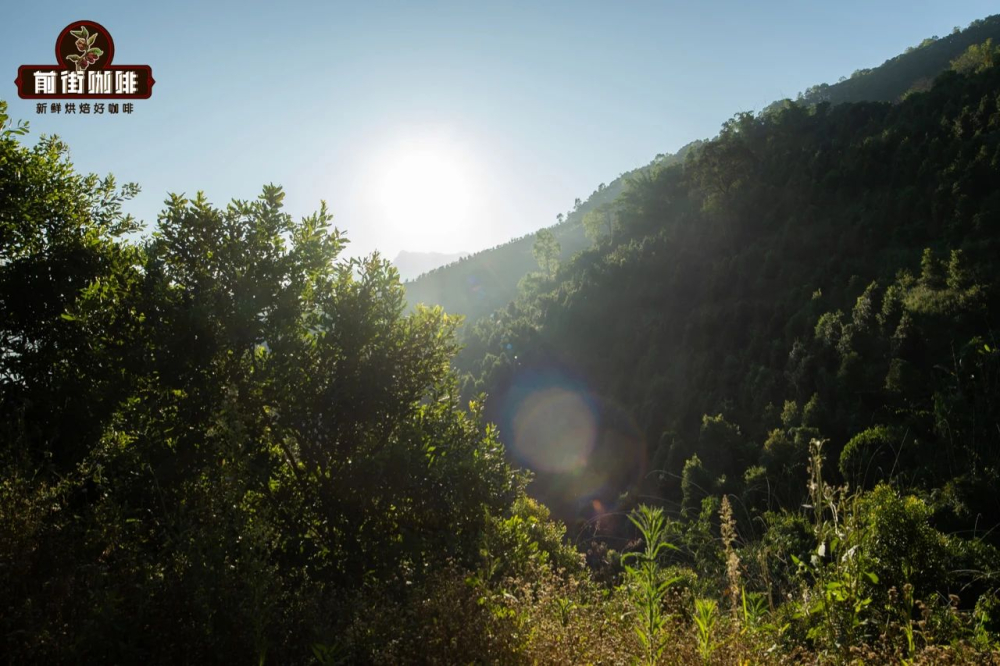
Yunnan coffee is Arabica, and the main variety planted today is Catimor, which replaced earlier Typica and Bourbon trees because of its resistance to leaf rust and higher yields. Catimor tends to cup with lower acidity, more body and a nutty, chocolate-leaning sweetness, while Typica and Bourbon bring cleaner, sweeter and more delicate fruit notes.
Yunnan sits in southwestern China, with the Tropic of Cancer crossing its south. Mountains and plateaus make up most of the province, and roughly 90 percent of the land lies between 1,000 and 3,500 meters, with a subtropical plateau monsoon climate, wide day-night temperature swings and ample rain. Plantings cluster in Pu'er, Baoshan, Dehong and Lincang, and washed processing is common.
Yunnan coffee has emerged in the specialty coffee market in recent years, and its unique terroir and varietal characteristics have attracted much attention. This article provides an in-depth analysis of the flavor characteristics of single-origin Yunnan coffee beans, focusing on the origin and flavor performance of the Catimor variety, while comparing the differences with Typica, Bourbon, and other varieties. The article also details the cultivation history of Yunnan coffee, the distribution of major producing regions, and the washed processing method, and includes roasting and brewing suggestions for Front Street Coffee's Yunnan Typica and Catimor coffee beans, providing a complete guide to Yunnan coffee for coffee enthusiasts.
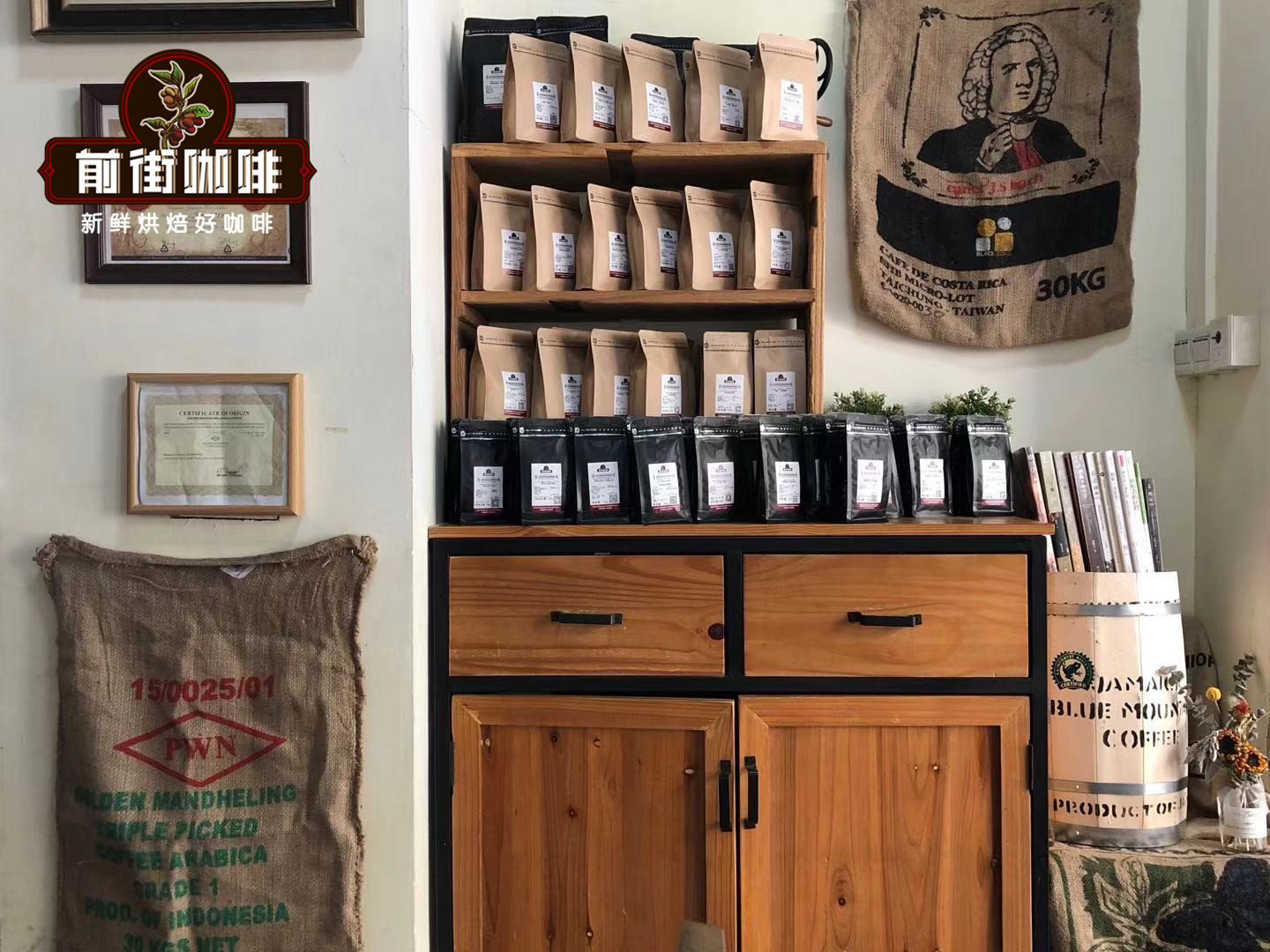
For more specialty coffee knowledge, please follow our WeChat official account: Front Street Coffee
Yunnan coffee beans have frequently appeared in the specialty coffee scene in recent years, though their development toward specialty coffee has not been long. Front Street Coffee believes this land holds tremendous potential, so we established a plantation specifically for growing Yunnan coffee in the border region between Yunnan and Myanmar. Next, Front Street Coffee will introduce the unique characteristics of Yunnan coffee.
Yunnan Coffee Growing Conditions in China
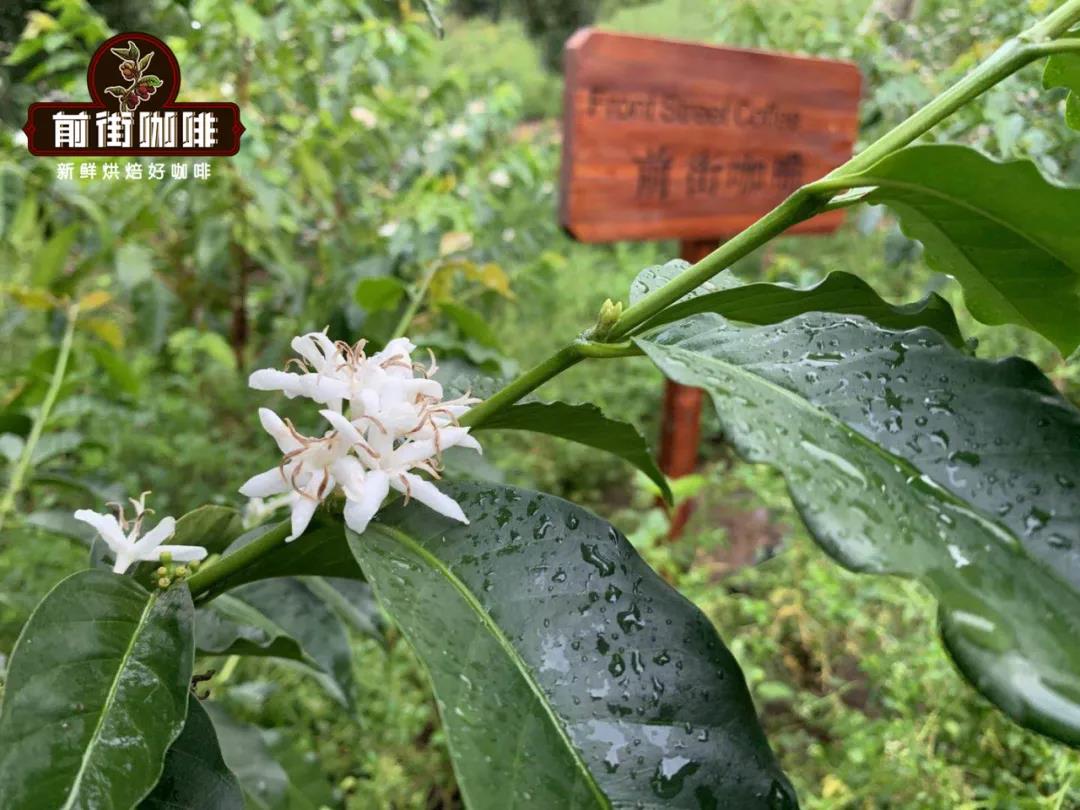
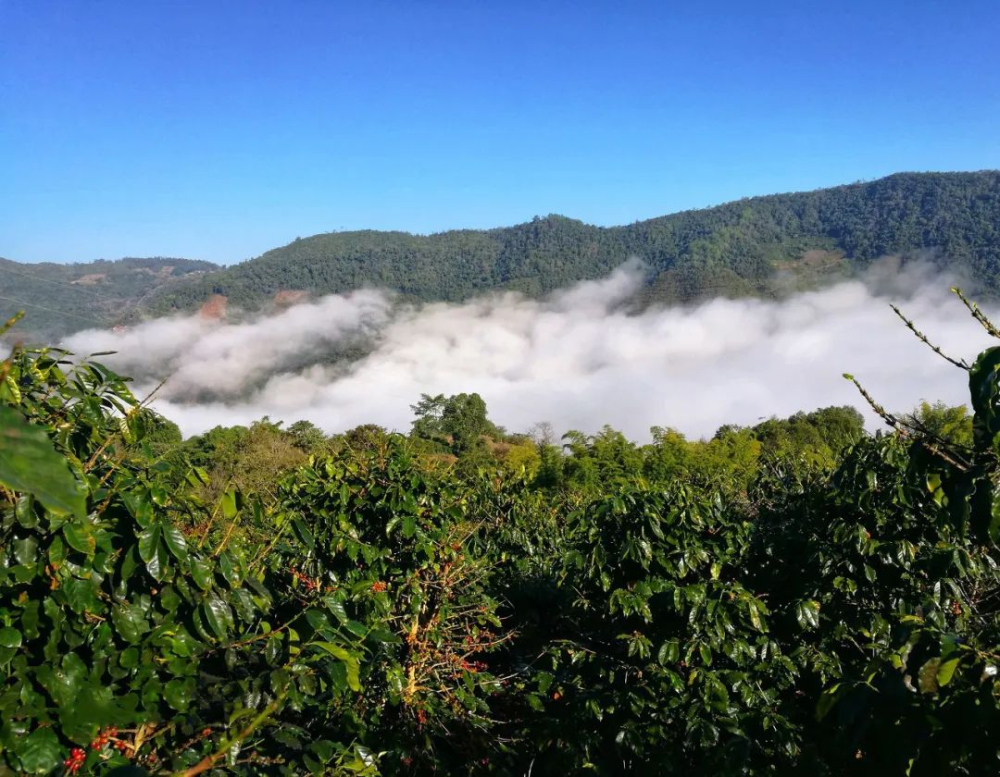
Yunnan is located in southwestern China, with the Tropic of Cancer passing through its southern part. The terrain is mainly mountainous and plateau, with the mid-altitude region of 1,000 to 3,500 meters above sea level accounting for nearly 90% of the province's total land area. It has a subtropical plateau monsoon climate with significant temperature differences between day and night and abundant rainfall. As mentioned in previous articles by Front Street Coffee, Arabica varieties need to be grown in high-altitude environments with suitable temperature and rainfall to produce high-quality coffee cherries.
Currently, the vast majority of coffee on the Chinese market comes from Yunnan. Yunnan coffee accounts for 98% of the national total production, which can be said to basically represent China's coffee growing industry.
Yunnan Coffee Producing Regions
The cultivation areas of Yunnan small-bean coffee are mainly concentrated in the south and west, with Pu'er, Baoshan, Dehong, and Lincang being particularly well-known. The Yunnan coffee grown on Front Street Coffee's plantation comes from Baoshan. Front Street Coffee believes that the coffee beans here have a rich flavor without bitterness, a prominent aroma without harshness, and strong regional characteristics. Below, Front Street will briefly introduce the characteristics of each of these Yunnan producing regions.
Dehong: Known as the "Hometown of Chinese Coffee." The coffee cultivation altitude in Dehong Prefecture is all above 1,000 meters, with 30,000 mu located in mountainous areas above 1,600 meters. In addition, coffee cultivation in Dehong Prefecture mainly uses organic fertilizers and organic pesticides, producing coffee of relatively high quality, making it one of the rare high-quality coffee producing areas in the world. Baoshan: Coffee cultivation in Baoshan began in the mid-1950s, with the first coffee seedling introduced from Southeast Asia by the late patriotic overseas Chinese Mr. Liang Jinshan. In recent years, with the continuous expansion of international trade, the small-bean coffee of Lujiangba has become even more famous. Merchants from Europe, America, and Arab countries, especially those from Britain, the United States, Egypt, and Hong Kong and Macao regions, regard it as a premium coffee, and the product is in short supply. In December 2010, upon review by the General Administration of Quality Supervision, Inspection and Quarantine of China, it was decided to implement national geographical indication product protection for "Baoshan Small-Bean Coffee." Lincang: Its unique geographical location and climatic conditions have made Lincang a focus of attention for many coffee enterprises. The region has successively established high-quality coffee seedling bases of 200 mu and 100 mu in Mengding Town of Gengma Autonomous County and Lincang Xingfu Farm respectively, and has carried out coffee cultivation in Gengma, Zhenkang, Yunxian, Cangyuan, Yongde, and other places. Pu'er: Coffee cultivation in the tea hometown of Pu'er has a history of 150 years. In the early 1990s, Pu'er City began to cultivate coffee as an advantageous pillar industry for adjusting the industrial structure and helping farmers increase income and become prosperous.
Yunnan Coffee Cultivation History
As mentioned above by Front Street, the development of Yunnan coffee toward specialty coffee and its recognition by coffee enthusiasts worldwide has not been long. However, according to Front Street's understanding, the history of coffee cultivation in Yunnan is quite long, mainly divided into four stages. Next, Front Street will discuss the cultivation history of Yunnan coffee beans.
Stage One: In the 1880s, the Qing government was forced to sign a treaty with France ending the Sino-French War and opened Mengzi (Mengzi County, Honghe Prefecture) as a trading port. In 1889, the Mengzi Customs opened, marking the beginning of interaction between the southwestern border region and the outside world. For a time, foreign merchants gathered and trading houses arrived one after another.
Stage Two: In 1902, a French missionary with the Chinese name Tian Deneng brought coffee from Vietnam to a mountain village called Zhukula in Binchuan County, Dali, Yunnan Province, for cultivation. To this day, descendants of that batch of coffee plants still survive.
Stage Three: In 1952, experts from the Yunnan Academy of Agricultural Sciences distributed 80 kilograms of coffee seeds to farmers in Lujiangba, Baoshan. Several years later, they guided large-scale cultivation, which led to the swaying coffee trees along the Yunnan-Myanmar Highway. Due to the enormous demand from supplying the Soviet Union, Yunnan's coffee cultivation experienced a rapid development.
Stage Four: In 1988, Nestlé established a joint venture in China and began supporting the local coffee industry in Yunnan through launching coffee cultivation projects and other means. Yunnan coffee rose again. Starting in 1992, Nestlé established a coffee agriculture department specifically to guide and research the improvement and cultivation of Yunnan coffee, and purchased coffee at prices based on the U.S. spot market. To date, not only have coffee giants such as Nestlé, Maxwell, Kraft, and Starbucks all engaged in coffee business in Yunnan, but local coffee enterprises have also gradually grown stronger.
It was after experiencing the above four stages that Yunnan began researching coffee cultivation. Today, coffee farmers in Yunnan producing regions mainly cultivate small-bean coffee, which is why Yunnan coffee is also called Yunnan small-bean coffee. Next, Front Street Coffee will explain the coffee varieties currently cultivated in Yunnan.
Yunnan Coffee Bean Varieties
The most widely cultivated coffee bean in Yunnan currently is Catimor, though there are still small amounts of Typica and Bourbon coffee beans cultivated in the Baoshan area. Although they all belong to the Arabica species in a broad sense, these varieties are fundamentally quite different from one another.
Typica
Typica is the oldest native Arabica variety on the coffee market today, and almost all Arabica coffee bean varieties currently in existence are derived from Typica. Typica has an elegant flavor but is physically weak with low disease resistance and is susceptible to leaf rust. As a result, coffee bean yields are low and cannot meet economic viability. In recent years, Typica in Central and South America has gradually been replaced by Caturra and Catuai, so Typica is becoming increasingly rare. Although Typica has an elegant flavor, it is not as widespread as Bourbon.
The coffee trees mainly cultivated on Front Street Coffee's plantation in Yunnan are of the Typica variety, because Typica coffee has its unique clean, serene flavor and balanced characteristics with high cup clarity. So although Typica coffee trees are difficult to cultivate, Front Street Coffee wants coffee enthusiasts to be able to taste Yunnan coffee at its best.
Bourbon
It is a secondary variety resulting from a mutation of Typica, and together with Typica is one of the oldest existing coffee varieties. The green cherries turn bright red when ripe. Compared to Typica, Bourbon has broader leaves and denser growth. Although its yield is higher than Typica, its harvest period is also 2 years, making it a low-yield variety as well, but it has a high-quality cup profile with wine-like acidity and a sweet finish.
Catimor Coffee Variety
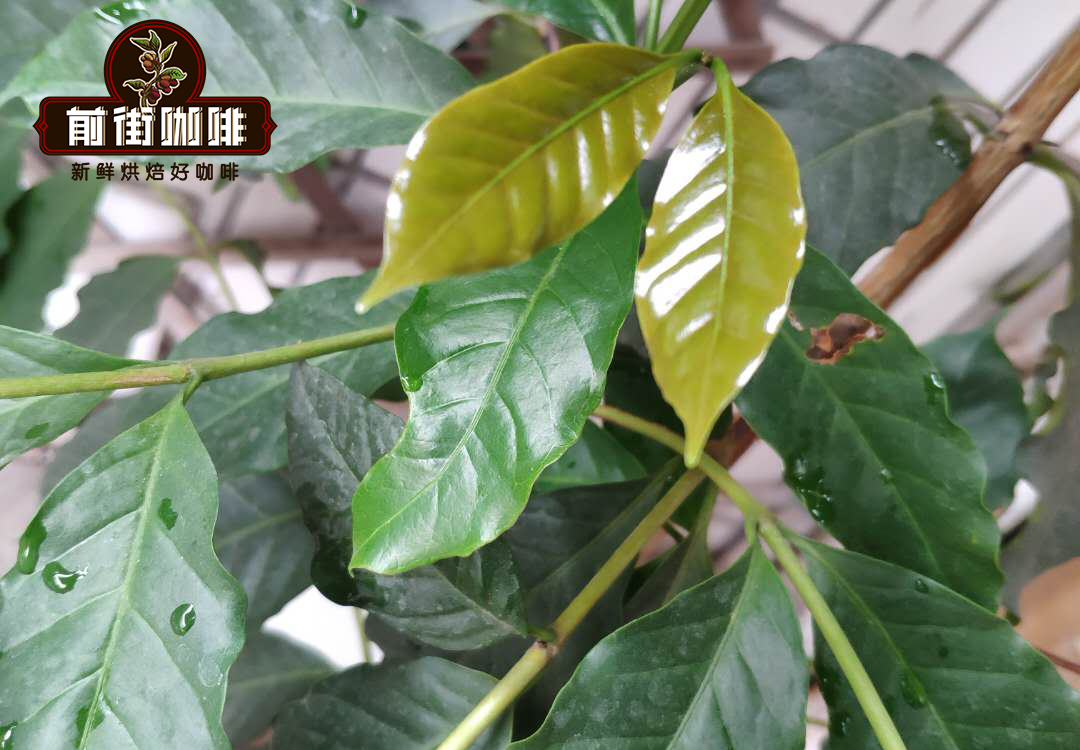
Catimor is a combination of the Arabica species and the Robusta species. Robusta has good resistance to leaf rust and rich oils, high yield, and is easy to cultivate. Therefore, after hybridizing with the Arabica species Typica, Catimor has 25% Robusta genes. It has improved resistance to leaf rust, retained rich oils, and also acquired some of the rich flavors of the Typica native species. Yunnan Coffee Processing Methods
According to Front Street's understanding, many processing methods have been used for Yunnan coffee beans to date, but the Yunnan coffee beans produced by Front Street Coffee currently all use the washed processing method, because the washed processing method is the processing method that best showcases a coffee bean's most original flavor. It also makes the coffee bean's flavor cleaner and brighter, reducing off-flavors. Therefore, Front Street Coffee uses the washed processing method for its coffee beans, with the aim of allowing coffee enthusiasts who visit Front Street Coffee's shop to taste the most authentic and original Yunnan coffee bean flavors.
Washed Processing Method Steps
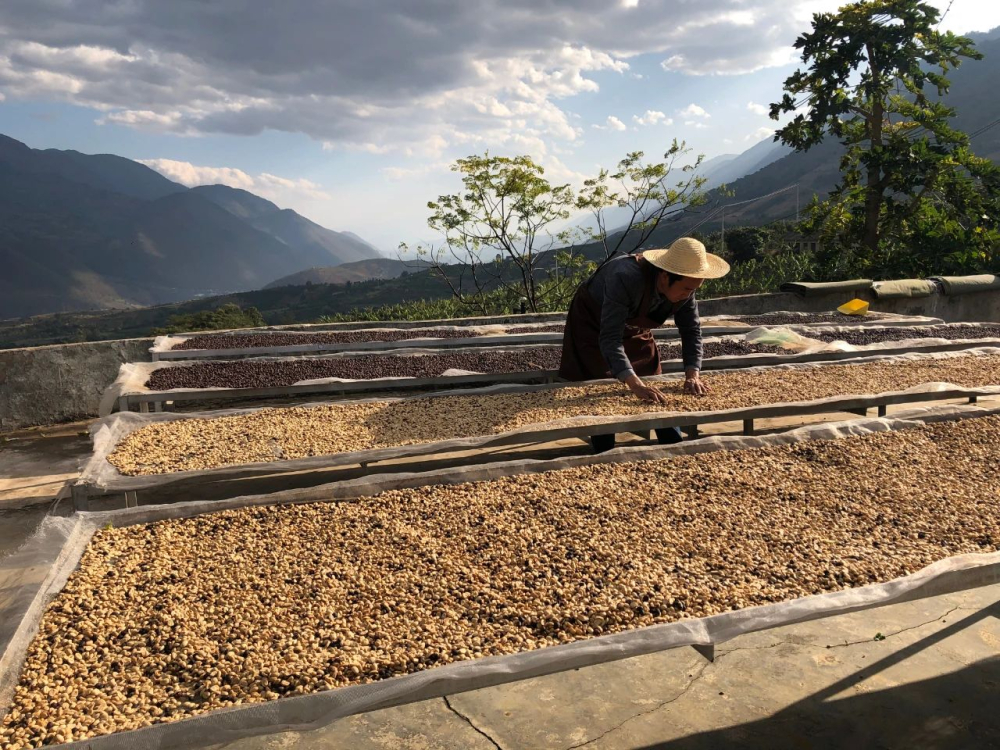
1. First, the coffee farmers pour all the harvested coffee cherries into water. In this way, the bad and defective coffee beans float to the surface, while those that sink to the bottom are coffee cherries of acceptable quality. This operation also greatly reduces the time wasted on picking through them one by one. 2. The screened coffee cherries are placed into a depulper to remove the skin and pulp. After removing these, there is still a layer of mucilage adhering to the surface of the coffee cherries, so a large amount of clean water is needed to wash away the sticky substance on the surface of the coffee cherries. 3. Next, fermentation is used to thoroughly remove the mucilage. This process takes about 18 hours. However, after fermentation is complete, fermentation bacteria remain attached to the surface of the coffee cherries, so they need to be washed again with a large amount of clean water. In this step, obtaining 1 kilogram of coffee beans requires consuming 40 to 50 kilograms of clean water. Front Street considers this to be a very large number, which is precisely why arid countries cannot adopt the washed method. 4. The cleaned coffee beans can then be dried. Some regions take them outdoors to dry directly, while some more developed producing regions send them to processing plants to be dried by machine, reducing the coffee's moisture content to about 11%. 5. Finally, the dried coffee beans are stored and packaged for sale and export.
Next, Front Street Coffee will introduce to coffee enthusiasts all of Front Street Coffee's current Yunnan coffees.
Front Street Coffee Front Street 2013 Typica Coffee Beans

Country: China Producing Region: Baoshan, Yunnan Altitude: 1450-1550m Variety: Typica Processing Method: Washed Flavor: Citrus, nuts, plum, melon and fruit aroma, brown sugar, black tea notes
Front Street Coffee Yunnan Small-Bean Coffee Beans
Country: China Producing Region: Baoshan, Yunnan Altitude: 1200m Variety: Catimor Processing Method: Washed Flavor: Herbal, nutty aroma, chocolate, caramel
Before launching each new coffee bean, Front Street Coffee conducts roasting and brewing flavor tests to select the best flavor curve, making it convenient for future brewing to serve coffee enthusiasts who visit Front Street Coffee. Next, Front Street will share Front Street Coffee's roasting and brewing data for these two Yunnan coffee beans.
Front Street 2013 Typica Coffee Roasting Suggestions
The bean moisture content is 10.9%, so the roasting plan is to charge at 200°C, then use high heat and a small airflow to accelerate dehydration. After the dehydration phase ends, open the airflow to medium and use medium heat so that the Maillard reaction time is not too rushed. Develop for 3 minutes after first crack and then discharge. Turning point: 1:32, 92.5°C; yellowing point: 5:40, 148.5°C; first crack: 8:59, 188.0°C; develop 3 minutes and discharge: 12'00, 196°C.
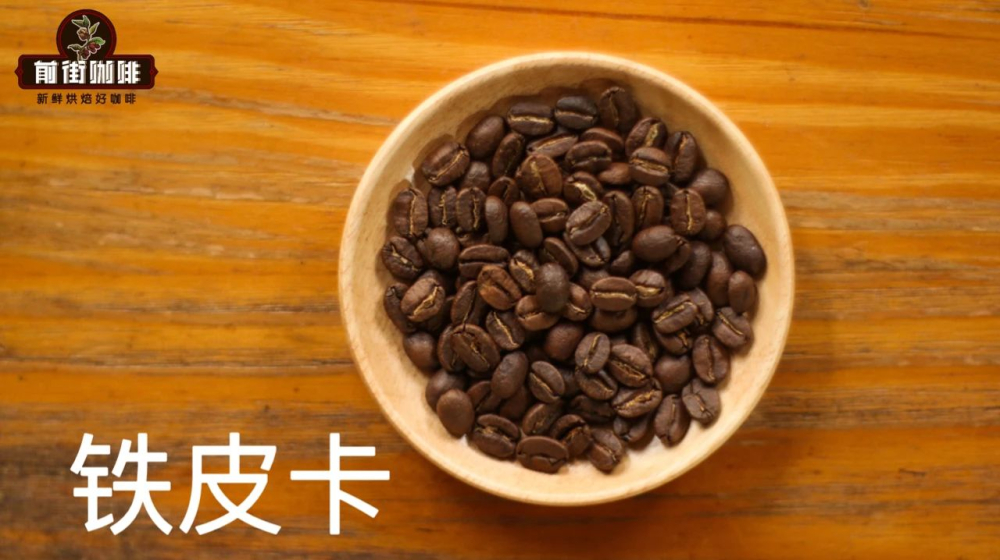
Front Street Yunnan Small-Bean Coffee Roasting Suggestions Charge at a drum temperature of 190°C, heat 120, airflow set to 3; turning point at 1'40", when the drum temperature reaches 145°C open the airflow to 4, heat unchanged; when the drum temperature reaches 166°C the bean surface turns yellow, the grassy smell completely disappears, entering the dehydration phase; when the drum temperature reaches 188°C, adjust the heat to 60°C, airflow to 5; at 8'37" the bean surface shows ugly wrinkles and dark streaks, and the toast aroma clearly turns into coffee aroma, which can be defined as the prelude to first crack. At this time, listen carefully for the sound of first crack. At 9'00" first crack begins, airflow unchanged. After first crack, develop for 3 minutes and discharge at 198°C.
Front Street Coffee's Brewing Suggestions for the Two Yunnan Coffee Beans
Front Street recommends using a V60 conical dripper. The V60 has a relatively large opening, and together with its unique spiral curve ribs, it allows air to be expelled more easily, thereby improving extraction quality. The body may not be thick enough, but the high concentration that brings out the fruity acidity and prominent aroma of Yunnan coffee is one of its major characteristics.
Dripper: V60 Water Temperature: 90-92°C Coffee-to-Water Ratio: 1:15 Grind Size: Medium-fine grind, i.e., fine granulated sugar coarseness (80% passing through a Chinese standard No. 20 sieve) Brewing Method: Pulse pouring. Use 30 grams of water for a 30-second bloom, then pour in a slow circular stream until 124 grams for the first pulse. When the water level drops and is about to expose the coffee bed, continue pouring until 227 grams and stop. When the water level drops and is about to expose the coffee bed, remove the dripper. (Start timing from the beginning of the bloom.) Total extraction time is 2 minutes.
Huaguoshan Brewing Flavor Description: Rich but not bitter, aromatic but not harsh, floral, melon sweetness in the mid-palate, black tea notes in the finish. Small-Bean Coffee Brewing Flavor Description: It smells very nutty, with herbal, chocolate, and caramel notes, and a slight fruity acidity in the finish.
The above content is compiled by CoffeeHunters, a coffee news website.


